Gucci occupies an odd place in the gift economy
Gucci occupies an odd place in the gift economy. The logo is recognisable enough to signal intent, but the archive runs deep enough that you can dodge the obvious. A good Gucci gift doesn't announce itself from across the room. It works quietly—leather that improves, hardware that doesn't tarnish, a scarf you actually wear in February.
The challenge is sorting signal from decoration. Gucci's seasonal collections move fast, and not everything in them is built to last. What you want are the pieces that sit outside the hype cycle: small leather goods with clean construction, silk that's finished properly, accessories refined enough to survive a change in taste. These aren't novelties. They're things that justify the box they arrive in.
The five pieces below all land under five hundred dollars. Each one reflects some part of the house's technical capacity—whether that's Florentine leather-working, Como silk production, or simply the restraint to let material do the work. They're gifts that don't require explanation, which is often the point.
Horsebit Leather Card Case
The horsebit isn't subtle, but it's earned. Gucci introduced the detail in 1953, and it remains the house's most legible piece of hardware. This card case—grained calfskin, four slots, a single central compartment—uses it as a clasp rather than ornament. The result is a small leather good that feels resolved.
The leather is the point. Gucci's tanneries finish it to a slight texture, enough to resist scratches without looking distressed from the factory. It won't stay pristine, but it will age in a way that reads as use rather than damage. The stitching is tight, the edges are painted, and the slots don't stretch after a month of daily carry. It's a card case that actually holds cards, which is rarer than it should be.
At just under three hundred dollars, it sits in the space where leather quality and brand recognition overlap. You're paying for both, but you're getting both. The horsebit gives it enough visual weight to work as a gift. The construction ensures it works as a card case.
GG Silk Twill Scarf
Gucci's scarves come out of Como, where the mills have been printing silk since before the house existed. This particular piece—90cm square, twill weave, hand-rolled edges—uses the interlocking GG as an all-over pattern rather than a single logo hit. It's graphic without being loud.
Twill takes dye differently than plain weave. The diagonal structure catches light at angles, so a flat print gains depth. Gucci's mills use this to layer colour in a way that photographs as one thing and wears as another. Up close, you see the individual passes. From a distance, it reads as texture.
The silk itself is 16-momme, which is light enough to knot without bulk but heavy enough to hold a drape. The edges are hand-rolled, not machine-stitched, which means they'll fray eventually but won't unravel. You can wear it as a neckerchief, a headscarf, or tied to a bag handle. It works in all three positions because the scale is correct and the print doesn't fight the application.
At around three hundred and fifty dollars, it's priced in line with other Italian silk squares. The difference is the print archive. Gucci has decades of house motifs to pull from, and the GG pattern is old enough to feel like a reference rather than a trend.
Leather Belt with Double G Buckle
A belt is a functional gift, which makes it easy to misjudge. This one—full-grain leather, 4cm width, antique gold or silver hardware—works because the proportions are restrained. The Double G buckle is smaller than you expect, and the leather is cut thick enough to hold its shape through a trouser loop.
The buckle is cast, not stamped, which gives it enough weight to sit flat against the waist. Gucci offers it in both polished and brushed finishes. The brushed version wears better. It picks up minor scuffs without looking damaged, and it doesn't show fingerprints the way polished metal does.
The leather is Italian, vegetable-tanned, and finished with a slight pull-up effect. Bend it and the colour lightens at the crease. It's a sign that the dye penetrated the grain rather than sitting on the surface. Over time, the belt will darken where it flexes and lighten where it stretches. That's the behaviour of good leather.
At four hundred dollars, it's expensive for a belt. But it's also the piece in this list most likely to outlast its owner. Buckles can be replaced. Leather this thick can be re-edged. If the width stays in proportion—and 4cm has been standard for decades—it won't look dated in ten years.
Ophidia GG Supreme Pouch
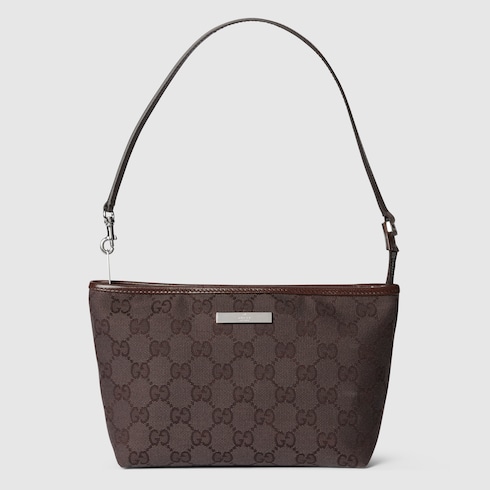
The Ophidia line uses GG Supreme canvas, which is Gucci's coated textile. It's not leather, but it's not pretending to be. The weave is tight, the coating is matte, and the result is a fabric that resists water and cleans with a damp cloth. This pouch—zip closure, leather trim, web stripe—works as a dopp kit, a cable organiser, or a catch-all for the bottom of a larger bag.
The construction is straightforward. The canvas is laminated to a backing for structure, the zip is metal with a leather pull, and the interior is lined in cotton twill. The leather trim at the edges and corners is there for reinforcement, not decoration. It's the kind of detail you notice when something doesn't fall apart.
The web stripe—green, red, green—runs down the centre. It's Gucci's oldest signature, borrowed from the saddle girth the founder worked with as a saddler. On a pouch this size, it reads as a detail rather than a statement. The scale is small enough to work.
At three hundred and twenty dollars, it's priced below the leather equivalent but built to the same standard. The canvas won't patina the way calfskin does, but it also won't scuff in a suitcase. It's a travel piece that actually travels.
Leather Keyring
A keyring sounds minor until you consider how often it's handled. This one—grained calfskin, cast metal ring, embossed Gucci script—is small enough to fit in a palm and heavy enough to feel deliberate. It's the least expensive piece here at around two hundred dollars, and the one most likely to be used daily.
The leather is the same stock Gucci uses for small goods: full-grain, vegetable-tanned, finished to resist scratches. The metal ring is welded, not split, so it won't spring open under tension. The embossing is shallow enough to stay legible as the leather wears. It's a keyring that does what a keyring does, with enough material quality to justify the name on it.
It works as a gift because it's useful without being practical. No one needs a two-hundred-dollar keyring, but everyone uses keys, and the piece is small enough to feel like a gesture rather than an obligation. It's the kind of thing you buy when you want the box but not the commitment.
A Note on Care
Gucci's leather goods come with care cards. Read them. The grained calfskin used across these pieces benefits from occasional conditioning—a neutral cream applied with a soft cloth, buffed after fifteen minutes. The GG Supreme canvas cleans with water and mild soap. The silk scarves are dry-clean only, despite what the internet suggests about hand-washing.
Hardware tarnishes. That's oxidation, not defect. Polished metal shows it faster than brushed, but both will dull over time. A jeweller's cloth brings it back. The leather itself will darken with handling and lighten with sun. That's the material responding to use. If you want it to stay exactly as it arrived, keep it in the box. If you want it to improve, wear it and forget about it.