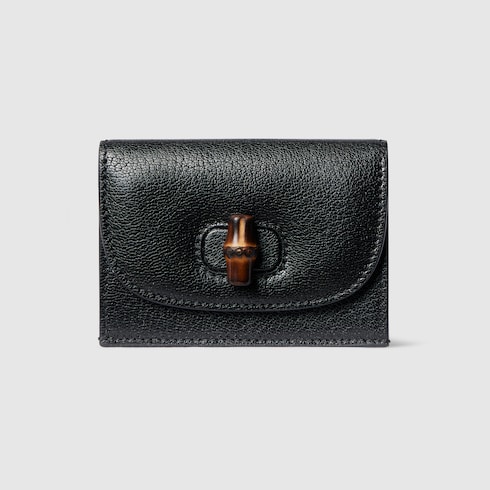
Gucci's bag archive is vast, frequently revised, and occasionally overwhelming
Gucci's bag archive is vast, frequently revised, and occasionally overwhelming. The house has spent the past decade swinging between maximalist logomania and relatively restrained leather goods, often within the same season. This makes buying well a question of editing: which pieces will outlast the campaign that launched them, and which rely too heavily on a single creative director's aesthetic?
The bags worth knowing share certain qualities. They reference an identifiable moment in Gucci's history without being enslaved to it. They use materials honestly—leather that ages rather than synthetic coatings that crack. They work across contexts: the same piece that functions at a wedding should also survive a weekend in the Cotswolds. And they avoid the trap of over-signalling. A double-G clasp is sufficient. You don't need the monogram canvas, the Web stripe, the horsebit, and the logo plate all at once.
What follows are five pieces that meet those criteria. Some date back to the 1950s and have been in continuous production, with minor tweaks, ever since. Others emerged more recently but have already proved durable in ways that much of the house's output has not. All of them will look correct in five years, which is more than you can say for most of what moves through a flagship.
Jackie 1961
The Jackie—formerly the Bouvier, renamed after a certain First Lady was photographed with it in the early 1960s—remains Gucci's most resolved handbag. It is a hobo in structure, which means it softens and collapses in ways that structured top-handles do not. The single shoulder strap is adjustable but not fussy. The piston closure, a small metal bar that slots through a loop of leather, has no moving parts to fail.
Gucci reissued the bag in 2020 under the name Jackie 1961, a bid to separate the archival silhouette from the various reinterpretations that had appeared in the intervening decades. The current version is truer to the original than anything produced since the 1990s. It comes in three sizes—small, medium, large—and the medium is the only one that matters. The small reads as an evening bag, which defeats the purpose. The large sags.
The leather is typically a smooth calfskin, though suede and croc-embossed versions appear seasonally. Avoid patent. It looks cheaper than it is, and it will crease at the fold within a year. Black and dark brown are the safe choices, but the bag works surprisingly well in burgundy or forest green, both of which age into something close to neutrality.
The Jackie's one weakness is the strap attachment. The hardware is robust, but the leather where it connects to the bag will stretch over time if you habitually overload it. This is not a laptop bag. It is not a gym bag. It will hold a wallet, phone, keys, a paperback, and a small washbag. That should be enough.
Dionysus
The Dionysus arrived in 2015, early in Alessandro Michele's tenure, and it has outlasted most of his other introductions. The tiger-head closure is more restrained than it sounds—two stylised profiles in aged metal, no enamel or gemstones unless you go looking for the embellished versions. The bag itself is a structured shoulder style with a chain strap, which makes it formal enough for evening but not so precious that you can't wear it during the day.
Gucci offers the Dionysus in GG Supreme canvas, which is coated textile rather than leather, and in plain leather. The canvas is lighter and cheaper, but it will not age as well. The coating eventually cracks at the corners, and there is no good way to repair it. The leather version, usually in black or deep red, develops a patina that improves the piece rather than degrading it.
Sizing is straightforward: small, medium, large. The small is an evening bag. The medium works as a daily carry if you travel light. The large is too big for the chain strap, which will dig into your shoulder after twenty minutes. If you want something that size, buy a different bag.
The Dionysus works because it borrows from Gucci's archive—the tiger motif appeared in the house's jewellery and silk scarves throughout the 1970s—without directly copying a previous design. It feels like Gucci, but it does not feel like a reissue.
Horsebit 1955
The Horsebit 1955 is a direct reissue, and that is both its strength and its limitation. The original horsebit bag appeared in the mid-1950s, one of the first designs to incorporate the equestrian hardware that would become Gucci's most recognisable motif. The current version, reintroduced in 2020, is nearly identical: a shoulder bag with a single flap, a horsebit closure, and a long strap that can be worn crossbody or doubled over the shoulder.
The bag is smaller than it looks in photographs. The standard size will hold a phone, cardholder, and lipstick, but not much else. There is a larger version, but it loses the proportions that make the original work. This is a bag for evenings and lunches, not for commuting.
The leather is smooth calfskin, usually in black, white, or one of Gucci's seasonal colours. White is impractical unless you are prepared to have it professionally cleaned twice a year. Black is the obvious choice, though the darker shades of green and burgundy hold up better to daily wear because they show scuffs less readily.
The Horsebit 1955 is elegant in a way that very little of Gucci's current range manages. It does not try to be interesting. It simply is.
Blondie
The Blondie is Gucci's most recent attempt at a rounded shoulder bag, introduced in 2023 as part of Sabato De Sarno's first collection as creative director. The name references the interlocking-G hardware, which sits at the centre of the bag's front panel. The shape is somewhere between a camera bag and a bowling bag—soft but not slouchy, structured but not rigid.
The Blondie works because it is not trying to be the Jackie. It has its own proportions, its own strap length, its own sense of how much a shoulder bag should hold. The interior is surprisingly spacious, with enough room for a small tablet, a wallet, and the usual daily debris. The strap is adjustable and wide enough that it does not cut into your shoulder.
Gucci offers the Blondie in both leather and the house's GG canvas. The leather version is preferable for the same reasons it is preferable on the Dionysus: it will age better, and it does not rely on a coating that will eventually fail. Black, caramel, and dark brown are the most versatile colours. The seasonal shades—pale pink, mint green—are harder to integrate into a working wardrobe.
The Blondie is too new to have proved itself over a decade, but it has the qualities that suggest it will. It is not trend-dependent. It does not rely on a specific styling trick to look correct. It is simply a good shoulder bag with Gucci's hardware on it.
Ophidia
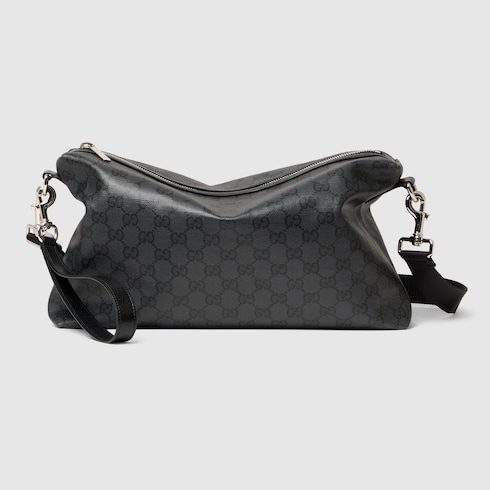
The Ophidia is Gucci's answer to the question of what a logo bag should look like if you are not twenty-three and do not want to be mistaken for someone who is. It uses the house's GG Supreme canvas, which means it is immediately recognisable as Gucci, but the Web stripe running down the centre is narrow enough that the bag does not announce itself from across a room.
The Ophidia comes in several formats: a belt bag, a camera bag, a tote, a bucket bag. The camera bag is the most useful. It is small enough to wear crossbody without looking like you are on a walking tour, and it holds more than you would expect. The belt bag is only worth considering if you are actively hiking or cycling. The tote is too large for the canvas to support; it will sag at the sides within six months.
The canvas is coated, which means it is water-resistant but not waterproof, and it will eventually crack at the stress points. This is not a bag that will last twenty years. It will last five to seven if you treat it well, which is acceptable given the price point. The leather trim—usually in brown or black—will outlast the canvas, and it is the trim that will show wear first.
The Ophidia is not an heirloom piece. It is a logo bag that happens to be well-designed. If you want something with Gucci's monogram on it, this is the least offensive way to get it.
Care and longevity
Gucci's leather goods benefit from the same treatment as any other high-end leather: keep them out of prolonged sunlight, store them stuffed with tissue when not in use, and have them professionally cleaned every two years if you wear them daily. The hardware—particularly on the Jackie and the Horsebit 1955—will tarnish over time. This is normal. Do not attempt to polish it yourself. A competent leather-goods repair service can restore the finish without damaging the surrounding material.
The bags made from GG Supreme canvas require more care than their leather counterparts. The coating is fragile, and it cannot be refinished once it cracks. Avoid overfilling these bags, and do not leave them in hot cars or direct sunlight for extended periods. If the canvas does crack, there is no repair. You are buying a bag with a fixed lifespan.
Gucci offers a repair service for its archival pieces, though the turnaround is slow and the cost is not insignificant. For bags like the Jackie and the Horsebit 1955, it is worth the investment. For newer styles, assess whether the repair cost approaches the replacement cost. Sometimes it does.