Investing in Acne Studios: a starter
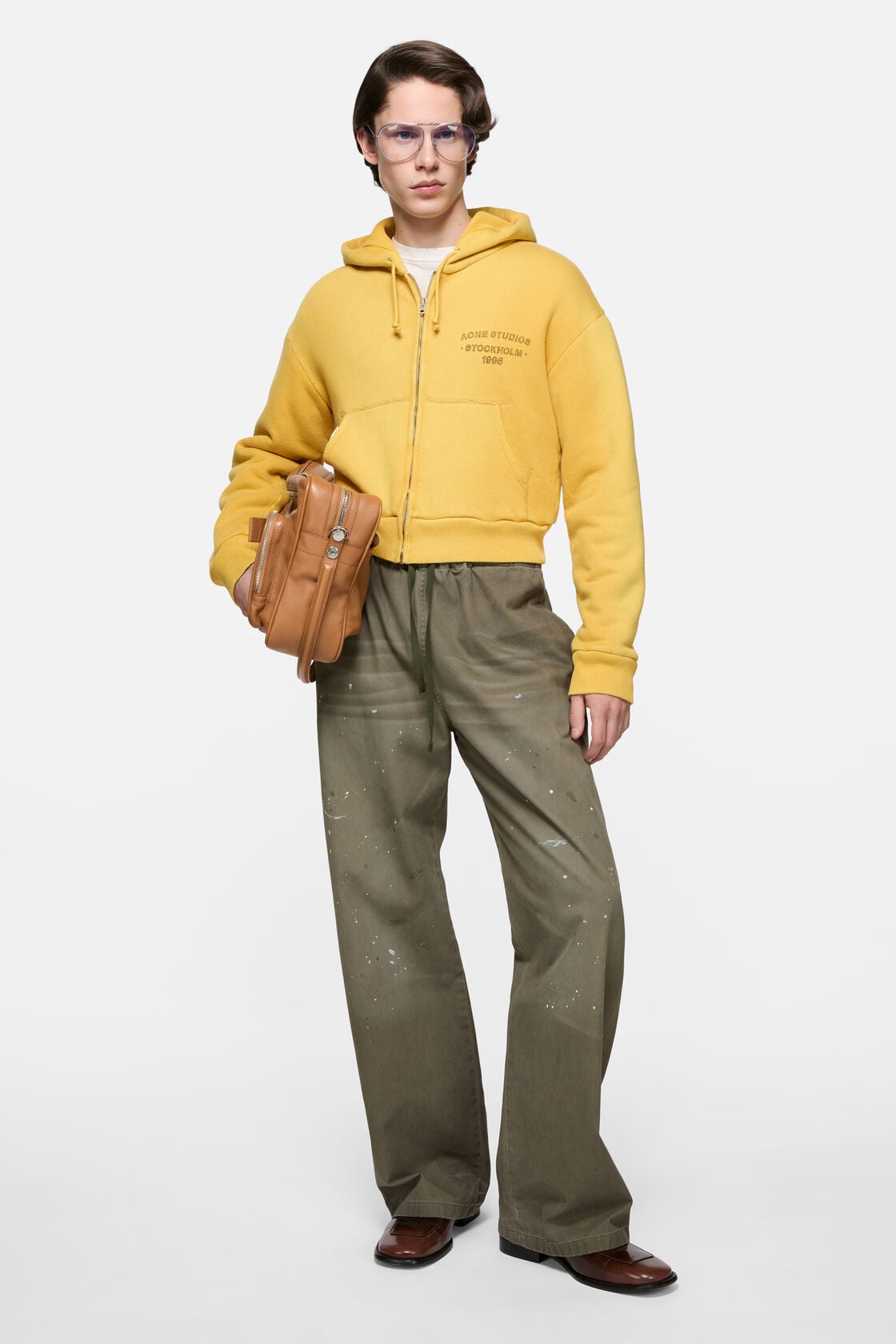
Acne Studios arrived in Stockholm in 1996 as a denim project and spent the next decade quietly building a wardrobe language that didn't require a backstory. The pieces don't announce themselves. They sit in the closet next to Lemaire and The Row without friction, which is harder to engineer than it looks. What reads as 'just a good grey sweater' is usually the result of a very particular sleeve pitch, a shoulder that doesn't creep forward, and a knit gauge calibrated to avoid the droop that kills most merino by season two.
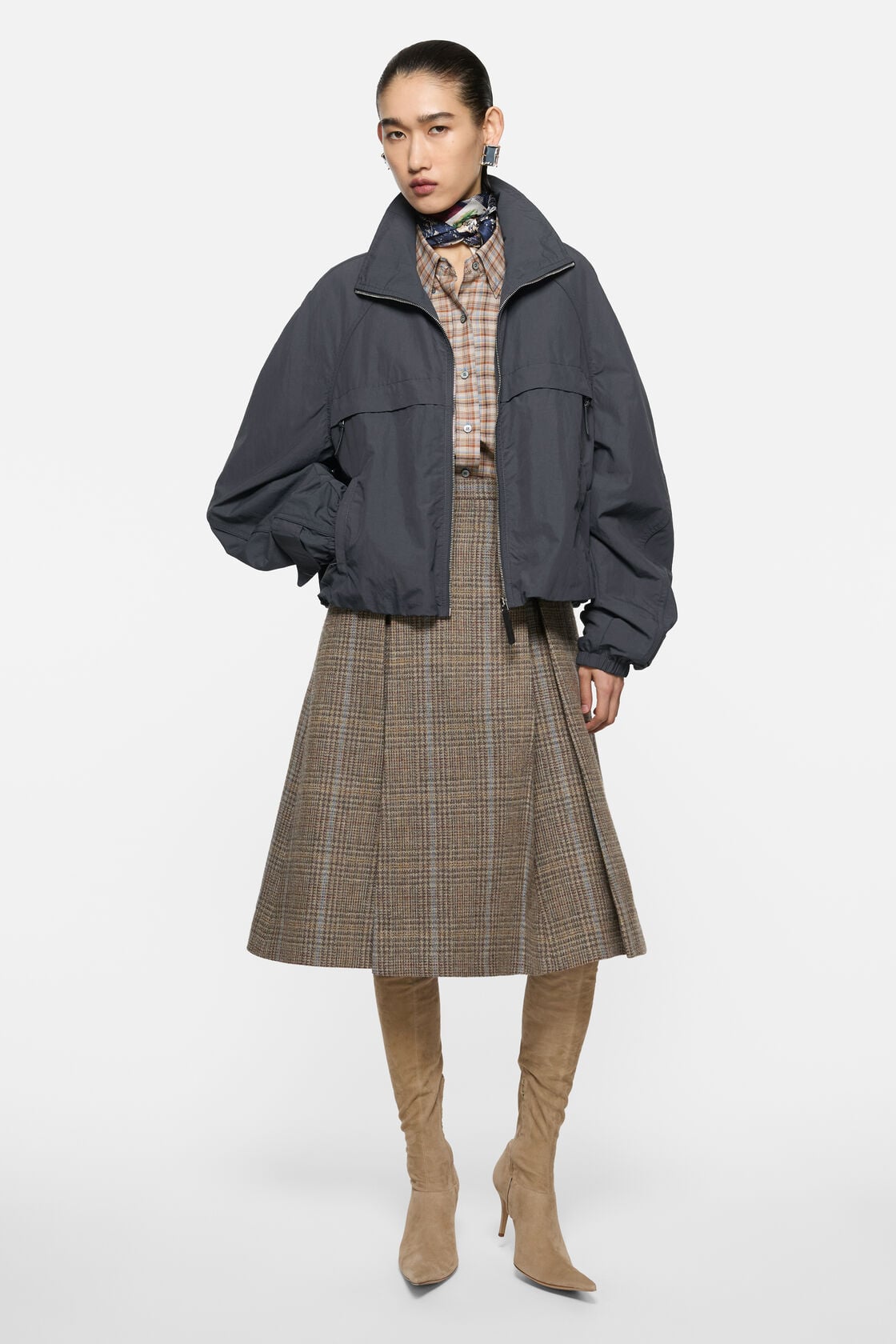
The house codes lightly. There's the Face motif, which younger buyers lean into and older ones avoid. There's a preference for slightly oversaline proportions—jeans that sit lower than you expect, coats that run long through the body. The tailoring has a Scandinavian bluntness: clean, structured, never fussy. Leather goods skew minimal but aren't trying to be Jil Sander. The shoes have become a quiet anchor in the lineup, especially the loafers and the lug-sole Tractor boots that now show up in every second airport departure gate.
If you're entering the catalogue for the first time, the smart move is to start with something that carries across seasons and doesn't require the rest of your wardrobe to match its energy. Below are three entry points, scaled by budget, that hold their ground.
Under €300: The Canada Scarf
Acne's oversized wool scarf has been in continuous production since 2010, which in contemporary fashion terms makes it a grandfather clock. It measures 200 by 70 centimetres, rendered in a fine Italian wool that doesn't pill the way most stadium scarves do. The fringe is raw-cut, the logo embroidered in tonal thread at one end. It works because it's large enough to actually insulate and plain enough to layer over tailoring without looking like you're performing casual.
The scarf comes in around twenty seasonal colours, but the safest long-term bet is one of the greys or the heavy navy that reads almost charcoal in low light. Avoid the bright primaries unless you're certain that's the direction your wardrobe is heading. You'll see this piece styled a dozen ways on the brand's lookbooks—wrapped twice, knotted at the chest, thrown asymmetrically—but in practice most owners just loop it once and let it hang. That's enough.
Retail hovers near €230, and it doesn't discount often. If you're buying secondhand, check the fringe for matting and the body for moth activity, especially if the previous owner stored it poorly. This is wool that wants a cedar closet or at least a sealed garment bag between April and October.
€500–€700: The Peele Loafer
Acne's Peele loafer appeared in 2018 and has since become the house's most reliable footwear silhouette. It's a penny loafer stripped of ornament, built on a slightly elongated last with a low vamp and a stacked leather sole. The upper is smooth calf, usually in black or a dark chocolate brown, with minimal stitching and no hardware beyond the keeper strap.
What makes the Peele work is the pitch of the toe and the way the collar sits against the ankle. It's narrow enough to look deliberate under cropped trousers but doesn't pinch if you're between sizes. The sole is leather, not rubber, which means it will require a topy or resole after six months of regular pavement wear. That's not a flaw—it's a trade-off for the clean line the house wanted.
Sizing runs true to European standards, but if you're usually between sizes in Italian footwear, go up. The calf doesn't stretch much, and the loafer should slip on without force. You'll find these at full price in Acne's own boutiques and at multi-brand retailers like SSENSE and Matches. Discount appears sporadically during end-of-season sales, usually 30 percent off, but stock moves quickly in core colours.
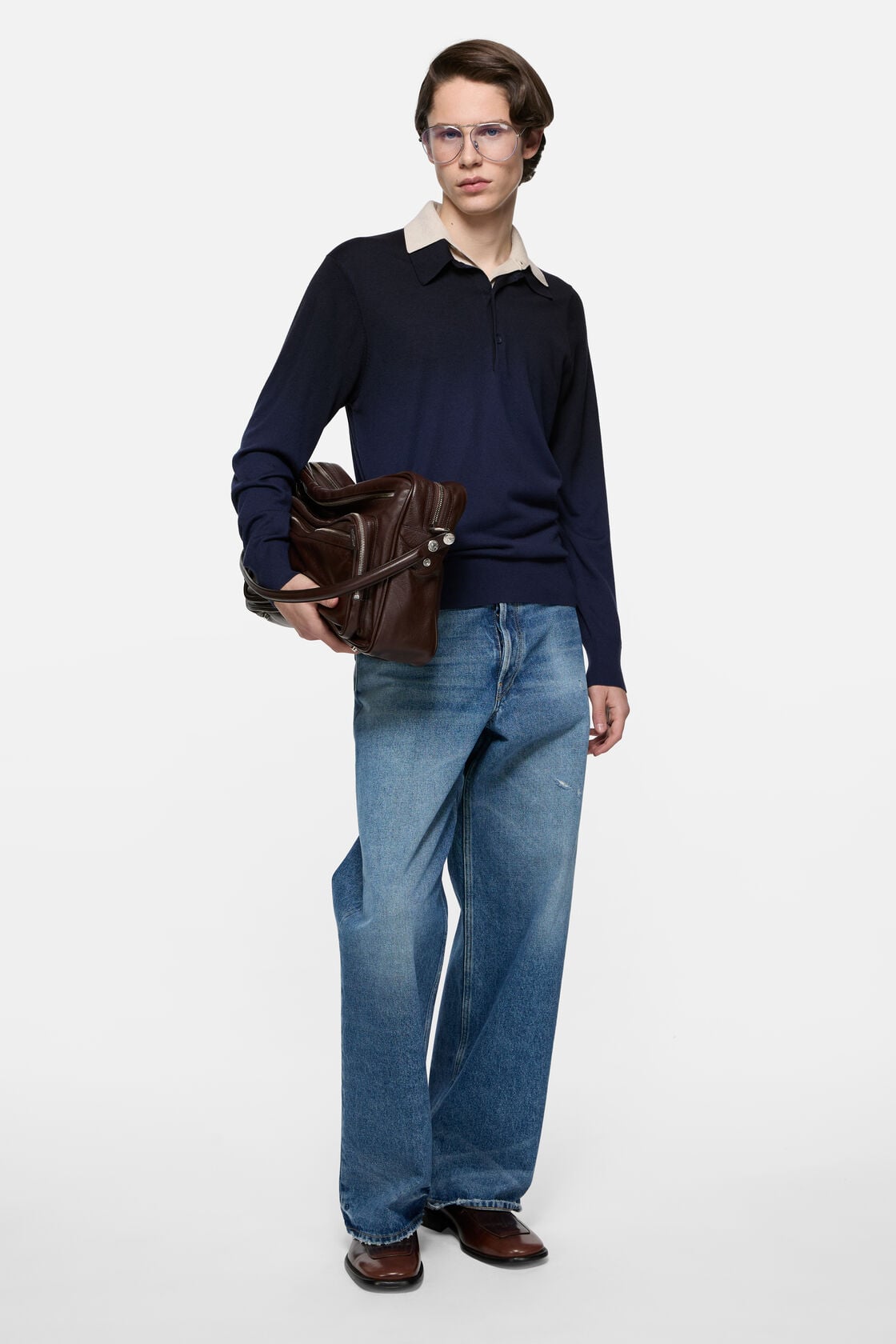
The Peele works across contexts in a way most loafers don't. It holds up under a grey flannel suit, anchors a wide-leg denim situation, and doesn't look out of place with technical outerwear. That versatility is what justifies the €600 entry point.
€1,200–€1,500: The Olizia Coat
If you're committing to Acne at the four-figure threshold, the move is outerwear. The Olizia is a double-breasted wool coat cut long through the body with a straight silhouette and a notched lapel. It's made in a heavy melton wool, usually Italian, with a viscose lining and oversized horn buttons. The fit is deliberately boxy—shoulders extend slightly past the natural line, sleeves run long, and the hem falls below the knee on most frames.
This is the coat you see on every third person leaving the Marais in January. It's become a uniform piece, which is either a selling point or a deterrent depending on how you feel about visible consensus. What it does well is provide structure without requiring tailoring. You can wear it open over knitwear or belted at the waist with the house's leather tie. The length makes it incompatible with cropped trousers, so plan accordingly.
The Olizia runs about €1,400 at retail and appears in seasonal colourways—camel, navy, charcoal, occasionally a deep forest green. The camel is the most referenced, but it's also the hardest to keep clean if you're commuting daily. The charcoal is more forgiving and pairs more easily with the rest of the Acne palette.
Secondhand market is active for this piece, especially in the core colours. Expect to find examples in good condition for around €800 to €1,000, though sizing can be inconsistent across production years. Check the lining for pulls and the buttonholes for fraying—those are the first points of failure.
A Note on Longevity
Acne's pieces don't require special treatment, but they don't forgive neglect either. Knitwear should be stored folded, not hung. Leather goods benefit from an annual conditioning with a neutral cream—nothing heavy, just enough to keep the grain supple. Outerwear in wool or wool-blend should be brushed after wear and dry-cleaned sparingly, once per season at most.
The stitching is generally solid, but hardware on bags and the eyelets on footwear can loosen with repetitive stress. A cobbler can reset a grommet for under €20. The brand offers repairs through its boutiques, though turnaround can stretch to eight weeks depending on the season. Most owners find a trusted local atelier and skip the official channel.