Investing in Givenchy: a starter
Givenchy sits at an odd intersection—storied enough to carry weight, commercial enough to be legible, but not so ubiquitous that wearing it feels like consensus. The house has moved through eras: Hubert's haute restraint, McQueen's gothic theatre, Tisci's dark romanticism, Clare Waight Keller's pared classicism, Matthew Williams's technical edge. What holds across those shifts is a certain seriousness of construction. The tailoring doesn't apologise. The leather goods don't try to be your friend.
If you're considering your first piece from the house, the question isn't what's iconic—it's what works in your actual rotation. Givenchy does a few things exceptionally well: sharp-shouldered outerwear, bags that look expensive without announcing it, shoes that read as considered rather than flashy. The trick is entering at the right altitude. A logo sweatshirt might be an easy in, but it won't teach you what the house does best. You want the piece that makes you understand why people return.
What follows are three entry points, scaled to different budgets but unified by a principle: buy the thing that reflects Givenchy's strength, not its merchandising.
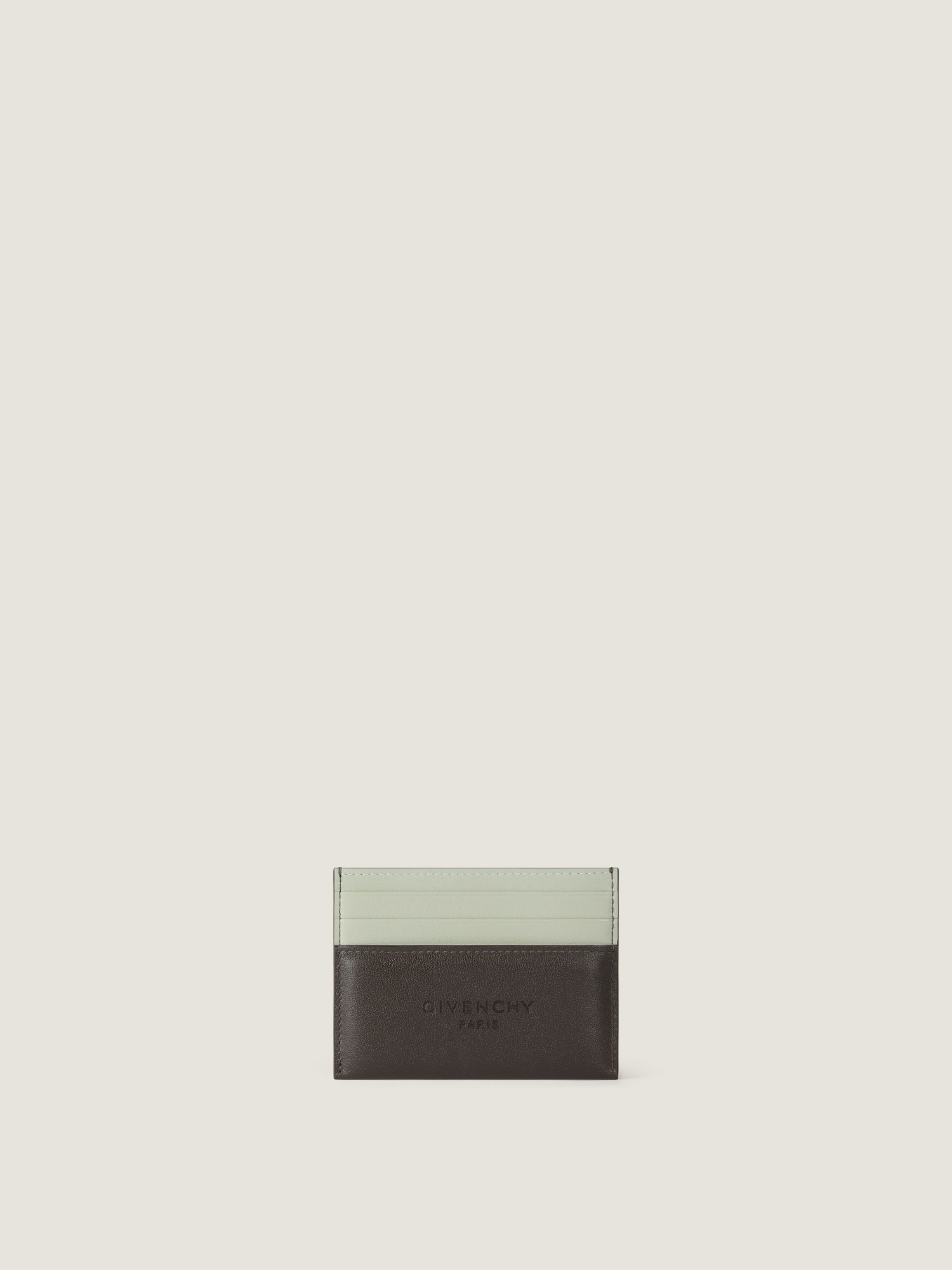
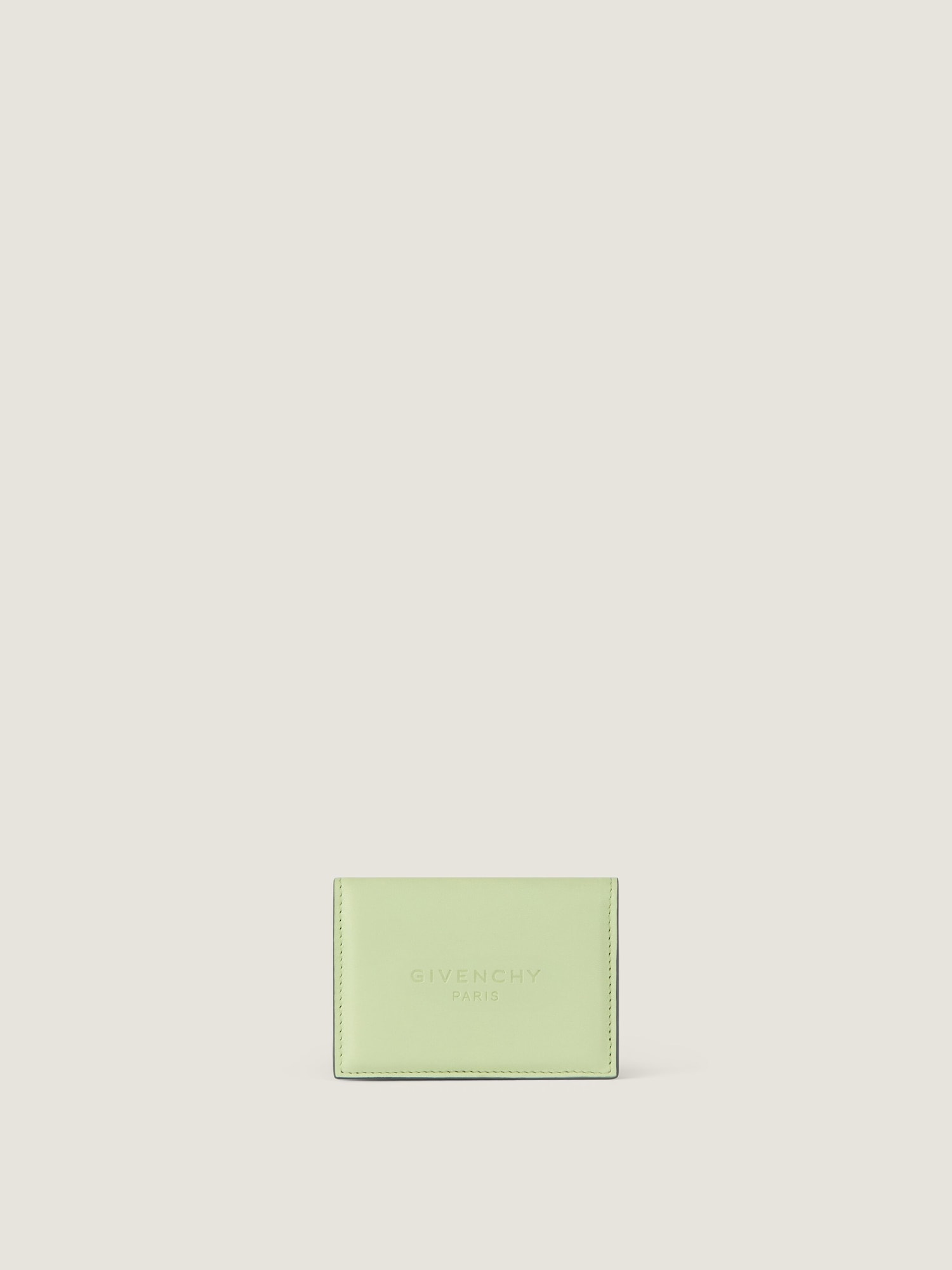
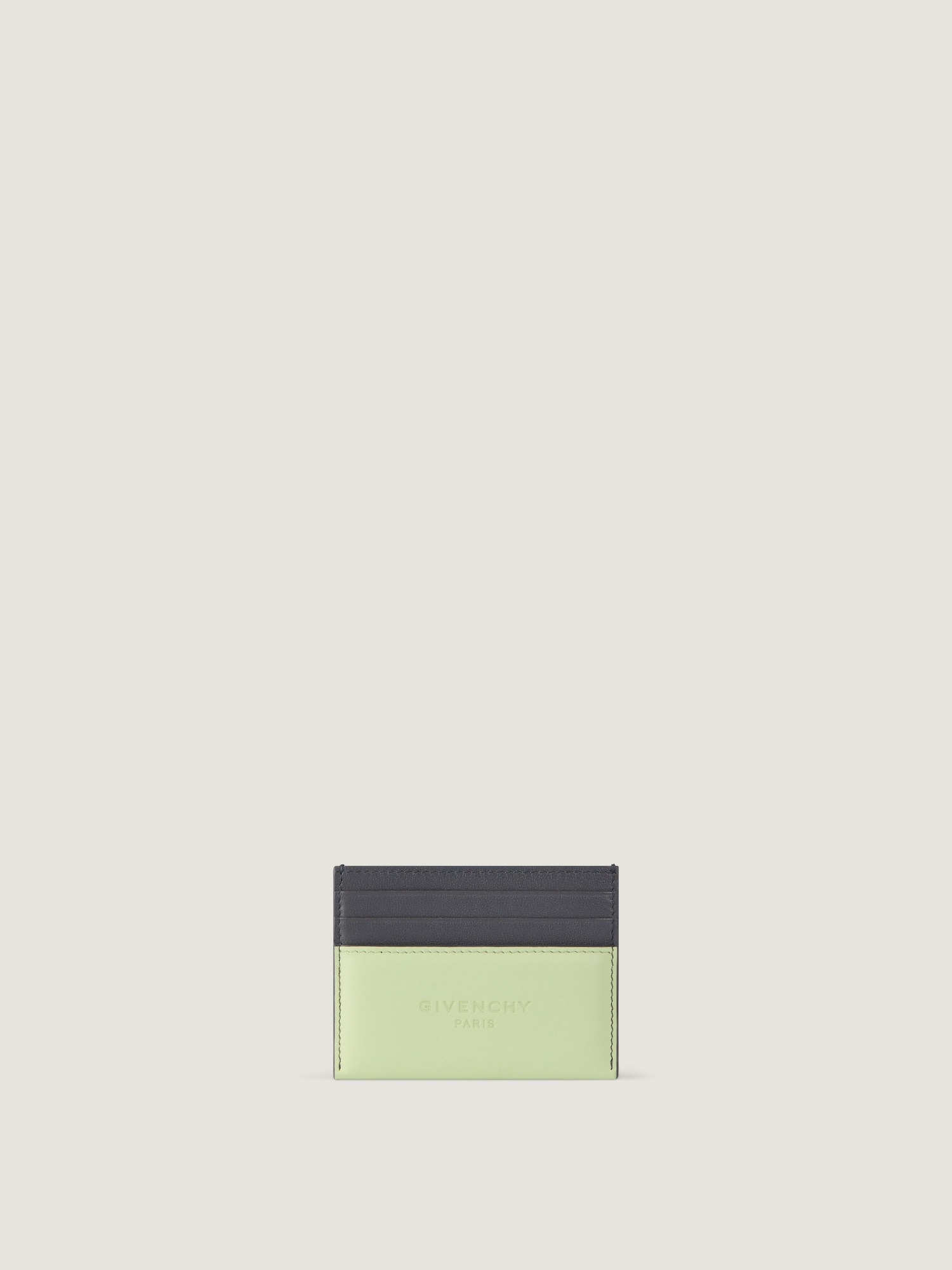
Under $500: The 4G-embossed card holder
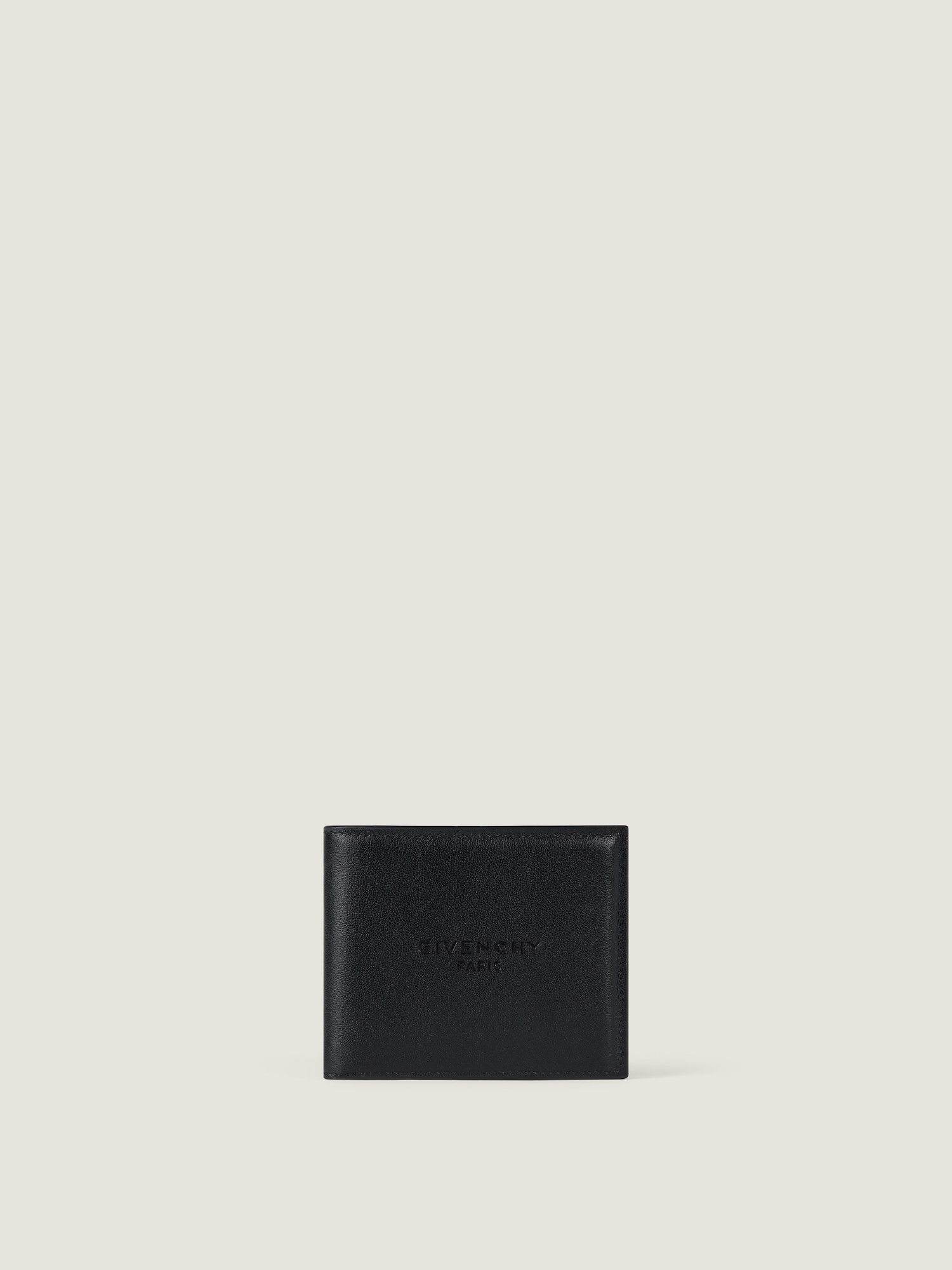
Start here if you want to live with the house's material language before committing to a larger piece. Givenchy's small leather goods—particularly the card holders and zip-around coin purses—are finished with the same attention as the bags, just at a fraction of the footprint. The 4G emblem, introduced under Tisci and refined since, sits low on the leather. It's there, but it doesn't lead.
The card holder comes in box calf and grained leather; go for the grain if you're carrying it loose in a pocket, box calf if it lives in a larger bag. Both develop a patina that reads as use rather than wear. The stitching is tight, the edges are bevelled and sealed, and the interior slots don't stretch out after a season. You're looking at around $320 to $390 depending on finish and market.
This is a test piece. If you find yourself reaching for it instead of the card holder you've used for three years, you've learned something about how Givenchy's design sits in your hand. If it feels inert, you've learned that too—and you're out less than the cost of a return flight.
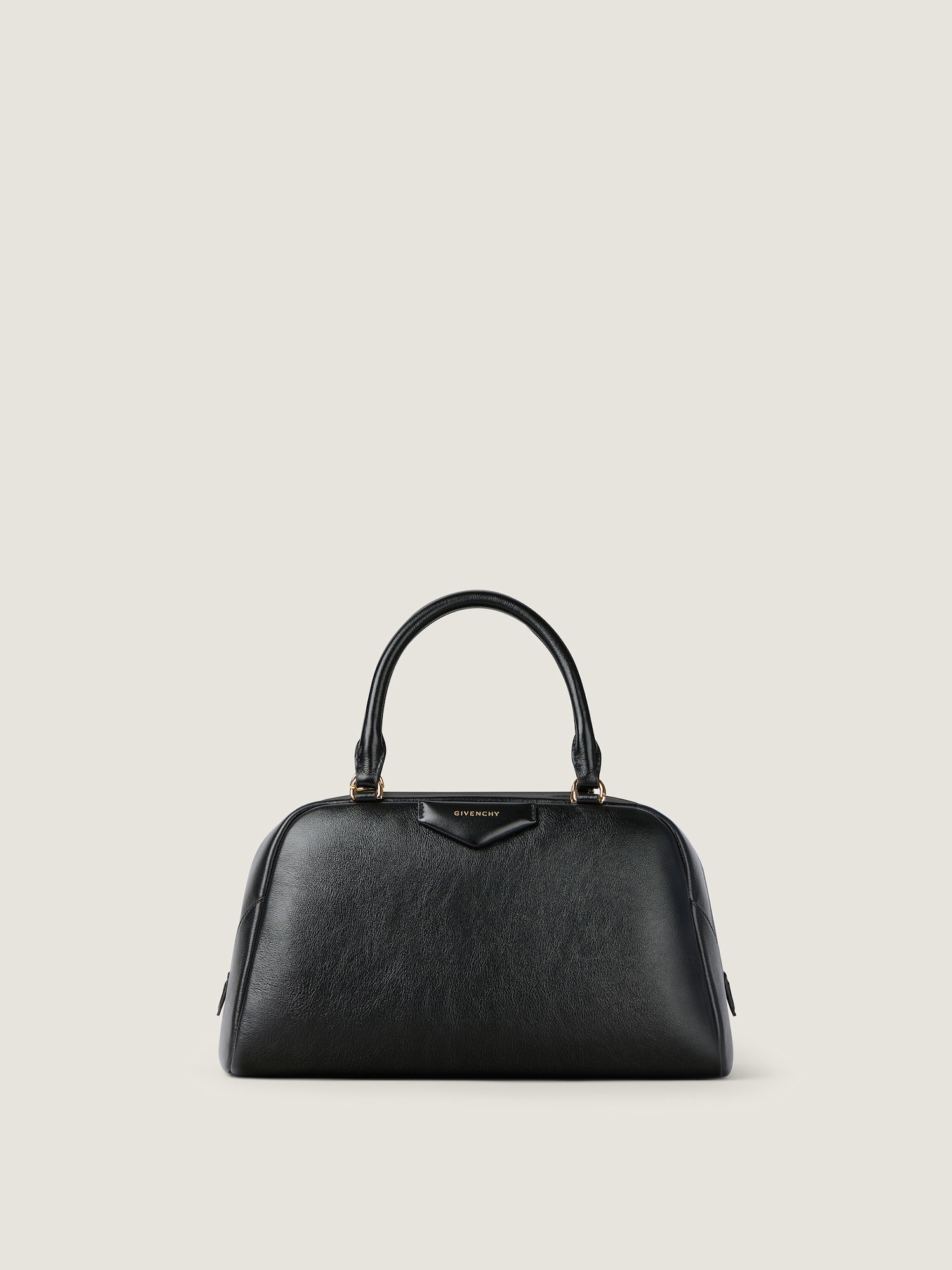
$1,200–$1,800: The Antigona Soft Mini in smooth leather
The Antigona is Givenchy's workhorse, and the Soft Mini is its most wearable iteration. Introduced in 2010 under Tisci, the Antigona has been reissued, resized, and reinterpreted more times than most bags survive, but the core architecture hasn't wavered: a structured trapezoid base, a clean top handle, a detachable shoulder strap, minimal hardware. The Soft Mini takes that frame and relaxes it—slightly slouchier body, same sharp lines.
At roughly 25 centimetres across, it's large enough for a wallet, phone, keys, a paperback, and a small zip pouch. It won't hold a laptop, but it will hold a day. The smooth leather version, as opposed to the grained or embossed variants, shows the house's finishing most clearly. The handle sits just right in the crook of your arm; the strap, when worn crossbody, doesn't pull the bag's shape out of true.
You'll find this in the $1,400 to $1,700 range depending on seasonal colour and retailer. Black is the obvious choice and the correct one if this is your only Givenchy bag. But the maison's archival burgundy and deep navy both photograph as near-black and wear as something more specific.
This is the piece that earns its place. It works with a wool coat, it works with denim and a t-shirt, it works in a meeting and it works on a plane. If you're going to spend in this band, spend on something you'll carry three times a week, not something you'll save for occasions that never quite arrive.
$2,500–$3,500: The double-breasted wool coat with structured shoulders
Givenchy's tailoring is where the house's couture foundation shows most clearly. The coats—particularly the double-breasted wool styles that appear each autumn—are cut with a precision that doesn't soften. The shoulder is built up but not exaggerated, the lapel sits flat against the chest, the hem hits just above the knee. This is not a coat that moves with you. You move within it.
The fabric is usually a tightly woven wool, sometimes with a cashmere percentage, always with enough weight to hold the silhouette. The buttons are horn or resin finished to look like horn, set close enough that the closure feels deliberate. The lining is viscose or cupro, and it's finished flat—no puckering at the sleeve head, no pulling at the back vent.
You're looking at $2,800 to $3,400 depending on the season's specific cut and whether you're buying at full price or waiting for the bi-annual sales. Size down if you're between—these are meant to skim, not envelop. And if the sleeves need shortening, take it to a tailor who works with structured garments. The shoulder can't be altered without compromising the line.
This is the piece that announces you've made a choice about how you want to be read in a room. It's not neutral. It's not soft. It's the coat you wear when you want your presence to precede your words.
On longevity
Givenchy's leather goods hold up if you're not precious about them. A light patina is the point—don't baby the bags. The hardware, mostly palladium or brushed gold, resists scratching better than polished finishes. For the coats, dry-clean once a season unless something spills. Store on a shaped hanger; the shoulder structure will collapse on a wire one. Rotate your pieces. Nothing lasts forever, but these will last as long as you need them to.