Jacquemus has always understood the gift better than most houses twice its age
Jacquemus has always understood the gift better than most houses twice its age. Not the gesture — the object itself. Something small enough to arrive in a box you can carry under one arm, specific enough that the person receiving it knows you didn't delegate the choice to an assistant, and designed with enough confidence that it doesn't apologise for being what it is. A bag shaped like a half-moon. A hat the width of a dinner plate. A belt that doubles as a sculptural joke about proportion.
The danger zone sits around the €300 mark, where accessories start performing taste rather than embodying it. Jacquemus skirts this more successfully than most because Simon Porte Jacquemus has always worked within a narrow material vocabulary — vegetable-tanned leather, canvas, raffia, brushed hardware — and because the house doesn't do logo maximalism. The pieces that work as gifts are the ones that feel like they could only come from this maison, but don't announce it from across a room.
What follows are five pieces under $500 that justify the box they arrive in. None require explanation. None apologise. All improve with a year of handling.
Le Bambino Long
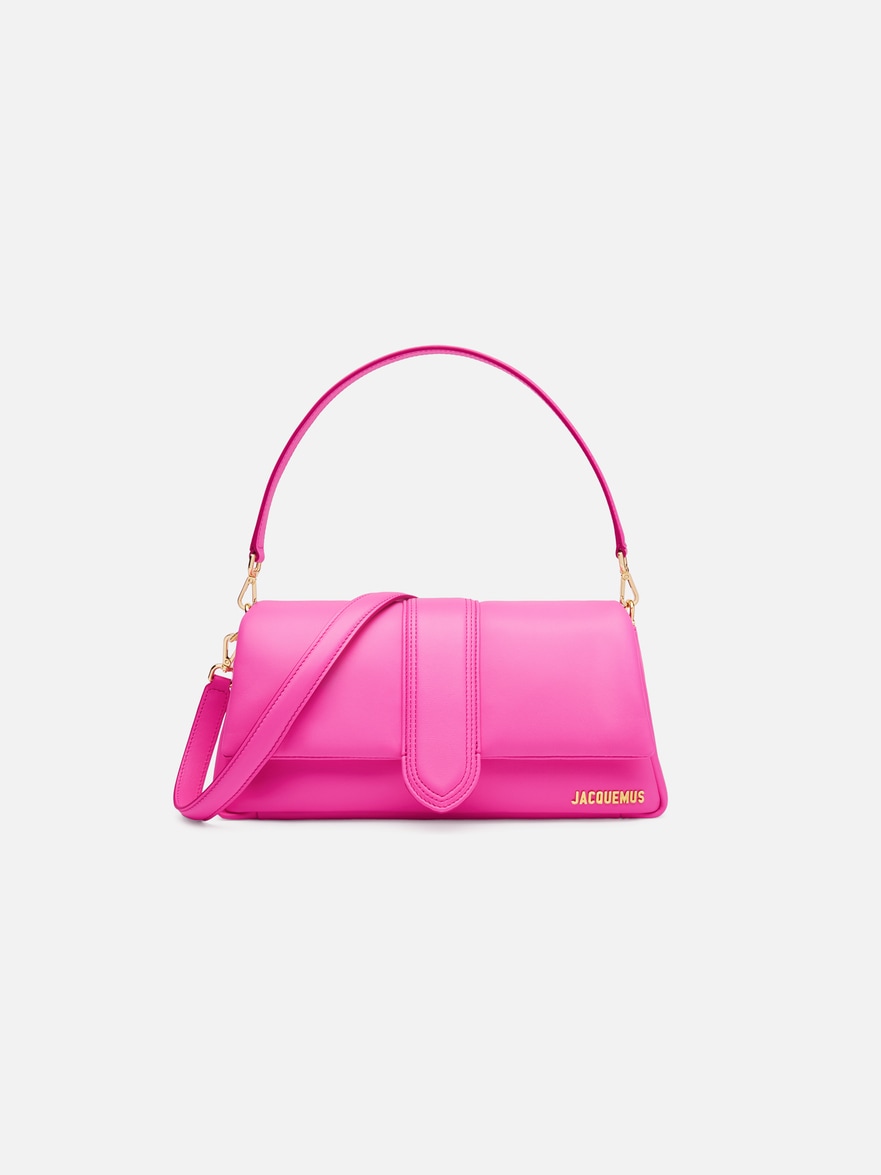
The Bambino has been in production long enough now that it's moved past trend object and into the territory of house signature. The Long variant — 7.5 inches across, just wide enough for a cardholder, keys, and a phone if you don't carry the Max — remains the most versatile expression of the shape. It works as an evening bag. It works clipped to a belt loop on a Saturday. It works because the proportions are considered enough that the bag doesn't collapse into novelty when you're not dressed for the occasion it was designed around.
The leather is smooth-grain calf, vegetable-tanned, which means it will darken and scuff in ways that read as patina rather than damage. The strap is adjustable, thin enough to sit flat under a jacket, and the hardware is brushed gold or silver depending on the colourway. Jacquemus rotates seasonal colours — this year that includes a deep olive and a washed terracotta — but the neutral shades (black, cream, tan) restock consistently.
The bag closes with a magnetic flap. No fumbling with clasps in dim lighting. No hardware that will snag on knitwear. It's the kind of engineering decision that only becomes apparent after six months of use, which is exactly when a gift stops being a gift and starts being the thing someone reaches for without thinking.
$450. Available in black, cream, tan, olive, terracotta.
Le Bob Gadjo
Bucket hats have spent the last three years oscillating between streetwear accessory and countryside pragmatism, and Jacquemus has threaded that line better than most by simply making a good hat. The Gadjo is cotton canvas, unlined, with a brim wide enough to provide actual function in sunlight but narrow enough that it doesn't tip into costume. The crown sits low. The fit is structured without being stiff.
What makes this work as a gift is that it doesn't require the recipient to be the kind of person who wears hats. It requires them to be the kind of person who occasionally needs to cover their head and would prefer not to look like they're cosplaying a French sailor or a Los Angeles teenager. The canvas softens after a handful of wears. The brim begins to hold the shape you give it. It becomes the hat you pack for a weekend because it compresses into a tote and doesn't protest.
Jacquemus embroiders the logo on the back in tonal thread, which means it's visible if you know to look for it and invisible if you don't. Colours rotate seasonally, but the khaki and navy restock reliably. Avoid the bright colourways unless you know the recipient's wardrobe intimately. A lime-green bucket hat is a specific kind of commitment.
$95. Comes in khaki, navy, black, seasonal brights.
La Ceinture Carre
Belts are difficult gifts because they require you to know someone's waist measurement, which is both intimate and logistically awkward. Jacquemus solves this by making a belt that doesn't pretend to be anything other than an accessory. The Carre is a thin leather strap — 1.5 centimetres wide — with a square brass buckle that sits flat and weighs almost nothing. It's designed to thread through loops or sit on the hips of a mid-rise trouser, and because the strap is adjustable along its full length, sizing becomes a non-issue.
The buckle is the piece. It's geometric, minimal, and just oversized enough that it registers as intentional without becoming the only thing you notice about an outfit. The leather is the same smooth-grain calf as the Bambino, which means it will age the same way: darker, softer, more supple. Jacquemus offers this in black, tan, and a rotating selection of seasonal tones. The black is the safest play. The tan works if the recipient wears a lot of cream and ivory.
This is the kind of gift that gets worn three times a week and forgotten about in the best possible way. It doesn't demand attention. It just does the work.
$250. Available in black, tan, seasonal colours.
Le Porte-Cartes Bambino
If the bag feels like too much or the recipient already carries something they're loyal to, the cardholder is the move. Jacquemus makes several, but the Bambino cardholder is the one that makes sense as a gift because it inherits the design language of the bag without requiring you to commit to the full silhouette. It's curved to match the Bambino's shape, holds four cards comfortably, and includes a central slip pocket for folded notes.
The leather is the same vegetable-tanned calf. The hardware is the same brushed metal. The logo is embossed on the interior, which means it's there for the person using it and invisible to everyone else. It's small enough to slip into a jacket pocket, substantial enough that it doesn't feel like an apology for not buying the bag.
Cardholders are low-risk gifts in the sense that they don't require the recipient to overhaul how they carry their things. They either slot into an existing system or they replace something that was already wearing thin. Jacquemus prices this at a point where it feels considered without feeling extravagant, which is the narrow band where gifts actually work.
$195. Comes in black, cream, tan, seasonal colours.
Le Chapeau Bomba
The Bomba is Jacquemus at its most confident: a wide-brimmed raffia hat with a crown so shallow it barely qualifies as structure. It's the hat that shows up in every campaign image shot in Provence or along the Côte d'Azur, and it works because it's designed for a specific kind of occasion — lunch outdoors, a day in the sun, the hour before you need to look like you've made an effort — and it doesn't pretend to be anything else.
The brim spans fourteen inches, which is wide enough to provide real shade and dramatic enough that wearing it becomes a minor event. The raffia is woven tight, finished with a tonal grosgrain ribbon, and light enough that it doesn't feel like you're balancing weight on your head. It folds flat for travel, though the brim will crease if you're not careful.
This is a gift for someone who already owns the linen trousers and the espadrilles, or for someone who's about to. It doesn't work as an introduction to the house. It works as confirmation that you understand what they're building toward.
$290. Natural raffia, grosgrain band. One size.
On Longevity
Jacquemus pieces don't require special care, but they reward it. The leather goods benefit from a light conditioning every six months — a neutral cream, worked in with a soft cloth, then left to absorb overnight. The canvas pieces can be spot-cleaned with a damp rag and mild soap; don't machine wash them. The raffia hat should be stored flat or on a wide hook, never compressed under other items.
Most of these pieces will outlast the trends that birthed them, which is the point. A good gift doesn't ask the recipient to keep up. It just sits there, getting better, waiting to be used.