## The Jacquemus Bags Worth Knowing
The Jacquemus Bags Worth Knowing
Jacquemus has spent the last decade building a bag vocabulary that feels specific to the house without leaning on logomania or obvious hardware. Simon Porte Jacquemus understands proportion in a way most designers talk around — his bags are either dramatically small or generously structured, never the tepid middle ground that sells well in duty-free. The leather is typically smooth calf or grained cowhide, occasionally raffia for summer capsules, and the construction favours clean lines over decorative stitching. What makes a Jacquemus bag legible as such isn't a monogram repeat or a signature closure, but rather the way the handle sits against the body or how the silhouette photographs from ten metres away. The house's bags have become shorthand for a certain kind of French dressing — not the Hermès kind, not the Chanel kind, but the third option that didn't exist before 2015. They work because they're considered without being precious, and because Jacquemus has the discipline to let a good shape run for multiple seasons instead of chasing newness every six months. Below, five pieces that justify the attention.
Le Chiquito
The bag that made the house legible to anyone not already reading Ssense editorials. Le Chiquito launched in 2017 as a micro bag so small it became a talking point before it became a product, and Jacquemus understood that the conversation was the product. The dimensions — roughly ten centimetres across — mean you're carrying a card case with a top handle, nothing more. The leather is smooth calf, structured enough to hold its shape when empty, which matters because an empty bag is what you'll be photographed holding. It comes in seasonal colours that shift twice a year, but the core offering remains black, cream, and a rotating bright accent. The top handle is a single piece of leather, clean and slightly stiff, engineered to sit upright when you set the bag down. Jacquemus has since scaled the silhouette up into Le Grand Chiquito and Le Petit Chiquito, both of which miss the point — the original works because it's absurd. You don't buy this to carry things. You buy it because it signals you're in on a joke that stopped being a joke three years ago and became a wardrobe piece. It retails around $570 and holds exactly what you think it does.
Le Bambino
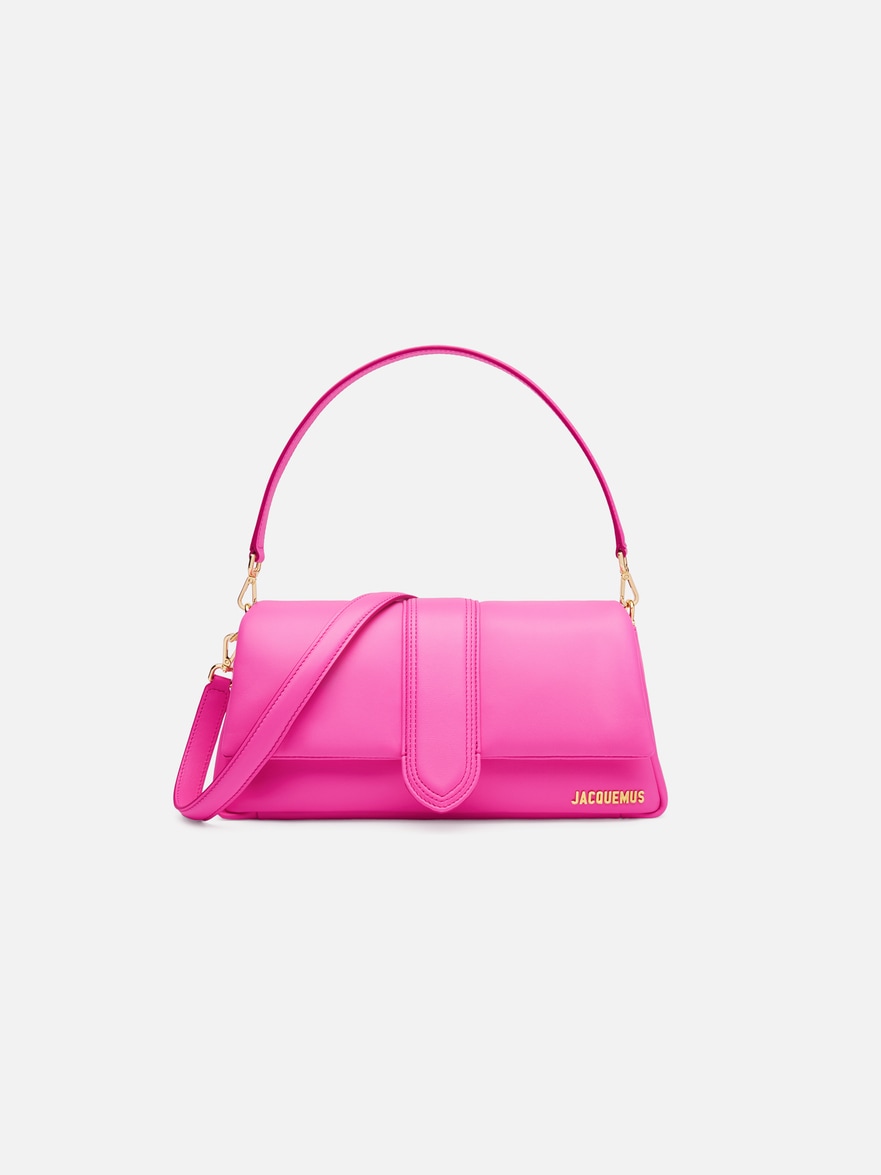
Le Bambino is what happens when the house takes the Chiquito logic and makes it almost useful. Launched shortly after its smaller sibling, this version measures roughly eighteen centimetres across, which gives you room for a phone, a card holder, a lip balm, and the kind of small wallet that doesn't fold. The silhouette is boxy and structured, with a short top handle and an optional crossbody strap that most people remove immediately because it disrupts the proportions. The leather is the same smooth calf as the Chiquito, occasionally embossed croc for seasonal releases, and the construction is clean — no visible stitching on the front panel, magnetic closure tucked inside the flap. What makes this bag work is the way it scales. It's small enough to feel special but large enough to function as an actual day bag if you've edited your carry down to the essentials. Jacquemus has kept this shape in production longer than most of its other styles, which suggests it sells steadily rather than in bursts. The handle is slightly longer than the Chiquito's, which means you can carry it in the crook of your elbow if you're the kind of person who does that. Retail sits around $650, and the resale market is stable, which tells you it's neither oversaturated nor forgotten.
Le Grand Bambino
The full-size version, introduced because the market asked for it and because Jacquemus realised the architecture could hold at a larger scale. Le Grand Bambino measures roughly thirty centimetres across, which puts it in tote territory without the tote associations. The shape is still boxy, still structured, but the proportions shift — the handle is longer, the body deeper, and the bag can accommodate a small laptop, a paperback, a cosmetics case, and the other things you actually carry when you're not performing minimalism for an audience. The leather is typically matte or lightly grained calf, and the hardware remains minimal — just the magnetic closure and the metal feet on the base. This is the version that works if you're buying Jacquemus for function rather than signal, though it still photographs well enough to justify itself on those terms too. The house produces this in fewer colourways than the smaller versions, which suggests it's aimed at a slightly older customer who's already done the micro bag phase and wants something that lasts past a season. Retail is around $890, and the bag holds its structure even when full, which isn't true of most soft-body totes at this price point.
Le Bisou
Jacquemus does heart-shaped bags the way other houses do monogram canvas — it's a signature move that could tip into novelty but doesn't, mostly because the execution is clean and the leather is good. Le Bisou is a structured heart-shaped crossbody with a thin strap and a single-compartment interior. The shape is symmetrical, the edges are bevelled, and the closure is a small magnetic flap at the top curve. It's made from smooth calf, occasionally patent for evening versions, and the strap is adjustable but not removable. The bag works because it's sculptural enough to read as intentional rather than cute, and because Jacquemus has the restraint not to add hardware or logos that would push it over the line. You see this bag on women who've already established their taste and can afford a piece that doesn't do much besides look like itself. It holds a phone, cards, keys, and not much else, which makes it a going-out bag rather than a daily carry. The house produces it in limited runs, usually tied to specific collections, and the resale value holds because supply stays controlled. Retail is around $730, and the shape has been consistent since its introduction, which means vintage and current-season versions are nearly identical.
Le Sac Rond
Jacquemus's answer to the basket bag, except it's made from woven leather rather than raffia and it works year-round instead of just May through August. Le Sac Rond is a circular tote with two short handles and an open top, constructed from strips of vacchetta leather woven in a tight intrecciato pattern. The shape is structured at the base and softens slightly toward the rim, and the handles are thick enough to carry comfortably even when the bag is full. The leather is undyed or lightly finished, which means it patinas quickly — six months of use will darken the handles and the base, and a year in you'll have a bag that looks distinctly yours. The interior is unlined, just the reverse of the woven leather, and there's no closure, which makes this a warm-weather or low-stakes carry. Jacquemus introduced this style as part of a summer collection and has kept it in rotation because it photographs well and because the construction justifies the price in a way that smooth leather sometimes doesn't. The weave is tight enough that small items won't slip through, but loose enough that the bag has give when you load it with something angular. Retail is around $810, and the piece works best if you're prepared to let it age rather than trying to keep it pristine.
Keeping Them Honest
Jacquemus bags are smooth calf or woven leather, which means they'll show wear faster than grained or treated finishes. The house doesn't offer much in the way of aftercare guidance, so you're on your own with conditioning and storage. Smooth calf should be wiped down with a dry cloth after each wear and conditioned every few months with a neutral leather cream — not oil, which will darken the finish unevenly. Woven styles like Le Sac Rond will patina whether you want them to or not, so commit to that process early or don't buy the bag. Store them stuffed with tissue in a dust bag, away from direct light, and keep them off the floor if you have pets. The hardware is minimal, which means less to tarnish, but the magnetic closures can weaken over time if you're rough with them. Jacquemus doesn't operate its own repair service, so you'll need to find a trusted leather specialist if stitching comes loose or a handle cracks. These aren't heirloom pieces, but they'll last five years of regular use if you treat them like leather rather than accessories.