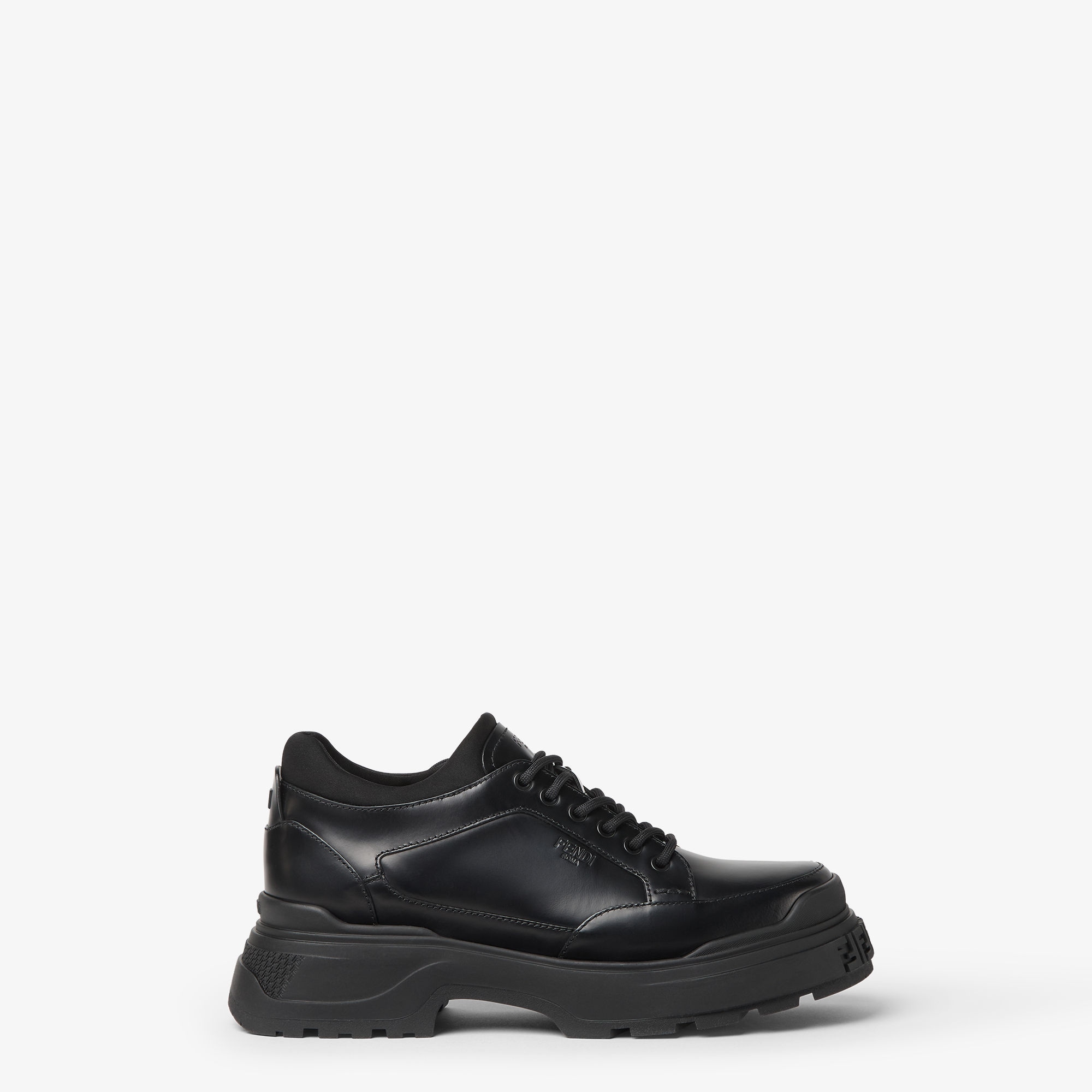
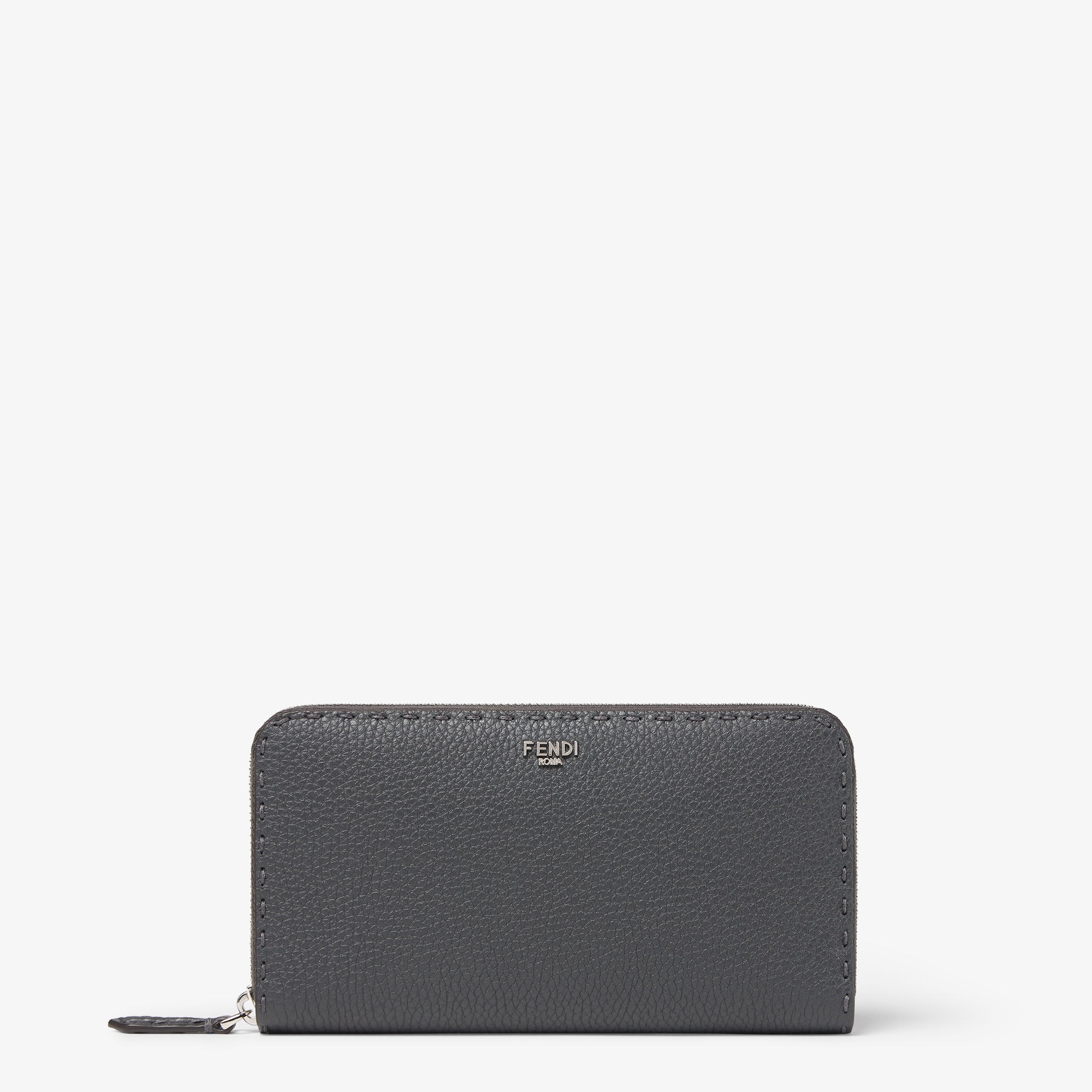
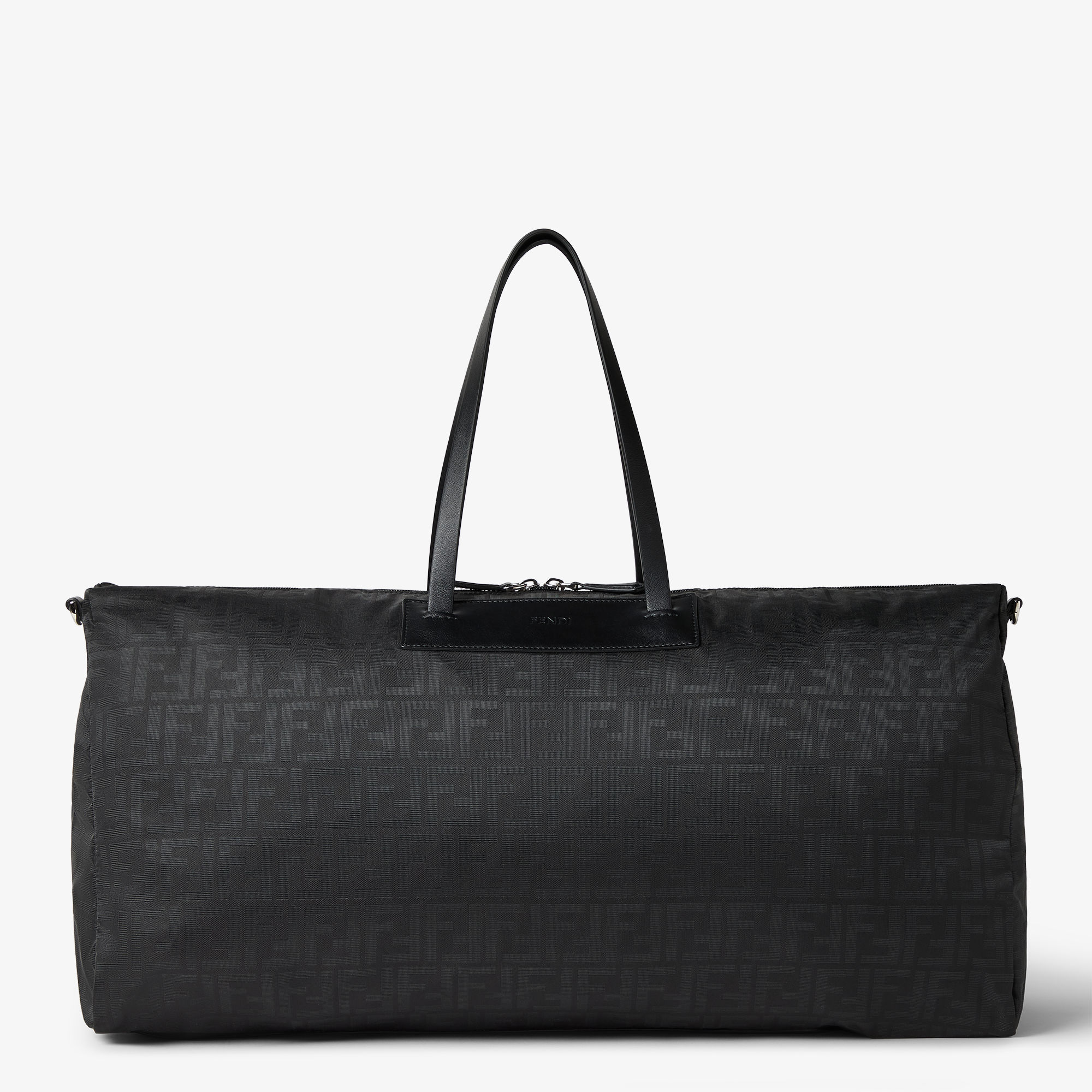
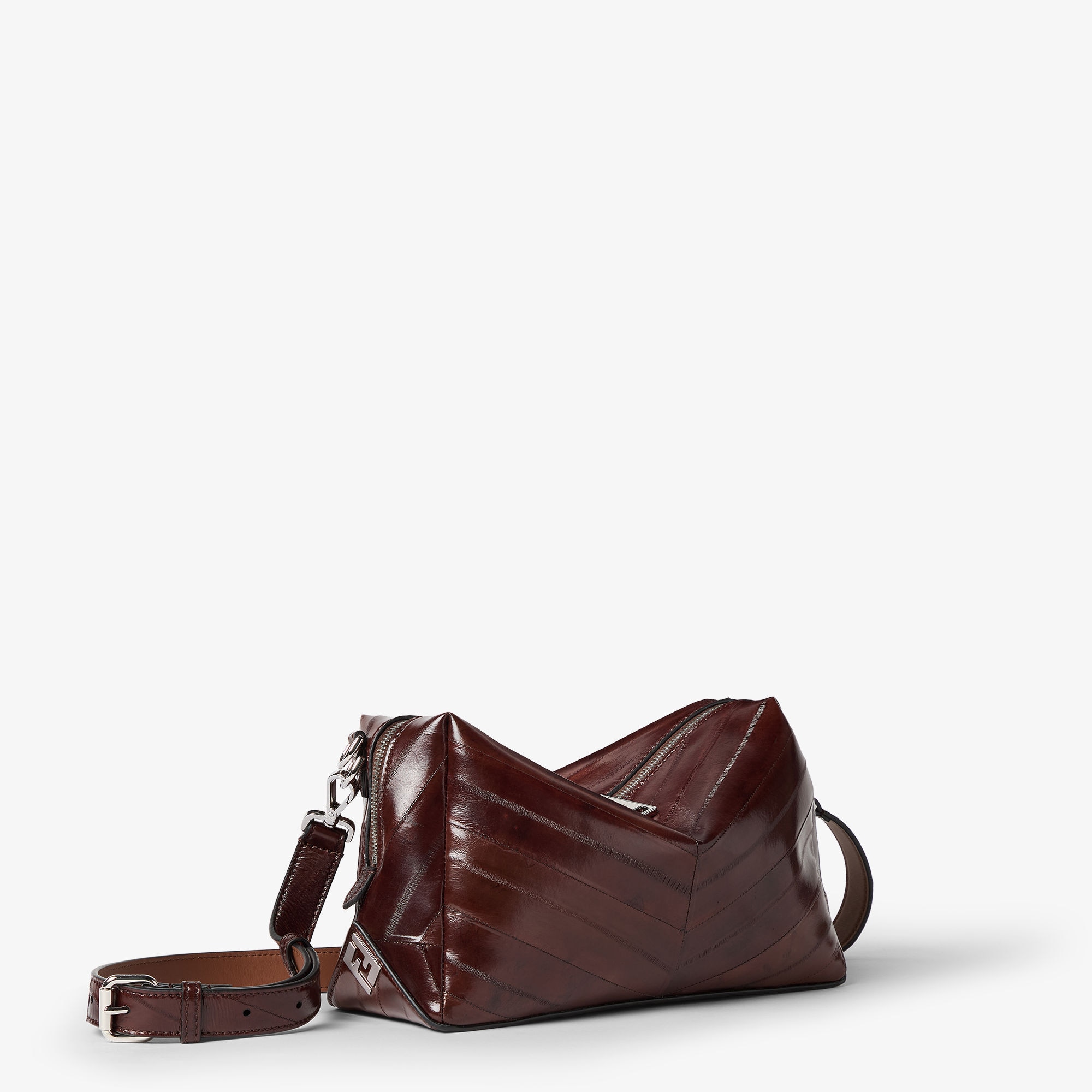
Fendi's artisans, named
The atelier sits on the fourth floor of the Palazzo della Civiltà Italiana, Rome's squared-off monument to Fascist geometry. Inside, Carla Venturini has been working the same stretch of bench for nineteen years. Her hands move in the rhythm peculiar to selleria work — pull, pierce, pull again — advancing a saddle stitch through two layers of calfskin at a pace that cannot be rushed. The bag taking shape is a Peekaboo, Fendi's structured top-handle introduced in 2008, and Venturini will spend eleven hours on this one example before it earns its serial number.
She is not famous. Until recently, the industry preferred it that way.
The turn toward attribution
For most of the twentieth century, luxury operated on a useful fiction: the designer's hand touched everything. Monograms and署名 suggested singular authorship, even as ateliers employed dozens, sometimes hundreds, of trained petites mains. Fendi, founded in 1925 as a leather and fur workshop, grew into a house where craft was assumed but rarely named. Karl Lagerfeld arrived in 1965 and remained for fifty-four years, his signature so dominant that the question of who actually stitched the hems or set the grommets seemed, to most, beside the point.
That logic has frayed. A combination of factors — social media's appetite for process, the resale market's obsession with provenance, a broader reckoning around labour in fashion — has made anonymity less tenable. Fendi responded in 2021 by launching an initiative it calls Fatto a Mano, Italian for 'made by hand', which does something simple and overdue: it puts names to the work.
Venturini is one of eight artisans now identified in the programme. Others include Giacomo Gori, a pattern cutter who has been with the house since 1987, and Elisabetta Arrigucci, who specialises in the intarsia techniques used on Fendi's more elaborate bags — inlaid leather panels that require a steady hand and a tolerance for repetition.
Training, old and new
Venturini came to Fendi by way of a vocational school in Scandicci, outside Florence, where she learned the basics of leather assembly. The curriculum was traditional: how to skive an edge, how to burnish without scorching, how to hold an awl so the holes align on both sides of a seam. She spent two years on sample work at a Tuscan contractor before Fendi hired her in 2004. Her first six months in Rome were spent shadowing a senior artisan named Paola Rinaldi, now retired, who had a reputation for immaculate topstitching and a low tolerance for shortcuts.
"You learned by watching, then by doing it badly, then by doing it again," Venturini said in a 2022 video produced for the house's website. The quote is careful, almost scripted, but the sentiment holds. Mastery in selleria is incremental. A beginner might take sixteen hours to complete a Peekaboo; Venturini now averages eleven, but only because her hands have traced the same geometry several thousand times.
The training pipeline has changed. Fendi opened its Accademia in 2016, a programme that recruits candidates straight from technical schools and puts them through an eighteen-month apprenticeship. The goal is to address what the industry calls, with some understatement, a "skills gap" — the fact that fewer young people are entering manual trades, even as demand for high-margin leather goods continues to climb. Graduates of the Accademia are guaranteed a position in the atelier, assuming they pass a final assessment that involves constructing a bag from scratch, unassisted, in a single day.
Gori, the pattern cutter, did not have that option. He started at Fendi in 1987, when the house was still family-run and the Rome atelier occupied a smaller building near Via Borgognona. His route in was more haphazard: a cousin worked in the fur workshop, mentioned an opening, and Gori showed up with a portfolio of technical drawings he had done for a now-defunct luggage brand. He was hired to assist the head cutter, a man named Sergio Luccichenti, who had worked for the Fendi sisters since the 1960s and was known, according to Gori, for being "exacting to the point of cruelty."
Gori's job, initially, was to translate a designer's sketch into a paper pattern that could be cut from leather. This required a grasp of geometry and an understanding of how skin behaves under tension — where it stretches, where it resists. A single miscalculation could waste an entire hide. Luccichenti would check Gori's work with a metal ruler and a red pencil, marking errors in silence. "You learned not to make the same mistake twice," Gori said in a 2019 interview with Il Sole 24 Ore.
The Peekaboo as case study
The Peekaboo, designed under Silvia Venturini Fendi's direction, is now one of the house's anchor products. The structure is deceptively simple: a soft trapezoid with an internal frame, two handles, and a twist-lock closure that allows the bag to open from the centre, revealing a contrasting lining. The name refers to that reveal — the idea that the bag has an inside and an outside, and that both matter.
From a construction standpoint, the Peekaboo is demanding. The frame must be rigid enough to hold shape but light enough not to drag. The leather panels are cut on the bias to avoid puckering, then skived at the edges so the seams lie flat. Venturini stitches each panel by hand using a two-needle saddle stitch, a technique borrowed from saddlery that creates a lock on both sides of the seam. If one thread breaks, the other holds. Machine stitching is faster, but it cannot replicate that security.
Arrigucci, the intarsia specialist, works on limited-edition Peekaboos that incorporate inlaid panels — geometric motifs, floral patterns, or abstract compositions rendered in contrasting leathers. Each inlay is cut separately, bevelled at the edges, and set into a recessed channel in the main panel. The pieces must fit with jeweller's precision; a gap of half a millimetre is visible and unacceptable. Arrigucci uses a surgical scalpel for the cutting and a bonding agent that allows fifteen seconds of adjustment before it sets. There is no margin for hesitation.
What attribution changes
Naming the artisans does not, in any immediate sense, alter the product. A Peekaboo stitched by Venturini is materially identical to one completed by another trained hand in the same atelier. The serial number inside does not specify the maker — only the date and location of production. But the Fatto a Mano programme, modest as it is, represents a shift in how the house frames its own labour.
Whether this constitutes transparency or marketing depends on one's threshold for scepticism. Fendi is still a subsidiary of LVMH, still operating within a system that prioritises margin over wage equity, still producing bags that retail for five thousand euros and up. Highlighting eight artisans does not address the broader question of how value is distributed across a supply chain that includes tanneries in Tuscany, hardware suppliers in Veneto, and contract ateliers whose workers remain unnamed.
That said, there is something consequential in the act of naming, even if it is partial. Venturini, Gori, and Arrigucci are no longer anonymous. Their work is legible, at least to those inclined to look. And in an industry long organised around the designer's myth of singular authorship, that is not nothing.
Venturini is fifty-two now. She has trained six apprentices through the Accademia, three of whom are still with the house. She does not expect her name to appear on a label, nor does she seem particularly interested in that kind of recognition. What she wants, she said in the same 2022 video, is for the next generation to understand that a bag is not a logo. It is a sequence of decisions, made by hand, that either hold or do not.