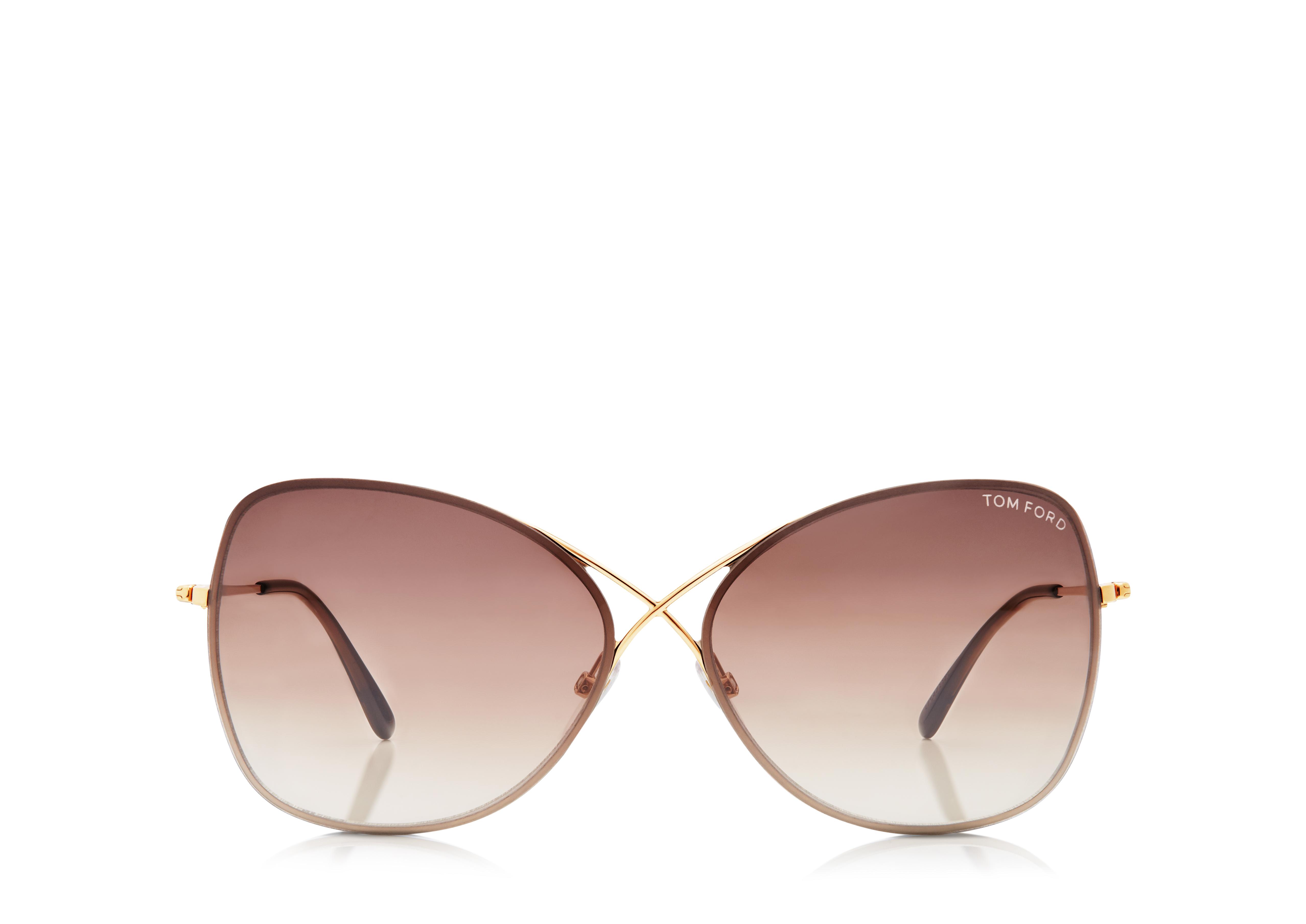
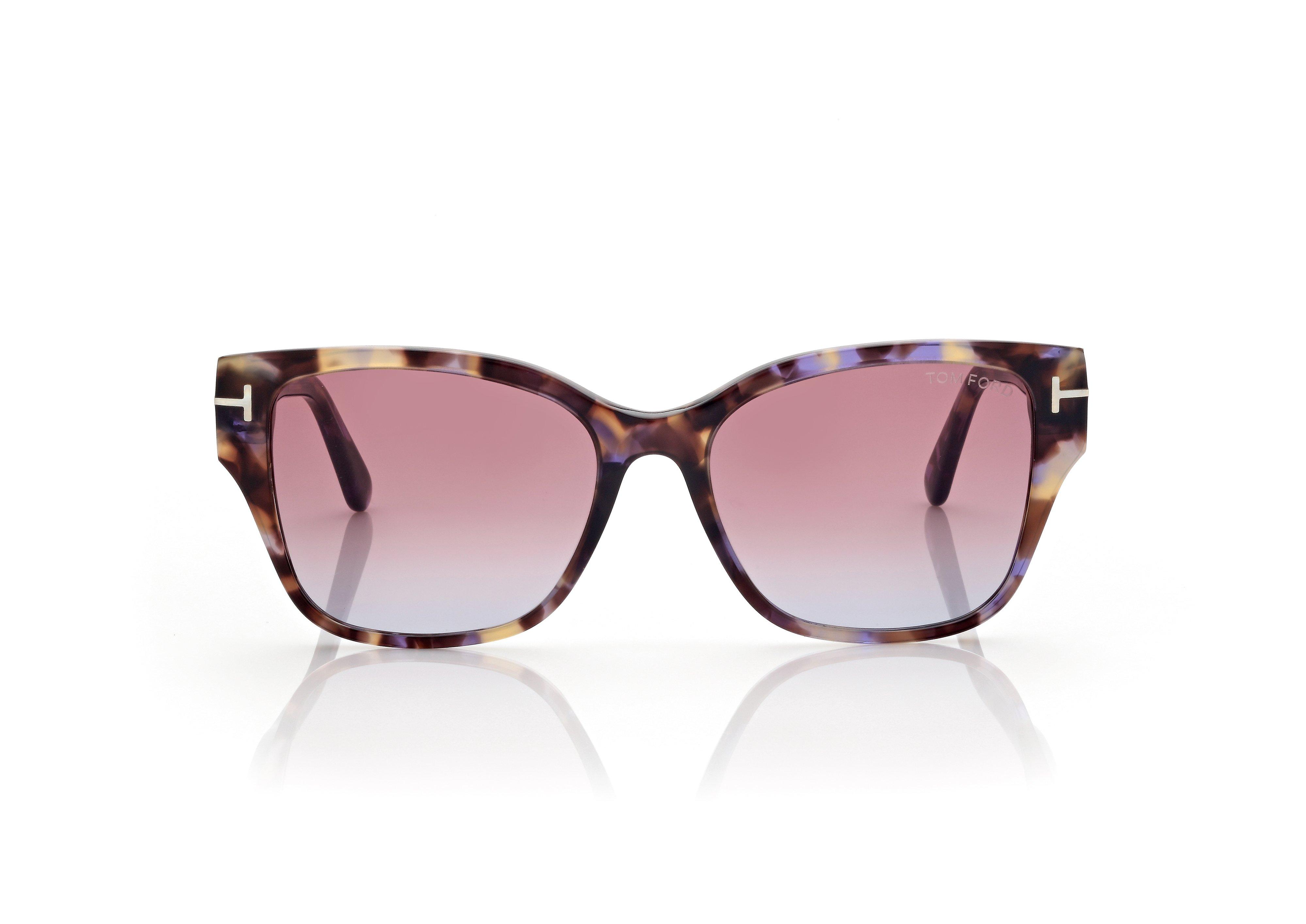
Portrait: the creative director at Tom Ford
The fitting room at Tom Ford's Madison Avenue flagship runs to black lacquer and low light, which is to say it runs exactly as one would expect. On a Tuesday afternoon in late September, the designer himself stood at the centre of it, hands in the pockets of trousers cut with a rise so exact it approached geometry. Before him, a model in a charcoal suit. Ford circled once, stopped, reached for the left lapel, and tugged it a quarter-inch toward the shoulder seam. "There," he said. The fit had been correct before. Now it was his.
This is the method, and it has held for thirty years.
The Gucci Decade
Ford arrived at Gucci in 1990 as the house's womenswear designer, a title that understated both his ambition and the scale of the problem. The Florentine leather-goods concern had, by that point, licensed itself into near-oblivion—Gucci beach towels, Gucci bourbon, Gucci playing cards. The brand equity, such as it was, had been atomised. Ford's remit was to design clothes. What he did instead was reconstruct an image.
He had trained at Parsons, worked briefly at Cathy Hardwick, spent two years at Perry Ellis under Marc Jacobs. The Ellis stint mattered: he learned to move fast, to read a room, to understand that American sportswear's genius was in its refusal to apologise. When he relocated to Milan, he brought that refusal with him. His first Gucci collection, Spring 1995, featured hipster trousers in ivory silk, a liquid jersey halter, and a handbag so minimal it looked like it had been designed in reverse—subtract everything until only function and logo remain. The fashion press, still caught in the undertow of grunge, called it vulgar. The stores called it sold.
Ford became creative director in 1994. By 1999, Gucci Group's revenues had increased nearly tenfold. The turnaround is now business-school lore, but the design strategy underneath it remains worth examining. Ford understood that luxury, at the tail end of the twentieth century, had split into two camps: the intellectual and the desirable. He chose desire. The velvet suits, the satin shirts unbuttoned past any reasonable latitude, the ad campaigns shot by Mario Testino in which models appeared less dressed than upholstered—it was all ecstatically, unapologetically carnal. And it worked because Ford never winked. He meant it.
The Signature
If one isolates the through-line in Ford's work—from Gucci to his eponymous label, launched in 2005—it is this: the body as architecture, sex as a design principle. Not sex in the abstract, but the specific physics of attraction. A jacket nipped at the waist. A trouser break that lands exactly at the instep. A fragrance (Black Orchid, 2006) engineered to smell like wealth and misbehaviour in equal measure. These are not accidents. They are calculations performed at such a high level that they read as instinct.
The Tom Ford label began with menswear, which surprised no one who had watched him dress himself. The suits were Savile Row in structure, Italian in cloth, and American in attitude—a hybrid that ought not to have worked but did, because Ford had spent fifteen years studying how men want to be seen. The first women's collection followed in 2010, and it bore the same logic: dresses cut to skim rather than cling, trousers that suggested a tuxedo without quoting one directly, a colour palette that leaned hard into black, navy, and the occasional flash of scarlet. Subtlety was not the goal. Precision was.
His work in film—A Single Man in 2009, Nocturnal Animals in 2016—extended the same aesthetic into narrative. Both pictures are almost aggressively beautiful, composed with the kind of control that can tip into airlessness. The criticism, when it came, was predictable: too much surface, not enough soul. Ford's response, delivered in an interview with The New York Times in 2016, was characteristically blunt. "I'm interested in beauty," he said. "I don't apologise for that."
The Estée Lauder Chapter
In November 2022, Estée Lauder Companies acquired the Tom Ford brand for $2.8 billion, a figure that placed it among the largest beauty and fashion acquisitions on record. Ford himself stayed on as creative director through the end of 2023, overseeing the transition before stepping back. The move, announced as a "new chapter," was in fact a conclusion. He had built the house, scaled it, and sold it at the apex of its value. What remained was the question every designer faces when the name on the door is also the name on the deed: what happens when you leave?
The answer, in Ford's case, is that the signature remains legible. The cut of a Tom Ford jacket does not require his hand on the shears; it requires the system he built—pattern-makers trained to his specifications, a fit model whose measurements are canonical, a design team that understands the difference between tight and tailored. The brand, in other words, has been engineered to survive him. Whether it will thrive is another question, and one that depends less on design than on whoever Estée Lauder appoints to interpret his codes without merely copying them.
What Endures
Ford turned sixty-two in August. He has lately been photographed less in fittings and more at his ranch in New Mexico, a twelve-thousand-acre property where the dress code runs to denim and the nearest paparazzo is two hours south. One suspects this is not retirement so much as recalibration. He has never been a designer who required the runway to prove a point; the work, once made, does that on its own.
What he leaves behind—or rather, what he has embedded in the industry—is a template. Not for how to design, but for how to control the image around the design. Ford understood, earlier than most, that a fashion house in the modern era is not a studio but a media company. The product is necessary, but the product is not enough. You need the campaign, the flagship, the fragrance counter at Neiman Marcus, the red carpet, the Instagram grid. You need, in short, a world. And the world must be so consistent, so relentlessly on-message, that a customer can walk into a Tom Ford boutique in Dallas or Dubai and know exactly what they are buying: not just a suit, but a version of themselves they have been persuaded to want.
Whether that constitutes artistry or commerce is a debate Ford has never entertained. He did both, at the same time, without apology. The clothes fit. The business scaled. The name endured. In the end, that is the signature.