## The Draper and the Coat That Outlasted Him
The Draper and the Coat That Outlasted Him
Thomas Burberry opened his first shop in Basingstoke in 1856, at twenty-one. He sold outdoor clothing to farmers and sportsmen — the sort of garments that needed to work in Hampshire mud and October rain. By 1879 he had patented gabardine, a tightly woven cotton twill that repelled water without the rubber coating that made most weatherproof cloth feel like a tarpaulin. The fabric breathed. It moved. It lasted.
This was not fashion. It was engineering.
Burberry's breakthrough came through function, not style. The British Army commissioned trench coats during the First World War — gabardine, naturally, with a storm shield, D-rings for equipment, and a belt that could be cinched tight when the wind picked up. Officers wore them in the trenches. Explorers wore them to the poles. By the 1920s, the coat had migrated from the front lines to Mayfair, where it became the thing you wore over a suit when the weather turned.
The house grew on that single invention. Gabardine held its shape. It aged well. It didn't need much looking after. Burberry understood that durability was a form of luxury — perhaps the only form that mattered to a man who spent his days outdoors.
What Remains
Walk into the Burberry archive in Horseferry Road and you will find trench coats from 1914 that still button properly. The gabardine has softened but not failed. The stitching holds. The storm shield still does what it was designed to do, which is to keep rain off your neck when you turn into the wind.
This is the inheritance. Not a design language, exactly, but a material fact: Burberry made a cloth that worked, and then built a house around it.
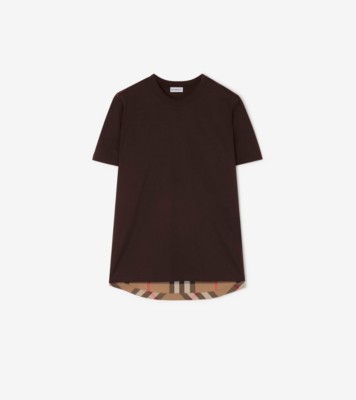
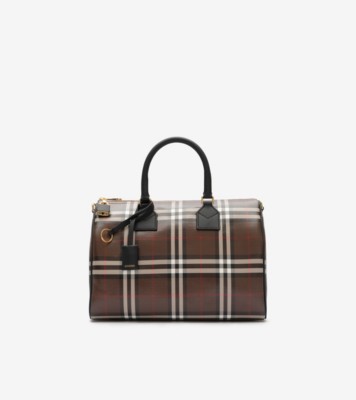
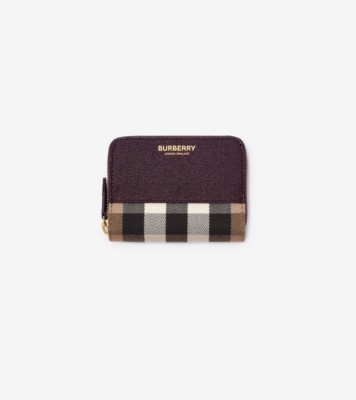
Thomas Burberry died in 1926. The company passed to his sons, and later to a series of managing directors who expanded the business into scarves, bags, and ready-to-wear. The check — camel, red, black, and white — was introduced as a coat lining in the 1920s and became the house signature by the 1960s. It appeared on umbrellas, scarves, and eventually everything else. By the 1990s, the check had become so ubiquitous that it stopped meaning anything at all.
The house stumbled. Licensing deals flooded the market with Burberry-branded goods that had little to do with gabardine or craftsmanship. The trench coat remained, but it was surrounded by noise.
The Long Rebuild
Rose Marie Bravo arrived as chief executive in 1997 and began pulling the licences back. She hired Christopher Bailey, a Yorkshire-born designer who had trained at the Royal College of Art and worked under Donna Karan and Gucci's Tom Ford. Bailey understood that Burberry's strength was not in reinvention but in refinement. He kept the trench coat. He kept the check, but used it sparingly. He introduced slimmer cuts and lighter fabrics, but the house codes stayed legible.
Bailey's Burberry was not revolutionary. It was consistent. The runway shows referenced British eccentricity — Wellington boots, oversized scarves, military tailoring — but the clothes themselves were wearable. A Burberry trench from 2005 looked like a Burberry trench from 1925, only lighter in the shoulder and narrower through the waist.
This was enough. The house stabilised, then grew. By the time Bailey became chief creative officer in 2009, Burberry had reclaimed its position as a heritage brand that still felt relevant.
The Question of Legacy
The difficulty with a house built on a single garment is that the garment eventually becomes a cage. Burberry has spent the past two decades trying to expand beyond the trench coat without abandoning it. Bailey introduced the Prorsum line, which leaned into fashion-forward tailoring and experimental fabrics. He cast British musicians and actors in campaigns that positioned Burberry as a living brand, not a museum piece.
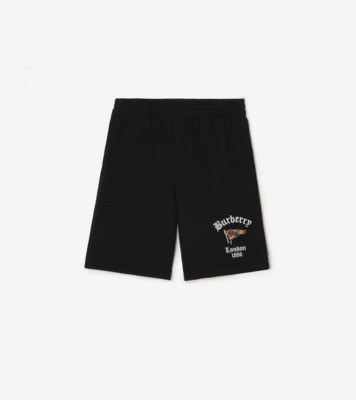
It worked, to a point. The trench coat remained the anchor, but the house around it grew more confident. Riccardo Tisci, who succeeded Bailey in 2018, brought a darker, more conceptual sensibility. He introduced a new monogram and leaned into streetwear silhouettes. The trench coat stayed, but it shared space with oversized hoodies and logo-heavy accessories.
Daniel Lee, who took over in 2022, has stripped things back. His Burberry is quieter, more focused on cloth and cut than on spectacle. The trench coat remains, but so does a renewed attention to outerwear in general — car coats, duffle coats, waxed cotton jackets. Lee seems to understand that Burberry's strength is not in chasing trends but in making things that last.
What Thomas Burberry Left Behind
The founder's legacy is not a design philosophy. It is a material standard. Gabardine is still woven in Yorkshire. The trench coat is still cut and sewn by hand in Castleford. The house has survived because the product at its centre was never about fashion. It was about function.
This is both a strength and a limitation. Burberry will never be Dior or Chanel, houses built on a designer's vision of femininity or elegance. It is a house built on a coat that keeps you dry. That is not a small thing, but it is a specific thing.
The question now is whether that specificity is enough. Burberry has spent the past twenty years trying to become a full lifestyle brand, with bags and scarves and ready-to-wear that extends beyond outerwear. Some of it has worked. Much of it has felt like an attempt to be something the house was never meant to be.
Thomas Burberry did not set out to build a fashion empire. He set out to make a better coat. The fact that the coat is still in production, still recognisable, still functional, is the only legacy that matters. The rest is commentary.