## The Fitting
The Fitting
Matthieu Blazy stands in a white room in Milan, one hand on a jacket shoulder, the other holding a pin. The model shifts. Blazy steps back, tilts his head, steps forward again. He adjusts the sleeve head by half a centimetre. The jacket is unlined—raw seams visible, construction exposed. It will stay that way.
This is how he works. Not in grand gestures, but in the space between the body and the cloth. He has been creative director at Bottega Veneta since November 2021, though you would not know it from the noise he makes. There are no manifestos, no reinventions announced via press release. There is, instead, a relentless attention to how things are made, and a belief that luxury is a question of structure, not surface.
The Apprenticeship
Blazy did not arrive at Bottega through the usual channels. He studied at La Cambre in Brussels, a school better known for producing conceptualists than house technicians. After graduating in 2004, he worked under Raf Simons at Jil Sander, then moved to Maison Martin Margiela in 2008. The Margiela years mattered. He learned to unpick a garment, to question why a seam sat where it did, to treat deconstruction not as an aesthetic but as a method.
By 2014 he was at Celine under Phoebe Philo, leading the ready-to-wear team. The discipline there was different—less conceptual, more embedded in daily life. A coat had to work in rain. A trouser had to survive a Tube commute. Blazy absorbed this. When he joined Bottega in 2020 as design director under Daniel Lee, he brought both modes with him: the structural rigour of Margiela, the lived-in pragmatism of Philo-era Celine.
Lee left abruptly in November 2021. Blazy was promoted within days. The speed suggested panic; the work that followed did not.
The Pivot
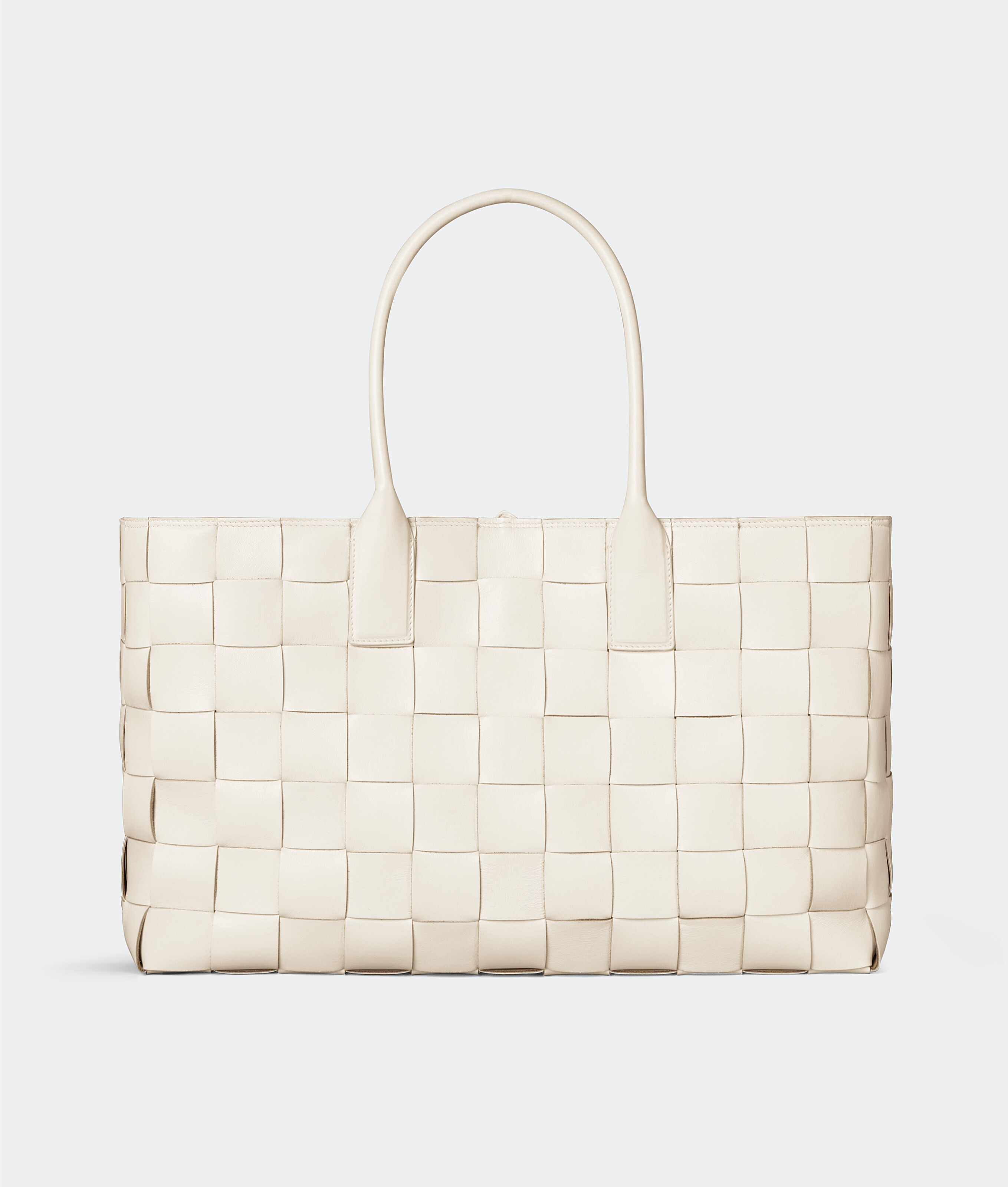
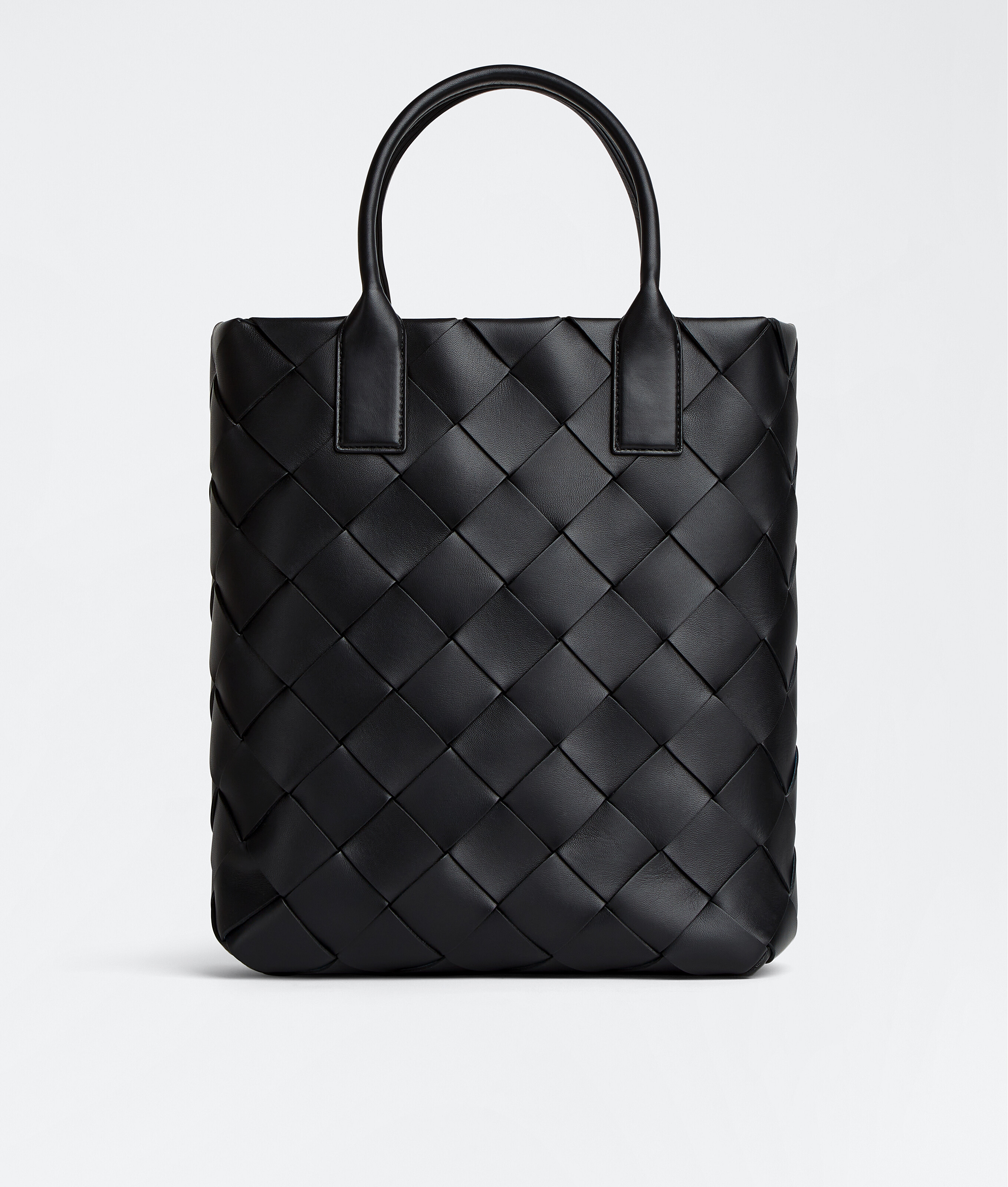
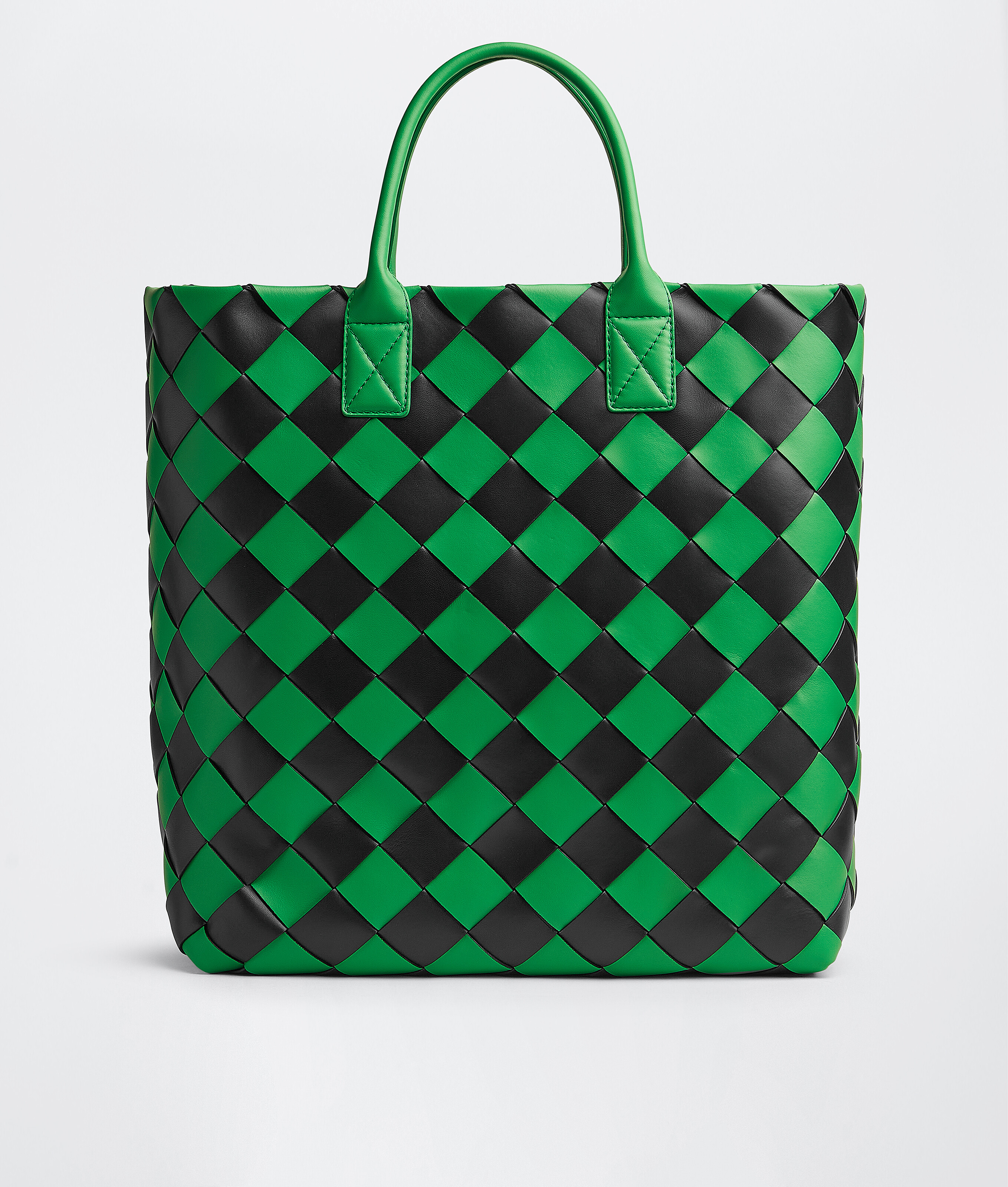
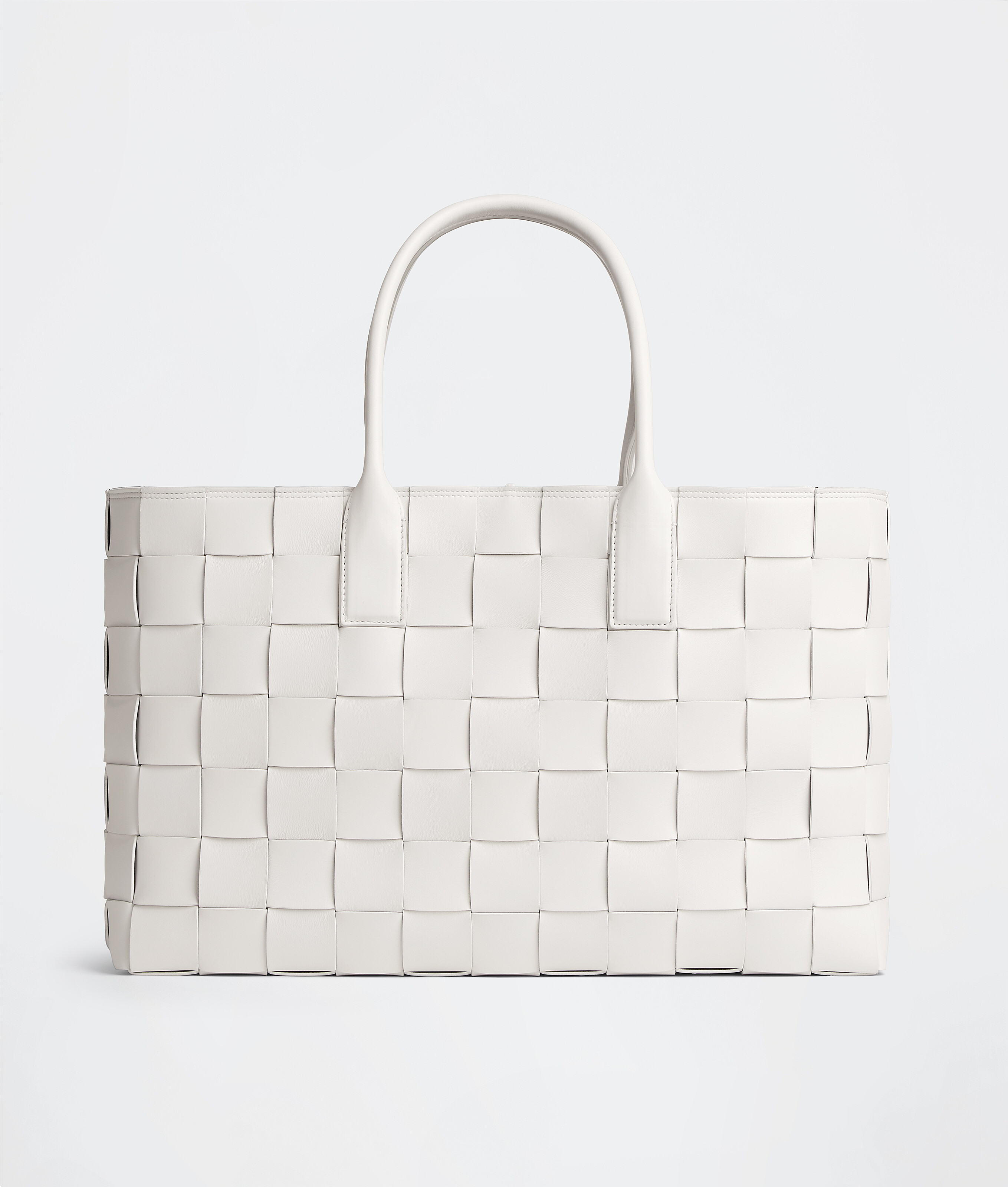
His first collection for Bottega, spring 2023, opened with a leather jacket so soft it moved like jersey. The intrecciato weave—the house's signature since the 1970s—appeared not on bags but on the surface of a coat, rendered in strips of nappa that caught the light. A dress was constructed from leather ribbons, each one hand-stitched to the next, creating a fabric that flexed and breathed.
This was the pivot. Where Lee had hardened Bottega's codes—chunky soles, architectural bags, a kind of knowing brashness—Blazy softened them. Not in the sense of making things delicate, but in the sense of making them yield. His clothes bend. They accommodate. A trench is cut so the belt can be tied loosely or not at all. A skirt has no visible waistband, just an internal drawstring that lets the wearer decide where it sits.
The bags followed the same logic. The Kalimero, introduced in his second collection, is a gathered pouch that collapses when empty and swells when full. No structure, no hardware, just leather and a drawstring. It sold out within weeks, not because it was loudly branded—there is no logo—but because it worked.
The Signature
If Blazy has a signature, it is this: he makes luxury feel like a material fact rather than a status signal. His shows are staged in anonymous industrial spaces—car parks, warehouses, a disused tram depot. The set is always minimal. The clothes do not need framing.
In his autumn 2023 collection, he showed a series of coats made from shearling that had been treated to look almost weightless. The pelts were shaved to different lengths, creating a gradient from dense wool to bare suede. On the body, the effect was sculptural but not stiff. The coat moved. It creased. It looked better after an hour of wear than it did on the hanger.
This is deliberate. Blazy has said, in interviews with System and 032c, that he is interested in garments that improve with use. A leather jacket that softens. A bag that moulds to what you carry. He cites Japanese boro textiles, Savile Row tailoring, and his grandmother's wardrobe as references—things made to last, to be repaired, to accumulate history.
The intrecciato itself has evolved under his direction. In spring 2024, he introduced a version woven from strips of denim, creating a bag that felt closer to workwear than to evening. In another collection, the weave appeared on the sole of a shoe, visible only when the wearer lifted their foot. These are not innovations for the sake of novelty. They are variations on a theme, each one testing how far the house code can bend before it breaks.
The Tension
There is a tension in Blazy's work between the artisanal and the industrial. His clothes require extraordinary craft—hand-stitched seams, hand-dyed leathers, hand-woven fabrics—but they are designed to look effortless. A jacket that took forty hours to construct should, in his view, look like you pulled it on without thinking.
This is harder than it sounds. Craft, when visible, tends to announce itself. A hand-rolled hem, a contrast stitch, a bound buttonhole—these are signals. Blazy's method is to bury the craft so deep that you feel it before you see it. A sleeve sets perfectly into the shoulder because the armhole has been recut three times. You do not notice the armhole. You notice that the jacket feels right.
The risk is that this approach reads as quiet to the point of invisible. In an industry that rewards spectacle, Blazy's refusal to shout can look like a lack of ambition. But the sales figures suggest otherwise. Bottega's revenue grew by double digits in 2023, driven largely by leather goods and ready-to-wear. The Kalimero bag now has a six-month waiting list. The house is, by most measures, in better shape than it was under Lee.
What Comes Next
Blazy is not interested in disruption. He has said as much. His project at Bottega is not to reinvent the house but to deepen it—to take the codes that exist and make them more themselves. The intrecciato becomes softer, more pliable. The leather becomes lighter, more responsive. The silhouette becomes easier, more accommodating.
His spring 2025 collection, shown in September, pushed this further. He introduced a series of garments made from a single piece of leather, cut and folded without seams. A jacket became a kind of origami, held together by the material's own memory. It was technically astonishing. It looked simple.
This is the next chapter. Not louder, not more complex, but more refined. Blazy is building a vocabulary, and he is in no hurry. The fitting continues. The sleeve head is adjusted again. The jacket will be ready when it is ready.