## The Fitting
The Fitting
Daniel Lee stands in a white-walled room on Horseferry Road, one hand on the shoulder of a jacket that refuses to sit. The cloth is a 10oz cavalry twill, cut close through the body, and the model — a young man with the posture of someone who has been standing for two hours — shifts his weight. Lee steps back, tilts his head, steps forward again. He tugs the hem down half an inch and the whole thing falls into place.
This is not drama. This is Tuesday.
Lee became creative director of Burberry in October 2022, arriving from Bottega Veneta with a reputation for making handbags that sold and clothes that photographers wanted to shoot. He was thirty-six. The brief, as far as anyone could tell, was to make Burberry feel like Burberry again — which is to say, to make it feel like something other than a house in search of itself.
Bradford to Mayfair
Lee grew up in Bradford, trained at Central Saint Martins, and spent his twenties learning how to make things. He worked under Phoebe Philo at Céline, then followed her to a short stint at Maison Margiela before returning to Céline as head of design for ready-to-wear and accessories. When Philo left in 2018, Lee moved to Bottega Veneta.
The Bottega years were fast. Lee's first collection for the house landed in February 2019 and within six months the Pouch and the Padded Cassette were everywhere. The clothes were clean, often severe, and built around a kind of architectural simplicity that felt both new and oddly familiar. Leather was thick. Seams were visible. Hems were raw. The shows were spare and the clothes sold.
By the time Lee left Bottega in 2021, the house had doubled its revenue. Kering did not want him to go. He went anyway.
The Pivot
Burberry was a different problem. The trench coat is an anchor and a millstone. It is the thing everyone knows and the thing that makes it difficult to do anything else. Christopher Bailey spent seventeen years at the house, much of it trying to build a universe around that single garment. Riccardo Tisci followed with an attempt to make Burberry feel harder, younger, less apologetic. Neither approach quite landed.
Lee's first collection for Burberry showed in February 2023. It opened with outerwear — trenches, car coats, duffle coats — all cut closer and shorter than the house had shown in years. The cloth was honest: gabardine, cotton drill, waxed canvas. The palette was navy, black, camel, grey. There were no prints. There was no archive pastiche. There was, instead, a kind of seriousness that felt like relief.
The handbags were small and structured. The shoes were flat or low-heeled. The models walked quickly. The collection was not trying to be anything other than what it was: a wardrobe for people who live in cities and need coats that work.
The Signature
If there is a through-line in Lee's work, it is a distrust of ornament. He does not do embellishment. He does not do whimsy. He does not, as far as anyone can tell, believe in the idea that fashion should be fun. What he does instead is make things that sit well on the body and look better six months in than they do on the runway.
At Burberry, this has meant a return to the house's industrial origins. Thomas Burburry — the extra 'r' was dropped in 1999 — was a draper in Basingstoke who patented gabardine in 1879 and built a business making weatherproof cloth for people who worked outdoors. The trench coat came later, during the First World War, as a commission for British officers. It was not, in other words, a fashion garment. It was a piece of kit.
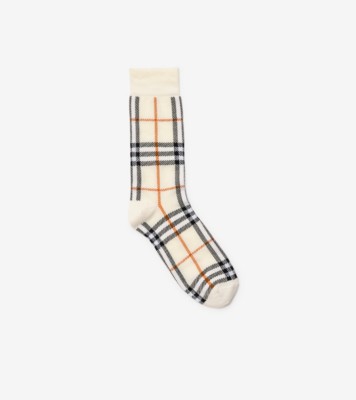
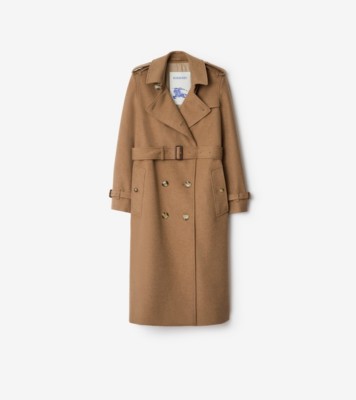
Lee has leaned into this. His Burberry is less about heritage as performance and more about heritage as function. The trench is still there, but it is shorter, lighter, and cut without the throat latch and storm shield that most people never use. The quilted jacket — a house staple since the Eighties — has been reworked in a diamond pattern that sits flatter and packs smaller. The check, which Tisci had tried to retire, is back, but only on linings and the occasional scarf.
The accessories have been similarly restrained. Lee's first bag for Burberry was the Knight, a soft, slightly slouchy shoulder bag with a single buckle and no visible branding. It sold well enough that the house expanded the line within two seasons. The shoes — loafers, lace-ups, Chelsea boots — are built on lasts that feel closer to Church's than to anything overtly fashion-forward.
This is not, it should be said, a conservative approach. It is a specific one. Lee is not interested in making clothes that announce themselves. He is interested in making clothes that last.
The Next Chapter
Burberry's revenue has stabilised under Lee, though the house is not yet back to the highs of the early Bailey years. The Chinese market, which had been a significant driver of growth, has softened. The American market remains strong. The European market is steady.
Lee's third collection, shown in September 2023, introduced colour — rust, olive, a particular shade of rose that appeared on both coats and knitwear. The silhouettes remained close, but there was a looseness in the trousers and a softness in the knitwear that suggested a willingness to move beyond the severity of the first two outings.
The fourth collection, in February 2024, went further. There were dresses — not many, but enough to suggest that Lee was thinking about a customer beyond the one who lives in tailoring and outerwear. There were also prints, though these were geometric rather than figurative, and used sparingly.
Whether this constitutes a signature is still an open question. Lee has been at Burberry for less than three years. The house has been around for nearly a century and a half. The trench will outlast him, as it has outlasted everyone else.
But there is something in the way Lee works — the attention to cut, the refusal to overcomplicate, the belief that a coat should do what a coat is supposed to do — that feels aligned with what Burberry was before it became a brand. It is not a revolution. It is a recalibration.
In the fitting room on Horseferry Road, the jacket finally sits. Lee nods, steps back, and moves on to the next piece. There are thirty looks in the collection and six weeks until the show. The work is not finished. It is never finished.
But the jacket is done.