## The Fitting
The Fitting
Simon Porte Jacquemus stands in a white-walled room in Paris, pinning a linen shirt to a model's shoulder blade. The fabric pools at her collarbone, then tightens across the ribs. He steps back. Adjusts. Steps back again. This is Giedre Dukauskaite, who has opened his shows since 2015, and the silence between them suggests they have done this many times before. The shirt will appear in the spring collection as 'La Chemise Valensole', named for a lavender field two hours north of his childhood home in Salon-de-Provence. It will sell predictably well. But the image that circulates—Dukauskaite in that shirt, shot against ochre stucco—will do more than move units. It will reinforce a fiction the house has spent a decade building: that Jacquemus dresses not customers, but a very specific type of woman. Three women, to be precise.
Giedre Dukauskaite: The Archetype
Dukauskaite is Lithuanian, based in New York, and possessed of the kind of face that photographs as if already sunlit. She walked Jacquemus's autumn 2015 presentation—his first in the official Paris calendar—and has missed perhaps two seasons since. By spring 2017, she was the campaign face. By 2019, she was the house codes made flesh: straw hat, linen trousers, bare feet on warm stone.
One suspects Jacquemus recognised something in her early. Not versatility—Dukauskaite is not a chameleon—but a kind of legibility. She reads, in his imagery, as both aspirational and accessible. The friend who lives in Marseille and wears her grandmother's jewellery. The ex-girlfriend who moved to the coast and started painting. She is never styled in excess. A single bag, often the 'Chiquito' or the 'Bambino', both so small they border on conceptual. Flat sandals. Occasionally a wide-brimmed hat, though just as often her hair is pulled back with nothing at all.
The effect is studied, but the study is invisible. Jacquemus has said, in an interview with System magazine, that he does not cast models—he casts women he would like to know. Dukauskaite, then, is the Platonic ideal of that impulse. She appears in his work not as a hanger, but as a character in a narrative he is still writing. The narrative involves a great deal of sunlight, a certain amount of linen, and almost no irony.
Laetitia Casta: The Endorsement
Laetitia Casta arrived later, but with more weight. She is French, famous since the mid-nineties, and carries the kind of cultural capital that cannot be purchased or faked. When she began appearing at Jacquemus shows in 2018—front row, then backstage, then in campaign imagery—it signalled a shift. The house was no longer emerging. It had emerged.
Casta's presence did two things. First, it connected Jacquemus to a lineage of French beauties who embodied a particular strain of sensuality: unforced, sun-drenched, vaguely pastoral. Bardot in Le Mépris. Birkin in a basket. The reference points are obvious, and Jacquemus has never pretended otherwise. Second, it legitimised the house in the eyes of an older, wealthier demographic. Casta is not an influencer. She is a film actress, a mother, a woman who has been photographed for three decades and still manages to seem private. Her endorsement—and it was an endorsement, however unspoken—mattered.
She wore Jacquemus to Cannes in 2019. A long white dress with a single cutout at the hip, photographed on the Croisette at dusk. The dress was not revolutionary. But Casta in the dress, moving through that particular landscape, became the image Jacquemus had been chasing since his first collection. The Mediterranean woman. The one who exists in his mind, and now, briefly, in ours.
Kendall Jenner: The Amplifier
Kendall Jenner is the third point in the triangle, and the most contentious. She is American, famous for being famous, and represents everything Jacquemus's aesthetic is supposed to reject: the hypervisible, the overproduced, the relentlessly commercial. And yet she has been the house's most effective ambassador.
Jenner first wore Jacquemus in 2019—a yellow 'La Robe Valensole' in Mykonos, posted to Instagram, seen by thirty million people within hours. The dress sold out in two days. She wore the 'Chiquito' bag in Los Angeles, in Paris, in Aspen. She walked the spring 2020 show in a wheat field outside Arles, and the resulting footage—Jenner in a butter-yellow dress, hair slicked back, walking through grain—became the most-watched fashion show video of the season.
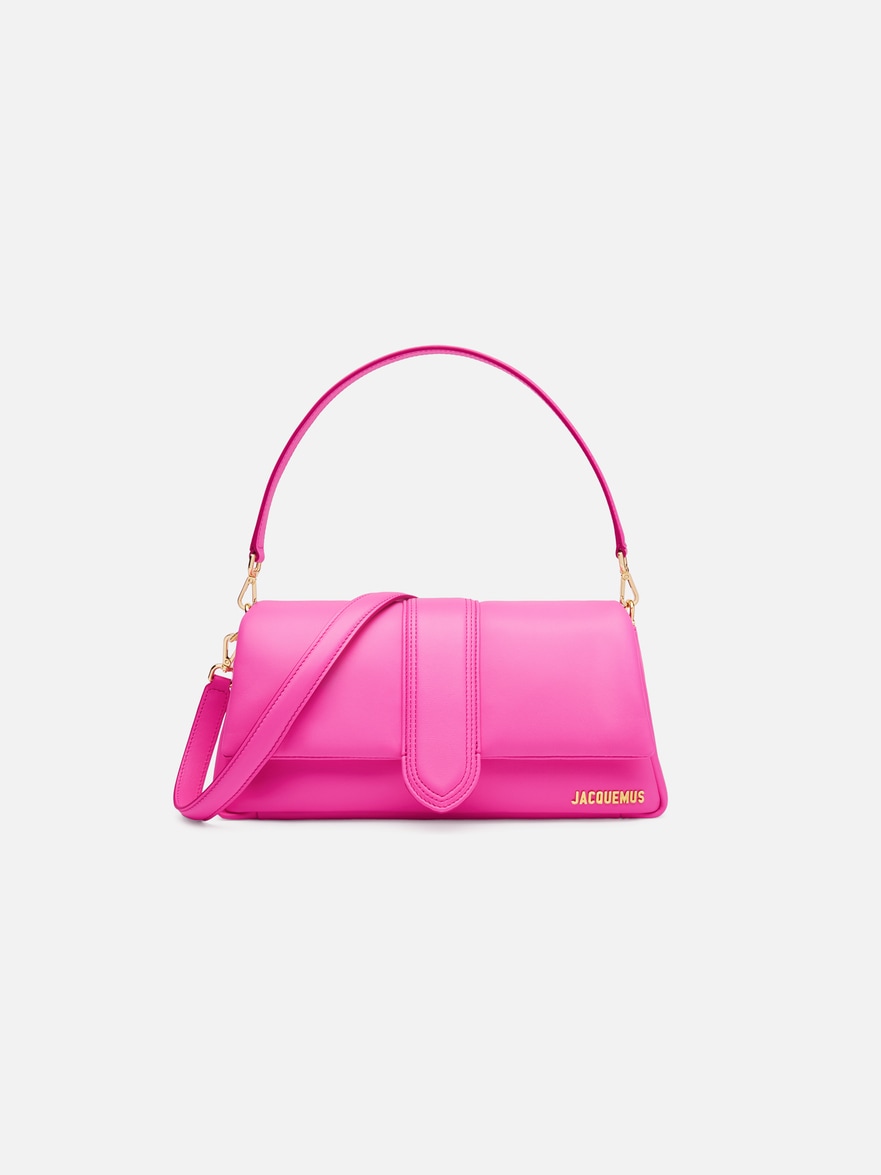
Jacquemus has been coy about the relationship. He told Vogue in 2020 that he does not pay for celebrity placement, that Jenner wears the clothes because she likes them. This may be true. It is also true that Jenner's presence expanded the house's reach beyond the insular world of Paris fashion. She brought Jacquemus to Calabasas, to the Kardashian-Jenner audience, to a demographic that buys bags the way others buy coffee. The 'Chiquito' became a meme. The 'Bambino' became a status symbol. The house, which had positioned itself as the antidote to logo-driven excess, became one of the most Instagrammed brands of the decade.
The tension is obvious. Jenner does not fit the Jacquemus woman as originally conceived. She is not French, not discreet, not remotely interested in fading into a sun-dappled background. But she understands the language of the image, and she understands how to deploy it. When she wears Jacquemus, she is not playing a character. She is playing herself playing a character, and the distance between the two is where the brand now lives.
What Comes After
Jacquemus is thirty-three. The house is fourteen years old. The three women who have defined it—Dukauskaite, Casta, Jenner—represent three phases: the dream, the validation, the scale. What comes next is less clear.
The maison has expanded into menswear, homewares, beauty. It has shown in wheat fields, on salt flats, in the middle of the Seine. It has become, in the language of the industry, a lifestyle brand. The clothes themselves—linen shirts, cutout dresses, tiny bags—remain consistent. But the world around them has grown noisier. More crowded. More difficult to control.
One wonders whether the muse model can survive this. Whether a house built on the image of three women can continue to function as it scales. Jacquemus has said he wants to dress "real women", but real women do not exist in wheat fields at golden hour. They exist in offices, in supermarkets, in all the places his campaigns studiously avoid.
The fitting ends. Dukauskaite steps out of the linen shirt, pulls on her own clothes, leaves. Jacquemus remains in the white room, pinning fabric to a form. The next collection is due in four months. The next campaign will be shot in Provence, or perhaps Greece. The muse will be there, whoever she is. The image will circulate. The fiction will hold, or it won't.