## The Fitting
The Fitting
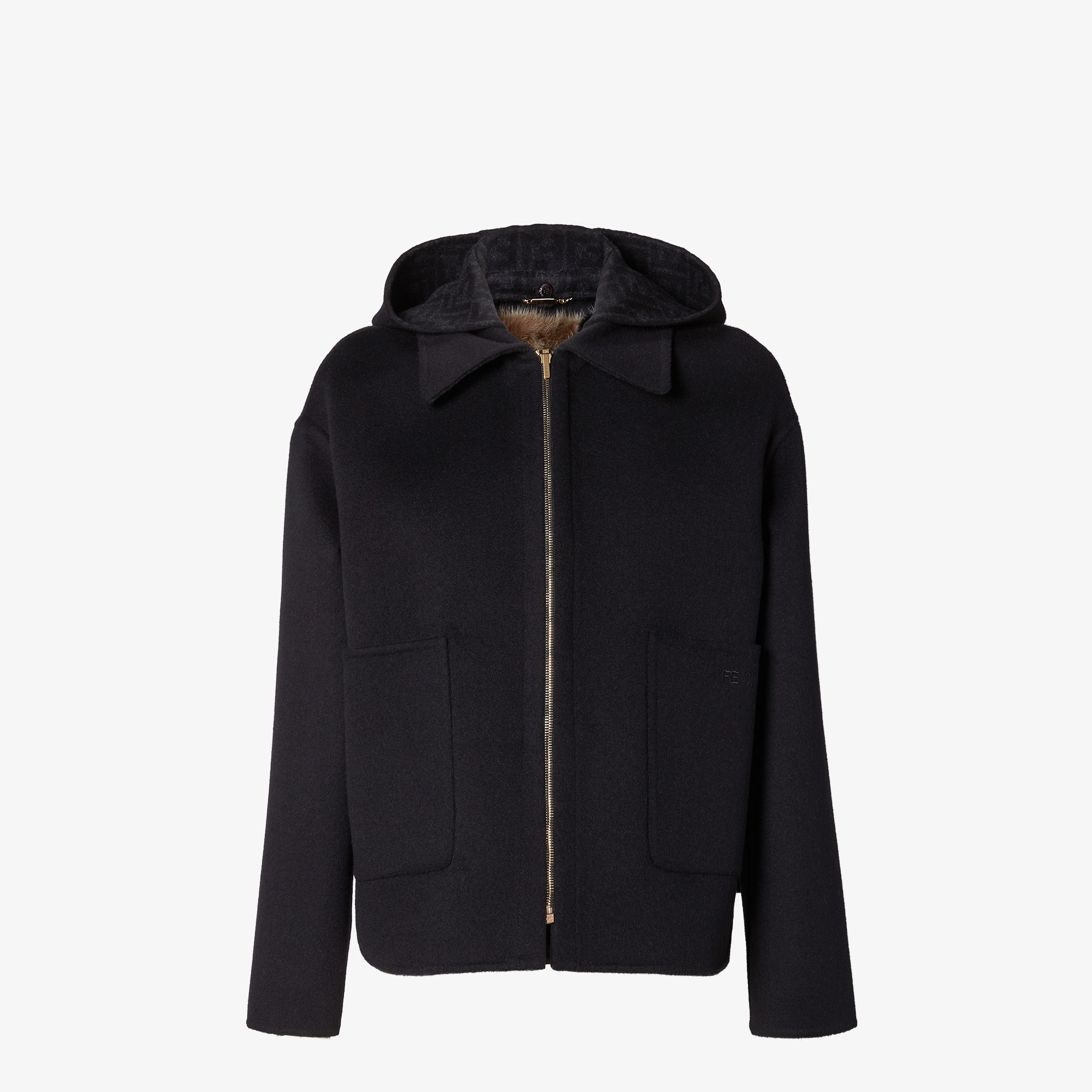
Kim Jones stands in a high-ceilinged room on Via Solari, one hand on the shoulder of a mannequin draped in tobacco-coloured shearling. The coat is cut like a blouson but weighs what a proper overcoat should. He adjusts the collar, steps back, adjusts it again. Around him, three members of the atelier wait with pins. This is the fourth iteration of the same silhouette. He is not satisfied, but he is close.
Jones has been at Fendi since 2020, tasked with menswear and couture — a pairing that sounds more contradictory than it is. Both demand precision. Both reward restraint. And both, in his hands, have become vehicles for a kind of technical romanticism: clothes that reference the past without performing it, that feel considered rather than conceptual.
He does not speak much during fittings. When he does, it is in fragments. "Higher." "Softer." "Like the one from March." The atelier understands.
The Training
Jones came up through Central Saint Martins in the mid-nineties, a cohort that included a young John Galliano assistant and several people who would go on to work at Margiela. The school, at the time, was less concerned with commercial viability than with provocation. Jones absorbed that ethos but tempered it early. His graduate collection featured prints derived from his own photography — landscapes shot on travels funded by part-time work at a Covent Garden boutique. The pieces sold. That mattered to him.
After school, he moved through a series of positions that read, in retrospect, like a deliberate education: design roles at Umbro, Mulberry, Dunhill. Not the obvious path for someone trained in avant-garde tailoring, but Jones has always been more interested in how clothes function than in how they signal. Sportswear taught him about construction and movement. Accessories taught him about leather and hardware. Dunhill taught him how to address a man who already owns enough.
By the time he arrived at Louis Vuitton Men's in 2011, he had a vocabulary. What he needed was a stage.
The Pivot
Vuitton gave him that, and then some. Over seven years, Jones turned the house's menswear into one of the most commercially successful lines in the LVMH portfolio. He did it not by chasing trends but by building a wardrobe: MA-1 bombers in calf leather, tailored trousers with a slightly dropped rise, outerwear that borrowed from both military surplus and Savile Row. The collaborations — with Supreme, with fragment design, with Grace Coddington — generated headlines, but the underlying collection was what moved product.
He left in 2018 for Dior Men's, where the brief was narrower and the heritage more codified. Christian Dior had been, among other things, a gallerist and a lover of eighteenth-century French furniture. Jones leaned into that. His first collection for the house featured tailoring inspired by the atelier's 1947 archives, shown in a garden designed by the artist Marc Newson. The clothes were precise, the staging was lush, and the message was clear: he could do more than streetwear.
Two years later, Fendi came calling. Or rather, LVMH — which had acquired a stake in the Roman house in 2001 — suggested the match. Silvia Venturini Fendi would continue as creative director of accessories and womenswear. Jones would take menswear and haute fourrure, the fur and couture atelier that had been dormant since the death of Karl Lagerfeld in 2019.
It was, on paper, a strange fit. Jones is English, trained in London, and his aesthetic has always leaned toward the utilitarian. Fendi is Roman, rooted in craft, and its visual language — particularly in the hands of Lagerfeld — had been one of opulence and wit. But Jones understood something that not everyone did: Fendi's foundation was not fur for fur's sake. It was technical mastery. The atelier could make mink as light as silk, could inlay leather with such precision that the seams disappeared. That was the part that interested him.
The Signature
His first menswear collection for Fendi, shown in January 2021, opened with a shearling coat worn over a roll-neck and wide-legged trousers. The coat was the colour of wet sand. The trousers broke at the ankle. It was quiet, but it was not simple. The shearling had been worked until it had the hand of cashmere. The trousers were cut with a curved waistband that sat just below the natural waist, a detail borrowed from nineteen-forties tailoring but rendered in a contemporary silhouette.
What followed was a collection that felt like a conversation between Jones's own sensibility and the house's archive. There were references to Lagerfeld — a monogram print, a baguette bag reimagined as a crossbody — but they were integrated rather than quoted. There were also references to Roman architecture, to the way travertine catches light, to the specific weight of a winter morning in the city. The palette was stone, tobacco, rust, charcoal.
The couture, which he debuted a week later, took a different approach. Here, the craft was foregrounded. A coat made entirely of intarsia mink, each piece no larger than a thumbnail, arranged in a gradient from black to grey. A dress constructed from laser-cut leather, the perforations so fine that the material moved like chiffon. These were not clothes for wearing in any conventional sense. They were demonstrations of what the atelier could do, and by extension, what Jones could ask of them.
He has continued in this vein. Each season, the menswear grows more assured, the couture more experimental. He is not trying to make Fendi into something it is not. He is trying to show what it has always been, underneath the logomania and the celebrity front rows: a house built on the transformation of materials.
What Comes Next
Jones will turn fifty-one this year. He has spent three decades in fashion, and he is not slowing down. He still holds the Dior Men's role alongside Fendi, a workload that would exhaust most designers but seems to suit him. He works quickly, decides quickly, and does not second-guess.
In a 2022 interview with System, he said that he thinks of his job as "making things that people want to wear, not things that people want to photograph." It is a telling distinction. Jones is not uninterested in image — his shows are meticulously staged, his campaigns are sharp — but he is more interested in the object. In whether the sleeve is set correctly. In whether the leather will patina well. In whether, five years from now, the person who bought the coat will still reach for it.
That focus has served him well at Fendi, where the house's reputation rests not on reinvention but on refinement. The next chapter, one suspects, will be more of the same: collections that feel inevitable rather than surprising, that build on what came before rather than overturning it. Not every designer can work that way. Jones, it seems, cannot work any other.
He adjusts the collar one more time. The atelier watches. He nods. They move forward.