The fitting room at Acne Studios' Stockholm headquarters smells faintly of steam and wool
The fitting room at Acne Studios' Stockholm headquarters smells faintly of steam and wool. Jonny Johansson stands beside a half-dressed mannequin, adjusting the shoulder seam of a charcoal overcoat with his thumb and forefinger. The gesture is minute — a shift of perhaps three millimetres — but he holds the fabric there for several seconds, studying the new drape. "Better," he says, to no one in particular. Then he moves to the next piece.
This is how most of Johansson's days resolve: in the atelier, among bolts of cloth and half-finished garments, making small corrections that accumulate into a coherent vision. For more than two decades, he has shaped Acne Studios into something rare in contemporary fashion — a house with a distinct voice that never shouts, that prizes oddness over polish, that treats denim and tailoring with equal seriousness. It is work that resists the breathless pace of the industry, and Johansson himself resists the mythology that tends to calcify around long-tenured creative directors. He did not attend Central Saint Martins. He did not apprentice under a storied couturier. He started with jeans.
The Accidental Beginning
Johansson's route into fashion was lateral, almost incidental. In the mid-nineties, he was part of a Stockholm creative collective called ACNE — an acronym for Ambition to Create Novel Expressions, which tells you something about the earnestness of the era. The group worked across disciplines: film, graphic design, advertising. In 1996, Johansson and three collaborators decided to produce a run of raw denim jeans. One hundred pairs, distributed to friends. The fit was straight-legged and unadorned, the back pocket stitched in red thread. They sold quickly. Orders followed.
What began as a side project became the foundation of Acne Studios. Johansson, who had studied economics and harboured vague ambitions in film, found himself running a denim label. He had no formal training in pattern-making or draping, no fluency in the language of ateliers. He learned by proximity, by hiring people who knew more than he did, by making mistakes in private and correcting them before the next collection. "I was interested in the process, not the pedigree," he told System in 2019. The lack of formal education, he suggested, allowed him to approach garment construction without reverence — to treat a blazer as a problem to solve rather than a tradition to honour.
The Signature Emerges
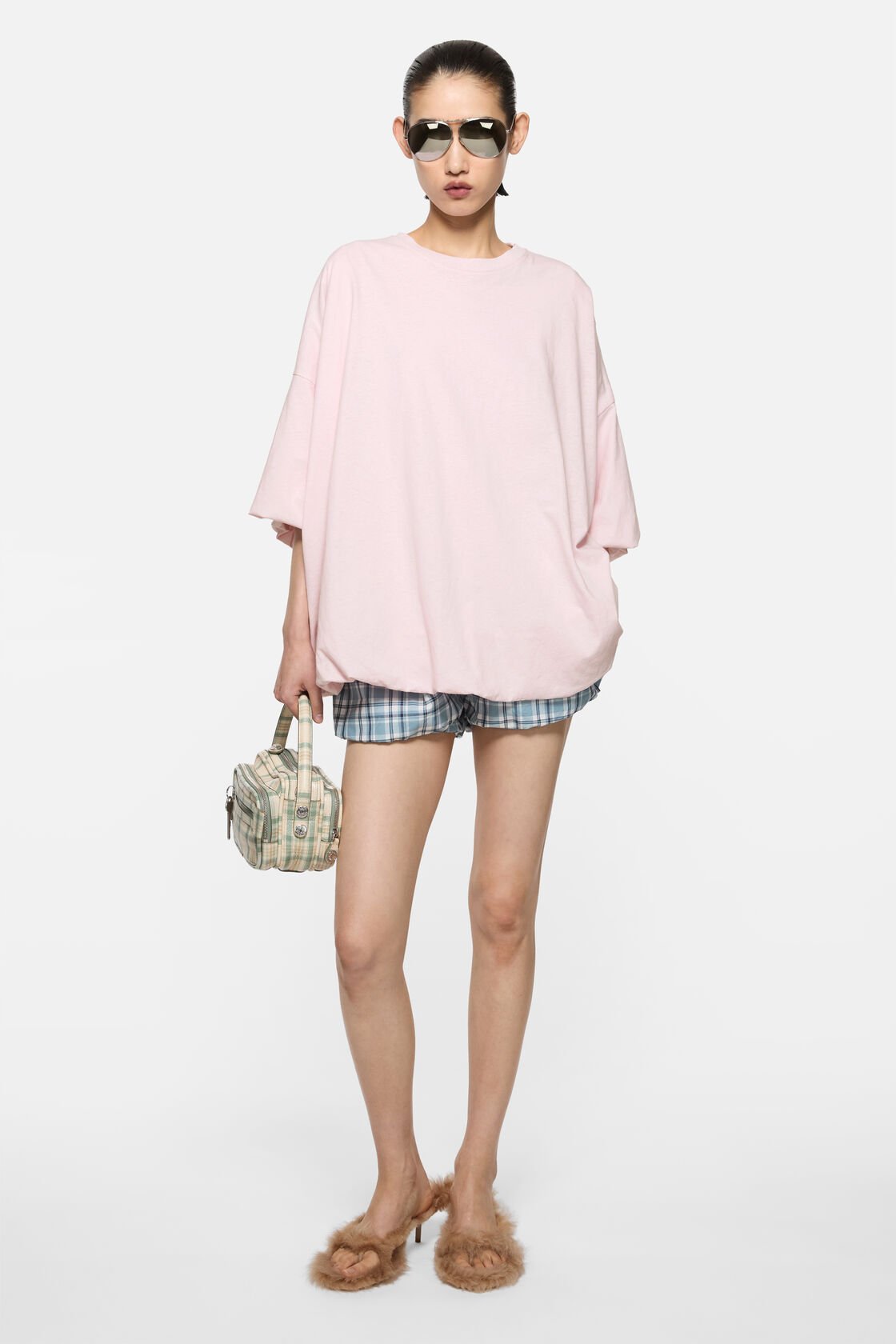
By the early 2000s, Acne Studios had expanded beyond denim into ready-to-wear, and Johansson's sensibility began to clarify. The clothes were neither minimal nor maximal. They occupied a middle register: slightly off, slightly unfinished, but always deliberate. A leather jacket might have sleeves that stopped an inch short of the wrist. A trench coat might be cut in a pale, impractical blush. Proportions were subtly distorted — a shoulder dropped, a hem asymmetrical — in ways that read as ease rather than experiment.
Johansson's references were eclectic and unstudied. He cited Helmut Lang and Martin Margiela, but also Swedish functionalism, the muted palette of Scandinavian interiors, the utilitarianism of workwear. His runway shows, staged in spare white rooms or industrial warehouses, felt more like art installations than fashion spectacles. Models walked slowly, sometimes barefoot. The lighting was flat. There was no music, or the music was so quiet it barely registered. The effect was to foreground the garments themselves, stripped of theatre.
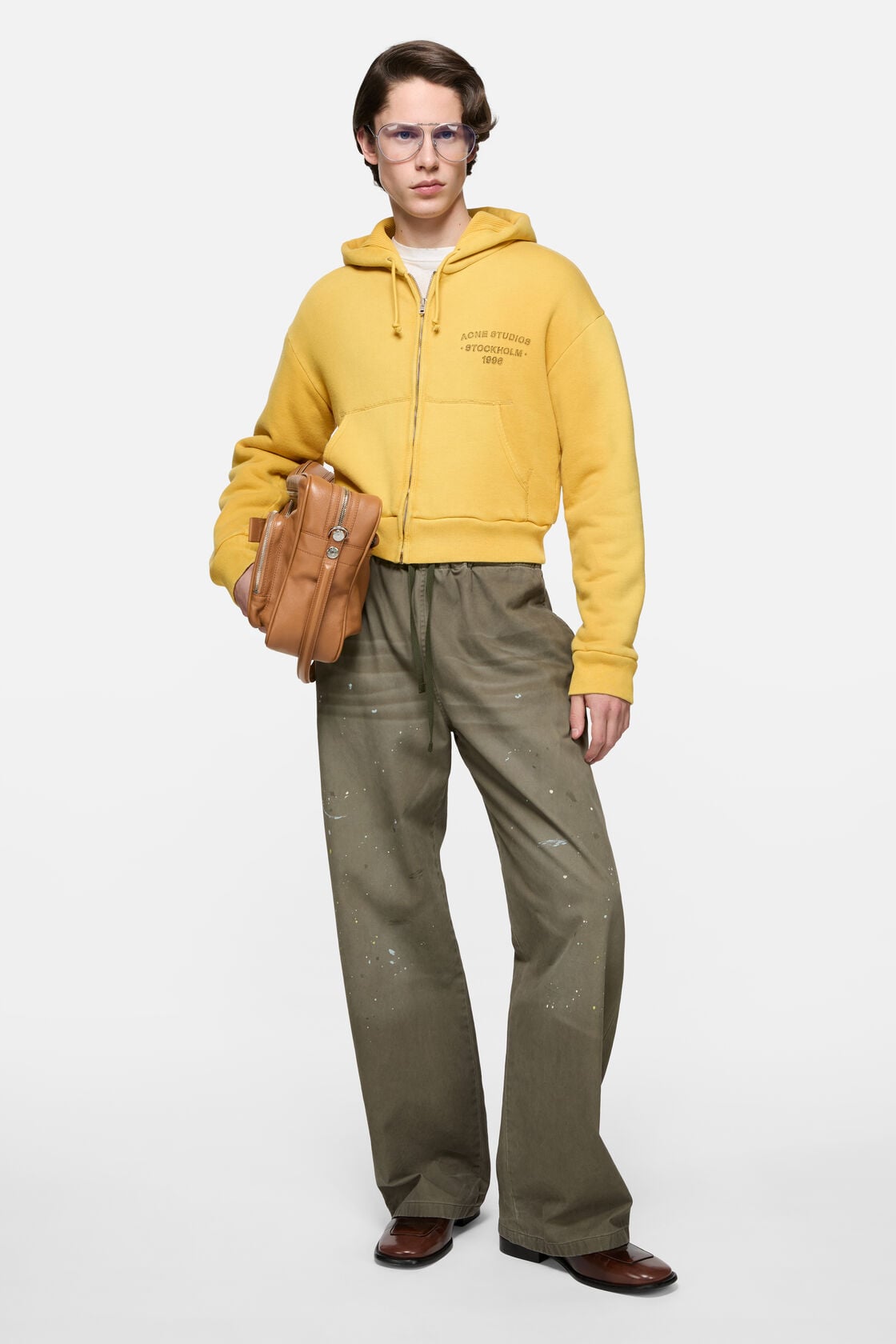
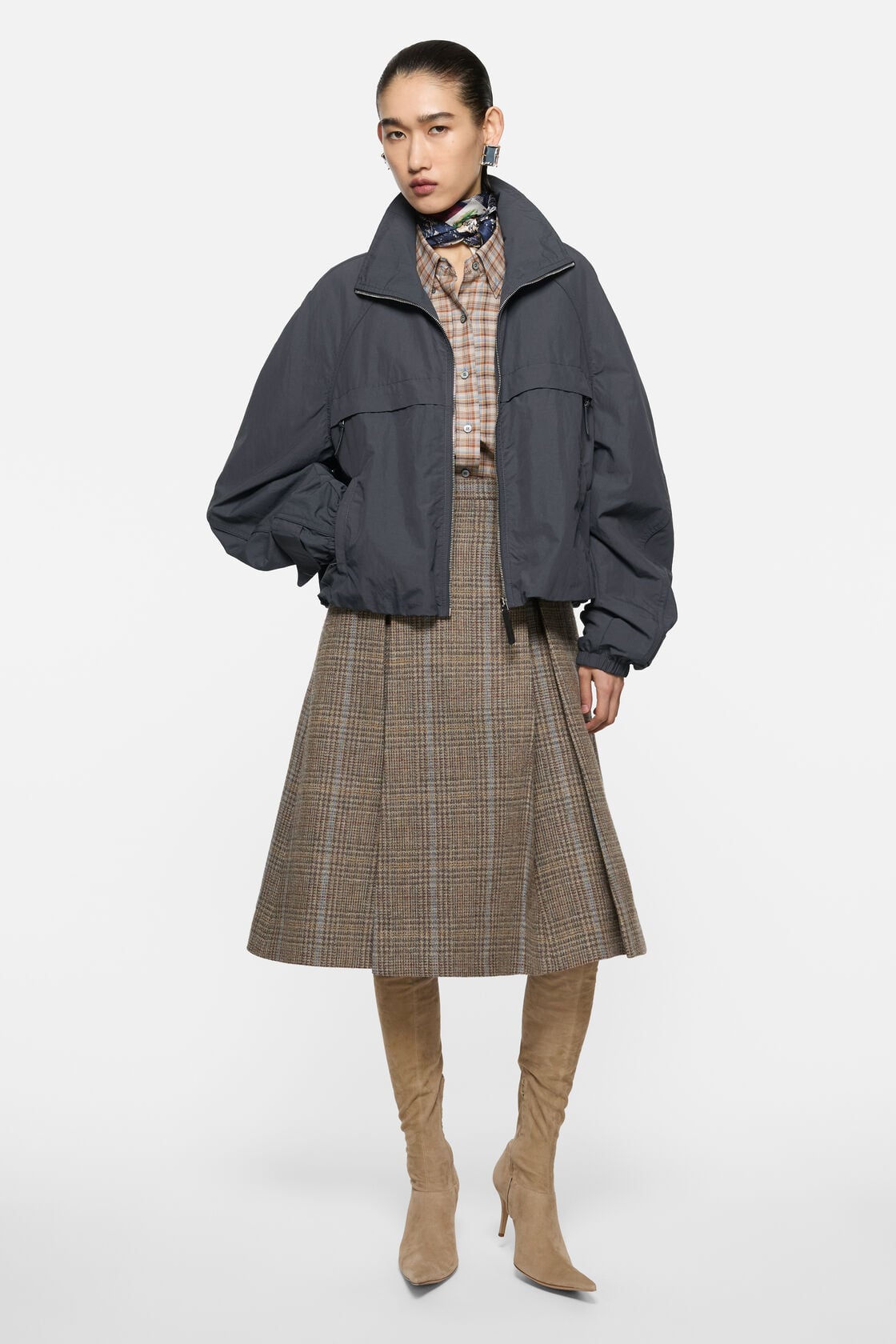
What emerged, collection after collection, was a vocabulary: oversized outerwear in camel and grey, denim treated as a neutral, knitwear with deliberate imperfections, leather goods that looked better with wear. Acne Studios became known for pieces that improved with age, that resisted the churn of trend cycles. The house's aesthetic was often described as Scandinavian, a label Johansson tolerated but never embraced. "We are Swedish, yes, but we are not making furniture," he told Vestoj in 2017. "The work is more personal than that."
The Pivot and the Pressure
In 2015, Acne Studios faced a pivot. The brand had grown rapidly — stores in Paris, London, New York, Tokyo — but remained independent, a rarity in an industry increasingly dominated by conglomerates. Johansson sold a majority stake to a private equity firm, a move that allowed for expansion but introduced new pressures. Collections needed to be more commercial, more legible to a broader audience. The question, implicit but unavoidable, was whether Johansson's idiosyncratic vision could scale.
He responded by doubling down on what made Acne Studios distinct. The collections became, if anything, more refined. He introduced the Musubi bag, a sculptural shoulder bag with a knotted front, which became a quiet bestseller. He leaned into outerwear, producing coats with exaggerated proportions that felt both architectural and wearable. He collaborated with artists and photographers — Viviane Sassen, Gia Coppola — to create campaigns that felt more like editorial projects than advertisements. The work remained personal, even as the business grew.
There were missteps. A collaboration with a fast-fashion retailer in 2019 drew criticism for diluting the brand's exclusivity. Some longtime customers complained that the newer collections felt too polished, too safe. Johansson acknowledged the tension in interviews but refused to apologise for evolution. "A brand that does not change is a brand that dies," he told Business of Fashion in 2020. The trick, he suggested, was to change slowly, to let the work accumulate rather than announce itself.
The Studio Today
Johansson still works from Stockholm, a choice that keeps him at a remove from the Paris-Milan-New York axis. The Acne Studios atelier is modest by industry standards — a converted warehouse in the Östermalm district, with high ceilings and north-facing light. He oversees a small team, most of whom have been with the house for years. The process is collaborative but not democratic. Johansson makes the final call on every piece, every fabric, every button.
His recent collections suggest a designer still refining rather than reinventing. Autumn/Winter 2024 featured oversized tailoring in charcoal and navy, leather trousers with a subtle flare, knitwear in gradient dyes that looked almost accidental. The palette was muted, the silhouettes familiar. But the details — a sleeve that wrapped at the wrist, a collar that stood without stiffness, a hem that fell just so — revealed the hours of adjustment, the millimetres of correction.
Johansson is fifty-three now, an age when many designers begin to consider legacy. He has said, in various interviews, that he has no interest in becoming an institution. He does not want Acne Studios to outlive its usefulness, to become a brand that trades on past glories. Whether the house can remain relevant without him is an open question, one he does not seem eager to answer.
For now, he returns to the fitting room, to the half-dressed mannequin, to the small corrections that accumulate into something coherent. The work continues. The seam shifts three millimetres. Better.