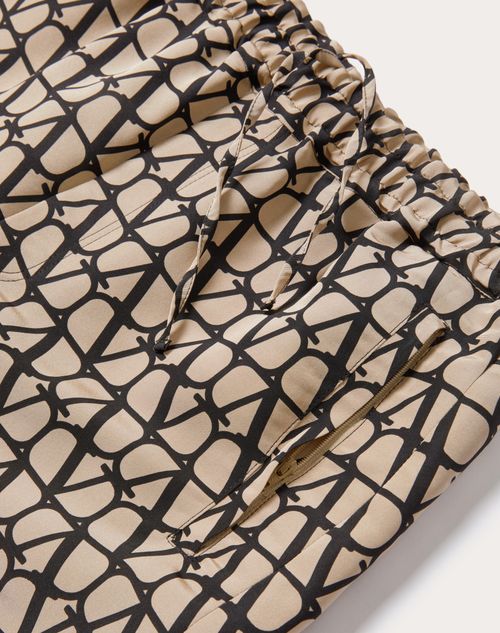
The fitting room at Palazzo Mignanelli runs the length of the first floor
The fitting room at Palazzo Mignanelli runs the length of the first floor. Alessandro Michele stands near the far window, arms crossed, watching a model turn in a gown that appears to have been assembled from three separate centuries. The bodice is structured like something from the 1880s. The skirt pools in organza the colour of dried rose petals. A bow the size of a dinner plate sits at the small of her back.
He says nothing for thirty seconds. Then: "The bow is wrong."
This is how Valentino works now. Michele arrived in March 2024 after seven years at Gucci and a brief, publicly messy exit. He had built an empire on maximalism, on clashing prints and archival plunder, on making the fashion system feel like a very expensive jumble sale. Valentino, by contrast, had spent the previous decade under Pierpaolo Piccioli refining a vocabulary of colour and volume that felt almost devotional. The question was whether Michele could do restraint. The early answer is: no, and that may be the point.
The long route in
Michele did not train as a designer in any formal sense. He studied at the Accademia di Costume e di Moda in Rome, but his real education came from working in the costume department at Tirelli, the atelier that supplies period dress to film productions. He spent years handling 18th-century frock coats and Edwardian corsetry, learning construction by reverse engineering garments that were never meant to be washed or worn more than once. It shows. His clothes at Gucci often looked like they had been pulled from a trunk in a country house and re-tailored by someone with a taste for the absurd.
He joined Gucci's design team in 2002, working under Tom Ford and then Frida Giannini. For over a decade he was invisible. When he was named creative director in 2015, the appointment was treated as an interim measure. The first collection arrived six months later and looked like nothing the house had done in twenty years. Pussy-bow blouses, fur-lined loafers, floral suits in jacquard so dense you could stand them in a corner. The fashion press called it eccentric. The market called it a miracle. Revenue tripled in three years.
The signature, then and now
Michele's Gucci rested on a few structural principles. First, more is more. Second, the past is not a period to reference but a prop room to raid. Third, if something feels slightly wrong, it is probably right. A men's suit in baby-pink silk. A handbag covered in appliquéd insects. A campaign starring octogenarians in cardigans. The work was never minimal, never quiet, and never particularly concerned with what anyone thought good taste might look like.
At Valentino, the same instincts are in play, but the context has shifted. Valentino Garavani built the house on a specific ideal of femininity: controlled, immaculate, expensively simple. Piccioli expanded that into something more operatic, using colour as structure and volume as punctuation. Michele has arrived with a different proposition. His first collection, shown in September 2024, featured lace blouses under tweed blazers, evening gowns with puffed sleeves the size of sofa cushions, and a recurring motif of oversized bows that looked like they had been borrowed from a portrait by John Singer Sargent.
The reaction was split. Some called it a brilliant collision of codes. Others said it looked like Gucci in a different building. Both are true. Michele does not work in evolution. He works in replacement. The question is whether Valentino's clients, who have spent years in Piccioli's precisely cut gowns, want to look like they are dressed for a garden party in 1902.
What he is trying to do
In an interview with System magazine last year, Michele said he was tired of the idea that fashion should be legible. He used the word "bourgeois" as a pejorative. He said he wanted to make clothes that confused people, that required a second look, that did not resolve into a single idea. That philosophy worked at Gucci because the house had no strong aesthetic memory to defend. Valentino does. The red alone carries more cultural weight than most brands manage in a decade.
Michele is not ignoring that history. He is treating it as one thread among many. His second collection, shown in March 2025, included several pieces in Valentino red, but they were styled with clashing prints and layered under jackets in powder blue. The effect was less "Roman couture" and more "what if Balenciaga made costumes for a Visconti film." It is a risky approach. Valentino's value is in its singularity. If it starts to look like everywhere else Michele has worked, the house loses the thing that made it worth hiring him in the first place.
The next chapter
Michele has said he plans to stay at Valentino for at least ten years. Whether that happens depends on how the commercial side responds. Gucci's revenue growth under his direction was extraordinary, but it was also driven by accessories, particularly the Dionysus bag and the loafer redesigns. Valentino's accessories business is smaller and less diversified. The clothes have to work.
The early signs are mixed. The atelier is producing pieces that require serious construction, the kind of internal boning and hand-finishing that takes weeks per garment. The price points reflect that. A gown from the first collection starts at €15,000. A day dress in printed silk runs €6,000. These are not clothes for the Instagram economy. They are clothes for clients who already own three homes and are looking for something to wear to someone else's wedding in Lake Como.
Michele seems unbothered by the pressure. In the Palazzo Mignanelli fitting room, he watches the model remove the gown with the oversized bow. He asks for the bow to be remade, smaller, and positioned four centimetres higher. The seamstress nods. He moves to the next piece, a coat in black wool with a fur collar that looks like it was taken from a 1930s photograph and enlarged by 20 per cent.
"It is not about being beautiful," he said in the System interview. "It is about being impossible to forget."
Whether that is what Valentino needs is a different question. But it is, undeniably, what Alessandro Michele does.