The fitting room at Via del Corso, sometime in the early Seventies
The fitting room at Via del Corso, sometime in the early Seventies. Lagerfeld adjusts a sleeve, tugs at a hem, and turns to the woman in the mirror. She is not a model. She is Anna Magnani, the actress, and she has come to Fendi not for a costume but for a coat. The kind of coat one wears to the market, to a café, to collect one's thoughts. Lagerfeld, newly installed as creative director, understands the assignment. He is not dressing a fantasy. He is dressing Rome.
Fendi has never been a house of singular vision. It was born plural — five sisters, each with a hand in the business — and it has remained so. Where other maisons orbit a single figure, Fendi has always required a cast. The designer, yes, but also the muse. And not the muse as ornament, but as collaborator, as provocation, as the woman who walks in and changes the brief.
Three such women come to mind. Not because they were the most photographed, though two of them were, but because they bent the house toward something it had not yet become.
Anna Magnani and the Refusal of Chic
Magnani arrived at Fendi in the early days of Lagerfeld's tenure, when the house was still known primarily for fur and little else. She was not interested in fur. She was interested in a coat that could withstand the weather, both meteorological and emotional. Lagerfeld, who had spent the previous decade making frothy things for Chloé, obliged. He made her a double-faced wool coat, belted, with pockets deep enough to lose your hands in. No lining. No flourish. The kind of garment that improves with wear.
Magnani wore it everywhere. In photographs from the period, you see her in the coat, a scarf knotted at her throat, her face set in that expression of hers — alert, faintly amused, as if she has just heard a joke but refuses to laugh. The coat became a template. Fendi, under Lagerfeld, would continue to make fur, but it would also make things for women who had no patience for the performance of wealth. Women who wanted facture without fuss.
One suspects Magnani never thought of herself as a muse. She was an actress. She needed a coat. But her presence at Fendi in those years — her insistence on the practical, the durable, the un-precious — set a tone. The house could be luxurious without being delicate. It could be Roman without being imperial.
Delfina Delettrez and the Question of Inheritance
Delfina Delettrez Fendi was born into the house. Literally. Her mother, Silvia Venturini Fendi, runs accessories and menswear. Her grandmother was one of the five sisters. By the time Delfina was old enough to hold a pencil, she had already spent more hours inside the atelier than most designers accumulate in a career.
She did not, however, stay inside it.
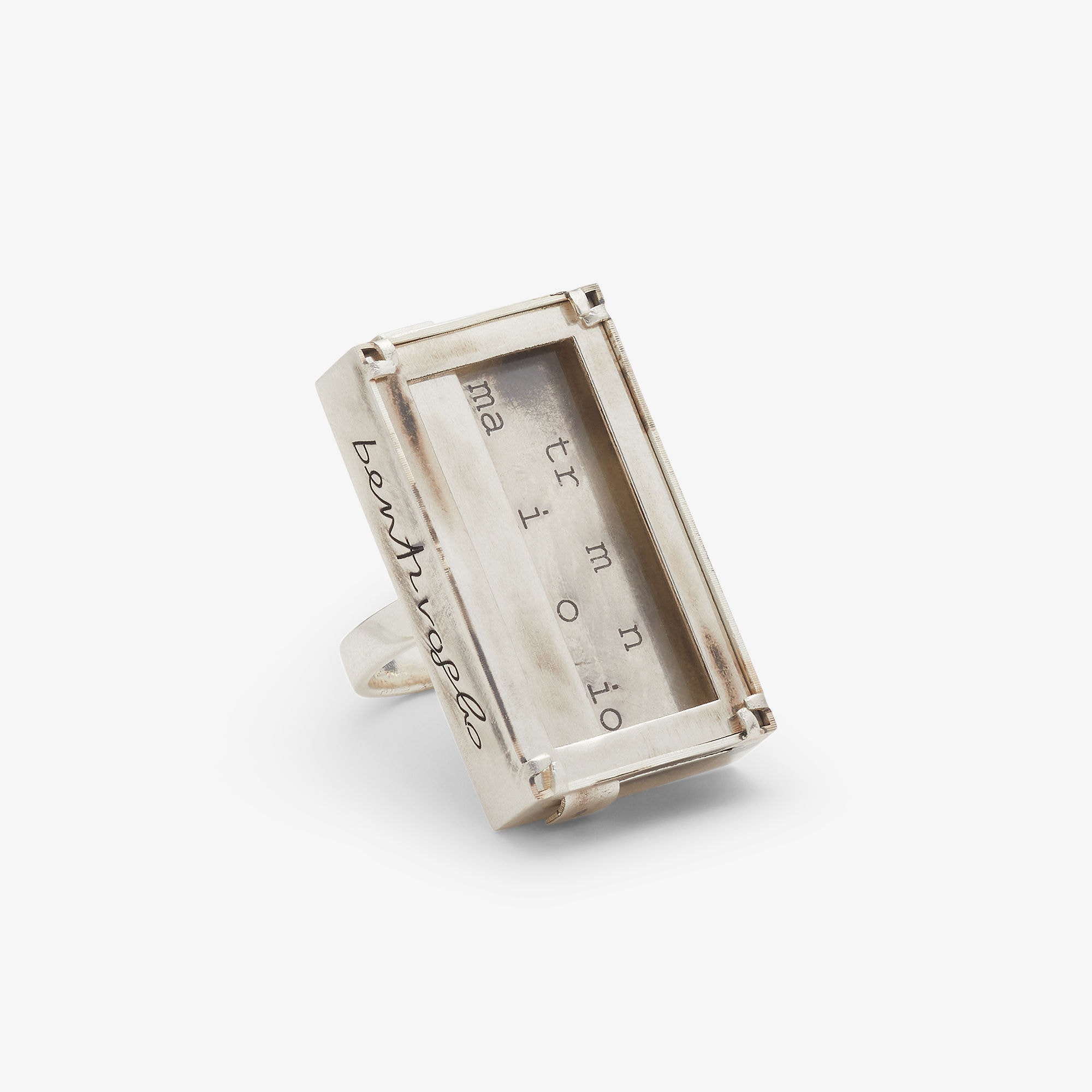
In 2007, at twenty, she launched her own jewellery line. The pieces were strange. Earrings that looked like tiny sculptures, rings that required instructions. She used pearls, but not in the way one's grandmother might. She used gold, but made it look like bone. The work was gothic, surreal, occasionally unsettling. It was not what one expected from a Fendi.
And yet. When Silvia Venturini Fendi began incorporating jewellery into the accessories line, she turned to Delfina. The collaboration was subtle at first — a charm here, a hardware detail there. But over time, Delfina's sensibility began to seep into the house. The Baguette, relaunched in the 2010s, started appearing with jewelled clasps, with chains that doubled as necklaces, with an ornamentation that felt less like decoration and more like punctuation.
Delfina has never formally joined Fendi. She maintains her own line, her own studio, her own point of view. But her influence is legible. She showed the house that inheritance need not mean repetition. That one could honour the archive without being trapped by it. That a Fendi, working at Fendi, could still surprise.
Adele Casagrande and the Founding Myth
The third woman is the first. Adele Casagrande married Edoardo Fendi in 1925, and together they opened a leather and fur workshop on Via del Plebiscito. Edoardo handled the business. Adele handled everything else.
She was not a designer in the modern sense. She did not sketch. She did not present collections. But she knew fur. She knew how to match pelts, how to cut them so the pattern flowed, how to line a coat so it sat on the body without pulling. She trained her daughters — the five sisters who would later run the house — in the same methods. Precision. Patience. An attention to the hand of the material that bordered on the devotional.
When Lagerfeld arrived in 1965, he found an atelier that still operated according to Adele's principles. Fur was not treated as a status symbol but as a textile, subject to the same rigour as wool or silk. This was unusual. Most furriers at the time were in the business of conspicuous consumption. Fendi, under Adele's influence, was in the business of craft.
Lagerfeld understood this immediately. He began experimenting — shearing fur to the texture of velvet, dyeing it in colours no mink had ever been, treating it as fabric rather than trophy. The work was radical, but it was also a continuation. Adele had taught the house to see fur as material. Lagerfeld simply took the next step.
She died in 1978, long before Fendi became the global concern it is today. But her approach — rigorous, tactile, unsentimental — remains embedded in the house. It is there in the way a seam is finished, in the weight of a handle, in the refusal to mistake luxury for softness.
What Remains
Fendi, in 2025, is a different house than it was in Magnani's day, or Adele's, or even Delfina's adolescence. It is owned by LVMH. It shows in Paris as well as Milan. It has a menswear line, a homeware line, a presence in markets Adele could not have imagined.
But the through-line persists. The house still responds to women who refuse to perform. Who want the coat, not the idea of the coat. Who understand that luxury is not about being seen but about being made, and made well.
Magnani, Adele, Delfina — three women, three generations, three ways of bending Fendi toward something it had not yet articulated. Not muses in the passive sense, but agents. The ones who walked in and said: this, not that. Make it work.