## The Fitting Room
The Fitting Room
Matthieu Blazy stands in a white-walled room on Via Privata Ercole Marelli, holding a sleeve that will not behave. The jacket is unfinished — pinned, tacked, chalk-marked at the armscye — and the model shifts her weight while Blazy tugs the cuff forward, then back, testing the fall. He does not speak. The atelier waits. After a moment he nods, and the seamstress steps in with her shears.
This is not theatre. Blazy has been creative director at Bottega Veneta since November 2021, and the work happens here, in fittings that run long and conversations conducted mostly through fabric. He came up through the ateliers — Raf Simons, Phoebe Philo's Céline, Maison Margiela under John Galliano — and the training shows. He does not sketch silhouettes and hand them off. He builds them on the body, adjusts them in muslin, remakes them when the proportion is wrong.
The house he inherited was already famous for intrecciato leather and a kind of algorithmic desirability. What it lacked was a centre of gravity. Blazy gave it one by returning to the fundamentals: cut, material, the intelligence of construction. His first collection for Bottega, shown in February 2022, opened with a slim coat in doubled cashmere that fastened with a single button and moved like water. No logo. No statement bag in the opener's hand. Just a coat that worked.
Training
Blazy is French, raised in Paris, trained at La Cambre in Brussels. The school is small and technical, closer to an apprenticeship than a theory seminar. He learned pattern-cutting there, draping, the mechanics of a sleeve head. After graduating in 2004, he moved through a series of studios where those skills mattered. First Raf Simons in Antwerp, where he worked on womenswear and learned to pare a silhouette down to its skeleton. Then Maison Margiela under Galliano, a house built on deconstruction and the idea that a garment could be both rigorous and strange.
The decisive years were at Céline, from 2014 to 2016, under Phoebe Philo. Philo's studio was famously exacting. Prototypes were remade until the sleeve pitched forward at exactly the right angle, until the skirt's kick pleat opened with the stride and closed behind it. Blazy has said little about that period in interviews, but the influence is legible. His work at Bottega shares Philo's interest in volume that does not announce itself, in cloth that carries weight without stiffness, in the coat you can wear for a decade without dating it.
After Céline he went to Calvin Klein under Raf Simons, then back to Paris as design director at Bottega under Daniel Lee. Lee's tenure was loud — the pouch bag, the square-toe boots, the padded cassette that became the house's commercial engine. Blazy worked in his shadow for two years, and when Lee departed abruptly in 2021, Kering handed the studio to his deputy.
The Pivot
Blazy's first show did not repudiate Lee's work so much as ignore it. Where Lee had leaned into logo-free status symbols and sculptural accessories, Blazy opened with clothes. A lean trouser in wool cavalry twill. A shirt with sleeves that gathered at the cuff and billowed through the forearm. A leather jacket so supple it moved like jersey, cut with a nipped waist and a collar that sat flat without stiffening.
The collection was not minimal. Minimalism implies reduction, a stripping away. What Blazy showed was abundance handled with discipline. Fringed leather that cascaded from a shoulder but never overwhelmed the body. Knits in gradient dyes that shifted from charcoal to rust across a single pullover. A trench in waxed cotton with an oversized collar and sleeves that could be rolled back to reveal contrast lining. Every piece carried some small complexity — a seam that curved instead of running straight, a placket that fastened asymmetrically, a hem that dipped at the back — but none of it shouted.
The bags were there, but they were not the point. The Kalimero, a soft pouch with a drawstring closure, became the collection's quiet hero. It slouched. It required no explanation. You could carry it to the market or to a meeting, and it worked either way.
Critics called it a return to craft, which was true but incomplete. Blazy had not rejected modernity or spectacle. He had simply moved the spectacle inward, into the construction. A coat might look simple from five metres away. Up close, you saw that the sleeves were set with a reverse seam, that the lining was hand-stitched at the hem, that the buttons were leather-covered and matched the shell's exact shade.
Signature
If there is a signature, it is this: clothes that reward proximity. Blazy works in trompe-l'œil, in materials that mimic other materials. Leather treated to look like denim. Denim woven to feel like twill. Knits constructed to drape like wovens. A dress from his spring 2023 collection appeared to be made from crumpled paper. It was lambskin, each crease and fold achieved through a multi-stage treatment that took the atelier weeks to develop.
This is not novelty for its own sake. The technique serves a purpose. By destabilising the expected relationship between appearance and material, Blazy forces a second look. The viewer must slow down, reconsider, touch. In an industry built on immediate legibility — logo, silhouette, colour — this is a radical move. It asks for attention, not recognition.
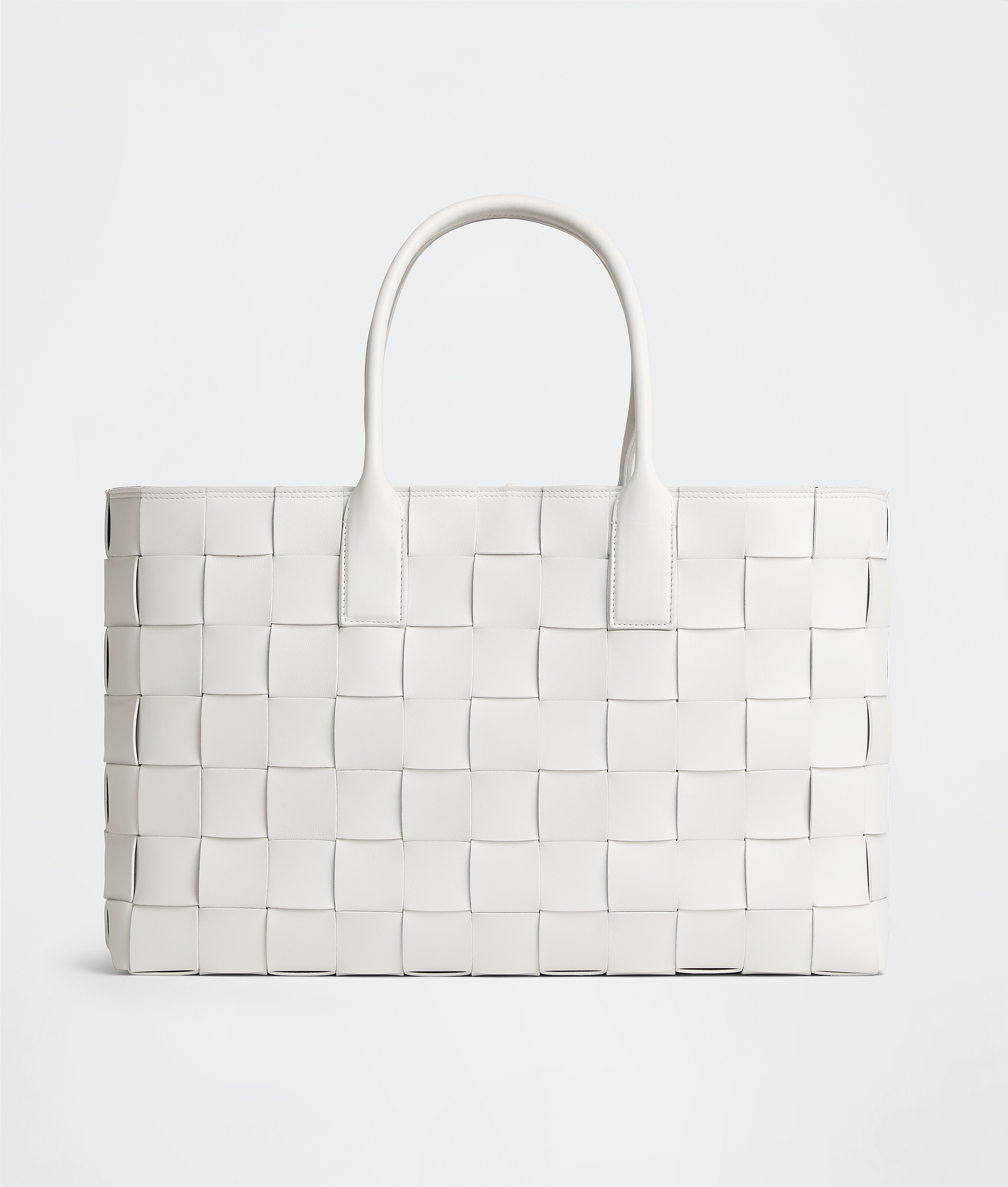
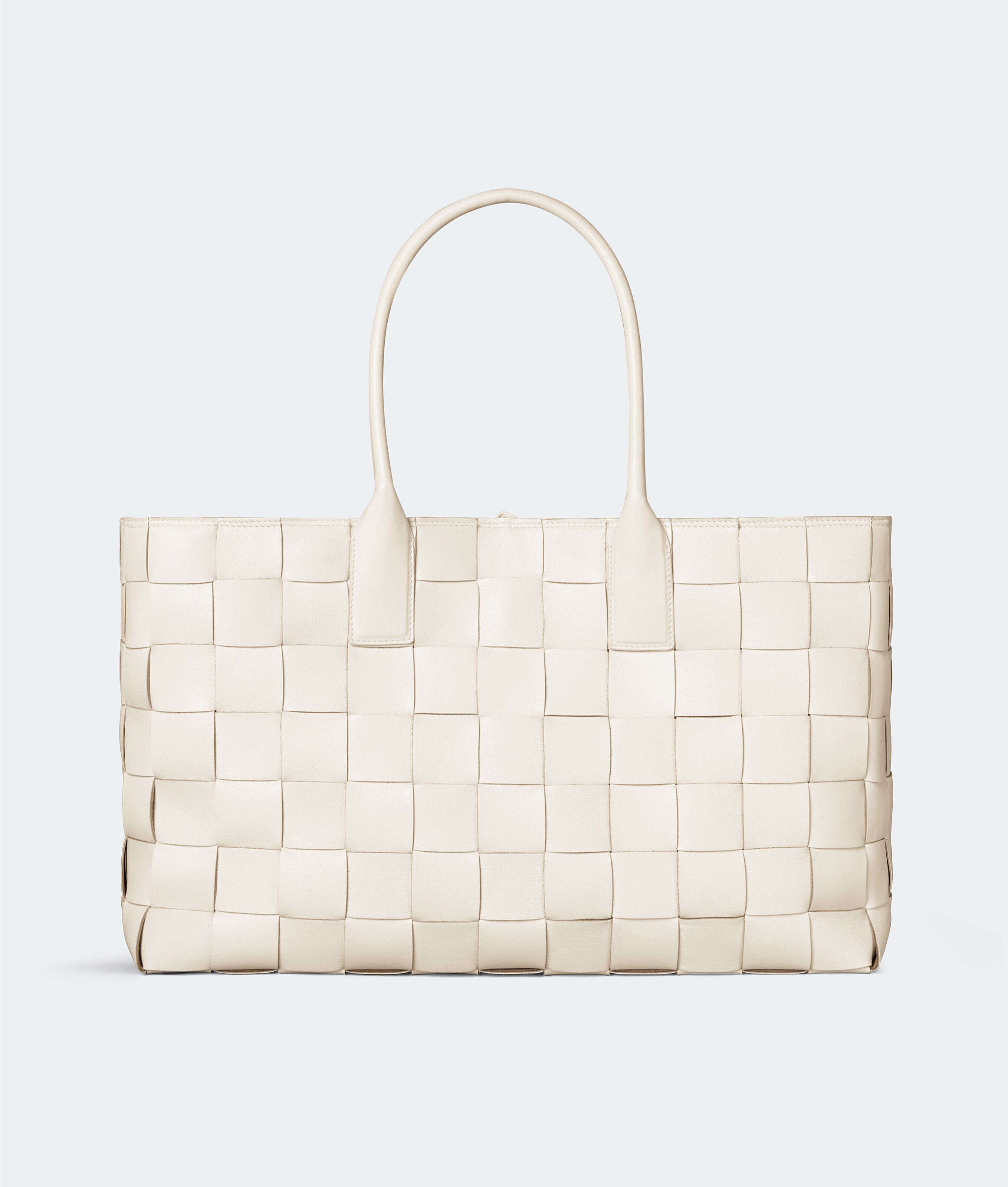
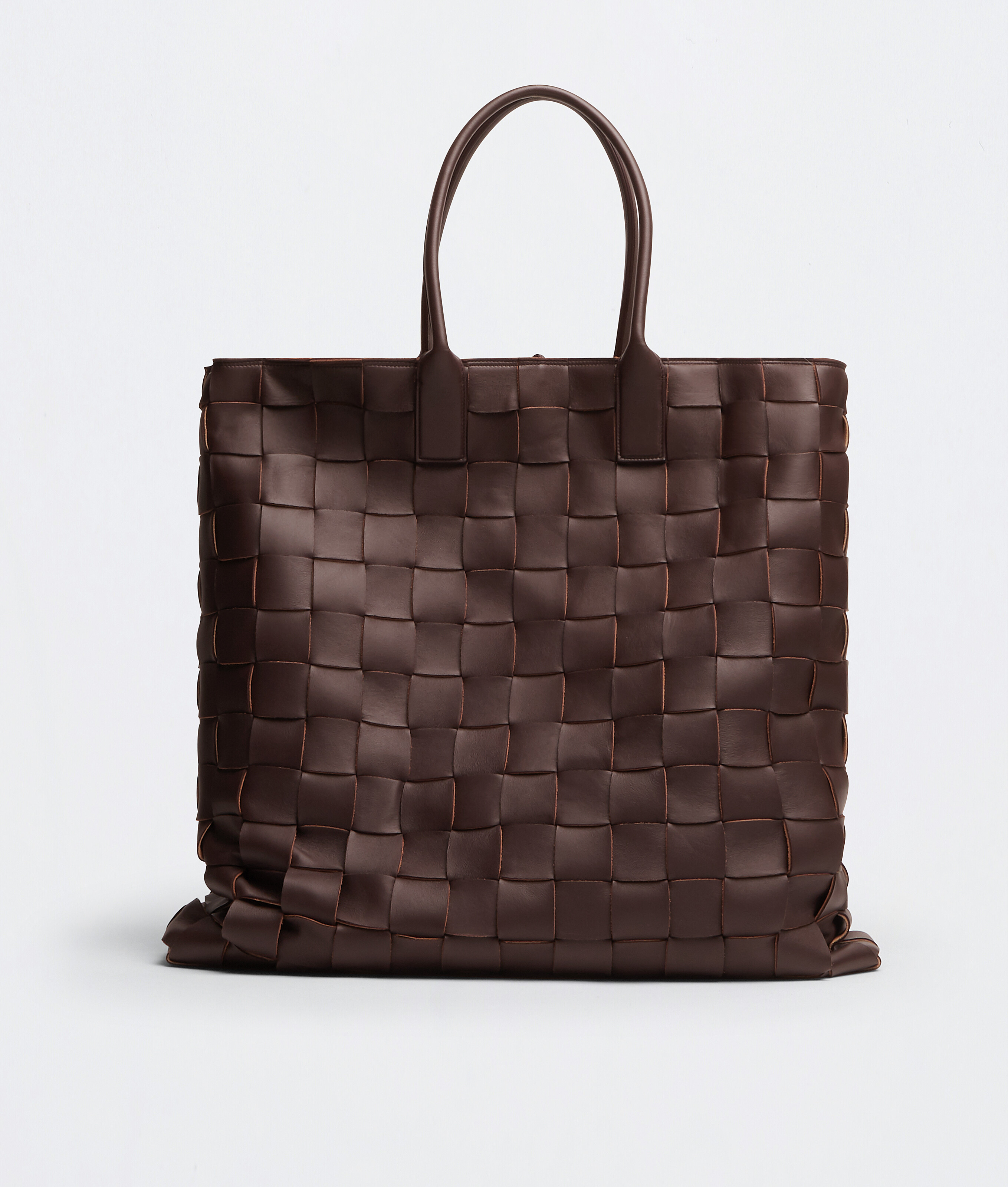
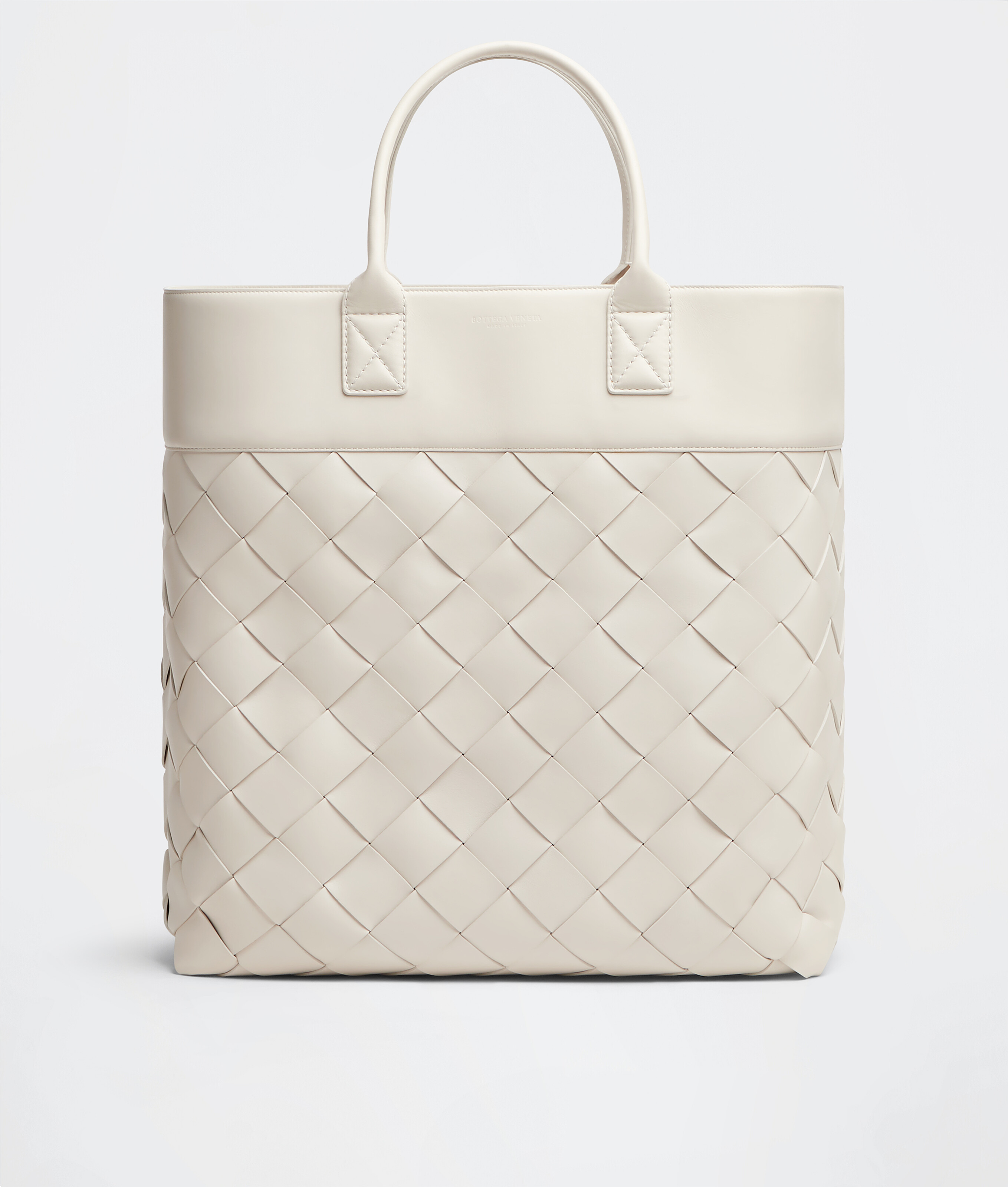
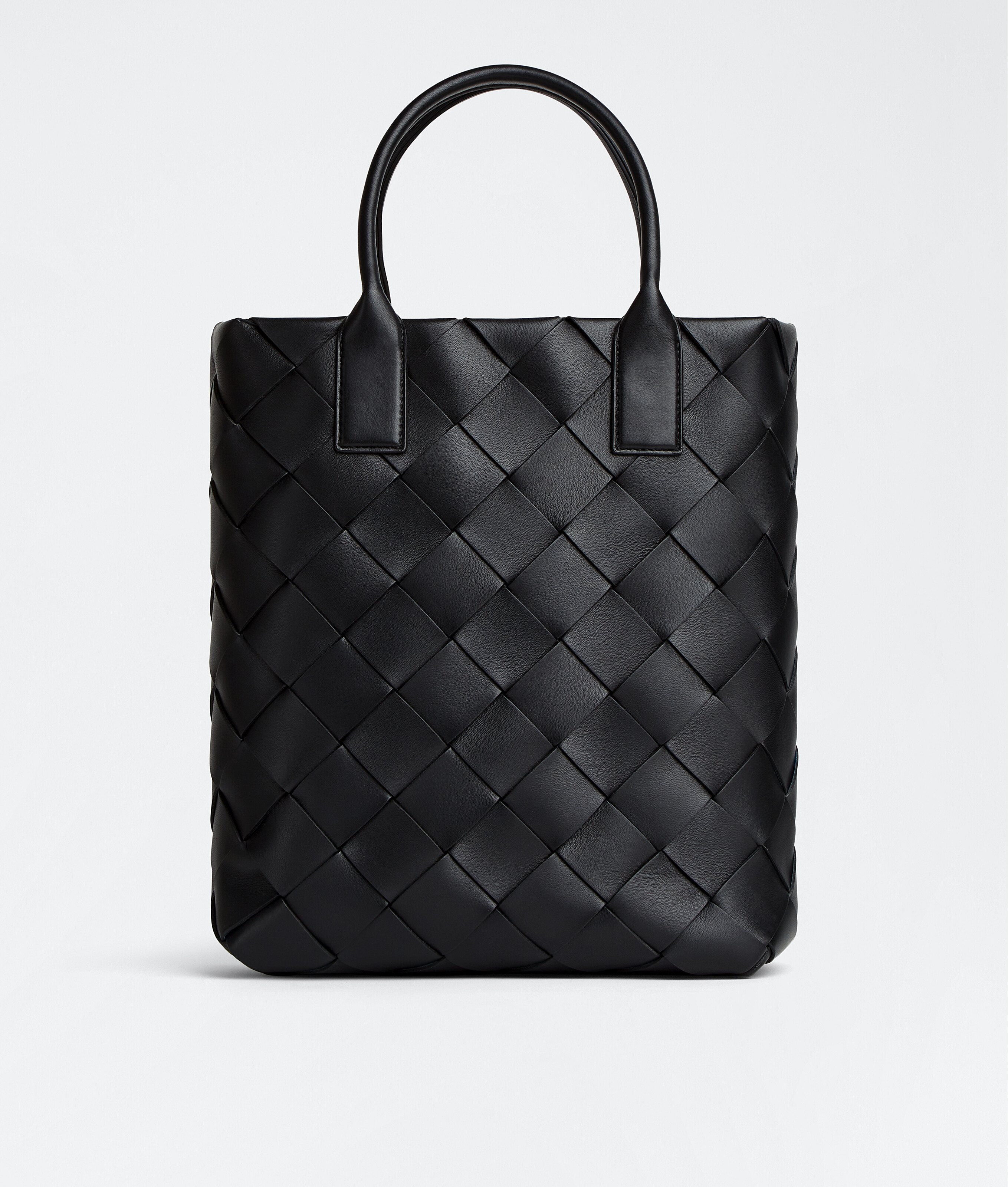
The intrecciato remains central, but Blazy has expanded its vocabulary. The house's signature weave now appears in unexpected weights and scales: oversized and chunky in a tote, so fine it resembles textile in a clutch, applied to denim and canvas and rubber. He has introduced new leathers — a grainy bull hide, a matt calfskin that resists shine — and used them in garments, not just accessories. A spring 2024 look featured a full intrecciato leather coat, weightless despite its density, that moved like a shirt.
What Next
Blazy has been in the seat for three years. The house is stable, critically lauded, commercially growing. The question now is whether he can sustain the model. Fashion's calendar is punishing. Two mainline collections a year, plus pre-collections, plus collaborations, plus the constant demand for newness that feeds the content cycle. Blazy's approach — slow, iterative, rooted in atelier development — does not accelerate easily.
There are signs he is testing the edges. His autumn 2024 show included a collaboration with a Venetian glassmaker, resulting in bags with hand-blown glass handles. The pieces were absurd and beautiful and mostly unwearable, a provocation from a designer known for wearability. He has also begun working with unexpected fabrications: rubberised cotton, bonded neoprene, a synthetic that mimics the hand of linen but repels water.
The risk is that the signature becomes a formula. Blazy's strength is his ability to make the complex look effortless, but effortlessness requires constant recalibration. If the trompe-l'œil becomes predictable, if every collection offers leather-that-looks-like-denim and knit-that-drapes-like-silk, the surprise dissipates.
For now, the work holds. Bottega Veneta under Blazy is a house that trusts its audience to look closely, to value construction over concept, to buy a coat because the sleeve is perfect. That is a bet on patience in an impatient industry. Whether it pays off depends on how long he can keep the fitting room door closed and the work quiet.