The fitting room in Stockholm smells of steam and unfinished wool
The fitting room in Stockholm smells of steam and unfinished wool. Jonny Johansson stands beside a model wearing a bomber jacket cut from what appears to be upholstery fabric — something between damask and denim, stiff enough to hold its silhouette without a body inside. He tugs at the sleeve head, frowns, says nothing. The pattern-maker waits. After a long pause: "Take it in two centimetres. Keep the volume at the shoulder."
This is how Acne Studios has operated for two decades. Quietly. With a preference for the fitting over the fanfare.
The Accidental Designer
Johansson did not train as a designer. He studied graphic design and advertising at Beckmans College of Design in Stockholm, graduating in the mid-nineties with no particular ambition to cut cloth. The fashion career began, as these things sometimes do, by accident. In 1996, he and three friends — Mikael Schiller, Jesper Kouthoofd, and Torkel Stavlund — founded Acne, an acronym for Ambition to Create Novel Expressions. It was a creative collective, not a fashion house. They made films, furniture, and eventually a run of raw-denim jeans with red stitching, which they gave to friends.
The jeans sold. All hundred pairs, then a thousand more. By 1997, Acne had pivoted — not entirely, but enough — into clothing. Johansson became the de facto designer, a role he has held ever since, though he resists the mythology that typically attends the title. "I'm not a couturier," he told System in 2014. "I'm interested in how people actually dress."
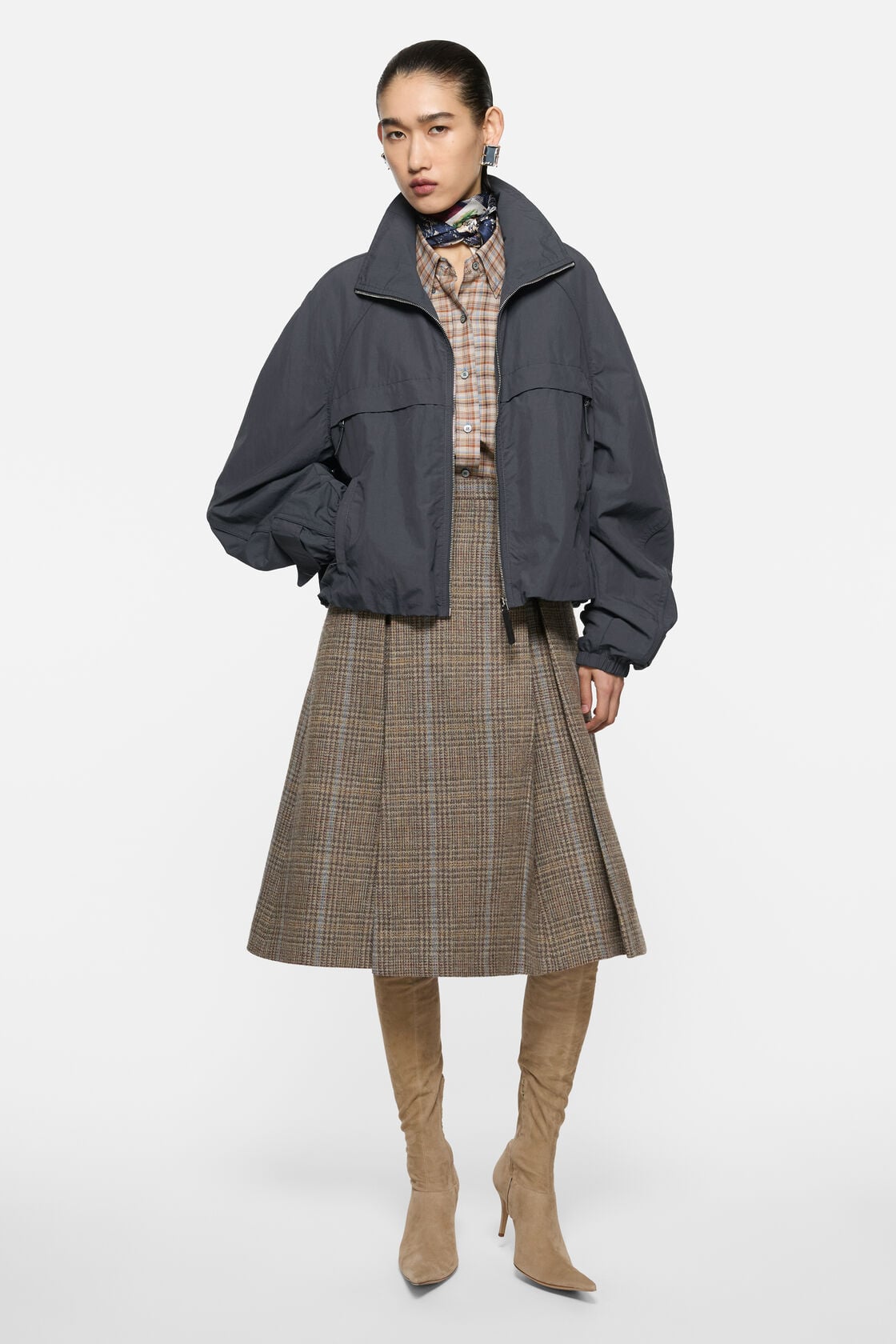
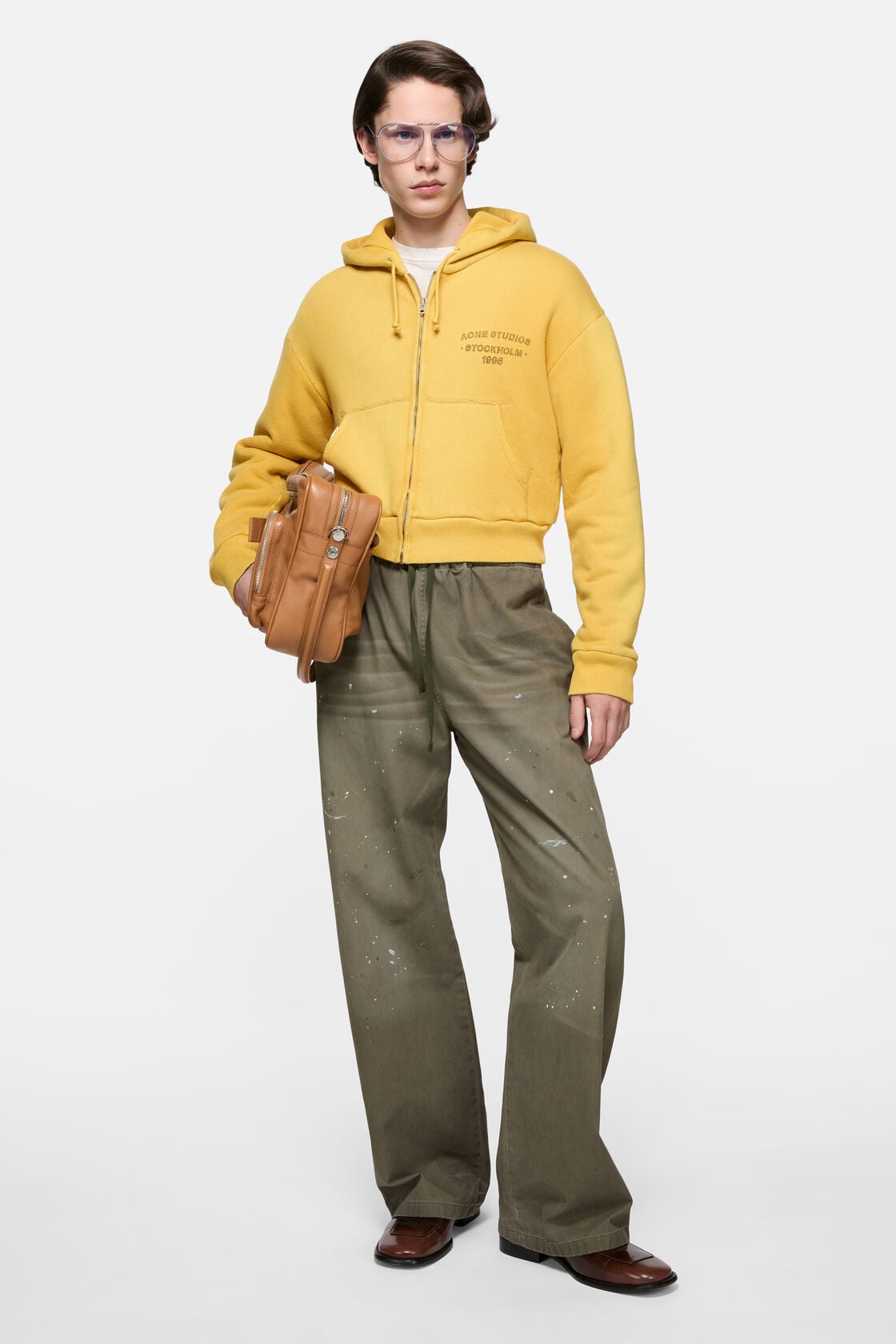
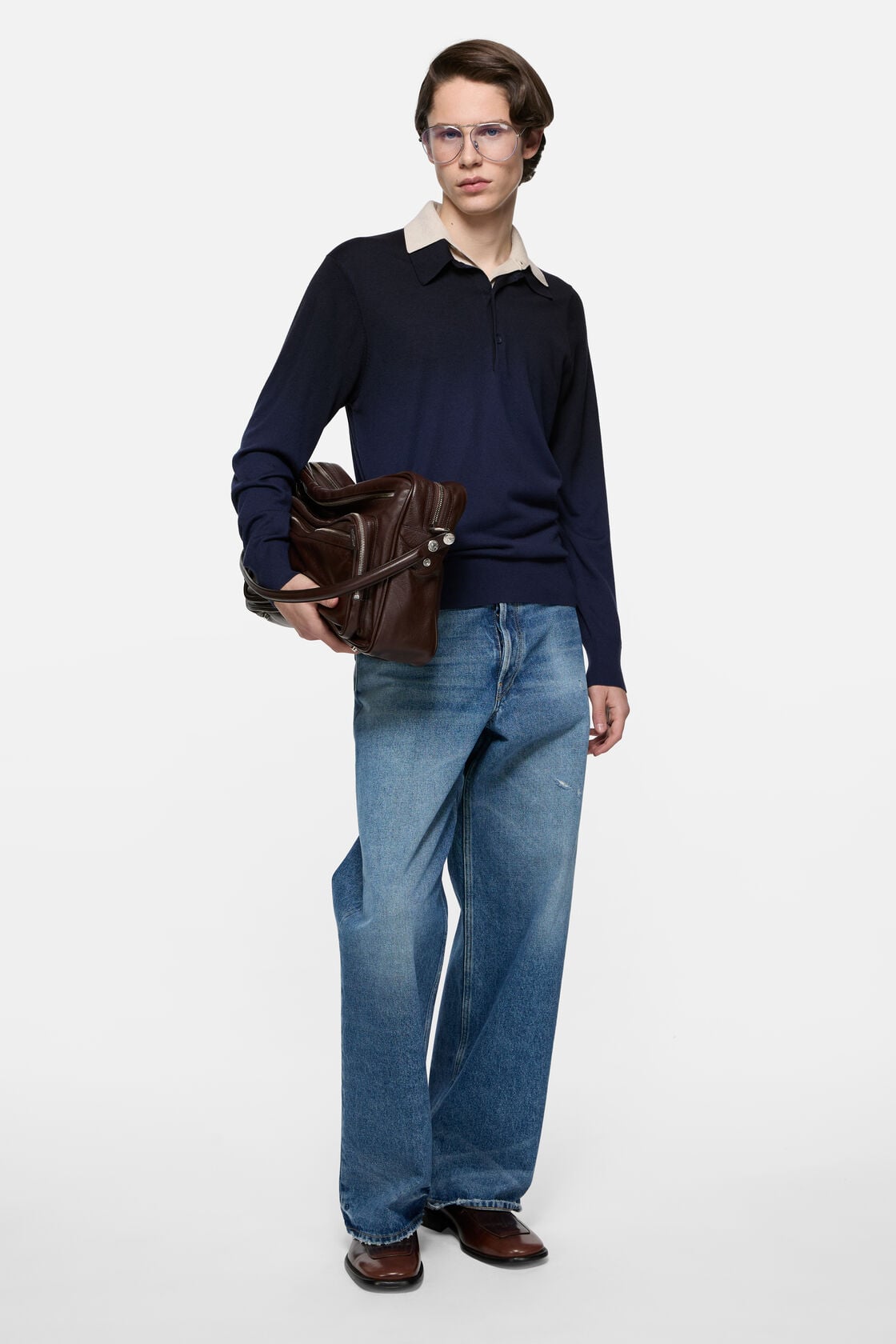
That pragmatism has shaped the house. Acne Studios — the name was extended in 2006 to avoid confusion with the skincare brand — does not deal in fantasy. It deals in oversized tailoring, deliberately unfinished hems, and knitwear that looks like it was borrowed from someone's older brother. The aesthetic is neither minimal nor maximal. It is, instead, specific. A grey melange crewneck in double-faced merino. A trench coat with the lining left raw. A scarf so large it functions as a blanket.
The Pivot
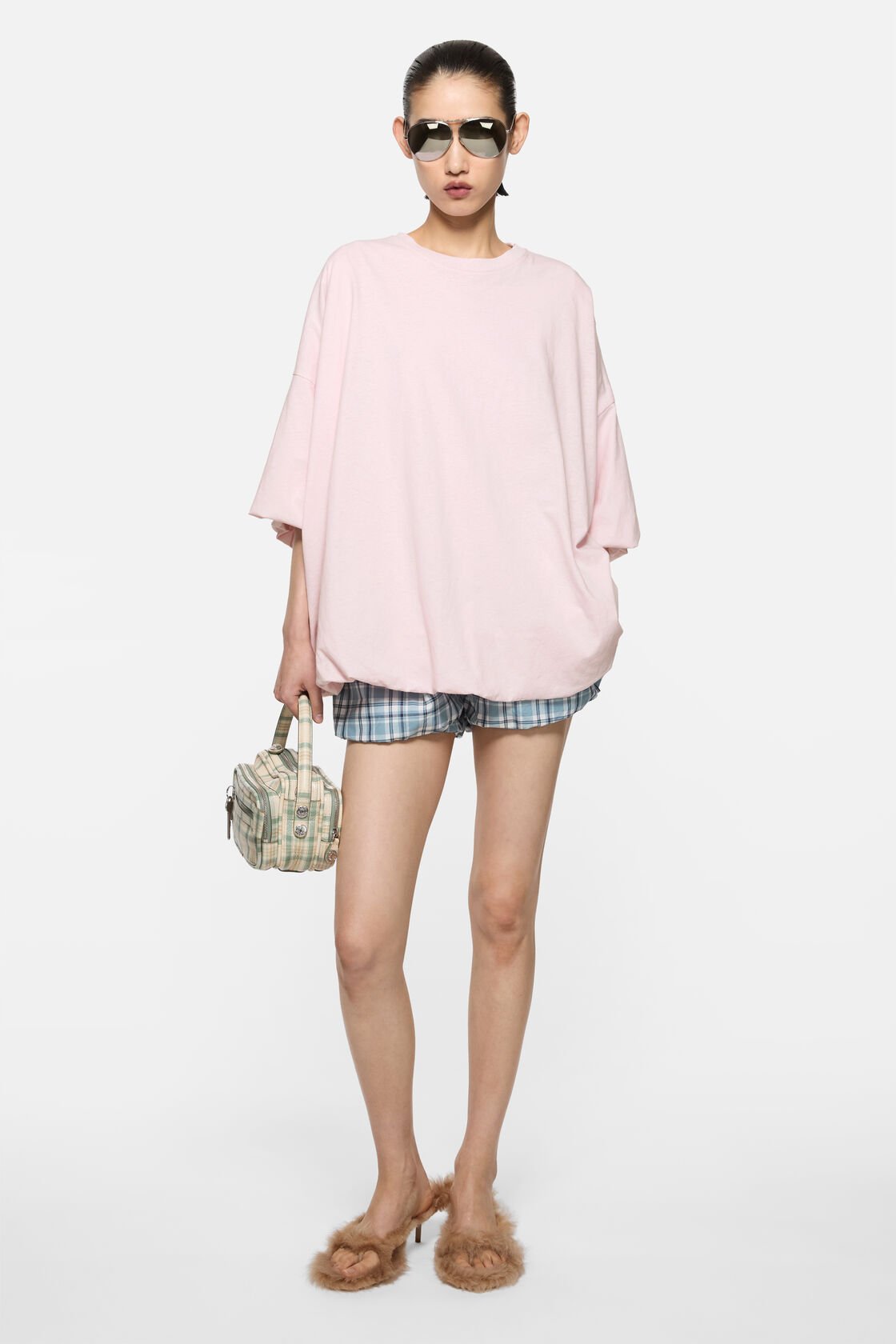
The breakthrough, if one can call it that, came in the early two-thousands. Acne Studios began showing in Paris, first off-calendar, then as part of the official schedule. The collections were met with a kind of bemused respect. Here was a Swedish house that understood Parisian tailoring but refused to perform it in the expected register. The shoulders were too wide. The trousers pooled at the ankle. The colour palette leaned toward grey, rust, and a particular shade of dusty pink that became, for a time, unavoidable.
Johansson's references were never purely sartorial. He cited Helmut Newton, Fassbinder, and the Swedish welfare state. The clothes reflected that hybridity — part studio uniform, part art-school costume, part something you might find in a Stockholm flea market. It was, in other words, difficult to copy. And in an industry that thrives on replication, that counted for something.
By 2010, Acne Studios had opened stores in Paris, London, and New York. The business had scaled, but the design process had not. Johansson still worked with a small team, still preferred the fitting to the mood board, still cut patterns himself when the result wasn't right. The house expanded into denim, leather goods, and eyewear — the Mustang frame, a squared-off acetate style, became as recognisable as the clothing — but the sensibility remained consistent. Oversized, unfinished, just left of centre.
The Signature
If there is a signature, it lies in proportion. Acne Studios does not make small clothes. The blazers swallow the body. The scarves trail to the knee. Even the T-shirts, cut from heavyweight cotton, hang with a deliberate looseness that suggests the wearer has borrowed them from someone taller. This is not accidental. Johansson has spoken, in interviews, about his interest in how garments move when they are too big — the way an oversized coat creates space around the body, the way volume can function as a kind of privacy.
The other signature is colour. Or rather, the absence of it. Acne Studios collections are built on a foundation of grey, black, camel, and navy, punctuated occasionally by a wash of pink or a stripe of ochre. The palette is neither austere nor boring. It is, instead, legible. You can recognise an Acne Studios piece from across a room, not because of a logo — though the house does use one, a sans-serif wordmark that appears on scarves and sweatshirts — but because of the way it sits on the body.
The house has also developed a reputation for its outerwear. The shearling-lined aviator jacket, introduced in the early two-thousands, has been reissued in various forms nearly every season since. The trench coat, cut long and left unlined, has become a studio staple. These are not investment pieces in the traditional sense. They are, instead, things one wears until they fall apart, then replaces with the same thing.
The Next Chapter
In 2015, Acne Studios sold a majority stake to IDG Capital Partners, a Beijing-based private equity firm. The deal raised questions about independence, about scale, about whether a house built on a certain kind of idiosyncrasy could survive institutional ownership. So far, the answer appears to be yes. Johansson remains creative director. The design process remains the same. The stores have multiplied — there are now more than fifty worldwide — but the aesthetic has not diluted.
The recent collections suggest a designer still interested in the same questions he was asking twenty years ago. How much volume can a sleeve hold before it becomes costume? What happens when you cut a blazer two sizes too large? Can a scarf function as architecture? These are not rhetorical questions. They are problems to be solved in cloth, at the fitting, with a pattern-maker waiting for instruction.
Johansson is now in his early fifties. He has no apparent interest in becoming a celebrity designer, no plans to launch a beauty line or collaborate with a sportswear giant. He shows up, makes clothes, adjusts the sleeve head by two centimetres. The work, one suspects, is enough.
In the Stockholm fitting room, the bomber jacket returns. The sleeve is narrower now, the shoulder still broad. Johansson nods. The pattern-maker makes a note. The jacket will go into production, will appear in stores six months from now, will sell or not sell depending on factors beyond anyone's control. But the process — the fitting, the adjustment, the refusal to settle — remains the same. And for a house built on specificity rather than spectacle, that consistency is the point.