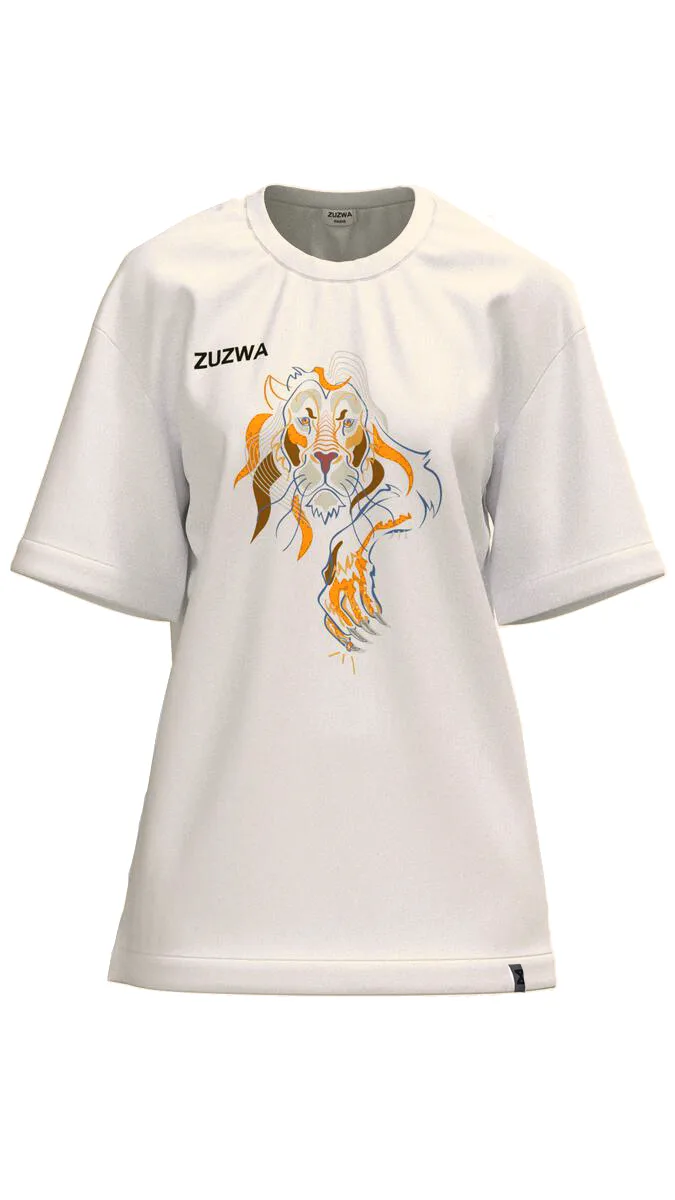
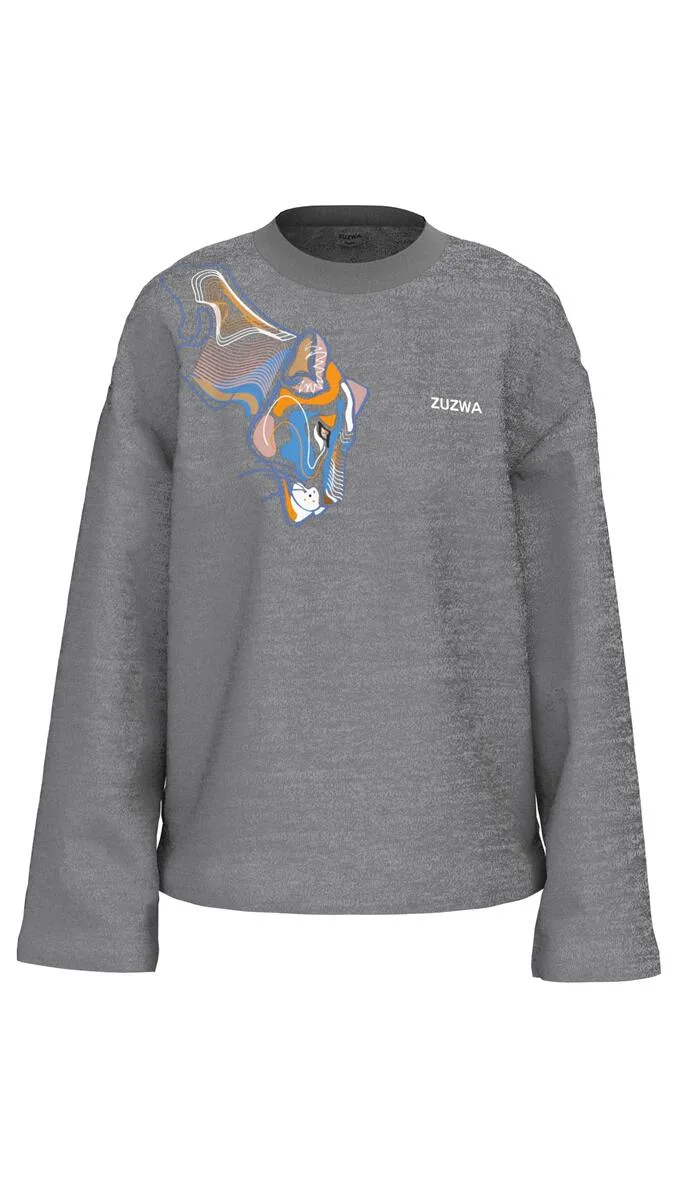
The fitting room on the second floor of ZUZWA's Paris atelier smells faintly of steam and linen starch
The fitting room on the second floor of ZUZWA's Paris atelier smells faintly of steam and linen starch. Pinned to the wall are three photographs, each no larger than a postcard. One shows a woman in a garden, another at a café table, the third mid-stride on a cobbled street. They are not models. They are not clients. They are the reason the house exists at all.
ZUZWA does not design for an imagined customer or a trend forecast. The maison designs for three women, all of whom wore the clothes before they were ever offered for sale. This is not sentiment. It is method.
The Grandmother
Her name was Zofia. She appears in the earliest photographs of the archive wearing a wool coat with a single button at the collarbone and sleeves that stop just short of the wrist. The coat was made in 1968, the year she left Warsaw for Paris with two suitcares and a sewing machine. She worked as a seamstress in the 11th arrondissement, altering wedding dresses and taking in trousers for men who could not afford a tailor.
Zofia did not own many clothes, but the ones she kept were constructed to last decades. Her winter coat was relined three times. Her house dresses were cut from deadstock wool crêpe, simple shifts with set-in sleeves and patch pockets. She hemmed everything by hand. When her granddaughter asked why, she said machine stitching puckered after ten years. Hand stitching moved with the cloth.
ZUZWA's signature coat—the one that appears every autumn in a different weight of wool—is Zofia's coat. The proportions have not changed. The button is still placed at the hollow of the throat. The sleeves still stop short, because Zofia believed a coat should not hide the hands. The current iteration is cut from a 14oz melton in slate grey. It costs €1,200. It will be relined in 2035.
The house does not market this as heritage. There are no sepia-toned campaigns or voiceovers about legacy. The coat is in the collection because it works. Zofia wore hers for thirty years, until the wool finally gave out at the shoulder seams. She unpicked it, saved the buttons, and used the fabric to line a quilt.
The Mother
If Zofia taught structure, her daughter taught restraint. Anna was a translator, not a seamstress, but she understood how clothing could either amplify or erase a woman in a room. She worked in Brussels for the European Commission in the 1990s, the only Polish woman in a department of French and Belgian men. She wore dark skirts, white shirts, and a single gold earring in her left ear. She was never the loudest voice in a meeting, but she was always heard.
Anna's wardrobe was small. Six skirts, eight shirts, two pairs of trousers, one blazer. She bought each piece with the expectation that it would last five years. She did not follow fashion, but she was never out of step. Her shirts were cotton poplin, cut with a high armhole and a straight hem that could be tucked or left loose. Her trousers were wool gabardine, flat-fronted, with a single pleat at the waist. She owned one pair of black leather loafers and one pair of low heels. She rotated them weekly.
ZUZWA's tailoring is Anna's tailoring. The trousers in the current collection have the same flat front, the same single pleat. The shirts are still cotton poplin, still cut high in the armhole. The blazer—a single-breasted style with a notched lapel and a three-button front—is the blazer Anna wore to work for a decade. She had it altered twice, once to take in the waist after she stopped smoking, once to let out the shoulders after she started swimming.
Anna did not believe in investment dressing. She believed in durability. When her daughter launched the house in 2015, Anna gave her a single piece of advice: make clothes that do not need to be explained. A woman should be able to put on a ZUZWA shirt and forget she is wearing it. That is the point.
The Sister
The third photograph shows a woman in her early thirties, cigarette in hand, standing outside a gallery in Berlin. This is Kasia, the designer's younger sister. She is not a muse in the traditional sense. She is a test case.
Kasia works in contemporary art and moves between cities. She does not own a car. She travels with a single carry-on and expects her clothes to survive a week in Copenhagen, a weekend in Lisbon, and a month in New York without needing a dry cleaner. She wears the same black trousers four days in a row. She sleeps in her shirts. She has been known to rinse a wool sweater in a hotel sink and wear it damp the next morning.
ZUZWA does not design for this kind of wear, but the clothes survive it anyway. Kasia has a pair of trousers from the first collection, now eight years old, that have been to seventeen countries. The wool is softer than it was, but the seams are intact. The waistband has not stretched. The hem has not frayed. She had them shortened once, in Barcelona, by a tailor who asked where they were made. When she said Paris, he nodded and charged her double.
Kasia is the reason ZUZWA does not use linings that degrade in heat. She is the reason the buttonholes are hand-sewn, not machine-cut. She is the reason the house will not use a fabric unless it can survive a washing machine, even if the care label says dry clean only. She has ruined enough samples to know what holds and what does not.
What Comes Next
The three women are still involved. Zofia died in 2019, but her coat remains in the collection. Anna consults on every pattern before it goes into production. Kasia wears the samples and reports back on what fails. This is not a sentimental arrangement. It is quality control.
ZUZWA has expanded since 2015—there are now stockists in London, New York, and Tokyo—but the atelier has not moved. The fitting room still smells of steam. The photographs are still pinned to the wall. The house does not design for the market. It designs for three women who knew what a seam should do, and trusted cloth more than trends.
The next collection will include a dress. It will be the first dress the house has made. Anna has agreed to wear it. Kasia has not.