The fitting room on the third floor of Jacquemus's Paris atelier smells faintly of steam and sizing
The fitting room on the third floor of Jacquemus's Paris atelier smells faintly of steam and sizing. Simon Porte Jacquemus stands to one side, arms crossed, watching a woman named Véronique Laroche pin the shoulder of a linen blazer so small it might fit a twelve-year-old. It will not fit a twelve-year-old. It will fit a woman who has, presumably, made peace with the fact that her jacket ends four inches above her navel.
Laroche has been with the house since 2015. Before that, she spent eleven years at Chloé, cutting toiles in the back room. She is fifty-two. Her hands move in short, decisive gestures — pin, tug, smooth — and she does not look up when Jacquemus murmurs something about the sleeve pitch. She has heard it before.
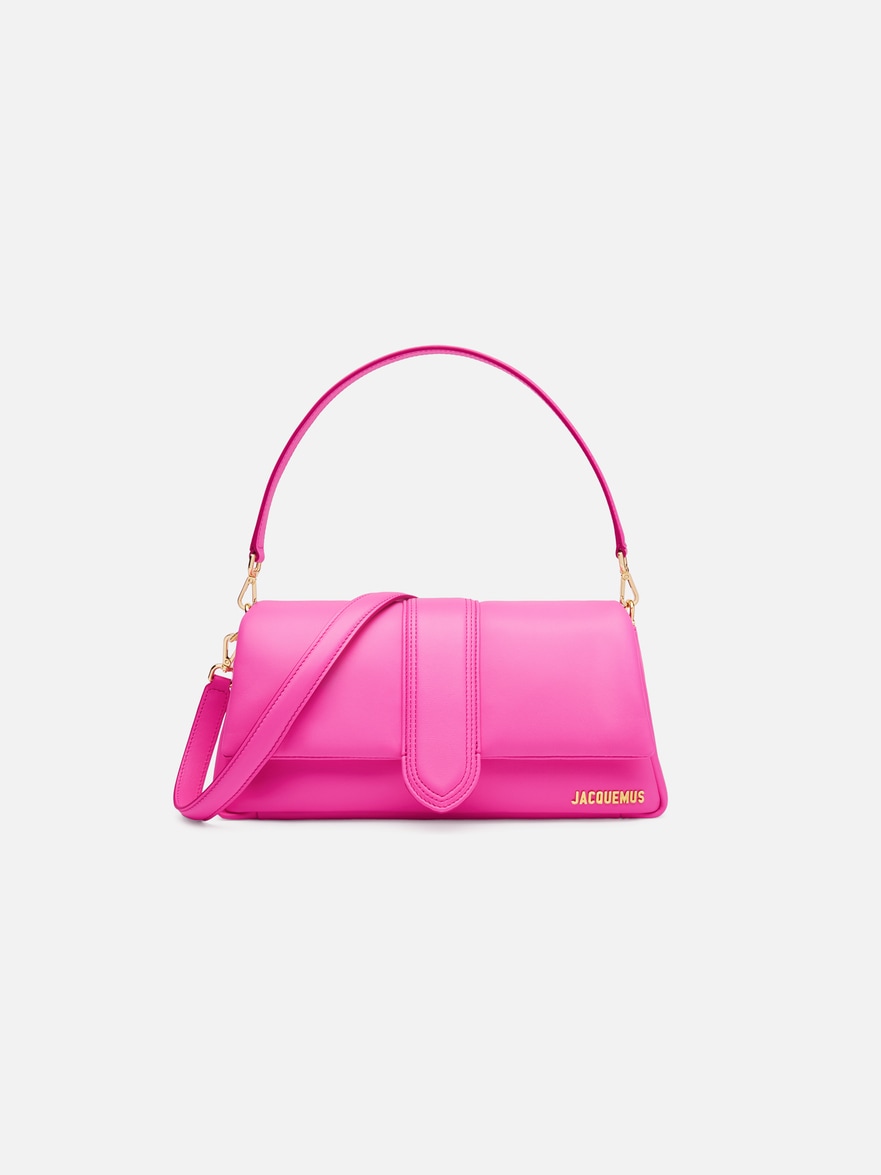
This is not, strictly speaking, a profile of Simon Porte Jacquemus. Those exist in abundance. This is about the people whose names do not appear in the show notes, who are not interviewed by System or photographed for 032c, but whose hands shape the garments that have made Jacquemus one of the most commercially successful independent labels in France. Specifically, it is about the people behind a single piece: Le Chiquito, the micro-bag that became, for better or worse, the house's calling card.
The Bag That Shouldn't Have Worked
Le Chiquito debuted in the Spring/Summer 2018 collection, shown in a lavender field outside Valensole. The bag measured roughly five inches across. It could hold a lipstick, a folded fifty-euro note, and possibly a single key, provided the key was not attached to a fob. It retailed for €390. Fashion Twitter lost its collective mind.
The bag was made, initially, by a man named Alain Fournier, who runs a small leather atelier in the 11th arrondissement. Fournier is sixty-seven. He trained at Hermès in the 1970s, left to work for smaller houses, and now takes on limited contract work for labels that want something done by hand. Jacquemus found him through a mutual acquaintance at Moynat.
Fournier's atelier employs three people, including himself. When the first order for Le Chiquito came through — two hundred units — he called Jacquemus's production manager and said it was not feasible. The bag required fourteen individual leather pieces, each no larger than a playing card, and the assembly involved hand-stitching at a scale where a millimetre's deviation was visible. He suggested they find a factory in Portugal.
Jacquemus, according to Fournier, said no. He wanted the first run done in Paris, by someone who understood what he called "the tension between the absurd and the precise." Fournier agreed to make fifty. Then he made another fifty. By the end of 2018, his atelier had produced nearly six hundred Chiquitos, and he had hired two additional stitchers.
The Stitchers
One of those stitchers is Nadia Benjelloun, thirty-four, who learned leatherwork at her father's workshop in Fez before moving to Paris in 2012. She works standing up, at a wooden table scarred with decades of blade marks that predate her tenure. Her toolkit includes a saddle-stitch awl, a bone folder, and a pair of Japanese shears she bought with her first paycheck from Fournier.
Benjelloun's job is to prepare the leather components and execute the hand-stitching on the bag's exterior seams. Each Chiquito takes her between ninety minutes and two hours, depending on the leather. Lambskin is faster. Crocodile-embossed calf, which Jacquemus introduced in 2019, requires more tension control.
She works in silence, mostly. Fournier does not permit music in the atelier. He believes it disrupts the rhythm of the stitch. Benjelloun has made, by her own estimate, somewhere north of three thousand Chiquitos. She does not own one. When asked why, in a brief exchange outside the atelier, she shrugged. "I see them all day," she said. "I don't need to see one in my wardrobe."
The other stitcher Fournier hired in 2018 is Matthieu Leroy, twenty-nine, who came to leatherwork sideways. He studied architecture at École Nationale Supérieure, worked for a firm in Lyon for two years, and quit after realising he had no interest in seeing his designs built by other people. A friend suggested he try working with his hands. He apprenticed with a saddle-maker in Normandy, then answered a Leboncoin ad Fournier had posted.
Leroy handles the bag's interior construction: the lining, the pocket (if one can call a slot two inches deep a pocket), and the attachment of the hardware. He also sources the miniature padlocks, which come from a supplier in the Marais who typically makes them for doll trunks. Leroy tested six different lock mechanisms before finding one that worked at Chiquito scale without jamming.
The Hardware
The hardware itself — the clasp, the chain, the D-rings — is made by a third-generation metalworker named Élodie Marchand, whose atelier is in Pantin, just beyond the Périphérique. Marchand is forty-one. She inherited the business from her father, who inherited it from his father, who started it in 1953 making buckles for post-war handbag manufacturers.
Marchand's work for Jacquemus began in 2017, before Le Chiquito, with the hardware for Le Grand Chiquito (a marginally less absurd version of the micro-bag, though still small by any rational standard). She casts the metal components in brass, then plates them in gold or palladium depending on the season's colour story. Each clasp is polished by hand. The chain links are soldered individually.
She employs one assistant, her cousin's son, who is learning the trade. When the Chiquito orders began to scale up in 2019, Marchand considered hiring a second assistant, then decided against it. "The work doesn't speed up just because you add a body," she said, in a phone conversation. "It either gets done right or it doesn't get done."
Jacquemus, for his part, has never visited Marchand's atelier. They communicate through his production team. She has met him once, at a supplier dinner in 2020. He thanked her for the hardware. She thanked him for the work. That was the extent of it.
What Comes Next
Le Chiquito is no longer the phenomenon it was in 2018. The bag still sells — Jacquemus introduced new colourways as recently as last season — but the fervour has cooled. Fournier's atelier now produces between thirty and fifty units a month, down from the two hundred monthly orders they were fielding in 2019.
Benjelloun has moved on to other projects within the atelier. Leroy is learning to cut patterns, with an eye toward eventually starting his own workshop. Marchand continues to make hardware for Jacquemus, though the bulk of her work now comes from other houses.
Véronique Laroche, the pattern-cutter, is still on the third floor, pinning blazers that defy anatomical logic. She was not involved in Le Chiquito — bags are a separate department — but she has watched the house grow from a scrappy operation with twelve employees to a brand that reported €200 million in revenue last year.
"People think it's just Simon," she said, during a fitting break. "And Simon is important, obviously. But a garment is thirty people's decisions. The person who selects the thread colour, the person who sets the iron temperature, the person who checks the seams before it goes into the bag. You don't see those names. But the garment doesn't exist without them."
She returned to the blazer. Jacquemus had left the room. The linen needed one more pin at the back neck, and then it would be done.