The fitting room on Via delle Caldaie smells faintly of steam and bergamot
The fitting room on Via delle Caldaie smells faintly of steam and bergamot. Sabato De Sarno stands near the three-way mirror, one hand resting on a mannequin draped in camel cashmere, the other gesturing toward a seam that runs just slightly off-grain. He doesn't raise his voice. The tailor nods, pins already between her teeth, and begins again.
This is the work. Not the front-row applause or the campaign imagery beamed across fifteen time zones, but this: the adjustment of a shoulder line by four millimetres, the insistence that a coat's collar sit flush without gaping. De Sarno has been Gucci's creative director since January 2023, and if his first collections felt like a deliberate exhale after years of maximalist theatre, it's because they were. He trained for exactitude, not spectacle.
The Atelier Years
De Sarno came up through the Italian system — Prada, then Valentino — where one learns construction before concept. At Prada, he spent years in the accessories division, a proving ground less glamorous than ready-to-wear but more exacting. A bag's facture is unforgiving. There is no drape to hide a miscalculation, no styling to distract from a poorly set gusset. He has spoken, in the past, of studying how a handle's weight distribution affects a silhouette when carried, how a clasp's mechanics must feel intuitive in the dark. These are not the concerns of a stylist or a brand consultant. They belong to someone who understands that luxury is, at base, a material proposition.
His decade at Valentino, most of it under Pierpaolo Piccioli, sharpened a different skill: the management of a house language. Valentino's vocabulary — that particular shade of red, the way tulle is gathered, the relationship between volume and restraint — is as codified as any grammar. De Sarno worked across menswear and womenswear, learning to modulate tone without losing coherence. It was not his vision on the runway, but the discipline of working within someone else's has its uses. One learns what a signature actually is: not a flourish, but a set of recurring structural choices.
The Pivot
When Kering announced his appointment, the industry's reaction split along predictable lines. Some saw a return to Gucci's pre-Alessandro Michele roots — to Tom Ford's polished eroticism or Frida Giannini's equestrian codes. Others worried that the maison, having spent seven years as fashion's most baroque stage set, might overcorrect into blandness. De Sarno's first collection, shown in September 2023, did neither.
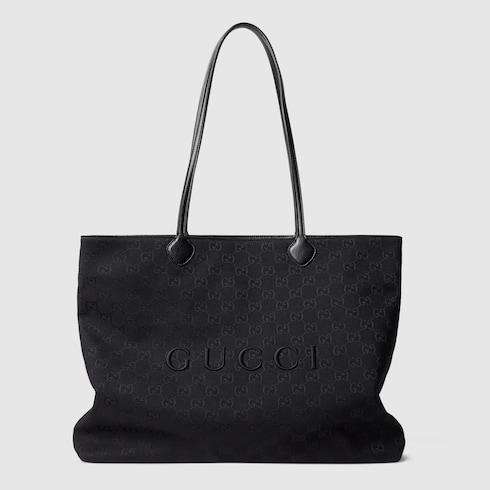
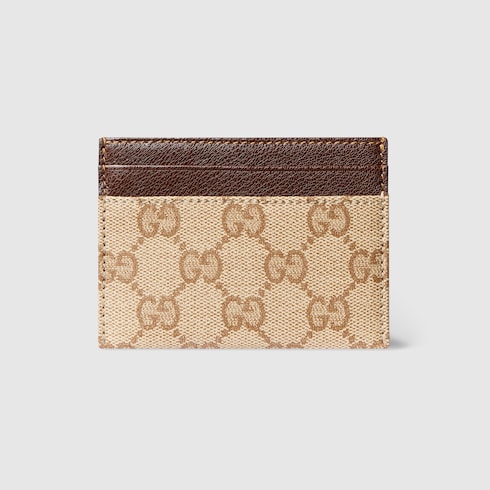
What he presented was quieter, certainly. The colour palette leaned into camel, chocolate, deep red. Silhouettes were legible: a single-breasted coat with a nipped waist, trousers cut with a gentle break, dresses that skimmed rather than clung. But quiet is not the same as timid. The tailoring was decisive. Shoulders were natural but structured. Hemlines fell just so. The leather goods — still Gucci's commercial engine — showed a similar recalibration: softer shapes, less hardware, a return to the kind of grain and hand-finish that signals craft rather than logo.
The reviews were mixed, which is often the case when a house shifts registers. Some critics found it too safe, a retreat from Michele's joyful disorder. Others noted that safety, in this context, might be strategic. Gucci's sales had begun to soften; the magpie maximalism that defined the Michele era had perhaps exhausted its audience. De Sarno's work read as a kind of palate cleanser, a way to remind the customer that Gucci's archive contains more than logomania and ironic pastiche.
The Signature
Eighteen months in, certain motifs recur. There is an evident affection for the 1990s — not the decade's minimalism, exactly, but its sense of ease. The way a blazer might be worn open over a fine-knit sweater. The return of the loafer as a day shoe, substantial enough to anchor a look but not so chunky it reads as costume. De Sarno has also leaned into Gucci's Florentine origins, not through literal Renaissance references but through an attention to proportion and line that feels, in some hard-to-name way, Italian. His clothes photograph well, but they seem designed to be worn rather than simply seen.
The leather work is where his hand shows most clearly. The Blondie, a top-handle bag introduced in his debut collection, takes its name from a 1970s Gucci design but reworks the structure: rounder, softer, with a circular interlocking-G clasp that functions as both hardware and ornament. The construction is traditional — saddle-stitched, hand-finished — but the effect is contemporary. It has sold well, which matters. A creative director's vision, however refined, must eventually translate into revenue.
There are risks in this approach. Playing to the middle — neither as radical as Michele nor as austere as, say, Phoebe Philo's Céline — can leave one vulnerable to charges of being merely competent. And competence, in fashion, is rarely enough. The question facing De Sarno is whether his particular form of restraint can generate the kind of desire that drives queues and waitlists, or whether it will be respected but not coveted.
What Comes Next
The maison's next chapter depends, in part, on how much latitude Kering allows for gradual evolution. De Sarno has spoken of wanting to build a wardrobe, not a series of one-off moments. That requires time — time for customers to understand the language, time for the atelier to refine the details, time for the work to accumulate into something larger than any single season.
He is not a showman. His presentations are straightforward: models walk, clothes are shown, the lights come up. There are no elaborate sets, no conceptual frameworks that require a press release to decode. This, too, is a choice. In an industry increasingly driven by spectacle and virality, there is something almost perverse about insisting that the work speak for itself.
Whether it will speak loudly enough remains to be seen. Gucci is not a small house that can afford to be a critical darling with modest sales. It is a commercial engine, and De Sarno's task is to keep it running while also giving it a reason to exist beyond its back-catalogue and logo recognition. The fittings continue. The seams are adjusted. The work, as he would likely say, goes on.