## The Hands That Built the Horns
The Hands That Built the Horns
Simon Ungless is cutting antlers from leather in a basement studio in Central Saint Martins when Lee McQueen walks in with a deer skull wrapped in newspaper. It is 1992. The skull goes on the table. Ungless, who teaches print and is not technically meant to be helping with graduate collections, picks up his scalpel.
By the time McQueen's degree show opens, the antlers are sewn into a frock coat. The coat is called Jack the Ripper Stalks His Victims. Ungless's name does not appear on the label, but his hands are in every seam.
This is how most of Alexander McQueen's most arresting work was made: in collaboration with artisans whose names appeared, if at all, in the credits at the back of the show notes. McQueen was not a solitary genius. He was a brilliant organiser of other people's skills.
The Pattern Cutter
Judy Halil joined McQueen in 1996, when the atelier was still operating out of a council flat in Hoxton. She had trained at the London College of Fashion and spent a decade cutting for commercial labels that paid on time. McQueen's cheques bounced. She stayed anyway.
Halil cut the bumster trousers that made McQueen's name. The brief was simple: drop the waistband six inches and keep the seat from collapsing. She drafted the pattern in an afternoon, adjusted it over three fittings, and watched it become the shape that defined a decade. The cut exposed the base of the spine and the beginning of the cleft. It was not, as critics claimed, an attempt to sexualise the body. It was an attempt to relocate the waist where McQueen thought it belonged—at the hips, where the pelvis meets the femur.
Halil worked with McQueen for four years. She left in 2000, before the Gucci acquisition, and returned to freelance cutting. In a 2009 interview with Dazed, she described McQueen as a technician first. "He knew how cloth moved because he'd spent years handling it. He didn't sketch and hope. He drafted and tested."
The Embroiderer
Shaun Leane met McQueen at a nightclub in Soho in 1992. Leane was a jeweller, trained in Hatton Garden under his uncle, working metal the old way—by hand, with a torch and a file. McQueen asked if he could make a piece for his next show. Leane said yes without asking what it was.
The brief arrived a week later: a metal corset, articulated at the spine, that moved when the model breathed. Leane had never made clothing. He treated it like armour. The first version took three weeks and weighed four pounds. McQueen put it on a model for the The Hunger collection in 1996. The corset locked at the back with a visible hinge. It was not meant to be comfortable. It was meant to look like the ribcage had been replaced.
Leane became McQueen's collaborator for the next thirteen years. He made the coiled metal chokers for Voss in 2001, the antler headdress for Widows of Culloden in 2006, and the feather skull cap for The Horn of Plenty in 2009. The work was never decorative. It was structural. Leane worked in silver, aluminium, and resin, materials that held their shape under stage lights and camera flashes.
In a 2015 profile in The Gentlewoman, Leane said McQueen never used the word 'jewellery'. He called it 'body architecture'. The pieces were not accessories. They were part of the garment's engineering.
The Milliner
Philip Treacy made the first hat for McQueen in 1996, a bicorn constructed from black felt and pheasant feathers. It was meant to sit at a forty-five-degree angle. Treacy delivered it at a thirty-degree tilt. McQueen repinned it during the fitting and told him to make it again.
Treacy, who had trained under Stephen Jones and was already making hats for Chanel, did not take direction easily. He made the hat again. McQueen repinned it again. They argued. The hat went into the show at forty-five degrees.
This became the working method. McQueen would sketch an idea—usually on the back of a cigarette packet—and Treacy would translate it into millinery. The sketches were not technical drawings. They were suggestions. Treacy once described them, in a 2012 interview with AnOther, as 'emotional instructions'.
The most famous piece they made together was the antler headdress worn by model Raquel Zimmermann in Widows of Culloden. The antlers were carved from resin, not bone, and weighed two pounds. Treacy built the structure over three weeks, working from a single photograph McQueen had torn from a book about Scottish folklore. The headdress became one of the most reproduced images in fashion history. Treacy's name appeared in the show notes, six lines down.
The Shoemaker
Dai Rees ran a bespoke shoemaking studio in Clerkenwell when McQueen called him in 1999. The brief was for a pair of boots with a heel height that Rees initially thought was a typo: nine inches, curved inward like a prosthetic hoof.
Rees built the first pair in three days. The heel was carved from laminated wood, covered in leather, and cantilevered forward so the weight sat over the ball of the foot. The model who wore them, Aimee Mullins, was a double amputee who usually walked on carbon-fibre running blades. She wore the boots for the No. 13 show in 1999 and walked the length of the runway without assistance.
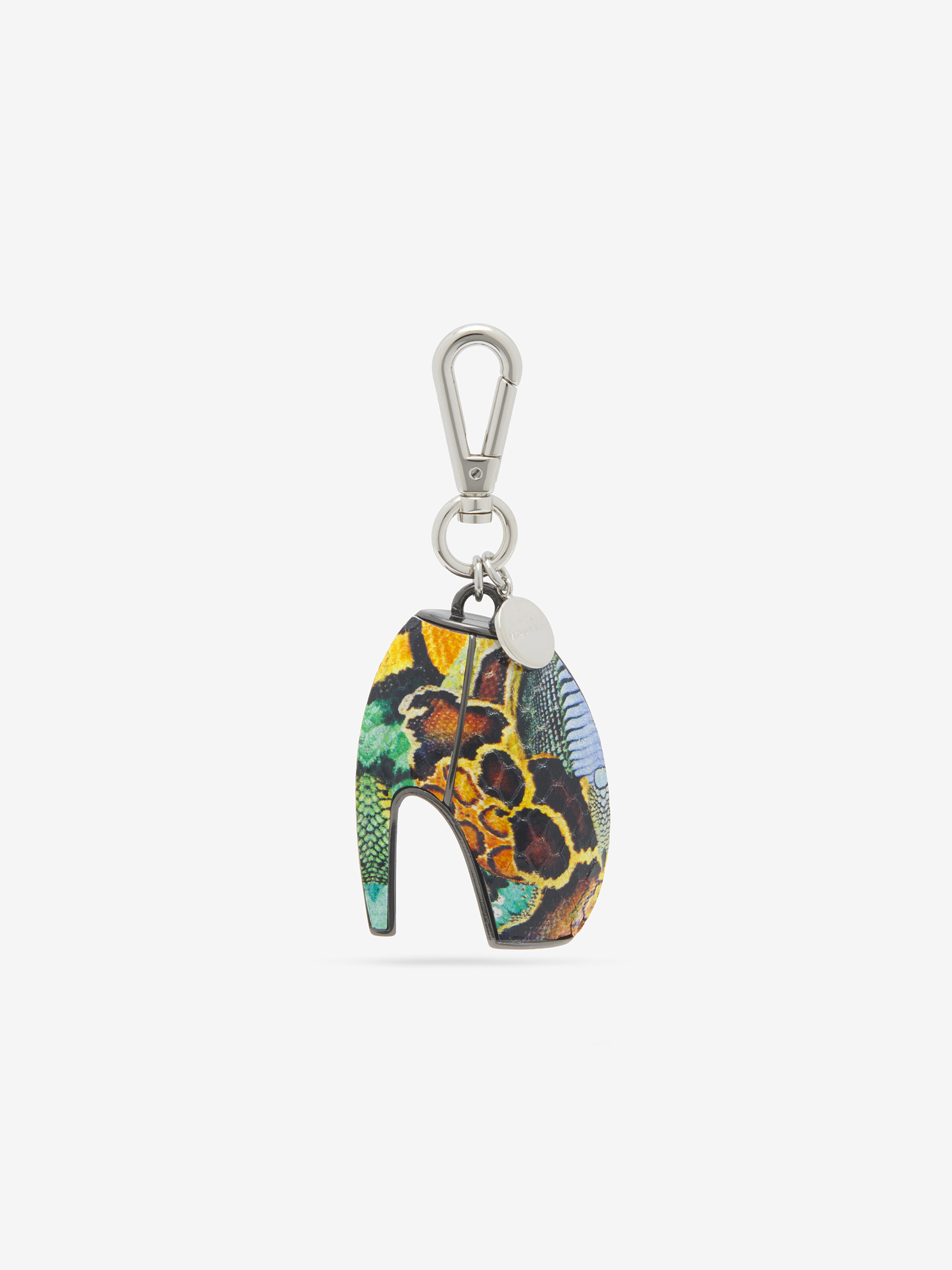
McQueen called them armadillo boots. Rees called them an engineering problem. The heel had no room for a steel shank, so he used a fibreglass insert borrowed from prosthetics manufacturing. The boots held. McQueen ordered six more pairs.
Rees worked with McQueen on and off for the next decade. He made the wooden platform boots for Plato's Atlantis in 2010, the last collection McQueen completed before his death. The platforms were ten inches high and covered in reptile-printed leather. They were not meant to be walked in. They were meant to be looked at.
In a 2019 interview with 1Granary, Rees said McQueen never asked if something was possible. He assumed it was, and left the problem-solving to the artisan.
The Atelier
Alexander McQueen died in February 2010. The studio continued. Sarah Burton, who had worked as head of womenswear design since 2000, took over as creative director. Most of the artisans stayed.
Shaun Leane still makes jewellery for the house, though the pieces are now signed and sold separately. Philip Treacy works on commission for special collections. Dai Rees runs his own studio and occasionally consults on footwear. Simon Ungless teaches at ArtCenter College of Design in California.
The archive remains in London, stored in a climate-controlled facility in King's Cross. The antler headdress is there, along with the metal corset, the armadillo boots, and the first pair of bumster trousers. The pieces are not labelled with the names of the people who made them. They are labelled with McQueen's name, as they were always meant to be.
But the hands that built them are still working. They are cutting leather in Hoxton, carving resin in Clerkenwell, hammering metal in Hatton Garden. They are doing what they have always done: solving problems that other people think are impossible.