## The Hands That Weave
The Hands That Weave
Giovanna Bianchi has been plaiting leather for thirty-one years. She sits at a bench in Bottega Veneta's Montebello atelier, a low-ceilinged room outside Vicenza where the air smells faintly of tannin and machine oil. In front of her: eight strips of nappa, each four millimetres wide, each cut to within a tenth of that tolerance. She does not measure anymore. Her hands know the width by feel.
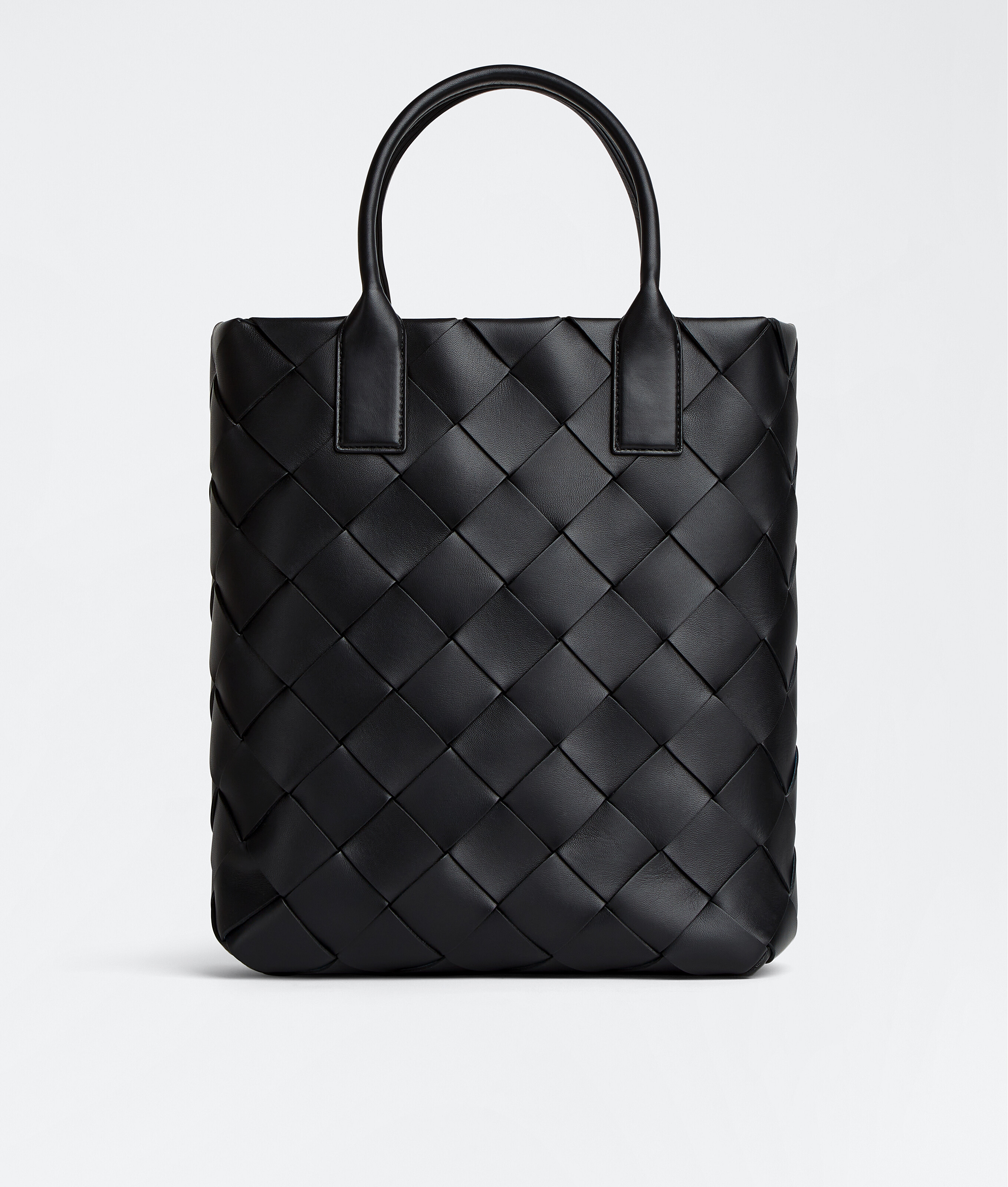
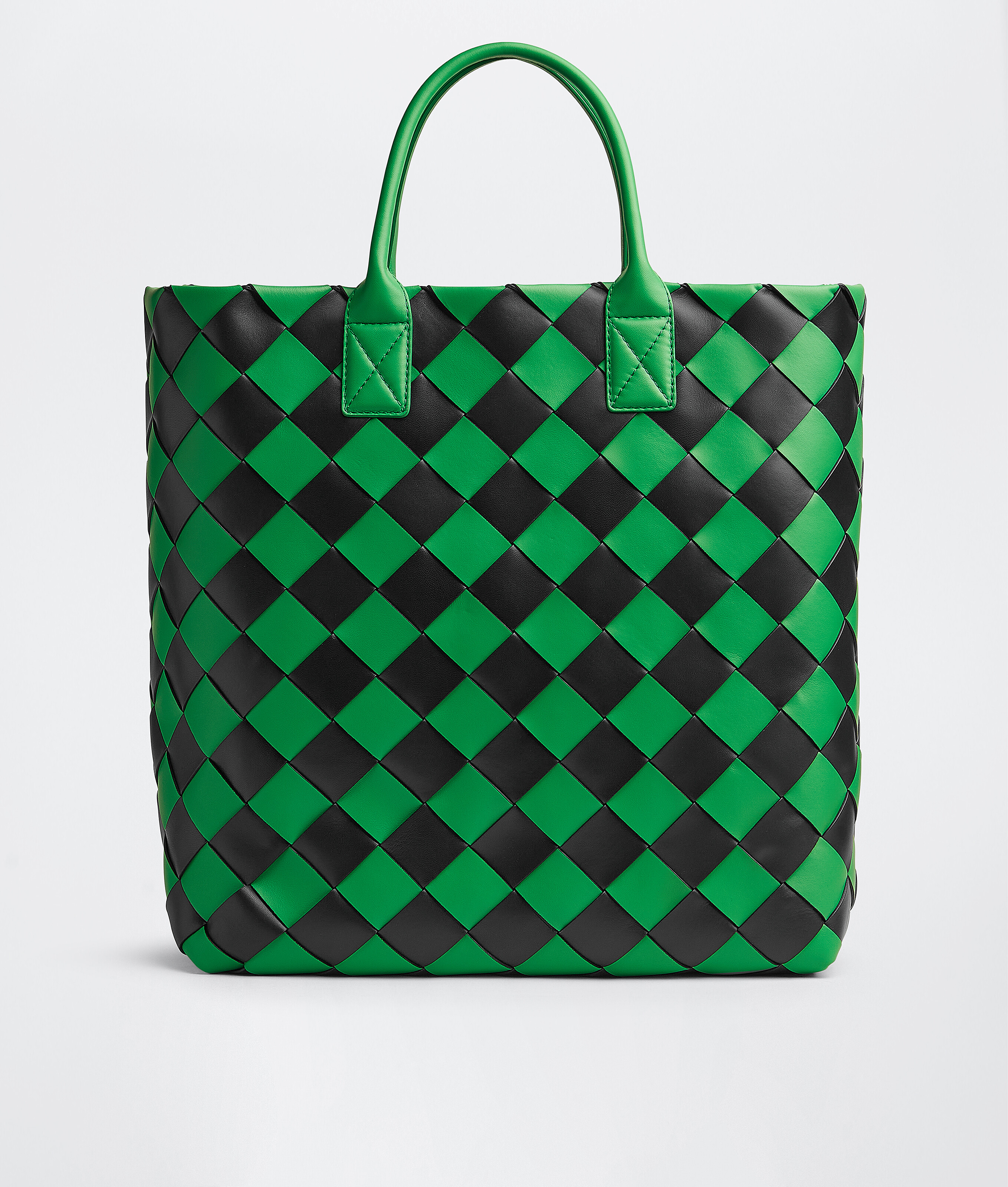
The bag she is making is a small Cassette, the quilted pouch that has become shorthand for Bottega Veneta under Matthieu Blazy. It will take her six hours to complete the intrecciato weave across the body, another two to set the frame and attach the strap. When it is finished, her name will not appear on the dust bag or the card tucked inside. But it will appear in the maison's internal ledger, next to the batch number and the date of completion. Bottega does not sign its products. It does sign its labour.
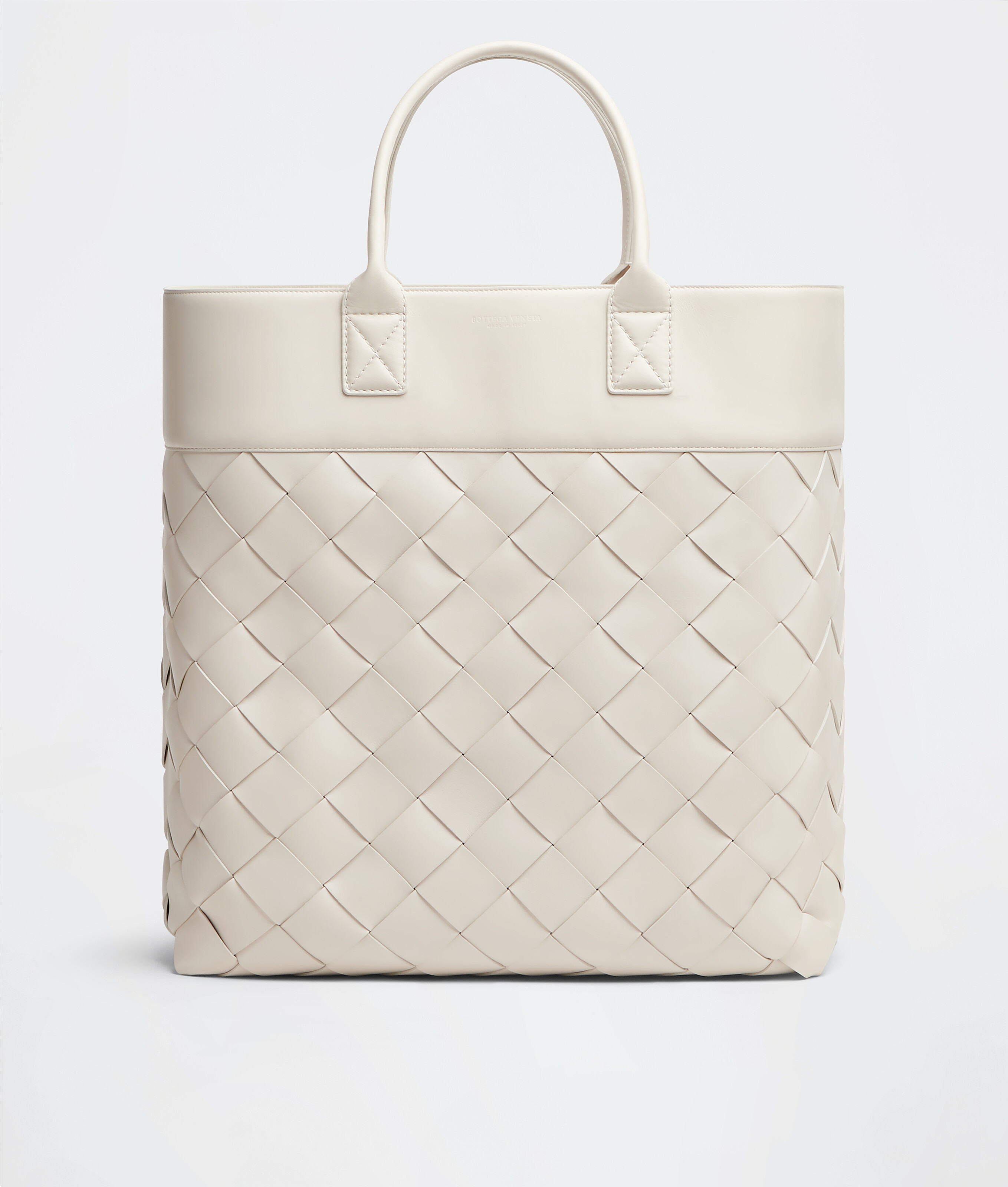
This is not romantic. It is structural. Bottega Veneta has always been a house built on craft rather than logo, and craft requires craftsmen. Not in the abstract—actual people, with surnames and start dates and preferred tools. The intrecciato itself, that woven signature, is not a pattern you can automate. It is a skill you learn under supervision, over months, until your fingers stop hesitating at the crossover points.
Bianchi learned it in 1992, when she was nineteen. Her trainer was a woman named Carla Sartori, who had learned it in 1978 from one of the original weavers hired when Bottega opened its first Veneto workshop in 1966. Sartori is retired now. Bianchi is training two new hires, both in their twenties, both struggling with the same problem she struggled with thirty years ago: keeping the tension even across a curve.
The difficulty is geometric. Leather does not stretch the way fabric does. When you weave it around a three-dimensional form—a bag body, a shoe upper—you are asking it to hold a line while also bending through space. Pull too tight and the weave puckers. Too loose and it sags. The sweet spot is tactile, not visual. You feel it in the resistance as you draw the next strip through.
"It is like tuning a string," Bianchi said in a 2022 interview with Vogue Italia. "You do not listen. You touch."
A Vocabulary of Tension
Bottega Veneta's atelier system is unusual in luxury. Most houses centralise production or outsource it to contracted workshops. Bottega does neither. It operates six ateliers across the Veneto, each specialising in a category: small leather goods in Montebello, ready-to-wear in Vicenza, shoes in Arzignano. The artisans are salaried employees, not freelancers. They work standard hours. They take August off.
This sounds obvious until you compare it to the rest of the industry, where piece-rate contracts and seasonal surges are common. Bottega's model is slower and more expensive. It also means that the person who made your bag in 2018 is likely still there, making bags, accumulating skill.
Marco Tessaro is one of them. He has worked in the Arzignano shoe atelier since 2001, starting as a cutter and moving into assembly. His current role is what Bottega calls a maestro artigiano—not a manager, but a senior maker responsible for training and quality control. He can look at a finished Puddle boot and tell you, within seconds, whether the vamp was lasted by someone in their first year or their fifth.
The tell is in the topline, where the leather meets the sole. A beginner will pull the upper taut to avoid wrinkles, which creates a hard edge. An experienced hand leaves a fraction of ease, knowing the leather will settle as the boot is worn. The difference is invisible in photographs. It is obvious on the foot.
Tessaro's own breakthrough came in 2015, when he was asked to develop the construction for what would become the Lug sole. The design brief was simple: a chunky tread that did not look orthotic. The execution was not. The sole had to be heavy enough to read as substantial but light enough not to throw off the boot's balance. Tessaro spent four months testing compounds and tread depths before landing on a two-layer construction—soft rubber inside for flex, harder rubber outside for durability.
The Lug became one of Bottega's signature silhouettes under Daniel Lee, then carried forward under Blazy. Tessaro is still refining it. The current version, released this past autumn, uses a marginally thinner midsole that shaves thirty grammes off the weight without changing the visual mass. Thirty grammes is nothing. Thirty grammes is everything.
What Signature Means
The Cassette bag that Giovanna Bianchi weaves at her bench in Montebello did not exist before 2019. It was introduced under Lee as part of his first collection for the house, a quilted riff on the intrecciato that replaced the traditional weave with padded squares. The technique is different—you are not plaiting strips but stitching panels—but the principle is the same. Control the tension. Let the material speak.
Bianchi had to learn the Cassette construction from scratch. So did the rest of the Montebello atelier. Bottega ran a six-week training programme, led by the house's technical director and a pattern-maker brought in from the ready-to-wear team. The challenge was not the quilting itself, which is standard in outerwear, but adapting it to a small leather good that would be handled daily, stuffed into larger bags, slung over shoulders. The stitching had to be tight enough to hold the shape but loose enough to allow the padding to compress and recover.
They went through nineteen prototypes. Bianchi worked on seven of them. The version that went into production uses a 3mm foam core, topstitched through with a waxed thread that is marginally thicker than the thread used in the classic intrecciato bags. The difference in thread weight is 0.2mm. It matters because the stitching is structural, not decorative. If the thread is too fine, it cuts into the leather under load. Too thick, and it creates a ridge that interrupts the quilted surface.
Bianchi's name does not appear in any press material about the Cassette. Neither does the name of the pattern-maker or the technical director. Bottega Veneta does not, as a rule, foreground individual artisans in its marketing. The emphasis is on the house, the atelier, the collective skill base. This is not modesty. It is strategy. A brand built on named personalities is vulnerable when those personalities leave. A brand built on institutional knowledge is harder to destabilise.
But the knowledge is not abstract. It lives in people. Bianchi is fifty now. She has another fifteen years, maybe, before retirement. The two artisans she is training will, if they stay, be weaving Cassettes in 2045. They will teach others. The line holds.
The Next Bench
Bottega Veneta opened a new atelier last year in Dueville, a town twenty minutes north of Vicenza. It is the first new facility the house has built since 2008. The focus is small leather goods, which have become the commercial engine of the brand under Blazy. The atelier employs forty-three people. Thirty-one of them are under thirty-five.
This is deliberate. Bottega is facing the same problem as every other luxury house with in-house production: the artisan base is ageing, and the pipeline of new talent is thin. Leather-working is not a profession that attracts school-leavers the way it did in the 1980s. The pay is decent but not exceptional. The work is repetitive. You spend years making the same bag, the same shoe, until your hands stop thinking about it.
The Dueville atelier is an attempt to make that proposition more appealing. The building is new, light-filled, climate-controlled. There is a canteen. There is a training studio with adjustable benches and task lighting that does not give you a headache by 3pm. These are not luxuries. They are working conditions.
The curriculum is also different. New hires spend their first three months rotating through every station in the atelier—cutting, skiving, edge-painting, assembly—before specialising. The idea is to build a general fluency in leather before narrowing the focus. It also means that if someone leaves, the remaining team can cover the gap.
Giulia Moretti is one of the new hires. She is twenty-six, trained originally as a pattern-cutter for ready-to-wear, and joined Bottega last April. She is currently learning intrecciato under Bianchi's supervision. Her hands are not fast yet. She is on her second Cassette. The first one took her eleven hours. This one will take nine.
When I ask her what the hardest part is, she does not hesitate. "The corner," she says. "Where the weave turns." She mimes the motion, fingers pulling an invisible strip through a crossover point. "You cannot see it until it is wrong."
Bianchi, sitting two benches away, does not look up. But she nods.