## The Leather Room in Vicenza
The Leather Room in Vicenza
Michele Taddei and Renzo Zengiaro met in 1966 over a cutting table in the Veneto, where most Italian leather goods were still being made by hand in workshops that smelled of tannin and glue. They were not designers in the sense we use the word now. Taddei had trained in leatherwork; Zengiaro understood production. What they shared was a distaste for logos and an interest in a particular weave—intrecciato—that required more time than most factories were willing to give.
Bottega Veneta opened the following year in Vicenza, a city better known for Palladio than handbags. The name translates to "Venetian workshop," which was accurate in 1967 and remains so in spirit, if not in ownership. The house made soft leather goods: clutches, totes, small cases with no external branding. The intrecciato weave became the signature by accident of omission. If you were not going to stamp a logo, you needed another way to be recognised.
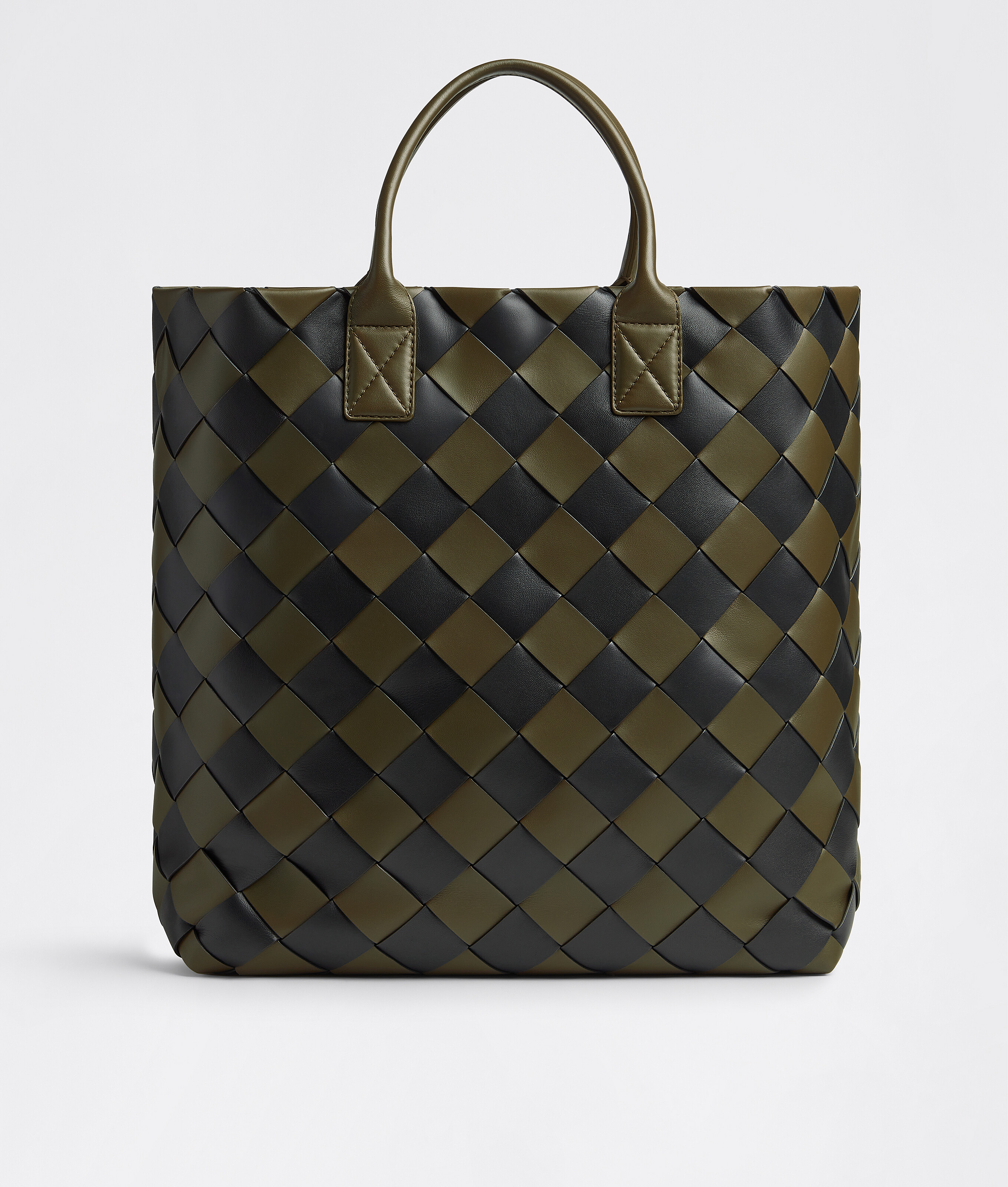
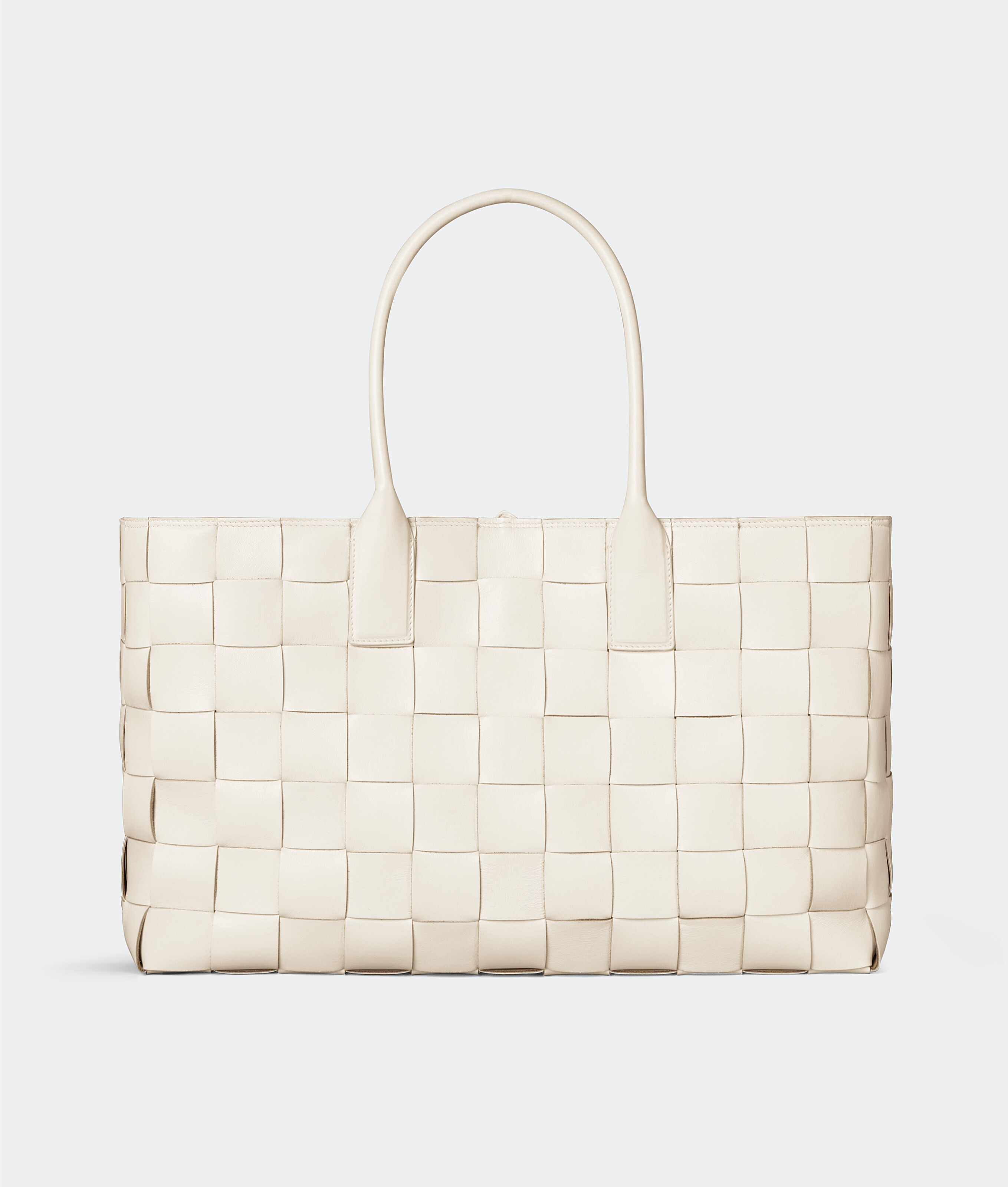
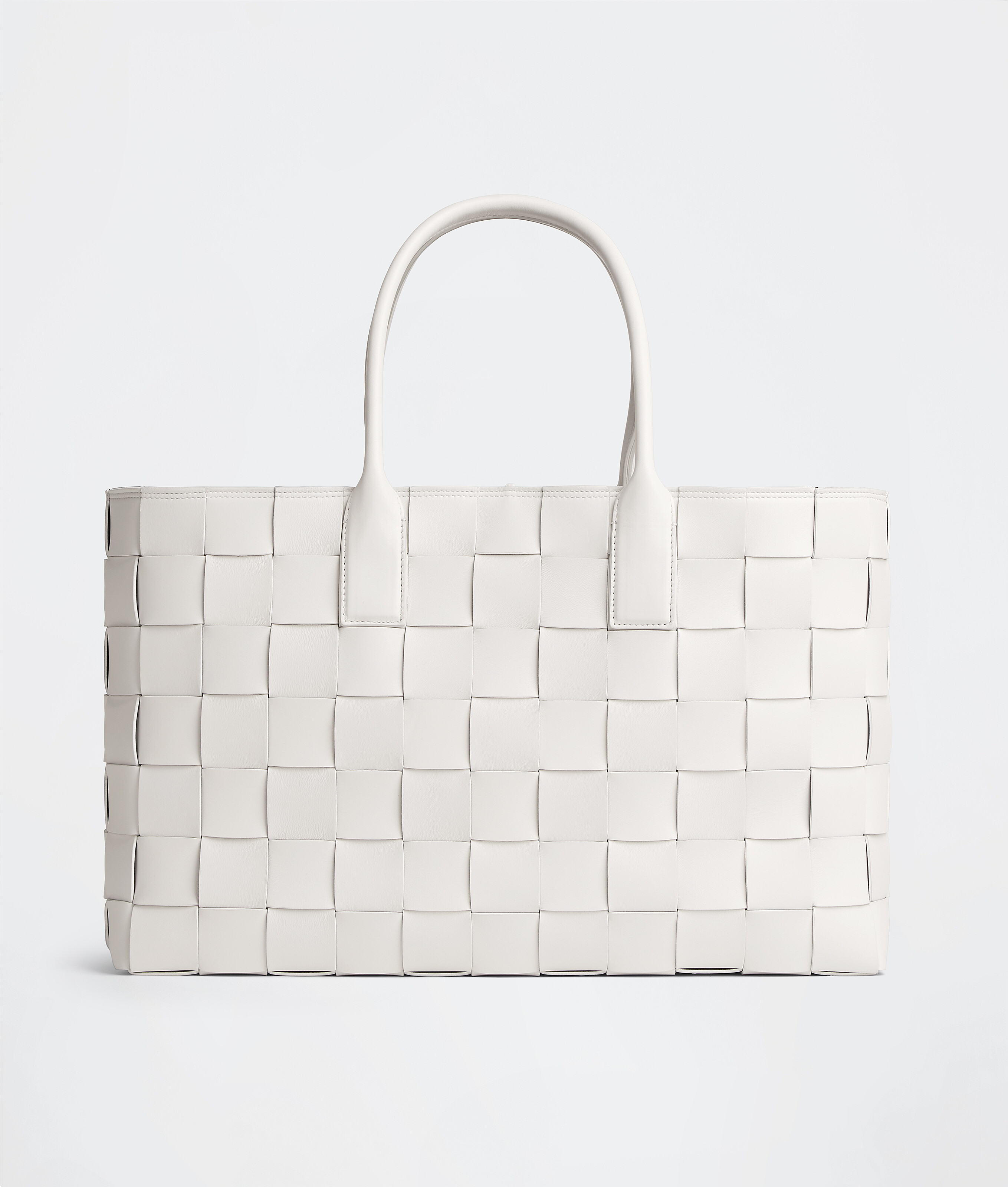
The technique itself was not new. Woven leather had been used in Italy for centuries, particularly in the Veneto, where artisans plaited strips of calf or lamb into chair seats and bags. What Taddei and Zengiaro did was refine the grid, tighten the weave, and apply it to butter-soft nappa. The result was tactile in a way that required handling. You could not photograph intrecciato and convey what it felt like, which made it a poor candidate for advertising but an excellent one for word of mouth.
The American Moment
Bottega Veneta might have remained a regional concern if not for the American market. In the early Seventies, the house found buyers at Bergdorf Goodman and Neiman Marcus, where customers with money and no need to announce it responded to the absence of hardware. A Bottega bag in 1973 was a signal, but a quiet one. It said you knew, and that was enough.
Andy Warhol carried a Bottega wallet. Lauren Hutton was photographed with a woven clutch. The house never paid for either endorsement, which tells you something about how luxury worked before conglomerate acquisition. By 1972, Bottega Veneta had opened a store in Manhattan. By the end of the decade, it was doing $10 million in annual revenue, almost entirely in leather goods.
Taddei and Zengiaro were not interested in ready-to-wear. They were not interested in fragrance. They made bags, small leather accessories, and the occasional piece of luggage. This was either disciplined or limited, depending on your perspective. What it was not was scalable, which became a problem when the founders wanted to retire.
The Handovers
The house changed hands in 1980, sold to a group that included Taddei and Zengiaro's original investors. It changed hands again in 2001, when Gucci Group—then controlled by François Pinault—acquired it for $156 million. By that point, Bottega Veneta had lost coherence. There were too many products, too much licensing, and not enough of the original intrecciato work that had made the house legible in the first place.
Tom Ford, who was running Gucci Group at the time, hired Tomas Maier to rebuild it. Maier was German, trained at Sonia Rykiel and Hermès, and had no particular attachment to Italian branding. His first move was to kill the licenses. His second was to go back to the weave. He reintroduced the Cabat, a large tote that required two artisans and eight hours to complete. He stripped the logo from everything except the lining. He made the bags heavier, the leather thicker, and the palette more muted.
It worked. By 2012, Bottega Veneta was doing €1 billion in revenue, nearly all of it in categories the founders would have recognised: bags, shoes, small leather goods. Maier stayed for 17 years, which is a long tenure in contemporary fashion. When he left in 2018, the house had a problem it had not faced since 1980: what do you do when the thing that made you coherent is gone?
What Remains
Daniel Lee arrived in 2018 and did what every designer does when handed a house with a strong archive: he looked for the piece no one was talking about. In Lee's case, it was the Pouch, a soft clutch with a gathered top that had been in the collection since the Seventies. He scaled it up, made it in padded leather, and turned it into the kind of bag that photographs well on an arm. It became the house's best-seller within a year.
Lee left in 2021. Matthieu Blazy, who had worked under him, took over and has spent the past three years doing something more difficult: making clothes that feel like they belong in the same house as a woven leather bag. Blazy's work is quieter than Lee's, more concerned with construction than statement. His autumn 2023 collection included a coat made from 26 leather triangles, each one hand-stitched and left raw at the edge. It was technically a ready-to-wear piece, but it required the same kind of labour as a Cabat.
This is the tension Bottega Veneta has always carried. The house was founded by two men who wanted to make leather goods without logos, in a region where craft was assumed rather than advertised. It became valuable because it resisted the things that usually make a brand valuable: visibility, licensing, expansion into categories that have nothing to do with the original skill. When Gucci Group bought it, the question was whether that resistance could survive industrialisation.
The answer, so far, is yes—but only because each designer since Maier has understood that the house is not about a look. It is about a process. The intrecciato weave takes longer than a stamped logo. A hand-stitched leather coat takes longer than a printed one. Bottega Veneta remains coherent not because it looks the same as it did in 1967, but because it still requires the same kind of labour.
Taddei died in 2013. Zengiaro rarely gives interviews. The house they founded is now part of Kering, which also owns Gucci, Saint Laurent, and Balenciaga. It does over €1.6 billion in annual revenue. It has stores in 50 countries. None of this would have been possible if the founders had been interested in scale. But none of it would matter if the current designers were not still interested in the weave.