The Loafer Room sits one floor above the main atelier at Gucci's Scandicci facility, twelve kilometres west of Florence
The Loafer Room sits one floor above the main atelier at Gucci's Scandicci facility, twelve kilometres west of Florence. It is smaller than you might expect — eight benches, each assigned to a single craftsperson who works a rotation of three styles: the 1953 horsebit, the Princetown slipper, and a newer backless iteration introduced in 2015. On a Tuesday in March, Alessandra Nuti pulls a last from its rack and begins the assembly of what will become, sixteen hours later, a size 39 horsebit loafer in black calfskin.
She does not work alone, but she works the whole piece. This is the Gucci model, and it differs from the segmented assembly common elsewhere. Nuti joined the house in 1987, trained under a master cordwainer who had himself learned the horsebit construction in the 1960s, and has since made an estimated forty-two thousand pairs. She can identify her own work in archive sales by the slight forward rake of the stitching at the vamp's edge — a signature she does not advertise, but which those who handle enough pairs begin to notice.
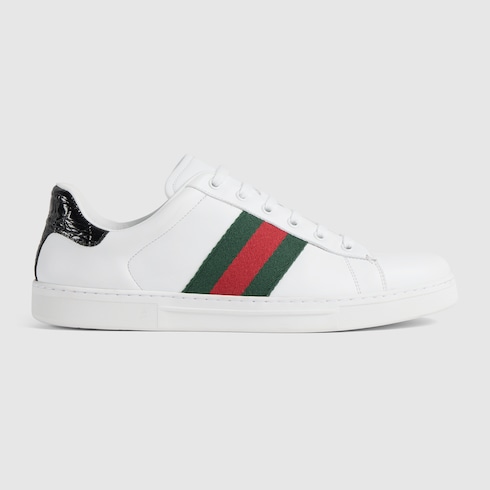
The horsebit loafer is not, strictly speaking, a loafer. It requires a last shaped to accommodate the metal snaffle, which sits across the instep and bears a portion of the shoe's structural load. The bit itself — that doubled ring and bar, lifted from English riding tack — is die-cast in Arezzo, then plated and polished in a facility Gucci does not own but has contracted for thirty years. Each component arrives at Scandicci in lots of five hundred, inspected for weight consistency and surface finish before entering the atelier's inventory.
Nuti begins with the upper. She cuts the calfskin by hand, using a rotary blade and a template that has been adjusted twice since 1953: once in 1979 to narrow the throat, and again in 2004 to taper the heel counter. The leather comes from a tannery in Santa Croce sull'Arno, vegetable-tanned and drum-dyed, then left to rest for six weeks before cutting. She scores the flesh side with a groover, folds the edge, and secures it with a line of stitching so fine it reads, from two feet away, as a single shadow.
The horsebit attachment is the juncture where most counterfeits fail. Nuti uses a two-part rivet system: the post passes through a reinforced eyelet in the leather, then meets a backing plate on the reverse, which is compressed under a pneumatic press calibrated to 140 kilograms of force. Too much pressure and the leather puckers. Too little and the bit shifts within a season. She sets each rivet, then tests it by hand, a motion so practised it looks like a tic.
The Scandicci Atelier and Its Lineage
Gucci opened the Scandicci facility in 1953, the same year Aldo Gucci introduced the horsebit loafer at the Milan trade fair. The building was designed to centralise production that had, until then, been scattered across Florence in rented workshops. By 1960, the atelier employed two hundred and twenty craftspeople. By 1980, that number had fallen to ninety, as manufacturing moved offshore. It rose again in the 1990s, when Tom Ford's tenure required a return to in-house prototyping, and today sits at roughly one hundred and thirty, though Gucci does not release official figures.
Nuti's trainer, Paolo Renzini, worked the horsebit bench from 1964 until his retirement in 2003. He had learned under Primo Lombardi, who had been part of the original 1953 cohort. This is the chain Gucci cites when it speaks of savoir-faire, though the term sits uneasily in a Florentine context — the house prefers maestria, or simply la mano. Renzini's method involved a three-month apprenticeship in which the novice made a single pair of loafers, repeatedly, until the construction became legible in the hands. Nuti recalls making seventeen pairs before Renzini allowed her to work on client orders. She still has the first pair she made that he deemed saleable. The stitching is uneven. She keeps them in her locker, unworn.
The atelier operates on a quota system. Each craftsperson is assigned a daily output — for the horsebit, that is four pairs — but quality control is individual. If a pair fails inspection, it is returned to the maker, who must remake it outside of quota hours. Nuti has had three returns in the past decade, all for issues with the bit alignment. She does not consider this a strong record. The best on her bench, a younger craftsman named Luca Fabrini, has had one return in eight years.
What the Hand Knows
Fabrini joined Gucci in 2011, part of a recruitment push aimed at countering an ageing workforce. He had trained in industrial shoemaking at a technical school in Prato, then worked two years at a hiking boot manufacturer before applying to Scandicci. His first assignment was not the horsebit but the Princetown, a mule introduced in 2015 that shares the horsebit's hardware but requires a different lasting technique. He moved to the horsebit bench in 2014, after a senior craftsperson retired.
Where Nuti works from muscle memory, Fabrini works from attention. He checks each stitch interval with a gauge. He realigns the bit three times before riveting. This makes him slower — he averages three and a half pairs a day — but his work shows a precision that the older generation, trained in an era of higher tolerances, does not always prioritise. The difference is visible only under magnification, or in the wear pattern after five years of use. Gucci's quality control has tightened since Kering's acquisition in 1999, and Fabrini's approach reflects that shift.
He is also the only craftsperson on the bench who has worked directly with Alessandro Michele, Gucci's creative director from 2015 to 2022. In 2017, Michele requested a horsebit variant with an oversized bit, scaled up by thirty per cent, for the cruise collection. Fabrini prototyped the piece, discovering that the standard rivet system could not support the additional weight. He developed a three-rivet configuration, which Michele approved and which now appears intermittently in seasonal offerings. Fabrini does not make these variants on rotation; they are assigned as special projects, typically eight to twelve pairs per season.
The Economics of the Hand
A horsebit loafer retails for €850 in Europe, $990 in the United States. Gucci does not disclose production costs, but industry estimates place material and labour at roughly thirty per cent of wholesale, or about €210 per pair. Of that, Nuti's labour — sixteen hours at an estimated €28 per hour, accounting for benefits and overhead — represents the largest single input. The leather costs approximately €45 per hide, yielding six pairs. The horsebit hardware, bought in bulk, costs €8 per set.
This arithmetic troubles some observers. A 2019 report by the Clean Clothes Campaign noted that Gucci's artisan wages, while above the Italian manufacturing average, have not kept pace with the brand's price increases, which have risen forty-three per cent since 2015. Gucci countered that the Scandicci atelier operates under a separate wage structure, negotiated with the Italian leather workers' union, and that craftspeople receive profit-sharing bonuses tied to the parent company's performance. Nuti declined to discuss her salary, but noted that she has been able to purchase a house in the hills above Scandicci, something her parents, both factory workers, could not.
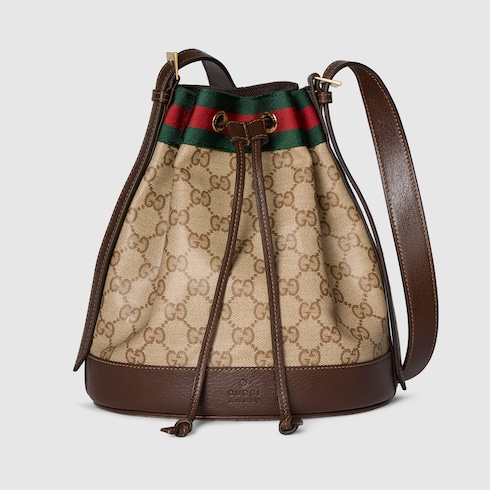
The horsebit loafer is not the most profitable item Gucci produces — that distinction belongs to the canvas handbag category, where material costs are lower and margins wider — but it serves a different function. It is the object the house points to when defending its pricing, the piece that justifies the claim of artisanal production in an era of industrial scale. Whether that claim holds depends, in part, on how long the Loafer Room continues to operate as it does now: eight benches, each worked by a single pair of hands, making a thing that could, with enough investment in automation, be made faster and cheaper elsewhere.
Nuti will retire in four years. Fabrini is training two apprentices, both women in their twenties, both graduates of the same Prato technical school he attended. One of them, he says, has better hands than he does. The other is faster. Neither has yet made a pair that passed inspection on the first attempt, but that is expected. Renzini used to say it takes a thousand pairs before the hands know more than the eyes. Nuti thinks that figure is low.