## The man who built a house out of sex appeal
The man who built a house out of sex appeal
Tom Ford once said, in a 2004 interview with Vogue, that he had spent his entire career "trying to make women feel powerful through their sexuality." One could argue this was less a career strategy than a reflex — the man simply could not design a lapel without wondering where the eye would land next. He arrived at Gucci in 1990 as the house teetered on the edge of irrelevance, its monogram diluted by airport licensing deals and its atelier reduced to a few leather craftsmen in Florence. By 1995, he was creative director. By 1999, Gucci Group was worth $4.3 billion. The turnaround was not subtle.
Ford grew up in Santa Fe, studied art history at New York University, then transferred to Parsons. The training was rigorous but not especially conceptual — he learned pattern-cutting, draping, the mechanics of a sleeve. After graduation, he worked briefly at Cathy Hardwick, then moved to Perry Ellis, where Marc Jacobs was already making noise. Ford, by his own account, was competent but not visionary. He knew how to finish a seam. He did not yet know how to finish a sentence with a hemline.
The Gucci job came through a recruiter. The house, then owned by Investcorp, was flailing. Dawn Mello, brought in to stabilise the brand, hired Ford to design ready-to-wear. His first collections were tentative — a little Halston, a little Armani, nothing that registered beyond the trade press. Then, in 1994, Domenico De Sole took over as CEO, and Ford was promoted. What followed was not a reinvention so much as a distillation. He took the house codes — the bit, the stirrup, the bamboo handle — and made them legible to a generation that had no memory of Grace Kelly or Jackie Onassis. The velvet hipster trouser. The satin shirt, unbuttoned to the sternum. The ad campaigns, shot by Mario Testino, in which models appeared to have just stepped out of someone else's bed.
It was, by any measure, effective. Revenue climbed from $230 million in 1994 to $3 billion by 2003. Ford became the first designer since Yves Saint Laurent to make fashion feel like a cultural event rather than a seasonal obligation. He also became, in the eyes of certain critics, a vulgarian. Suzy Menkes wrote in the International Herald Tribune that his work "confused eroticism with exhibitionism." Cathy Horyn, reviewing a 1997 collection for The New York Times, noted that "the clothes were so overtly sexual they seemed to cancel out any possibility of mystery." Ford did not appear to mind. He told Time in 1999 that he was "not interested in making women look like they just stepped out of a convent."
The Tom Ford house, or what remains of Gucci
By 2004, Ford and De Sole had fallen out with François Pinault, the chairman of Gucci Group's parent company. The dispute centred on creative control and contract terms; both men departed that April. Ford spent the next year in Los Angeles, directing A Single Man, a film adaptation of the Christopher Isherwood novel. It was a curious pivot — from runway to cinema — but the aesthetic was consistent. Every frame was composed like a fashion editorial: the light through a window, the fold of a shirt collar, the way grief registers in the set of a jaw.
In 2005, Ford announced the launch of his eponymous label, backed by Domenico De Sole and financed in part by Estée Lauder. The first collection, shown in 2007, was a return to form: sharply tailored suiting, evening gowns cut on the bias, accessories that nodded to the Gucci years without replicating them. The house strategy was unusual. Ford declined to show at the Paris or Milan calendar, instead presenting collections privately to editors and buyers. He opened a handful of freestanding stores — Madison Avenue, Rodeo Drive, Bond Street — and kept production limited. The clothes were expensive, often prohibitively so, but the margins were high and the brand remained tightly controlled.
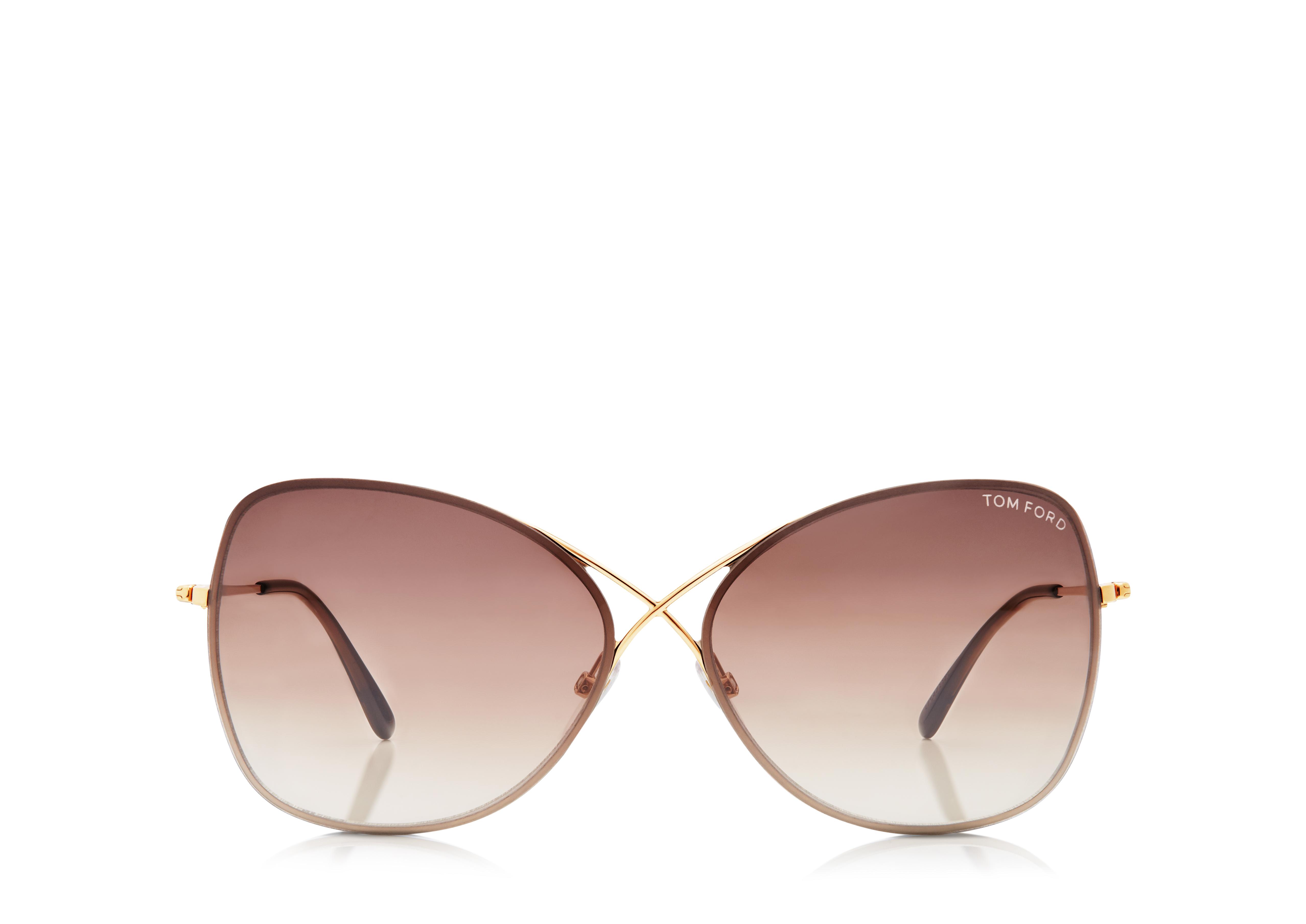
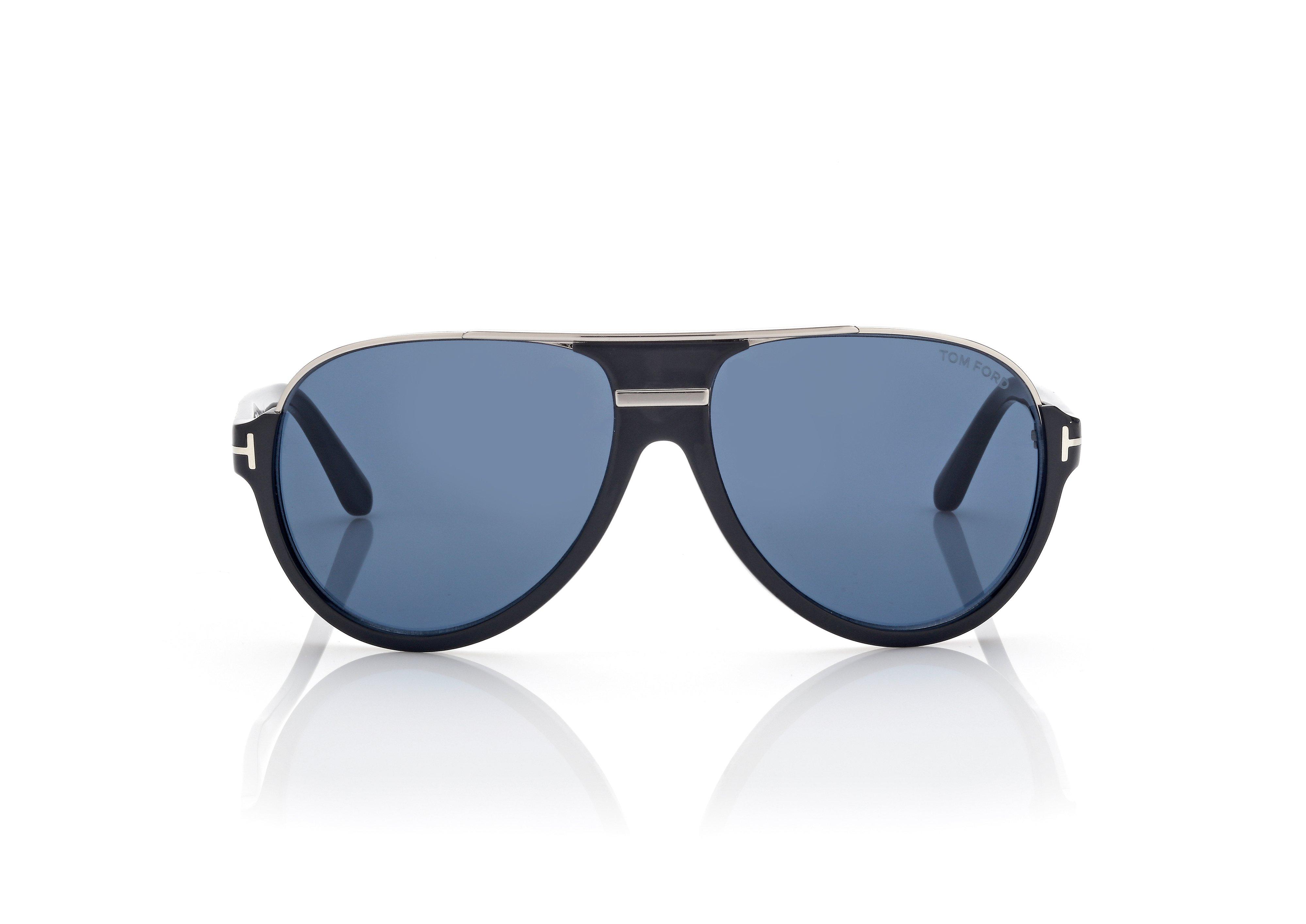
The real revenue, of course, came from beauty and eyewear. Estée Lauder launched Tom Ford Beauty in 2006, and within five years it was generating over $500 million annually. The fragrances — Black Orchid, Tobacco Vanille, Oud Wood — were dense, unapologetic, and priced at the upper end of the prestige market. Ford himself appeared in the campaigns, often shirtless, a decision that struck some as narcissistic and others as shrewd. He was selling a lifestyle, or at least the idea of one: a life in which you wore cashmere pyjamas to breakfast and applied cologne before answering the phone.
The Estée Lauder acquisition, and the question of succession
In 2022, Estée Lauder acquired the Tom Ford brand outright for $2.8 billion. Ford remained on as creative director through 2023, then stepped back. The house has since appointed Haider Ackermann, formerly of Berluti and his own label, as creative director. Ackermann's first collection, shown in February 2024, was a careful negotiation. He retained the house's emphasis on tailoring and sensuality, but softened the palette — more charcoal and ivory, less lacquer and gold. The reviews were measured. Some praised the restraint; others wondered whether a Tom Ford collection without Tom Ford was simply a very expensive suit.
The question is not unprecedented. Gucci survived Ford's departure, though it took several seasons and a new creative director — Frida Giannini, then Alessandro Michele — to find its footing again. Tom Ford, the house, faces a similar test. The name is still a draw, particularly in fragrance and accessories, but the ready-to-wear has always been inseparable from the man himself. Ford understood, better than most, that fashion is a confidence game. You sell the cut of a jacket, but also the idea that wearing it will make you the kind of person who orders a martini without specifying the gin.
Whether that idea survives its author is, on balance, unclear. Ackermann is a skilled technician, and Estée Lauder is not in the habit of mismanaging its acquisitions. But the house was never built on atelier tradition or archival codes. It was built on Ford's ability to make desire look like a business plan. One suspects that, without him, the plan may require some revision.