## The Room Above the Jeans Shop
The Room Above the Jeans Shop
Stockholm, 1996. Four men in a room above a production facility on Torsgatan, screen-printing logos onto raw denim. They had made a hundred pairs of jeans — red stitching, unfinished hems, a fit borrowed from Levi's 501s and tightened through the leg. They gave them to friends. The friends wore them. Other people asked where to buy them. Jonny Johansson, Mikael Schiller, Jesper Kouthoofd, and Tomas Sjöö had not planned to start a fashion house. They had planned to start a creative collective. The jeans were a side project, something to fund the rest.
Twenty-eight years later, Acne Studios operates in thirty-odd countries, stages runway shows in Paris, and is majority-owned by a Chinese conglomerate. Johansson remains creative director. The jeans are still in production, though the logo has been refined and the fit adjusted six times. What began as an accident has become a maison with a point of view — spare, cerebral, faintly ironic — and a turnover that reached €300 million in 2022. The question is not whether Acne Studios succeeded. It is what kind of success this turned out to be.
The Collective That Became a Brand
The name is an acronym: Ambition to Create Novel Expression. Johansson has said in interviews, including one with Wallpaper in 2014, that he finds the name embarrassing now. It was earnest in a way that Swedish design culture was not, at the time. The four founders met through Stockholm's art and advertising scene. Johansson had studied at Beckmans College of Design, though he did not complete the programme. He worked in art direction. The jeans were meant as a promotional tool — a way to get the Acne name into circulation.
They worked. Within a year, the collective had become a denim label. Within three, Johansson was designing full collections. He had no formal training in pattern-making or draping. What he had was an eye for proportion and a willingness to borrow. Early Acne Studios collections pulled from military surplus, Comme des Garçons, and the kind of anti-fashion pragmatism that Margiela had made respectable in the 1990s. Johansson's breakthrough was not a silhouette. It was a sensibility: clothes that looked expensive but felt slightly off, as if the tailor had been given the wrong measurements and decided to leave them that way.
The Signature, If One Exists
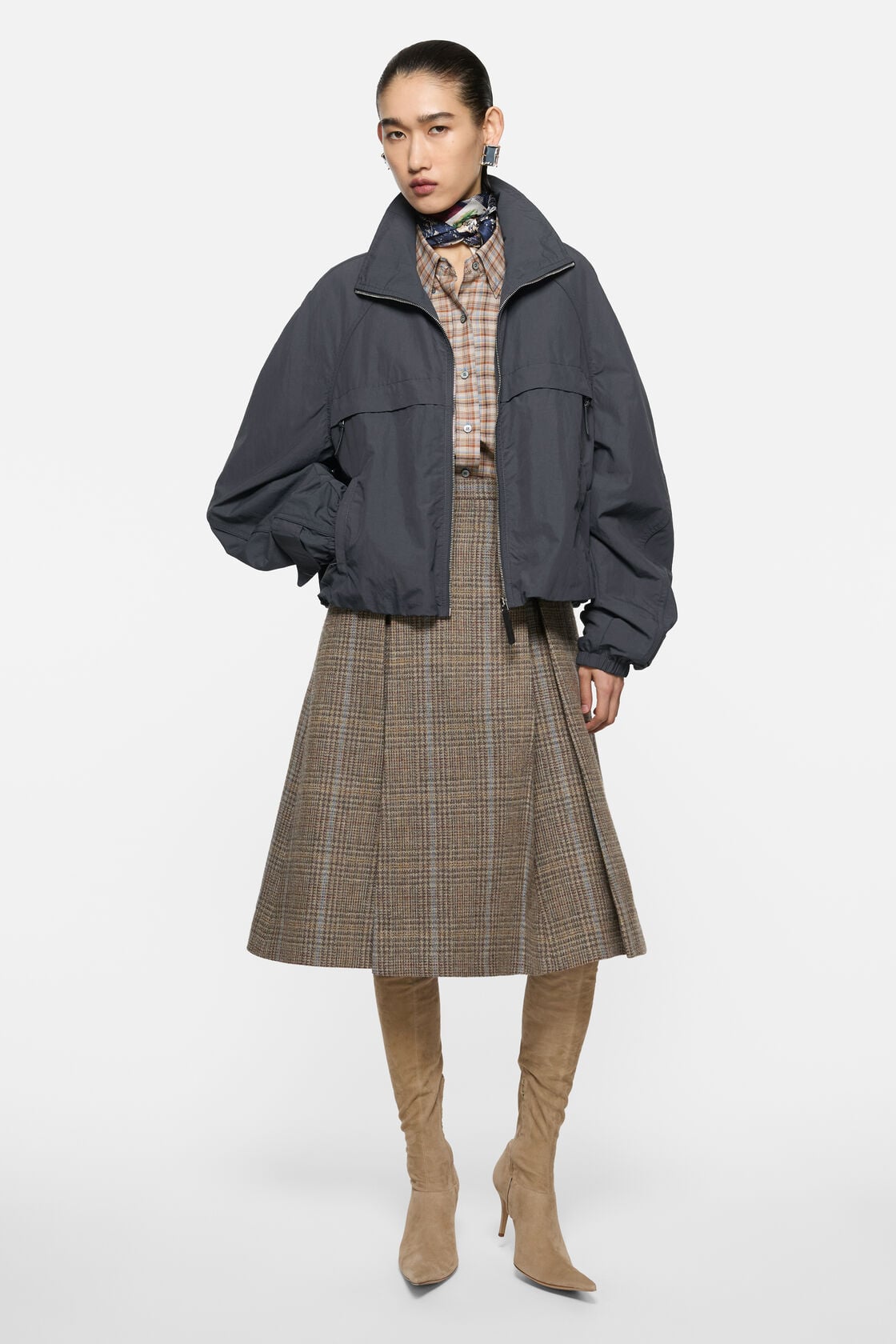
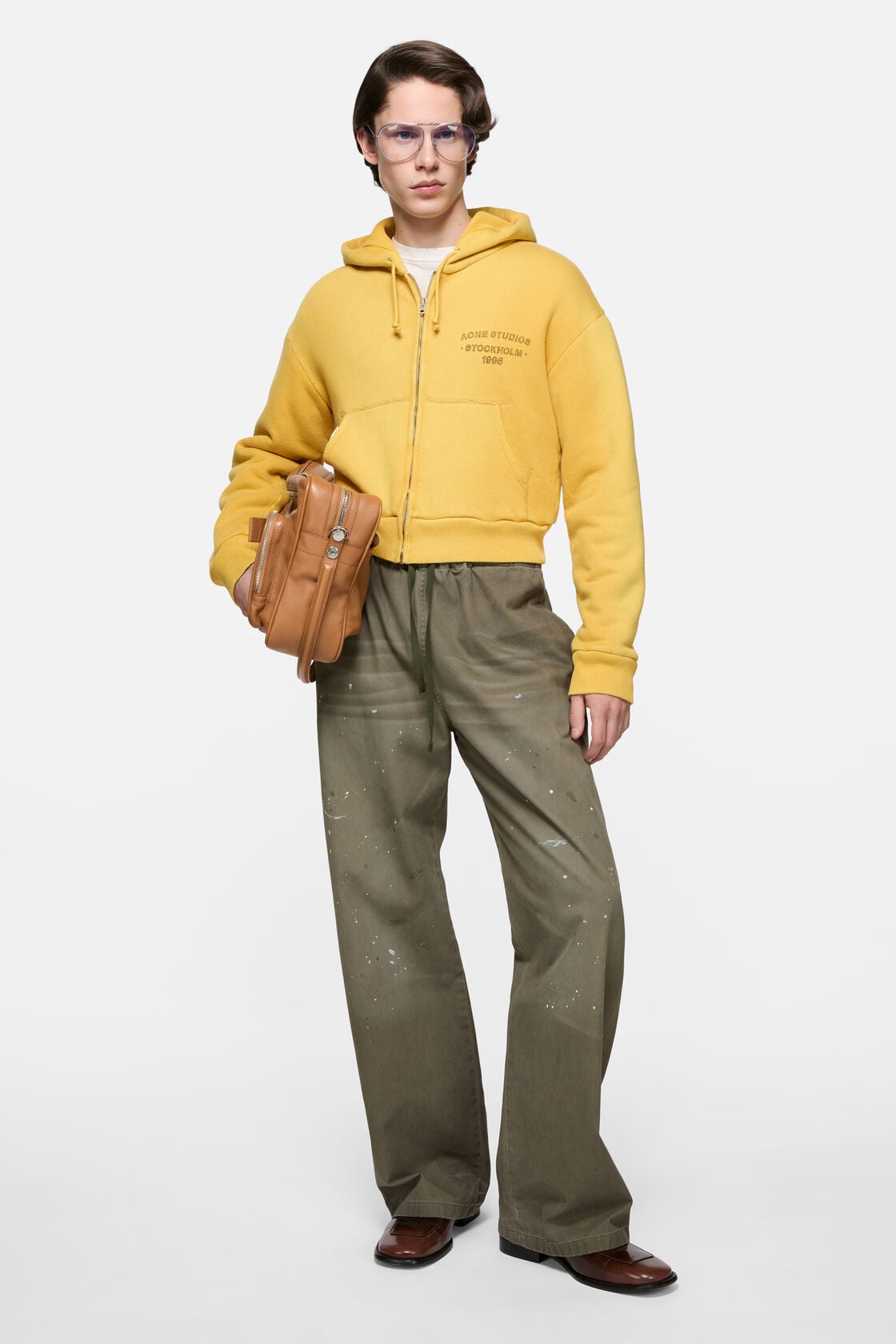
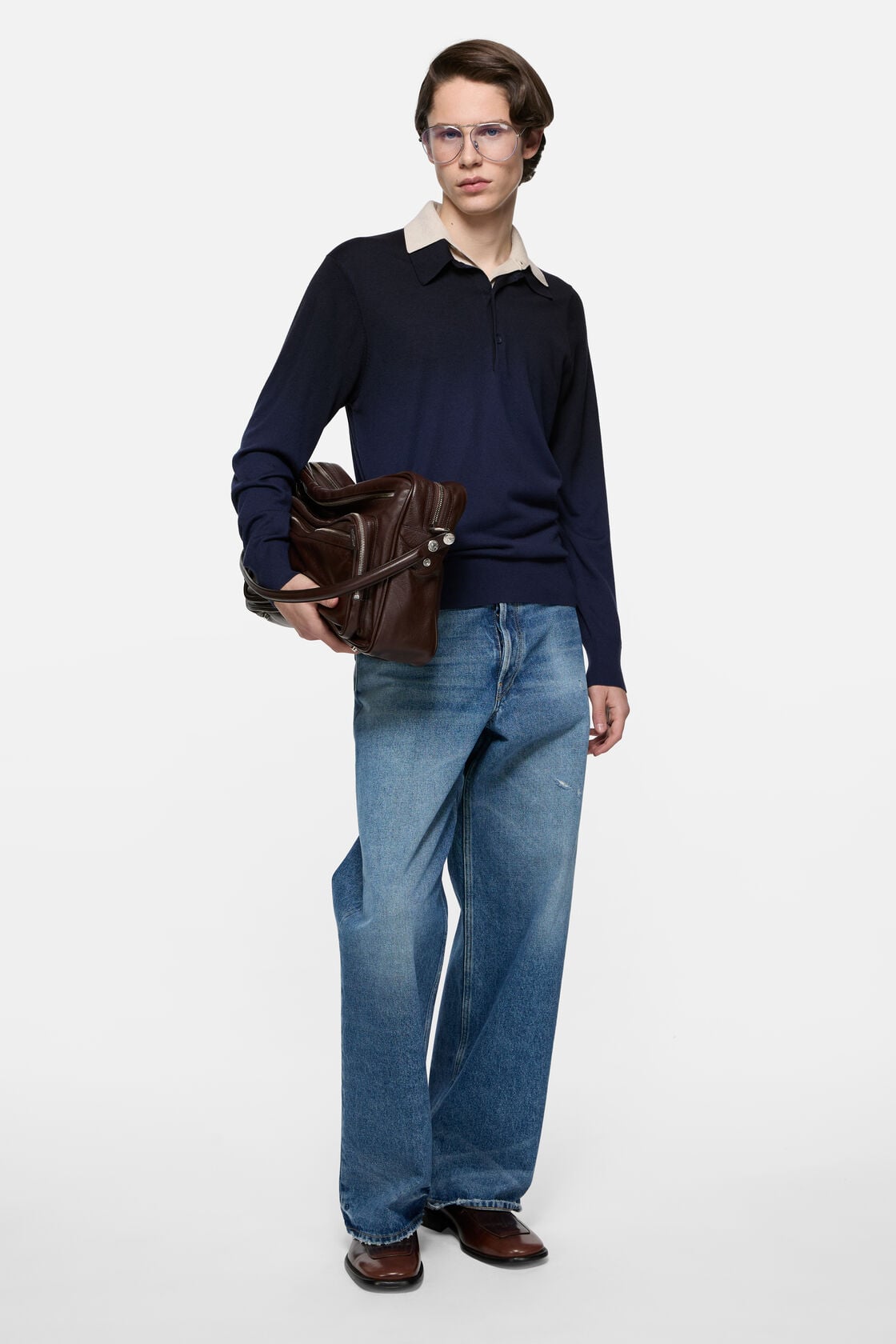
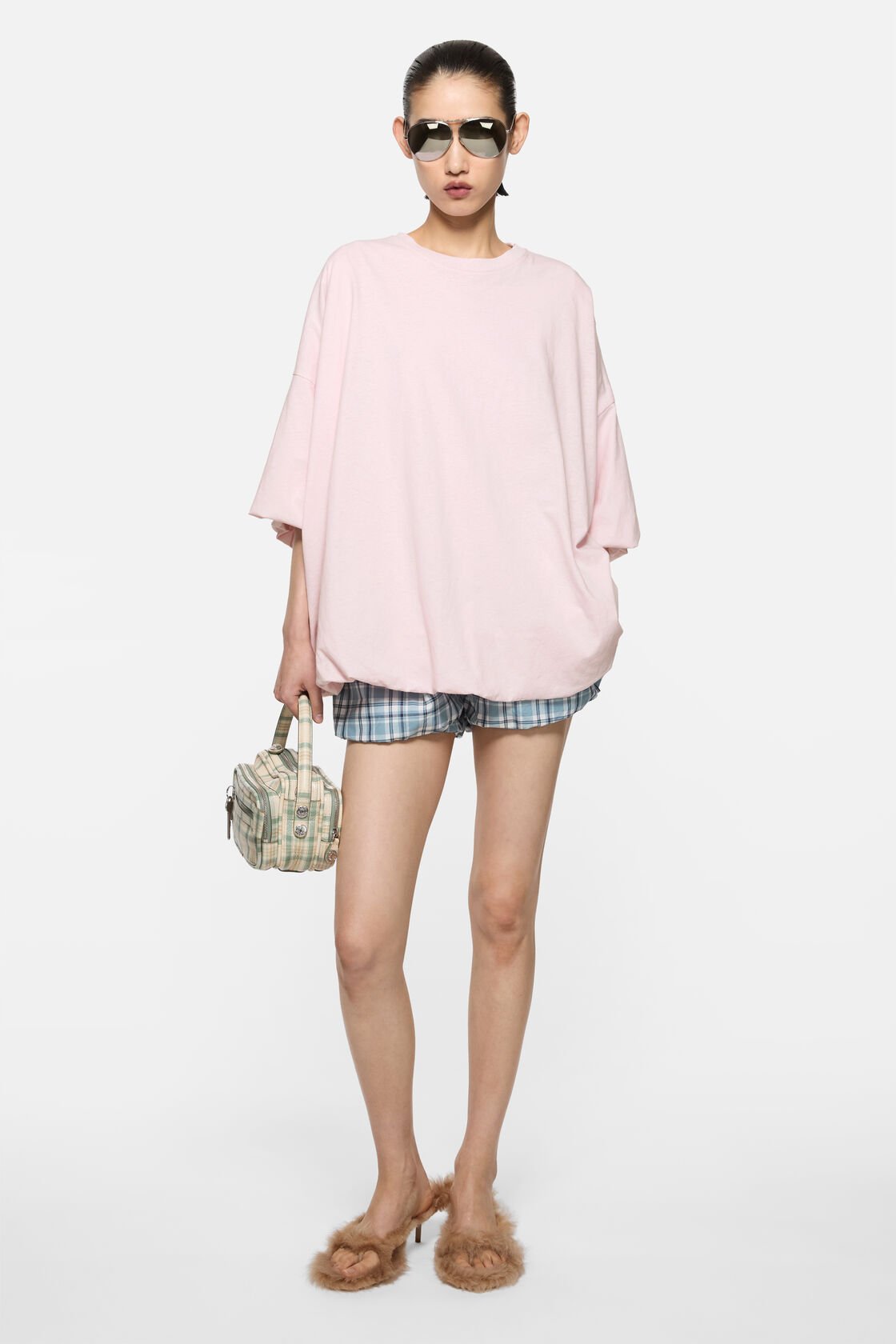
Acne Studios does not have a house code in the way that Chanel or Hermès does. There is no quilted flap bag, no stirrup leather. What it has is a recurring set of gestures. Oversized outerwear with sleeves that extend past the wrist. Trousers that break at the ankle but do not pool. Knitwear in flat, chalky colours — grey, rust, navy — that photograph well and age better. The house has produced a few objects that approach icon status: the Pistol boot, introduced in 2006, with its almond toe and stacked heel; the Canada scarf, a wool rectangle in tonal stripes, which became a signifier of a certain kind of Northern European taste in the early 2010s.
Johansson's approach to design is additive rather than reductive. He does not strip away until he reaches an essence. He starts with a reference — a 1980s Reebok trainer, a Canadian work jacket, a Savile Row blazer — and then distorts it, usually by adjusting the volume or shifting a seam. The result is clothing that feels familiar and wrong at the same time. It is not minimalism. It is something more slippery: a kind of studied awkwardness that only works if the facture is impeccable.
The Ownership Question
In 2015, Acne Studios sold a majority stake to IDG Capital Partners, a Beijing-based private equity firm. Johansson retained creative control. The founders retained a minority share. The deal was reported, at the time, as a way to fund expansion in Asia and North America. It was also a recognition that the house had outgrown its original structure. A creative collective cannot operate flagship stores in Tokyo and New York. A creative collective cannot produce twelve collections a year.
The sale was met with the usual hand-wringing about independence and vision. Would Acne Studios become another casualised luxury brand, its edges sanded down to appeal to a broader market? The answer, five years on, is both yes and no. The house has expanded — more stores, more collaborations, more product categories. But the aesthetic has not softened. If anything, it has become more committed to its own oddness. The Spring 2023 collection featured trousers with asymmetric waistbands and coats with sleeves that did not match. These are not moves designed to maximise sell-through.
Johansson has said, in a 2021 interview with Business of Fashion, that he does not think about market research when he designs. One suspects this is only partially true. No creative director at a house of this scale operates without data. But there is a difference between designing to data and designing around it. Johansson seems to do the latter. He knows what sold last season. He makes something adjacent, not identical.
What Remains
Schiller, Kouthoofd, and Sjöö have all stepped back from day-to-day operations. Johansson is the face of the house now, the name in the press releases. Acne Studios has become, in effect, a one-man operation — though Johansson works with a studio of thirty-odd designers, patternmakers, and technicians. The original ethos — collaborative, experimental, resistant to fashion's usual hierarchies — has been replaced by something more conventional. This is not a critique. It is an observation. Houses evolve or they disappear.
What has not changed is the house's relationship to Swedishness. Acne Studios does not traffic in folk motifs or nationalist nostalgia. But there is something distinctly Nordic in its palette, its restraint, its preference for function over flourish. The clothes are made to be worn in cold, wet climates by people who walk to work and do not want to be noticed. They are also made to be photographed under flat grey light, which is perhaps why they have translated so well to Instagram.
The question of what comes next is harder to answer. Johansson is fifty-two. He has been at Acne Studios for nearly three decades. There is no obvious successor, no deputy creative director being groomed for the role. The house has not announced plans for a retrospective or a founder's exit. It continues, season after season, producing clothes that sell well enough to justify their existence but not so well that they lose their edge.
This is, one suspects, exactly what Johansson wants. Not dominance. Not ubiquity. Just enough success to keep making the work, and enough autonomy to keep it strange.