## The Room Before the Label
The Room Before the Label
Jonny Johansson sits at a long table in Stockholm, surrounded by fabric swatches that don't quite behave. A length of raw denim refuses to lie flat. A piece of washed cotton poplin pools in a way that suggests it was never meant to hold a crisp silhouette. This is 1996, and Johansson is not yet a designer. He is an art director at a creative collective called ACNE — Ambition to Create Novel Expression — and the hundred pairs of jeans they are about to produce for friends and collaborators are, in his mind, a side project. A gesture. The denim is red-selvedge Cone Mills, the fit is unisex and straight-legged, and the back pockets carry five different thread colours because no one in the room can agree on one.
By the time those jeans reach the hands of stylists and editors, the gesture has become a business. Acne Studios, as it would eventually be called, did not arrive with a manifesto or a lookbook. It arrived as a pair of trousers that felt, somehow, off — in the best sense. Not quite workwear, not quite fashion. The fit was considered but not precious. The stitching was visible, almost deliberately so. And the price sat in a register that suggested the makers were not trying to sell you a dream. They were trying to sell you a pair of jeans.
What Came Before
Johansson's training, such as it was, did not follow the atelier route. He studied graphic design and film, worked in advertising, and spent the early nineties immersed in Stockholm's small but restless creative scene. His co-founders at ACNE — Mikael Schiller, Tore Eliasson, and Jesper Kouthoofd among them — came from similar backgrounds: film production, music, brand strategy. None of them had sewn a garment. What they shared was a dissatisfaction with what was available to buy, and a suspicion that the gap between high fashion and streetwear was less a chasm than a failure of imagination.
The collective's first office was above a sex shop on Götgatan. The jeans were cut and sewn in a small factory outside the city, and the initial run of a hundred pairs sold out within days. Johansson has said, in various interviews, that the speed of that sell-through surprised him. Not because the jeans were good — he believed they were — but because the idea of turning a creative experiment into a clothing line felt, at the time, almost incidental. The collective was already doing other things: directing music videos, designing album covers, consulting for brands. Fashion was simply another medium.
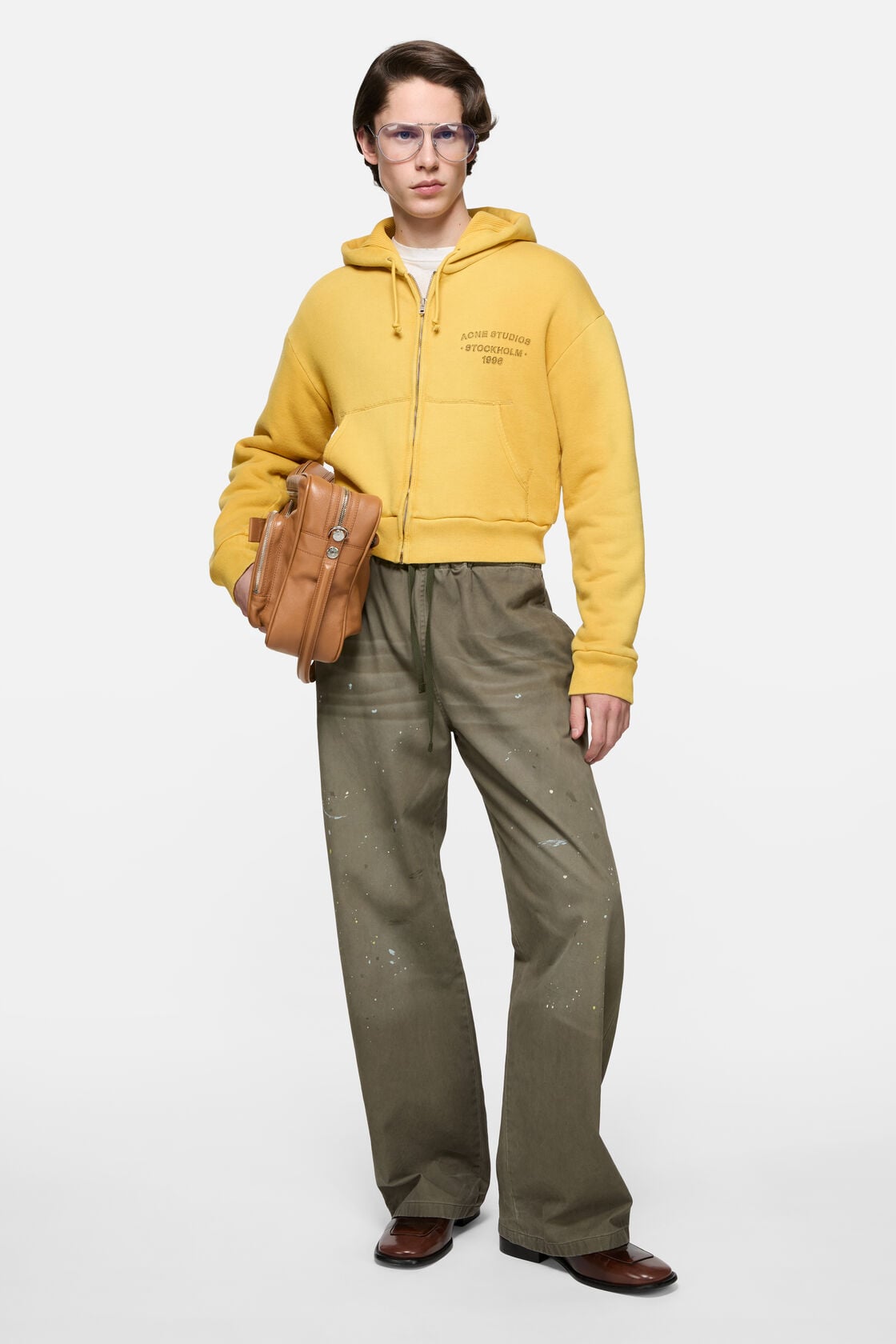
But fashion, unlike film or graphic design, has a way of demanding more. By 1998, Acne Studios had expanded beyond denim. There were shirts, outerwear, knitwear. The aesthetic remained difficult to pin down — Scandinavian, yes, but not in the austere, monochrome sense that the term usually implies. Colours were muted but not neutral. Cuts were relaxed but not sloppy. The clothes felt worn in before you bought them, as though they had already lived a life.
The Signature, If There Is One
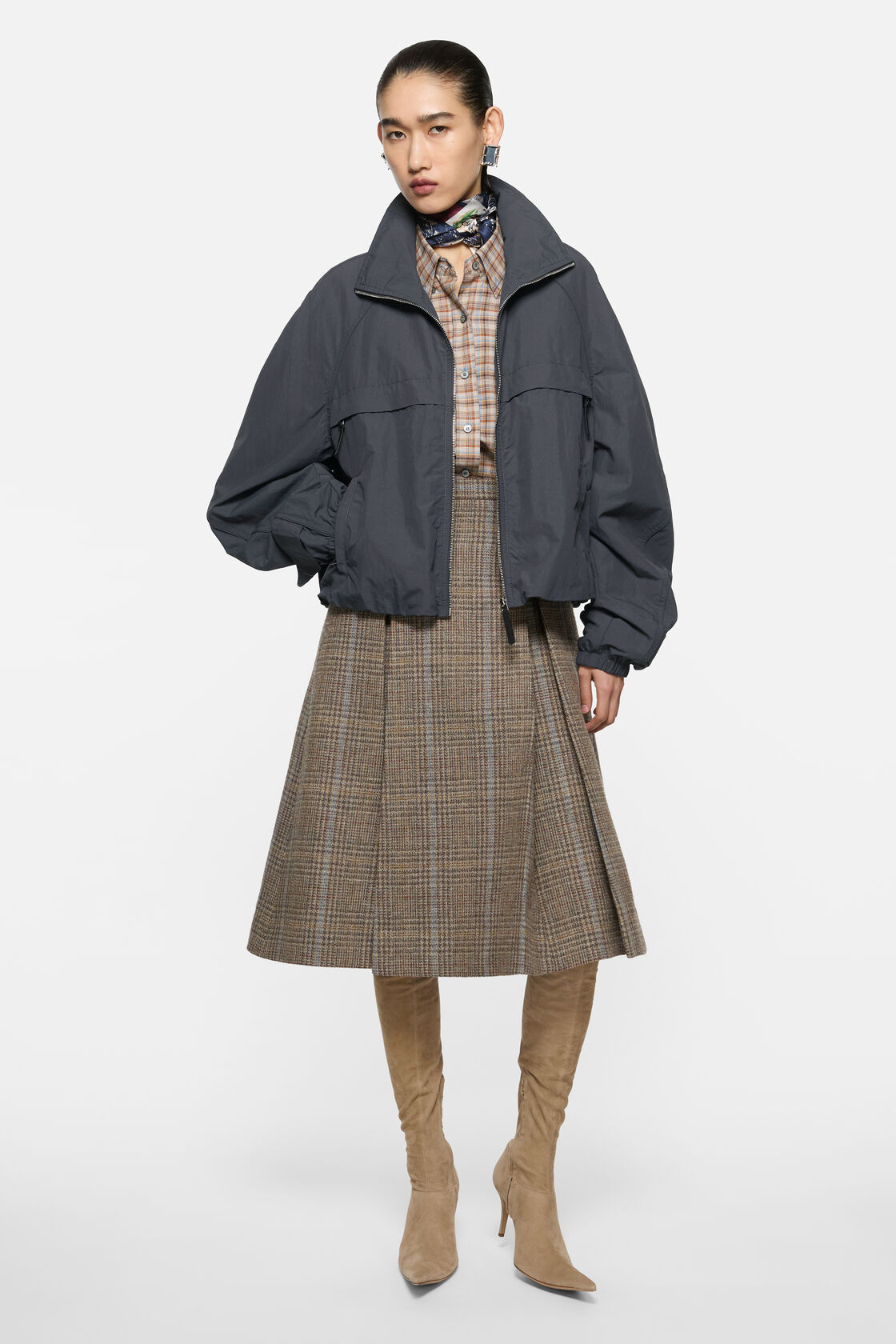
One hesitates to call anything Johansson does a signature. He resists repetition in a way that can frustrate retailers and delight editors. A given season might feature oversized tailoring in Prince of Wales check, followed by a collection of slip dresses in industrial nylon, followed by a return to denim so raw it could stand on its own. What holds it together — and this is where the training in visual communication becomes relevant — is a consistent sense of proportion and a refusal to resolve tension.
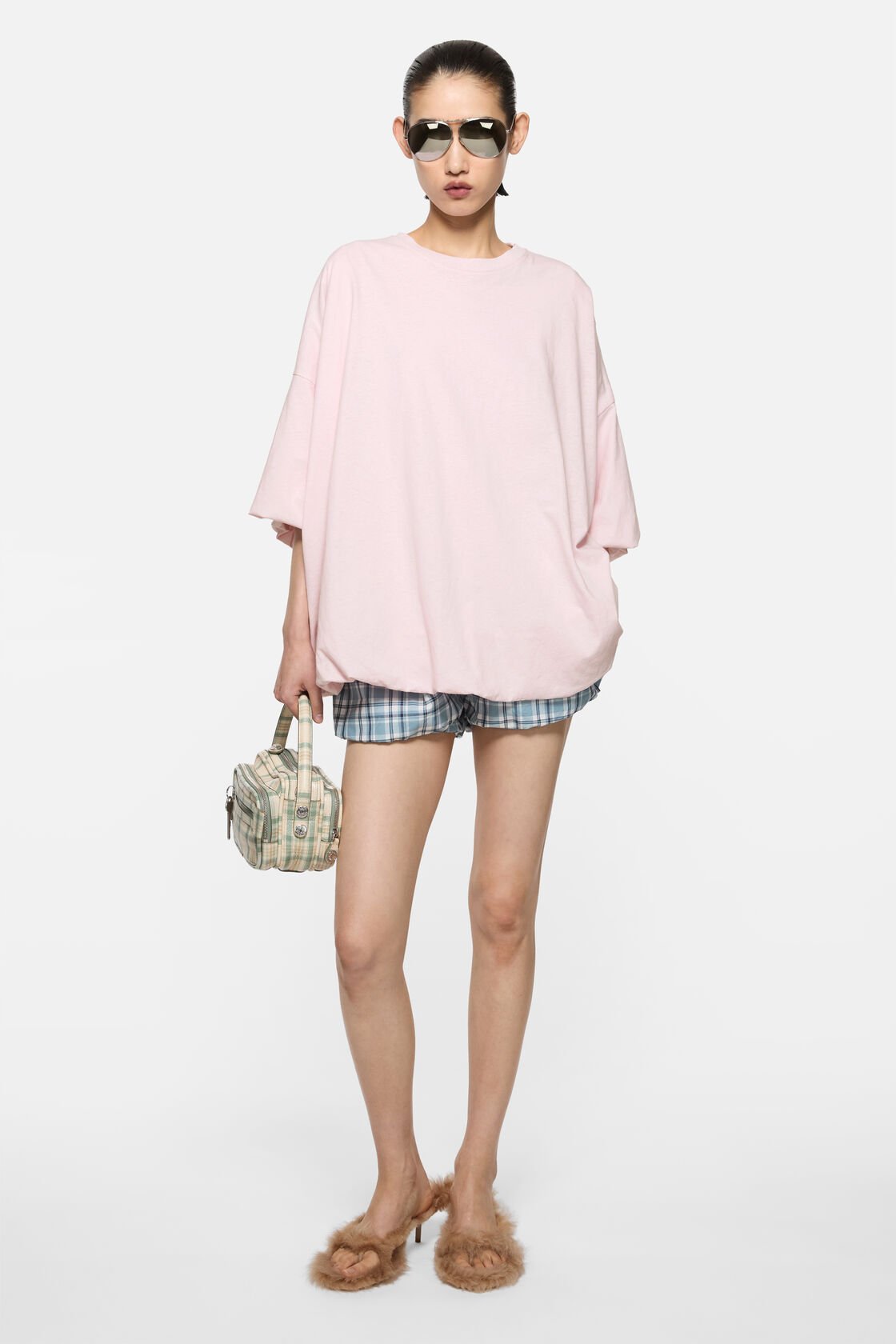
Take the Musubi bag, introduced in 2018. The name refers to a Japanese knot, and the design is, on paper, simple: two padded leather panels joined by a twisted strap. But the effect is strange. The bag looks soft and structural at once, like a piece of upholstery that has been folded into something portable. It became, almost immediately, one of the house's most recognisable pieces. Not because it was loud, but because it occupied a space that no other bag seemed to claim.
The same could be said of the Studios Acne face logo, which appears on hoodies, T-shirts, and the occasional runway piece. It is a smiley face with one eye larger than the other, rendered in a single weight of line. Childish, arguably. But also knowing. The asymmetry suggests that the house is not interested in polish for its own sake. Perfection, one suspects, would bore them.
What Remains
In 2006, Acne Studios began showing at Paris Fashion Week. The move signalled ambition, but also a certain kind of arrival. Stockholm, for all its creative energy, does not have the infrastructure to support a global fashion house. Paris does. The shows were never theatrical — no elaborate sets, no celebrity front rows. Johansson preferred to let the clothes speak, and the clothes, more often than not, were worn by models who looked like they had somewhere else to be.
By 2014, the house had opened stores in Paris, London, New York, Tokyo, and Seoul. The growth was steady, not explosive. Johansson retained creative control, even as the business expanded. In interviews, he has described his role as curatorial — not in the sense of selecting from a pool of existing ideas, but in the sense of shaping a point of view from a wide range of references. Film stills, modernist furniture, subcultural uniforms. The sources are eclectic. The output is coherent.
In 2019, Acne Studios became part of a larger luxury group, acquired by a Chinese investment firm with holdings in several European fashion houses. Johansson remained as creative director. The atelier stayed in Stockholm. The question, as it always is with such arrangements, is what happens next. Does the house scale without diluting? Does it retain the looseness that made it compelling in the first place?
The Object Itself
Walk into an Acne Studios store today and you will find garments that feel, in some essential way, unchanged from those first jeans. The denim is still raw-edged. The knitwear still pools at the hem. The leather jackets still look like they were made for someone else and then, somehow, fit you perfectly. There is a consistency here, but it is not the consistency of a brand that has found its formula and repeated it. It is the consistency of a sensibility that refuses to be polished into irrelevance.
Whether that sensibility can survive the pressures of scale is, on balance, an open question. Johansson is still designing. The atelier is still in Stockholm. The clothes still feel like they were made by people who would rather be making something else, but have decided — for now — that this is worth their time. One hopes that remains true.