## The Saddler's Son
The Saddler's Son
Guccio Gucci did not begin with leather. He began with luggage — other people's luggage, specifically, during a stint as a lift operator at the Savoy Hotel in London sometime around 1897. The trunks and valises that passed through that lobby, their brass corners and monogrammed canvas, left an impression. When he returned to Florence a few years later, he opened a small workshop on Via della Vigna Nuova. The year was 1921. He sold saddles, bridles, and travel cases to the Tuscan gentry. The rest is not history so much as accretion.
What Gucci built in those early decades was a craft business, not a fashion house. His sons — Aldo, Vasco, Ugo, Rodolfo — joined the atelier in the 1930s and 40s. Aldo, the eldest, proved the most commercially minded. He opened the first shop outside Florence, in Rome, in 1938. A Milan location followed. Then, in 1953, New York — 58th Street, just off Fifth Avenue. That move, more than any design, set the template. Gucci would be Florentine in craft and American in ambition.
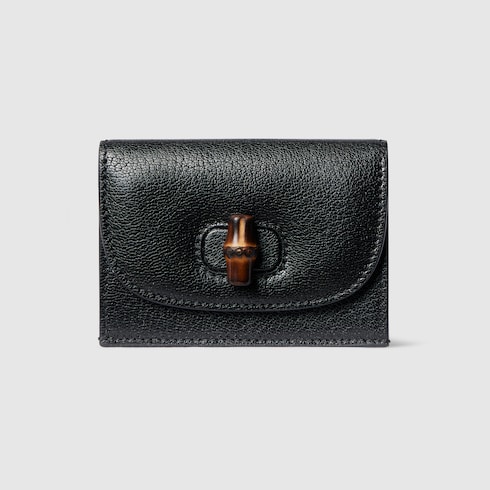
The house developed its visual grammar during the postwar years, when leather was rationed and ingenuity became necessity. The bamboo-handled bag, introduced in 1947, used a material abundant in Italy and requiring no tanning. The horsebit loafer, which arrived in 1953, translated equestrian hardware into footwear. Both pieces carried a logic that read as elegant precisely because it was functional. Ornament followed structure, not the reverse.
By the 1960s, Gucci had become shorthand for a particular kind of Continental glamour. Grace Kelly carried the Flora scarf. Jacqueline Kennedy owned the shoulder bag that would later bear her name. Peter Sellers wore the loafers in After the Pink Panther. But the family, by then, had begun to fracture. Aldo and Rodolfo disagreed on expansion. Rodolfo's son, Maurizio, entered the business in 1972 with ideas that clashed with his uncle's. The disputes turned legal, then bitter, then violent.
What remains of Guccio's vision is harder to pin down than the folklore suggests. The house today operates at a scale he could not have imagined — €10 billion in annual revenue, boutiques in a hundred-odd countries, collections that turn over every season. The bamboo handle still appears. So does the horsebit. But these are references now, not solutions to material shortages. They signify heritage in the way a monogram does: efficiently, and at a distance.
The Sons, and the Split
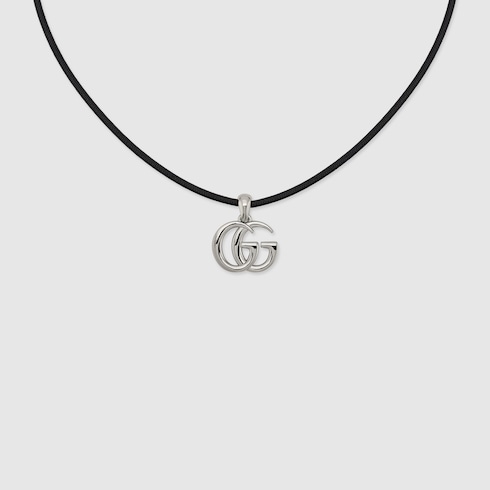
Aldo Gucci, who ran the business for much of the mid-century, understood that luxury required theatre. He opened the New York flagship with a reception that drew café society and gossip columnists in equal measure. He cultivated relationships with film studios, ensuring that Gucci appeared on screen and in credit sequences. By the 1970s, the interlocking Gs — a motif Aldo himself is said to have refined — appeared on everything from handbags to ashtrays. Licensing deals proliferated. The brand expanded, and with it, the risk of dilution.
Rodolfo, Aldo's younger brother, took a more cautious line. He managed the Italian operations and resisted the American appetite for ubiquity. When Rodolfo died in 1983, his son Maurizio inherited his 50 per cent stake. Maurizio, a lawyer by training, had little patience for Aldo's approach. He believed the house had become vulgar, overexposed, compromised. In 1984, with backing from an investment firm, he bought out his uncle's shares and took control.
What followed was a decade of turbulence. Maurizio hired Dawn Mello, then president of Bergdorf Goodman, to restore what he called the brand's "dignity." She brought in Tom Ford, a young American designer, to lead accessories. She pared back the product range, closed underperforming licenses, and refocused on leather goods. The moves were necessary, but expensive. By 1993, Gucci was hemorrhaging cash. Maurizio sold his remaining shares to Investcorp, a Bahrain-based firm, and left the company. Two years later, he was shot dead outside his Milan office. The murder, later tied to a contract killing arranged by his ex-wife, became tabloid fodder. It also marked the end of family control.
What Ford Found
Tom Ford, by then creative director, inherited a house with a notable past and a muddled present. His solution was not to resurrect Guccio's Florence but to invent a new vocabulary altogether — one rooted in sex, precision, and a kind of arch glamour that didn't apologise for itself. The velvet hip-huggers, the satin shirts unbuttoned to the sternum, the ad campaigns shot by Mario Testino: none of it referenced saddles or bamboo. It referenced Studio 54, American Gigolo, and a version of Italian style filtered through Los Angeles.
The strategy worked. Revenue tripled between 1995 and 1999. Gucci went public. Ford became the most visible designer of his generation, and the house became, for a time, the commercial engine of what would soon be called the Gucci Group — later Kering. But Ford's Gucci bore almost no resemblance to the atelier Guccio had opened eight decades earlier. The craft was still there, in the construction of a jacket or the hand-stitching of a loafer. But the ethos had shifted entirely. Gucci was no longer about restraint or functionality. It was about desire, and the machinery required to generate it at scale.
The Archival Question
Alessandro Michele, who took over in 2015, made a different wager. He returned to the archive — not to recreate it, but to ransack it. The horsebit became a buckle on a loafer-mule hybrid. The Flora print reappeared on everything from bomber jackets to sneakers. Michele's Gucci was magpie eclecticism, a collision of eras and references that felt both nostalgic and destabilising. It worked, commercially, for seven years. Then it didn't. Michele left in 2022. Sabato De Sarno, his successor, has signalled a return to "codes" — a word that in luxury means recognisable motifs, deployed with just enough variation to justify the season.
What Guccio built was a workshop. What his sons built was a brand. What remains is a conglomerate with an archive, and the question of how much weight that archive can bear. The bamboo bag still sells. So does the Horsebit 1955. But these pieces function now as entry points into a system of consumption far larger than any single object. They are tactile, yes, and well-made. But they are also symbols, and symbols require constant tending.
One suspects Guccio would find the whole apparatus baffling. He made luggage for people who travelled. His sons sold aspiration to people who didn't. The house today does both, at a volume that requires factories in Tuscany and supply chains across three continents. Whether that constitutes a betrayal or an evolution depends, perhaps, on whether you believe craft can survive scale. The leather is still vegetable-tanned. The stitching is still done by hand, at least on certain pieces. But the hands number in the thousands now, and the pieces number in the millions.
The question is not what remains of Gucci's vision. It is whether a vision, once industrialised, remains a vision at all.