## The White Coat
The White Coat
John Galliano stands in the Maison Margiela atelier on rue Saint-Maur wearing a white lab coat over paint-splattered trousers. His hands are covered in chalk dust. He is marking a sleeve head on a half-finished jacket, pinning the cloth directly onto the mannequin, then stepping back to assess the fall. The coat has no lining yet. You can see the canvas floating inside, the pad stitching still loose. He adjusts the shoulder by a quarter inch and moves on.
This is not the Galliano of the Dior years. No gold-braided hussar jacket. No tricorne. The theatrical wardrobe is gone, replaced by the uniform of the premier d'atelier. It is a deliberate choice. At Margiela, the designer does not take a bow.
He arrived at the maison in 2014, eight years old by then in its second life under OTB ownership, three years after Martin Margiela himself had long departed. The appointment surprised nearly everyone. Galliano had spent the previous three years out of the industry following his dismissal from Dior, working quietly in a small studio, rebuilding both technique and reputation. Margiela seemed an unlikely fit. The house had been founded on anonymity, collective authorship, deconstruction as philosophy. Galliano's name was synonymous with spectacle.
But Renzo Rosso, who owns the maison, saw something else. He saw a craftsman who had trained under the same principles Margiela valued: pattern-cutting as architecture, the integrity of construction, the garment as idea. Galliano had studied at Central Saint Martins under Bobby Hillson and later worked in the ateliers at Givenchy and Dior, where he learned haute couture from the petites mains who had dressed the private clients of the fifties. He understood how a sleeve was set, how a bodice was boned, how cloth moved over the body when the wearer sat or turned. That knowledge, Rosso believed, would translate.
The Pivot
Galliano's first collection for Margiela, shown in January 2015, was called Artisanal. Not a seasonal collection but a couture line, shown on a narrow runway in a disused Métro station. The models wore deconstructed tailoring, garments that had been taken apart and reassembled inside-out, seams exposed, linings on the outside. There were coats made from vintage military blankets, dresses constructed from reclaimed scarves, a jacket whose shoulder pads sat visibly on top of the cloth rather than inside it.
It was not a repudiation of his past work. It was a translation. Galliano had always been a storyteller, building collections around characters and narratives. At Margiela, the narrative became the process itself. The story was in the making.
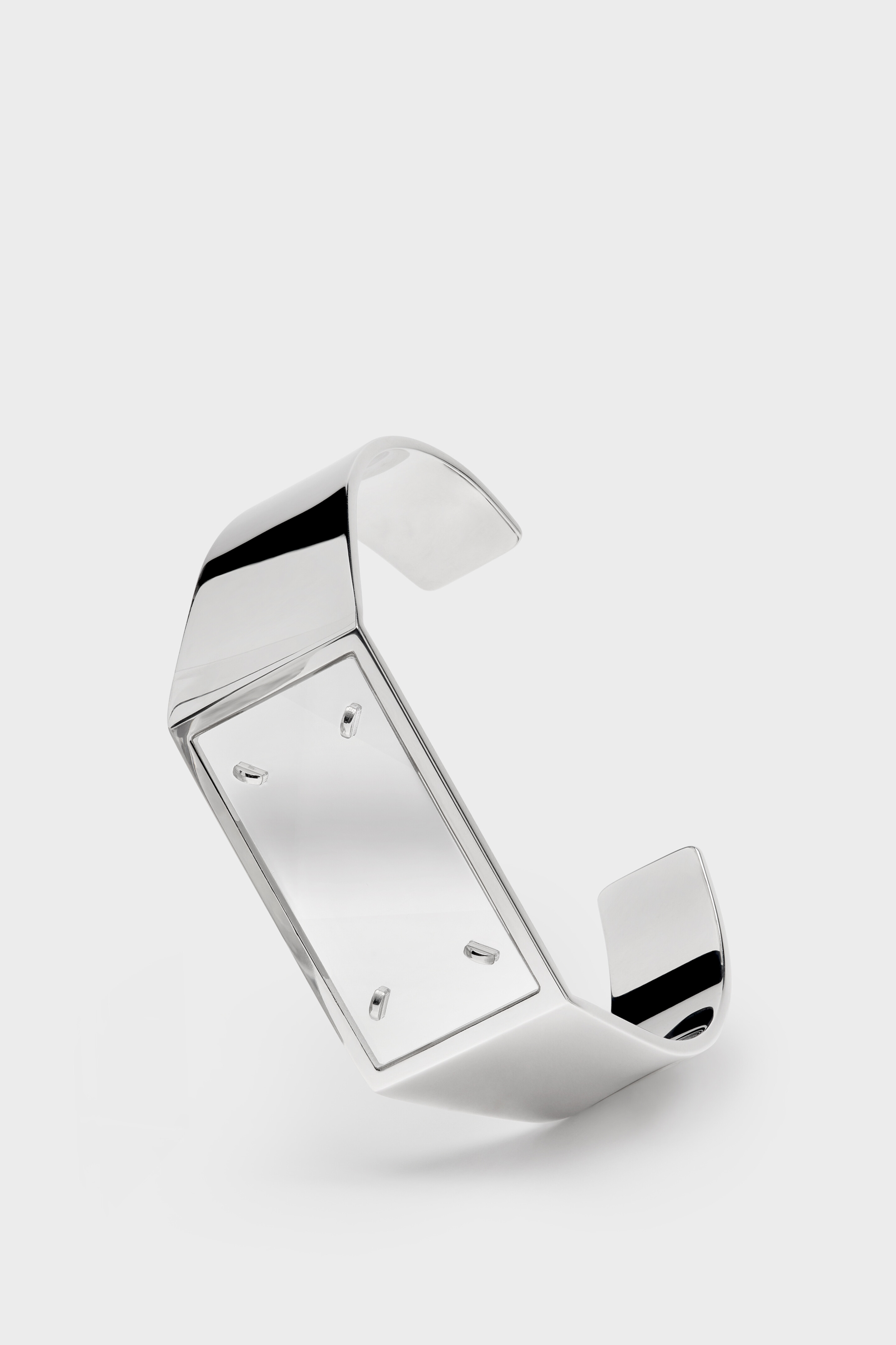
He kept the house codes. The Tabi boot remained. The four white stitches on the garment label, the blank white tag, the policy of no designer bows at the end of the show. He did not put his name on anything. But he brought his own obsessions: the transformational garment, the idea that clothing could shift identity, the technique of layering and reconstruction that he had learned in the ateliers.
What emerged was something neither purely Margiela nor purely Galliano. The collections began to explore a territory the house had not touched before: glamour, but dismantled. Evening gowns made from deconstructed tailoring. Cocktail dresses with exposed boning and unfinished hems. A red carpet wardrobe for a world that had stopped believing in red carpets.
The Signature
By his third year, a signature had formed. The Artisanal collections became known for a specific technique: taking existing garments, often vintage pieces or deadstock from the Margiela archive, and reconstructing them into something new. A men's suit jacket would be split down the back, turned inside out, and reassembled as a evening coat. A series of silk scarves would be stitched together to form a ball gown. The process was visible. Seams were left raw. Stitching was deliberately rough.
This was not deconstruction for its own sake. It was a method of working that prioritised the garment's history over its original function. Each piece carried the traces of what it had been. A coat made from a military blanket still showed the blanket's original stitching. A dress made from reclaimed gloves retained the fingers, now repurposed as decorative elements along the bodice.
The technique extended to the ready-to-wear line, where Galliano introduced the Replica series: garments copied exactly from vintage pieces, down to the fading and wear marks, then reproduced in new cloth. A 1950s workman's jacket. A 1970s German army trainer. A paint-stained artist's smock from an unknown decade. Each piece was labelled with the original garment's details: where it was found, when it was made, what it had been used for.
It was, in its way, the opposite of fashion. Fashion is supposed to erase history, to present the new as if it had no precedent. Galliano's Margiela insisted on precedent. Every garment was a copy, a reconstruction, a reference to something that had come before.
The Next Chapter
Ten years in, the question is what happens when a signature becomes a formula. The Artisanal collections continue twice a year, each one a variation on the same theme: found garments, reconstructed; vintage pieces, remade. The technique is now recognisable, which means it risks becoming predictable.
Galliano knows this. In recent seasons, he has begun to push the work in a different direction. The Spring 2024 Artisanal collection introduced a new process: garments that had been aged artificially, treated with chemicals and heat to simulate decades of wear, then reconstructed. The result was clothing that looked ancient but had been made last month. It was a strange inversion of the Replica concept. Instead of copying old garments exactly, he was making new garments look old.
Whether this represents a genuine evolution or simply another layer of technique remains unclear. The risk with Galliano's Margiela is that the process can overwhelm the garment. You admire the construction, the ingenuity, the sheer craft involved in taking a jacket apart and putting it back together inside-out. But you do not necessarily want to wear it.
The maison's commercial success suggests this is not a problem. Margiela's ready-to-wear line, particularly the Tabi boot and the Replica sneaker, has become a significant revenue driver for OTB. The Artisanal collections generate press and maintain the brand's credibility within the industry. Galliano has done what seemed impossible in 2014: he has made Margiela relevant again without making it his own.
In the atelier, he is still marking sleeves, still pinning cloth, still stepping back to assess the fall. The white coat remains. The process continues. What comes next is another reconstruction, another garment taken apart and put back together, another chapter in a story that insists on showing its seams.