## The White Lab Coat
The White Lab Coat
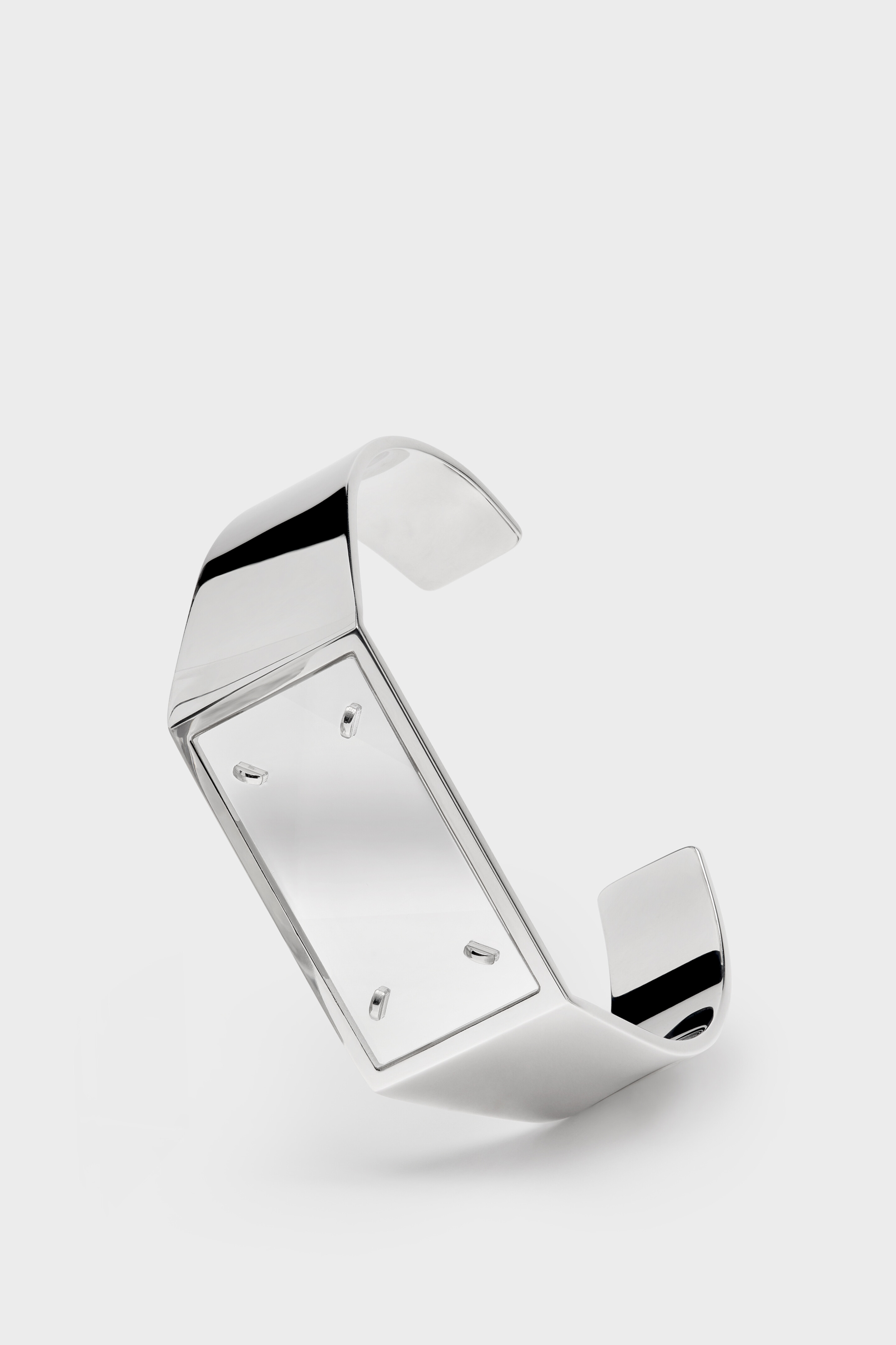
Martin Margiela never took a bow. For two decades, the Belgian designer sent models down runways in Paris while he stood backstage or sat in the audience, unidentified. The house he founded in 1988 operated without a logo, without his face on the programme, without interviews. Press releases came typed on white paper, unsigned. Invitations arrived as photocopies. The clothes themselves bore no branding except four white stitches on the lining, a deliberate blank where most designers stamped their name.
This was not shyness. It was strategy.
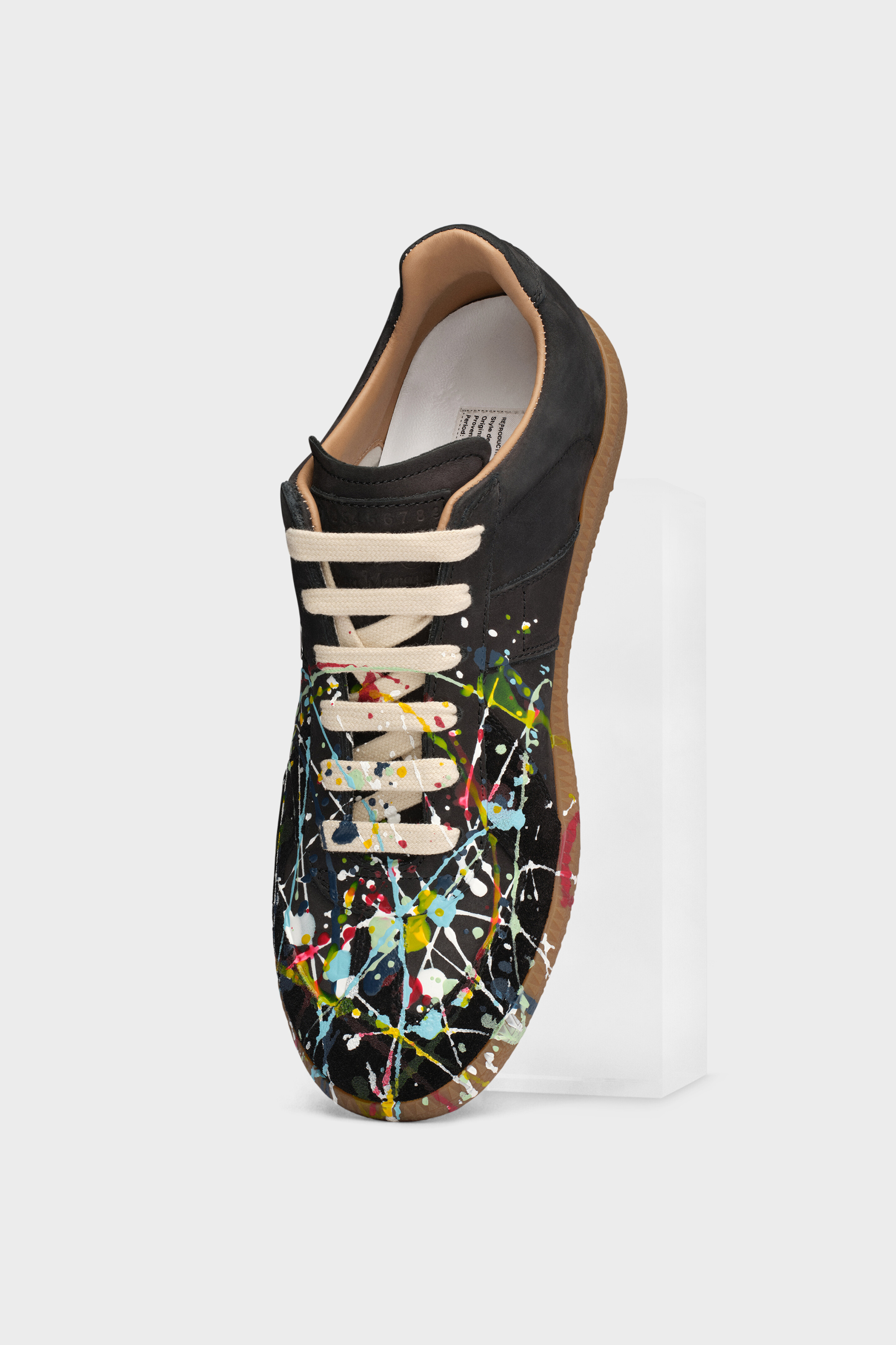
Margiela had trained under Jean Paul Gaultier in the early eighties, cutting patterns and draping toiles in a studio that treated fashion as theatre. He left in 1987 with a small team and a conviction that the designer's biography should not eclipse the garment. The first collection, shown in a children's playground in the 20th arrondissement, featured coats made from salvaged military linings and trousers with the waistband exposed. Models wore Tabi boots—split-toe, flat-soled, derived from Japanese workwear. The fashion press did not know what to make of it. Some walked out. Others stayed and took notes.
What Margiela proposed was a kind of anti-fashion fashion. He deconstructed tailoring to show how it was built, then left the seams on the outside. He took a men's sock, cut the toe, and turned it into a sweater. He photocopied a leather jacket onto fabric and sewed the print into a new jacket, a garment that referenced its own referent. The work was conceptual, but it was also wearable. A Margiela coat from 1991 still works now, provided the lining has not disintegrated.
The Artisanal Line
By the mid-nineties, Maison Margiela had developed a taxonomy. Each collection was numbered: Line 1 for women's ready-to-wear, Line 10 for men's, Line 6 for basics, Line 0 for artisanal pieces made by hand in the atelier. It was Line 0 that best expressed the house's ethos. These were one-off garments constructed from vintage fabrics, old gloves, broken plates, wigs. A dress might be assembled from 1950s scarves. A jacket could be lined with porcelain shards, wearable only in theory. The point was not utility. The point was to show that fashion could be made from what fashion had discarded.
Margiela himself remained invisible. Journalists who requested interviews were declined. Photographers who asked for a portrait were refused. The house communicated through fax, later email, always in the collective first person. "We believe the garment should speak for itself," one statement read. It was a position that became harder to maintain as the brand grew.
In 2002, Diesel's parent company bought a stake in Maison Margiela. The infusion of capital allowed the house to expand, but it also introduced tension. Margiela had built a brand on refusal—refusal to advertise, to logo, to perform the role of creative genius. Diesel wanted product. The compromise was a diffusion line, MM6, which launched in 1997 and offered a more accessible entry point. It sold. But the artisanal work, the reconstructed garments, the experiments with scale and proportion—those remained niche.
By 2008, Margiela had left the house that bore his name. The departure was announced in a press release, unsigned, like everything else. No explanation was given. The designer has not given an interview since.
After the Founder
What remains of Maison Margiela without Martin Margiela is a question the house has spent fifteen years answering. John Galliano took over as creative director in 2014, a controversial appointment given his public fall from grace three years earlier. But Galliano understood the language Margiela had established. He knew how to work with deconstruction, how to layer references, how to treat the runway as a space for ideas rather than product placement.
Under Galliano, the house has retained its core signatures—the Tabi boot, the oversized tailoring, the exposed seams—while introducing a theatricality that was never part of Margiela's vocabulary. The artisanal collections have become more baroque, more referential. A coat might be constructed from vintage kimonos and then distressed to look a century old. A dress might feature trompe-l'œil embroidery that mimics the folds of fabric. It is technically brilliant. It is also, in some sense, the opposite of what Margiela set out to do.
The original project was about anonymity, about letting the garment exist without the mythology of its maker. Galliano's Margiela is deeply personal, saturated with his own biography, his own references, his own need to be seen. The tension is productive. The work is compelling. But it raises the question of what a house is once its founder has gone.
Margiela's own answer, presumably, is silence. He has not commented on the collections that bear his name. He has not appeared at retrospectives of his work. When the MoMu in Antwerp mounted a major exhibition in 2008, he did not attend. When Somerset House in London showed a survey of the house's output in 2018, his absence was noted in every review.
The Four Stitches
The white stitches remain. They are still sewn into the lining of every garment, a small square of thread that marks the piece as Margiela without saying the name. It is the only logo the house has ever used, and it is invisible when the garment is worn. You know it is there. That is enough.
What Margiela built was a brand that operated by negation. No face, no logo, no interviews, no bows. The work was the work. The rest was noise. It was a position that could not survive contact with the fashion industry as it exists now, an industry that runs on personality, on image, on the designer as celebrity. But for two decades, it worked. The clothes were enough.
Whether they still are is a question each collection answers differently. Galliano's Margiela is not Margiela's Margiela. It cannot be. But it is still Maison Margiela, still producing garments that ask you to look twice, to question what fashion is for, to consider the distance between the thing and the idea of the thing. The Tabi boot, now in its fourth decade, still divides opinion. The oversized blazer still sits wrong on the body, deliberately. The artisanal pieces still cost more than they should and last less long than you would hope.
The house continues. The founder does not. That, in the end, may be the most Margiela thing about it.