## The White Lab Coat
The White Lab Coat
Martin Margiela did not bow. At the end of his spring 1989 show—his first—models walked a disused playground in the 20th arrondissement while children kicked a football against a chain-link fence. When the applause came, Margiela stayed backstage. He would do this for two decades. No interviews. No photographs. No bows. The work, he insisted, should speak.
It did. But what it said was uncomfortable. Seams were exposed. Linings hung outside garments. A waistcoat was assembled from broken plates. A dress was made from a vintage slip, its lace fraying, its history visible. This was not fashion as fantasy. It was fashion as autopsy.
Margiela trained at Antwerp's Royal Academy in the early eighties, part of the generation that included Ann Demeulemeester and Dries Van Noten. But while his peers moved toward poetry, Margiela moved toward surgery. After graduation, he worked for Jean Paul Gaultier, learning construction and spectacle in equal measure. In 1988, he left to start his own house with Jenny Meirens, a former PR director. They had no money. They worked from a borrowed studio. The first collection was shown in a condemned building.
The clothes looked like they had been made in one. Margiela's tailoring was impeccable—he could cut a sleeve as cleanly as anyone on the Place Vendôme—but he chose to unpick it. He split seams and restitched them on the outside. He turned jackets inside out and wore them that way. He took a man's shirt, cut it down the back, and reassembled it as a woman's dress. The technique was called décortiqué: to deconstruct, to strip down, to expose the skeleton.
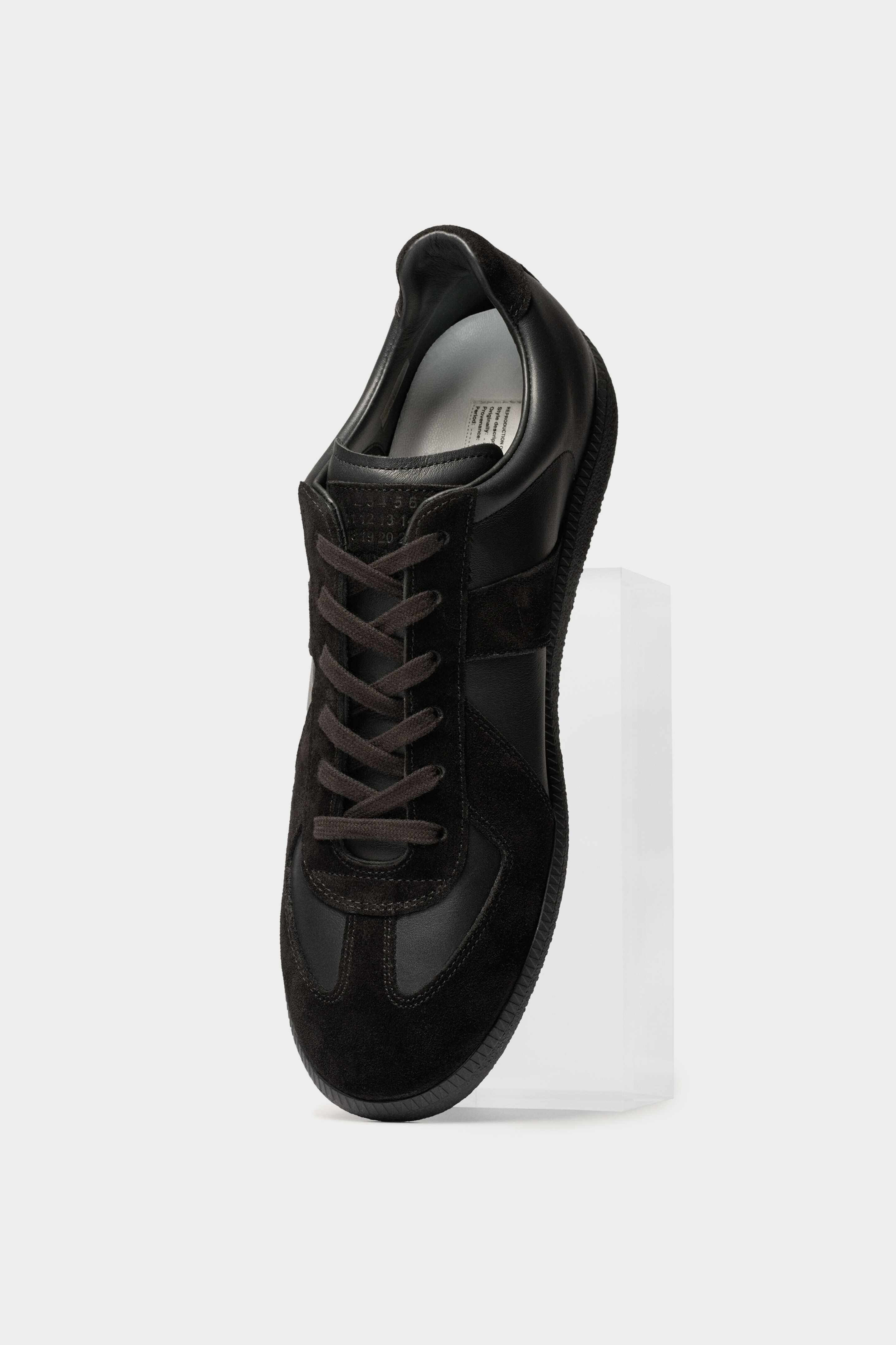
It was not, as critics claimed, nihilism. It was rigour. Margiela wanted you to see how a garment was made because he believed that understanding preceded appreciation. A shoulder pad, normally hidden, became a sculptural element. A dart, usually invisible, was marked with a line of white thread. The house's signature Tabi boot—split-toed, based on a fifteenth-century Japanese sock—was not exotic. It was anatomical. Feet have five toes. Why pretend otherwise?
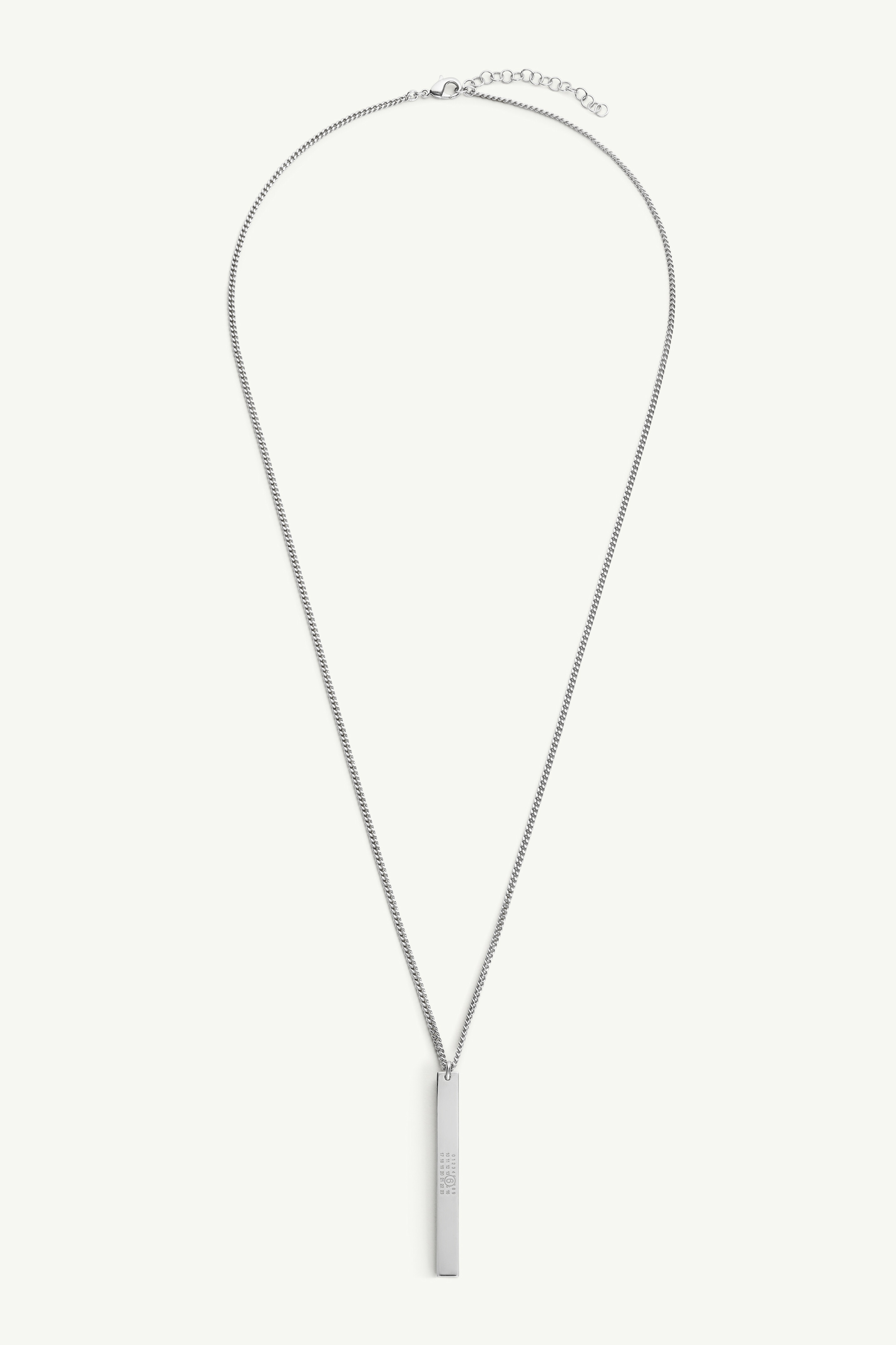
The house grew quietly. There were no logos, only a blank white label stitched with four loose threads at each corner. Sizes were marked zero to 23, a system Margiela devised to replace the industry's arbitrary small-medium-large. Shops were given white lab coats to hang the clothes on. Staff at the Paris atelier wore the same coats. The uniform was deliberate. Fashion, Margiela suggested, was not about personality. It was about process.
By the mid-nineties, Maison Margiela had become a cult. Rei Kawakubo admired the work. Helmut Lang cited it as an influence. But the house was not profitable. In 1997, Margiela sold a stake to Diesel, then run by Renzo Rosso. The deal allowed the house to expand, but it also marked the beginning of a slow exit. Margiela, who had always been reclusive, became more so. He stopped attending fittings. He communicated through faxes. In 2009, he left the house entirely. No statement was issued. The house continued as if nothing had changed.
It has changed. John Galliano arrived as creative director in 2014, five years after Margiela's departure. Galliano is not Margiela. Where Margiela was silent, Galliano is theatrical. Where Margiela deconstructed, Galliano reconstructs. But he understands the house's grammar. His collections reference the archive without copying it. The Tabi boot remains. The blank label remains. The sense of garments as experiments, not products, remains.
What does not remain is the anonymity. Galliano takes a bow. He gives interviews. He appears in campaigns. This is not a betrayal. It is a recognition that the fashion system has changed. A house cannot survive on mystery alone. It needs a face, a voice, a narrative. Margiela built a house that could function without him. Galliano has proven it can.
The Archive as Blueprint
The question is not whether Maison Margiela is still Maison Margiela. The question is whether it needs to be. Margiela's work between 1988 and 2009 is complete. It exists as a body of ideas, techniques, and objects. It can be studied, referenced, and reinterpreted, but it cannot be continued. Galliano does not try. He treats the archive as a blueprint, not a bible.
His autumn 2015 collection, his first for the house, was called 'Artisanal'. It included a coat made from a deconstructed trench, its panels rearranged and stitched with visible seams. It included a dress assembled from vintage scarves, their edges raw. It included gloves with fingernails attached, a reference to a 1998 Margiela show. The techniques were Margiela's. The sensibility was Galliano's. The result was neither pastiche nor departure. It was continuation by other means.
Galliano has also brought back the house's sense of theatre. Margiela's shows were austere—models walked in silence, often in abandoned spaces, sometimes without music. Galliano's shows are events. Models wear exaggerated wigs and makeup. The sets are elaborate. The clothes are worn, not displayed. This is closer to Galliano's work at Dior than to Margiela's early collections, but it is not out of place. Margiela always understood that fashion was performance. He simply chose to perform differently.
The house's commercial lines have expanded under Galliano. The Tabi boot now comes in dozens of variations. The Glam Slam bag, introduced in 2018, has become a bestseller. The replica line—reissues of vintage garments from flea markets, complete with their original labels—continues to sell. These are not compromises. They are applications of Margiela's ideas to a market that can now afford them.
What Remains
Margiela has not spoken publicly since leaving the house. He lives in Belgium. He does not attend fashion shows. He does not comment on Galliano's work. In a 2018 documentary, he appeared on camera for the first time, his face blurred, his voice distorted. He said he was happy with his decision to leave. He said the work was more important than the person.
This is the house's inheritance. Not a set of techniques, though those remain. Not a signature, though the Tabi and the blank label endure. The inheritance is a method. Margiela showed that fashion could be rigorous without being precious, experimental without being unwearable. He showed that a house could exist without a cult of personality. He built a structure that could survive his absence.
Whether it should have is another question. Some believe the house died in 2009, that what remains is a well-managed archive. Others believe Galliano has given it a second life. Both are correct. Maison Margiela is not what it was. But it is still what Margiela intended: a laboratory, not a monument. The work continues. The white coat remains on its hanger. The seams are still on the outside.