## The Workshop That Became a House
The Workshop That Became a House
Michele Taddei and Renzo Zengiaro met in Vicenza in 1966, not as designers but as leather artisans who understood that northern Italy had more tanners than it had brands. They opened Bottega Veneta—literally, "Venetian workshop"—with no ambition beyond making handbags that didn't announce themselves. The intrecciato weave, which would become the house signature, was born from necessity: woven leather required no visible stitching, no hardware, no logo plate. It was a way to finish an edge cleanly.
For the first decade, Bottega Veneta operated as a contractor. American department stores ordered unbranded goods; the workshop delivered them in quantity. The weave tightened. The leather improved. By the mid-seventies, Warhol owned a few pieces, and the waiting list at Bergdorf's stretched into months, but Taddei and Zengiaro remained in Vicenza. They were not interested in Paris.
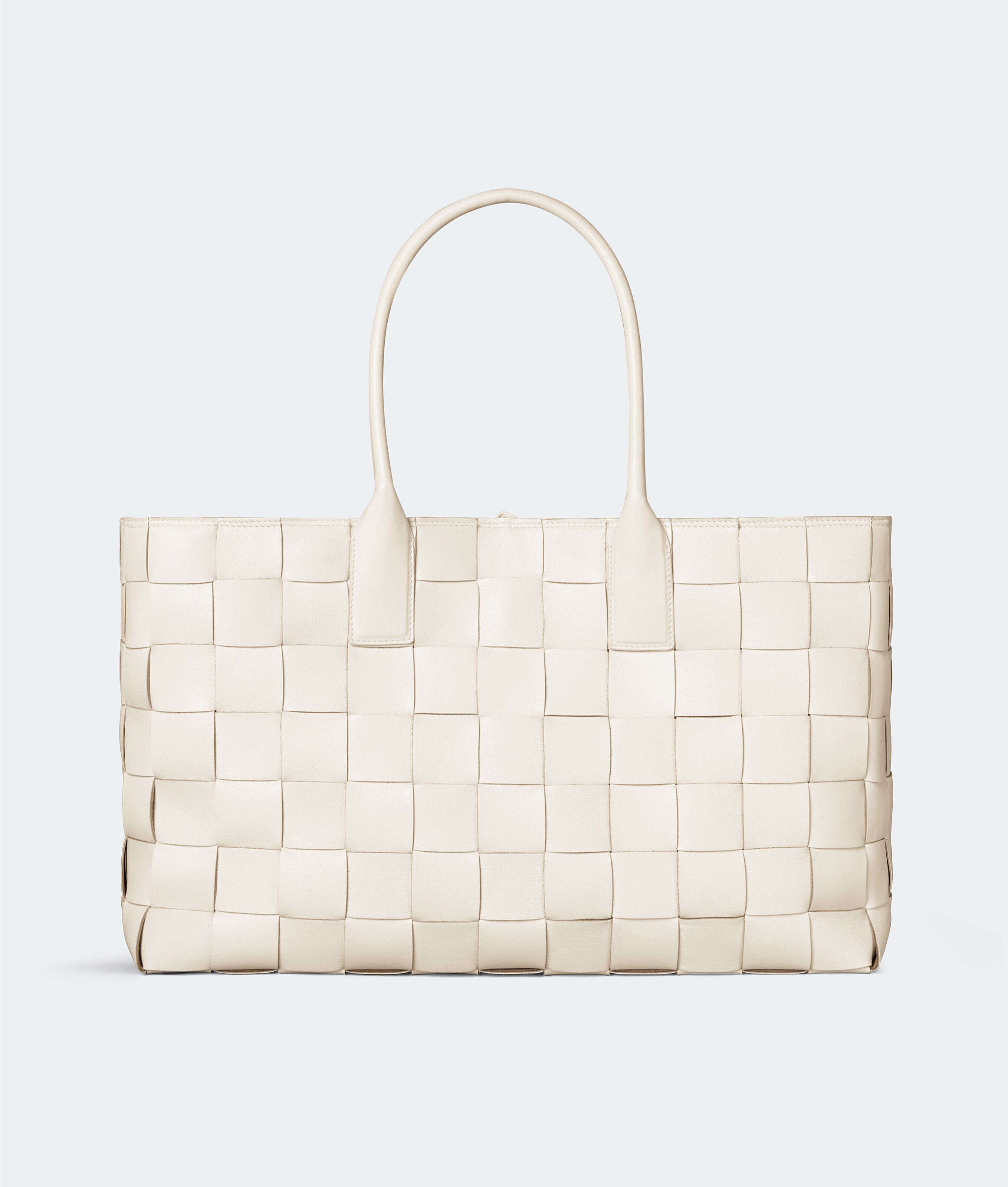
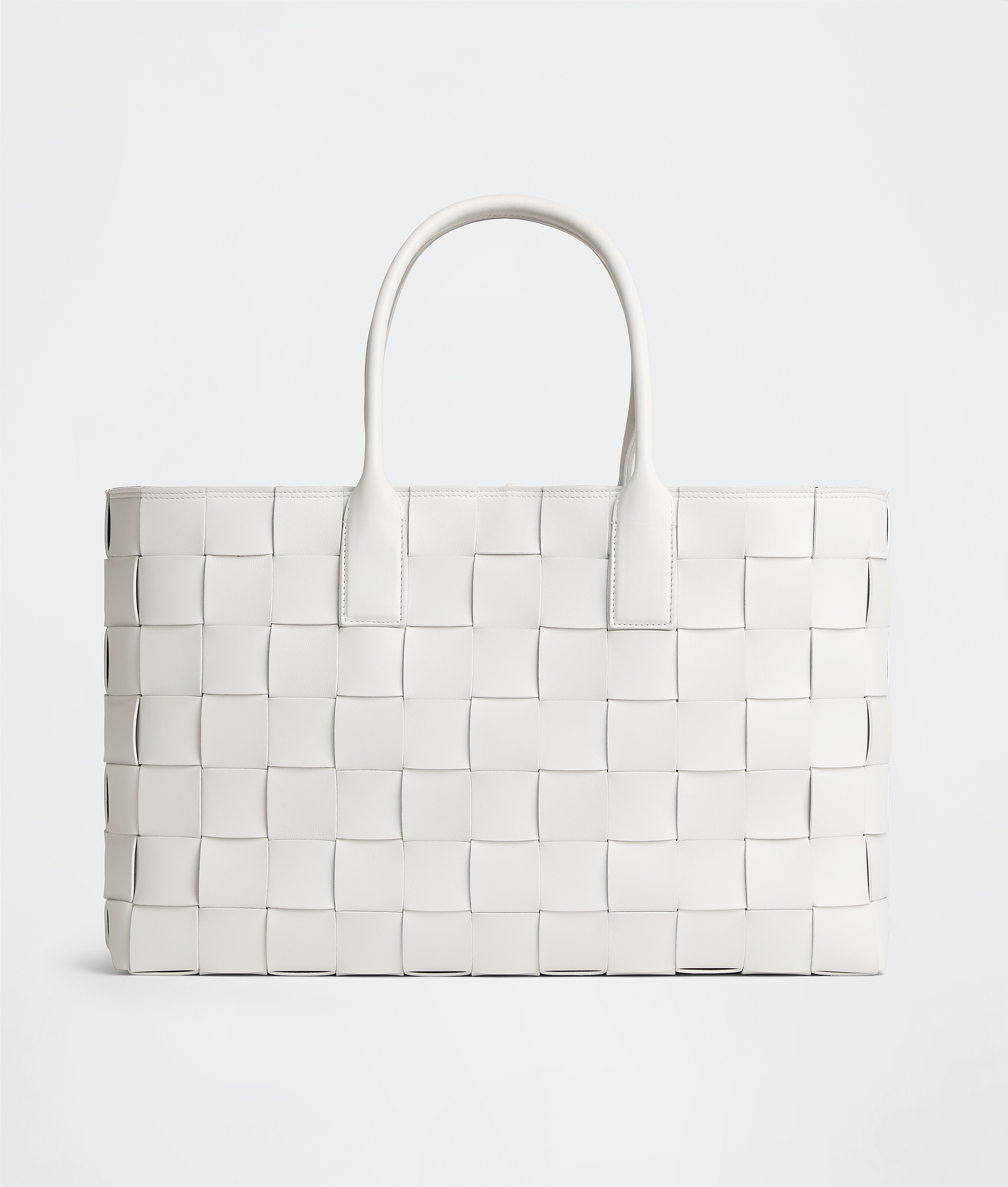
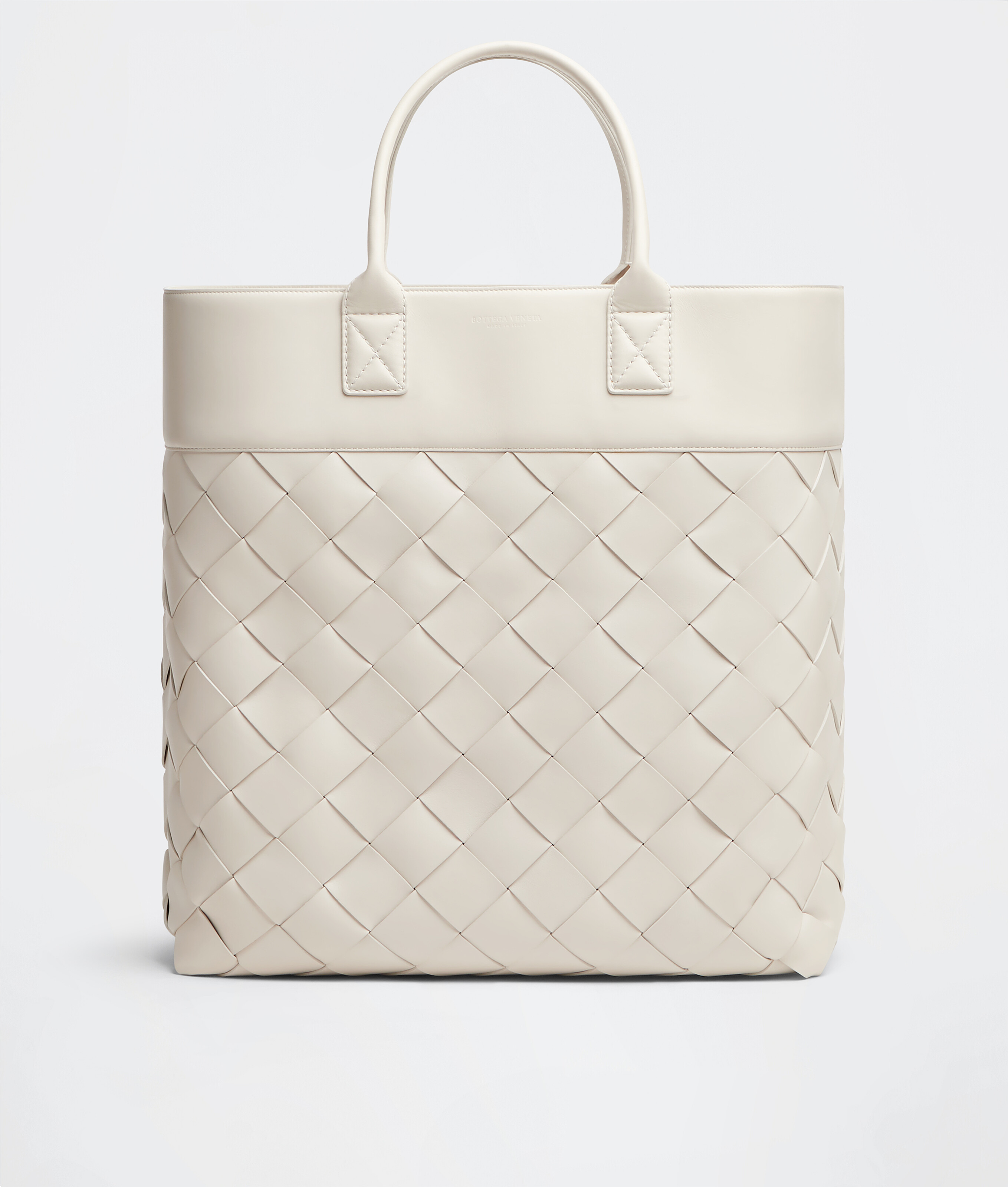
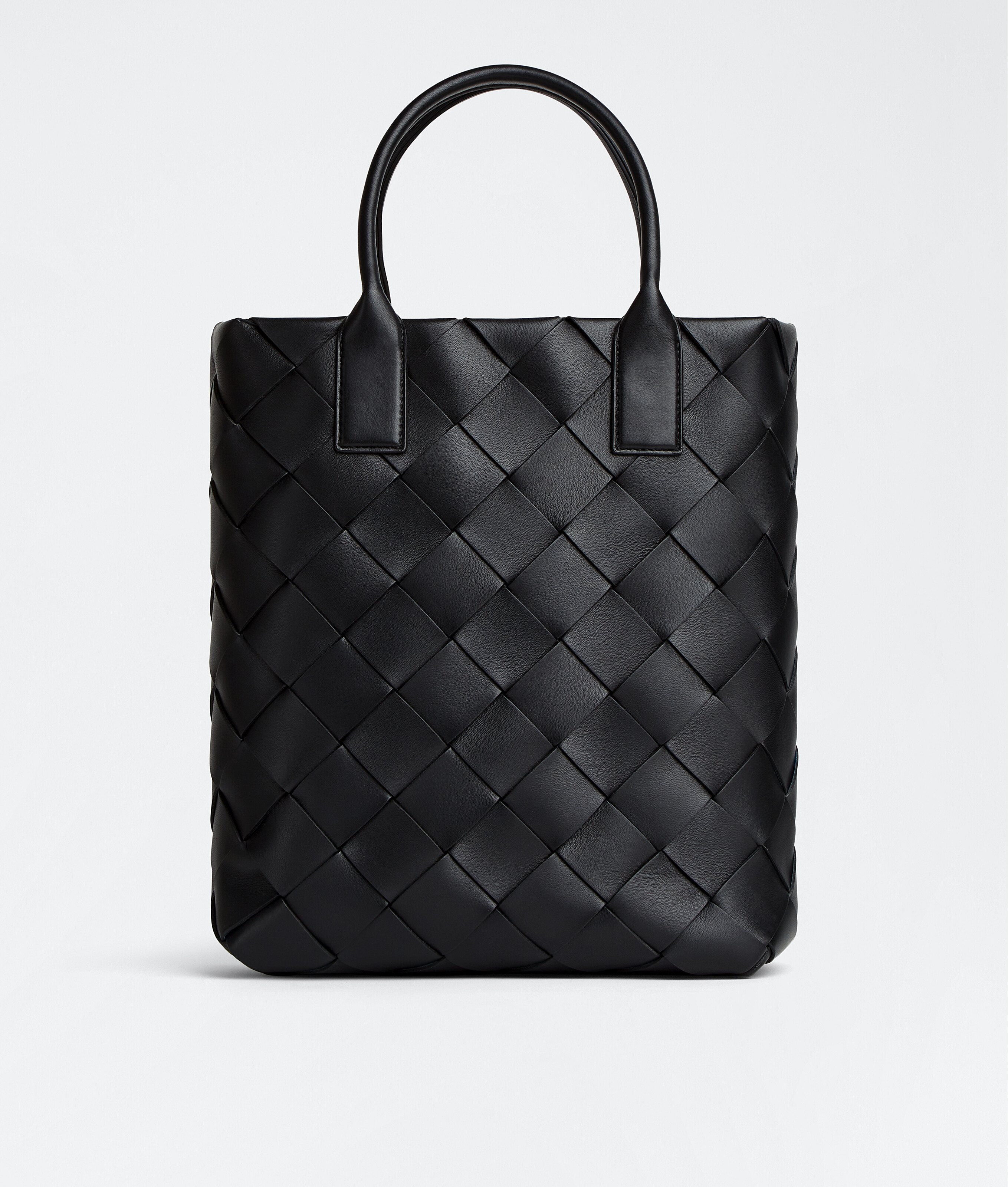
What they built was a house defined by omission. No monogram. No seasonal reinvention. No advertising until 2001. The intrecciato itself—narrow strips of nappa or calf woven at right angles, then burnished until the surface caught light without shine—became recognisable only to people who already knew. It was a handshake, not a shout.
Taddei died in 1999. Zengiaro had stepped back years earlier. By then, the workshop had been sold twice: first to a consortium in the eighties, then to Gucci Group in 2001, just as Tom Ford was turning that house into the most profitable engine in luxury. Bottega Veneta, by contrast, was making beautiful bags in a Veneto atelier and losing money every quarter.
What Ford Kept
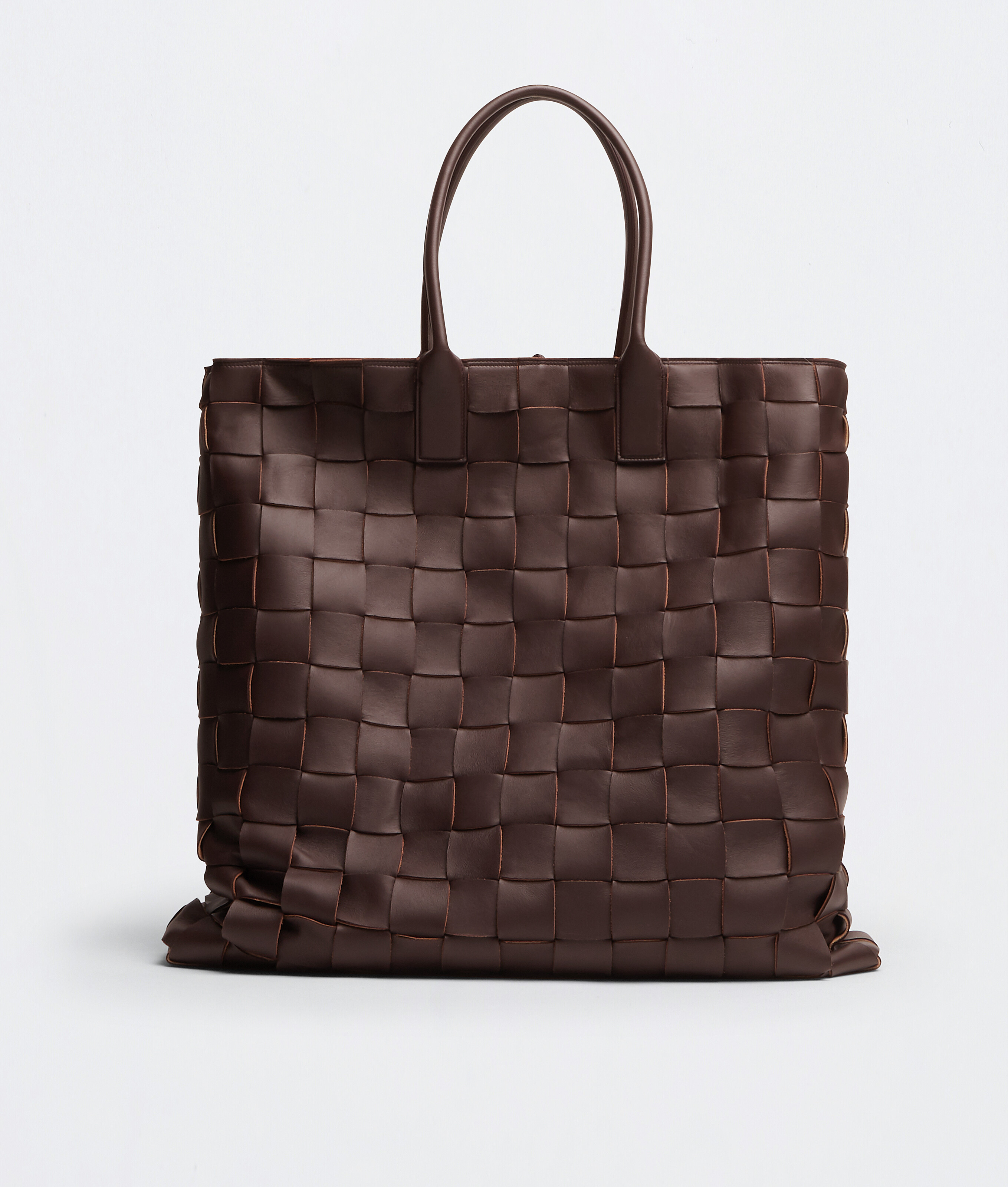
Ford installed Tomas Maier in 2001 with a single instruction: make this relevant without making it loud. Maier, a German who had spent years at Hermès and Sonia Rykiel, understood the assignment. He kept the intrecciato. He kept the no-logo doctrine. He added colour—not the primaries favoured elsewhere, but muted greens, rusts, slate blues that looked like they had aged into themselves. He introduced the Cabat, a massive tote with no lining, no interior pockets, and a four-figure price that made sense only if you understood how long it took to weave.
Maier's Bottega was not minimalist. It was specific. The leather was always slightly softer than expected. The Veneta bag, a slouchy hobo that predated his tenure, became the house icon under his watch—not because he pushed it, but because it required no explanation. You either wanted that particular weight on your shoulder or you didn't.
He stayed for seventeen years. By the time he left in 2018, Bottega Veneta was generating over a billion euros annually, and the intrecciato had been widely copied by brands that didn't have the atelier to execute it properly.
What Remains
Daniel Lee arrived in 2018 with no interest in preserving anything. He kept the intrecciato only as a technical base, then exploded it: oversized, squared-off, applied to boots and coats and jewellery in ways that looked nothing like the original weave. He introduced the Pouch, a clutch with no structure and a shape that collapsed in on itself, and the Puddle boot, a galosh-inspired rubber slip-on that became the most-copied shoe of 2020. Lee's Bottega was louder, faster, and more concerned with image than Maier's had ever been.
It worked. Revenue climbed. The house became, briefly, the most talked-about brand in fashion—not because of a logo, but because Lee had figured out how to make Bottega feel like a secret that everyone was in on.
He left in 2021. Matthieu Blazy, who had been designing the leather goods under Lee, took over and promptly softened everything. The silhouettes relaxed. The colours went back to rust and moss. The bags became rounder, less architectural, closer to what Maier had been doing but without the same restraint. Blazy's first collection featured a coat made entirely of shredded and rewoven leather scraps—a piece that took eight hundred hours to complete and looked, from a distance, like boiled wool.
It was a statement about craft that Taddei and Zengiaro might have recognised.
The Atelier Problem
Bottega Veneta still operates from Vicenza, though the workshop has expanded into a modern facility that bears little resemblance to the original bottega. The intrecciato is still done by hand. A single Cabat still takes two artisans three days to complete. The house still refuses to print its name on the outside of a bag.
But the logic has shifted. What began as a workshop that made goods for other people is now a luxury house that makes goods for people who want to be seen holding them. The intrecciato, which was once a solution to a construction problem, is now a design signature that signals membership. The no-logo stance, which was once a matter of craft, is now a marketing position.
This is not a criticism. It is what happens when a workshop becomes a brand. Taddei and Zengiaro built something that could be sold because it had a clear identity, and that identity was valuable precisely because it was not loud. Maier refined it. Lee expanded it. Blazy is now trying to hold the centre—to make bags that feel like they were built by people who care about leather, while also making clothes that photograph well on a runway in Milan.
The question is not whether Bottega Veneta has stayed true to its origins. The question is whether the origins matter. The house that exists today is not the workshop that opened in 1966. It is a luxury brand with an atelier attached, and the atelier is there to justify the price, not to determine the product.
What remains is the weave. And the idea, however abstracted, that a bag should be judged by how it is made, not by what is printed on it. Whether that idea can survive another decade of creative directors and quarterly earnings calls is a different matter.