Thomas Burberry opened his first shop in Basingstoke in 1856, at twenty-one
Thomas Burberry opened his first shop in Basingstoke in 1856, at twenty-one. He sold outdoor clothing to farmers and sportsmen. By 1879 he had invented gabardine.
That is the official story. The truth is messier. Burberry did not invent waterproofing — Charles Macintosh had patented rubberised cloth half a century earlier — but he understood that rubber stank and trapped sweat. Gabardine was different. He took worsted yarn, treated it with lanolin before weaving, then wove it so tightly that rain sat on the surface. The result breathed. It also lasted. A gabardine coat from 1900 will still turn water today, provided you have not washed it.
The invention made him. By 1891 Burberry had opened on the Haymarket in London. By 1901 he had designed the Tielocken, a military coat with a single strap across the chest. It became the trench coat, though not yet by that name. Officers in the First World War wore it in Flanders mud. It kept them dry. It did not keep them alive, but it kept them dry.
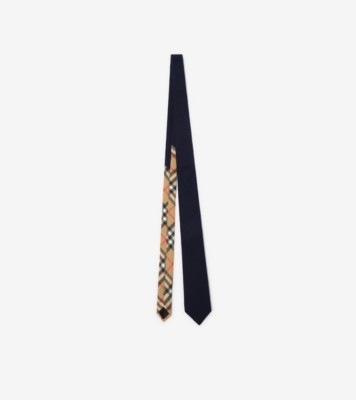
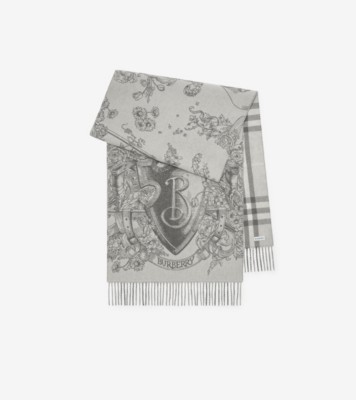
What remains of Thomas Burberry now is not the man but the infrastructure. The check, which he did not design — it was a lining pattern, registered in 1924, after his death. The trench, which he did design, though the name came later and the belt configuration changed three times before 1950. The gabardine itself, which the house still weaves in Yorkshire, though most of what Burberry sells today is not gabardine and does not need to be.
There was no second founder. The business passed to his sons, then to Great Universal Stores in 1955. It went public in 1973. By the 1990s it was everywhere and nowhere — a check scarf brand worn by football casuals and secretaries, with no control over licensing and no coherent design direction. In 1997 Rose Marie Bravo arrived from Saks Fifth Avenue and began the work of pulling it back.
She hired Christopher Bailey in 2001. He was twenty-nine, trained under Donna Karan and Gucci's Tom Ford, and he understood that Burberry's problem was not the trench but everything else. The trench worked. The trench had always worked. The question was what to put next to it.
Bailey's answer, for sixteen years, was to mine the archive without repeating it. He showed trenches in patchwork leather, in python, in shearling. He revived the Prorsum knight logo and put it on buckles. He cast British actors and musicians in the campaigns — Eddie Redmayne, Cara Delevingne, Romeo Beckham — and shot them in Yorkshire moors and London rain. It was heritage, but heritage with a pulse.
The check receded. Not entirely — you cannot kill the check, and Bailey knew better than to try — but it moved from the exterior to the lining, where Thomas Burberry's team had originally placed it. The house became, briefly, a place where you could buy a £2,000 trench and feel you were buying something that would outlast you, rather than something your mother had worn in 1987.
Bailey left in 2018. Riccardo Tisci arrived the same year, from Givenchy, with a mandate to make Burberry younger and louder. He replaced the Prorsum knight with a new monogram, designed by Peter Saville, and filled the runway with nylon parkas and logo-print nylon. The strategy was sound — Burberry needed to sell to a customer who had not been born when the check went mass — but the execution felt borrowed. Tisci's Burberry looked like Tisci's Givenchy in beige.
He lasted four years. Daniel Lee, formerly of Bottega Veneta, took over in 2022. Lee's first show, in February 2023, opened with a black leather trench. No check, no monogram, just a clean shoulder line and a belt that sat exactly where it should. The collection that followed included shearling aviators, waxed cotton field jackets, and several coats that looked like they had been made in 1943 and stored in a barn until last week.
Lee's Burberry is quieter than Tisci's and less sentimental than Bailey's. He has kept the archive close but refuses to foreground it. A trench is a trench. A duffle is a duffle. The question is cut and cloth, not story. His second collection, in September 2023, included a women's trench in 14oz cotton gabardine with a dropped shoulder and no visible branding. It looked like something you could wear for thirty years, which is the point.
What remains of Thomas Burberry is not a vision but a process. The gabardine is still woven the same way, still finished by hand in Castleford. The trench pattern has been adjusted — the storm flap is narrower now, the sleeve pitch slightly different — but the construction is identical. Fourteen pattern pieces, stitched and topstitched, with a collar that can be worn up or down depending on wind direction.
Burberry has been public since 1973, owned by shareholders since 1955, and operated by hired designers since Bailey. There is no founding family left. There is no single aesthetic, no house codes beyond the check and the trench. What there is, instead, is a weave.
Lee seems to understand this. His Burberry does not look backward, but it does not pretend the past is irrelevant. A gabardine trench from 2024 will perform exactly as a gabardine trench from 1924 performed, because the cloth is the same and the construction is the same. Fashion changes. Gabardine does not.
The risk, of course, is that Burberry becomes a heritage brand in the worst sense — a house that sells only to people who remember what it used to be. Lee's task is to make the trench relevant to someone who has never owned one, without turning it into something it is not. So far, he has done this by stripping back. Fewer logos, less noise, better cloth.
Whether it works commercially is another question. Burberry's share price has been uneven since Lee's arrival, and the luxury market is contracting. But the trench remains. It has survived two world wars, several recessions, the check explosion of the 1990s, and the logo maximalism of the 2010s. It will survive this, too.
Thomas Burberry died in 1926. He was ninety-one. He left behind a weave, a coat, and a business that still bears his name. The weave is still woven. The coat is still cut. The name is still there, on the Haymarket, in Castleford, on a million high streets. What remains is not the man but the thing he made, and the thing he made still works.