## The Problem
The Problem
A winter evening in the city — dinner at eight, cocktails before, a walk between — asks for warmth you can't see. The air is sharp enough to require real insulation, but the moment you step inside, you're negotiating radiators set to tropical and a dining room that runs fifteen degrees warmer than the street. Bottega Veneta has always understood this specific friction. The house built its reputation on materials that perform without announcing themselves, and nowhere is that clearer than in how it approaches cold-weather dressing. The goal isn't to arrive bundled. It's to arrive composed.
The Coat
Start with the double-face cashmere coat. Bottega's version runs long — mid-calf, sometimes lower — and the fabric is bonded so there's no lining to bunch or separate. You get the warmth of two layers without the bulk. The sleeves are cut close enough that they disappear under a dinner jacket if you need them to, and the shoulders sit flat across the back. No padding, no structure that reads as outerwear. This is the coat you can keep on through the first drink if the restaurant seats you near the door, and no one will suggest you check it. The house has been making variations on this silhouette since the Tomas Maier era, but the recent iterations under Matthieu Blazy lean softer — less minimalism as statement, more minimalism as manners. Charcoal, camel, or a grey so dark it almost isn't. Not black. Black reads formal in a way that works against the ease the rest of this is built on.
The Knit
Underneath, a fine-gauge rollneck in merino or cashmere. Bottega's knits are engineered to sit close without clinging, and the weight matters here — you want something substantial enough to hold its shape after four hours of sitting, but fine enough that it doesn't add volume under the coat. The rollneck does two things: it keeps the throat warm without a scarf, and it establishes a clean line from jaw to shoulder that makes everything else look intentional. Colours that work: cream, tobacco, a grey that's warmer than the coat. The house often cuts these with slightly dropped shoulders and sleeves that run a half-inch longer than standard. It's a small adjustment, but it changes the drape. You're not trying to look tailored here. You're trying to look considered.
The Trouser
Bottega's wool trousers — the ones cut with a flat front and a straight leg that breaks once at the shoe — are warm in a way that doesn't register as winter-specific. The fabric is usually a mid-weight wool, sometimes blended with a small percentage of cashmere, and the weave is tight enough to block wind without feeling stiff. These aren't flannel trousers. Flannel telegraphs season in a way that limits how you can wear them later. You want something that reads as a good trouser first, a warm one second. The fit should be easy through the hip and thigh, narrow enough at the ankle that it doesn't puddle over the shoe. A charcoal or navy that doesn't match the coat exactly but lives in the same tonal range. The idea is coherence, not coordination.
The Bag
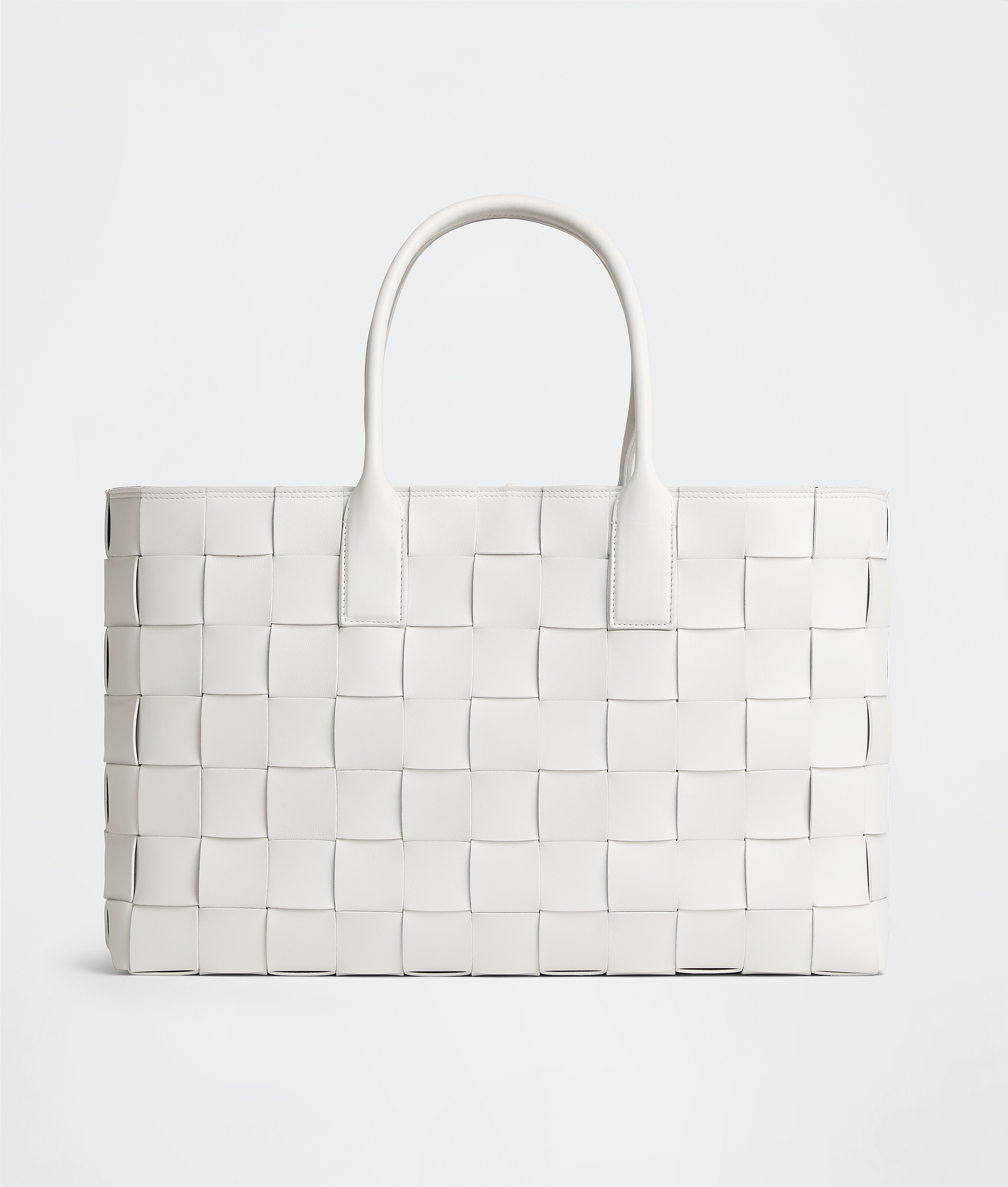
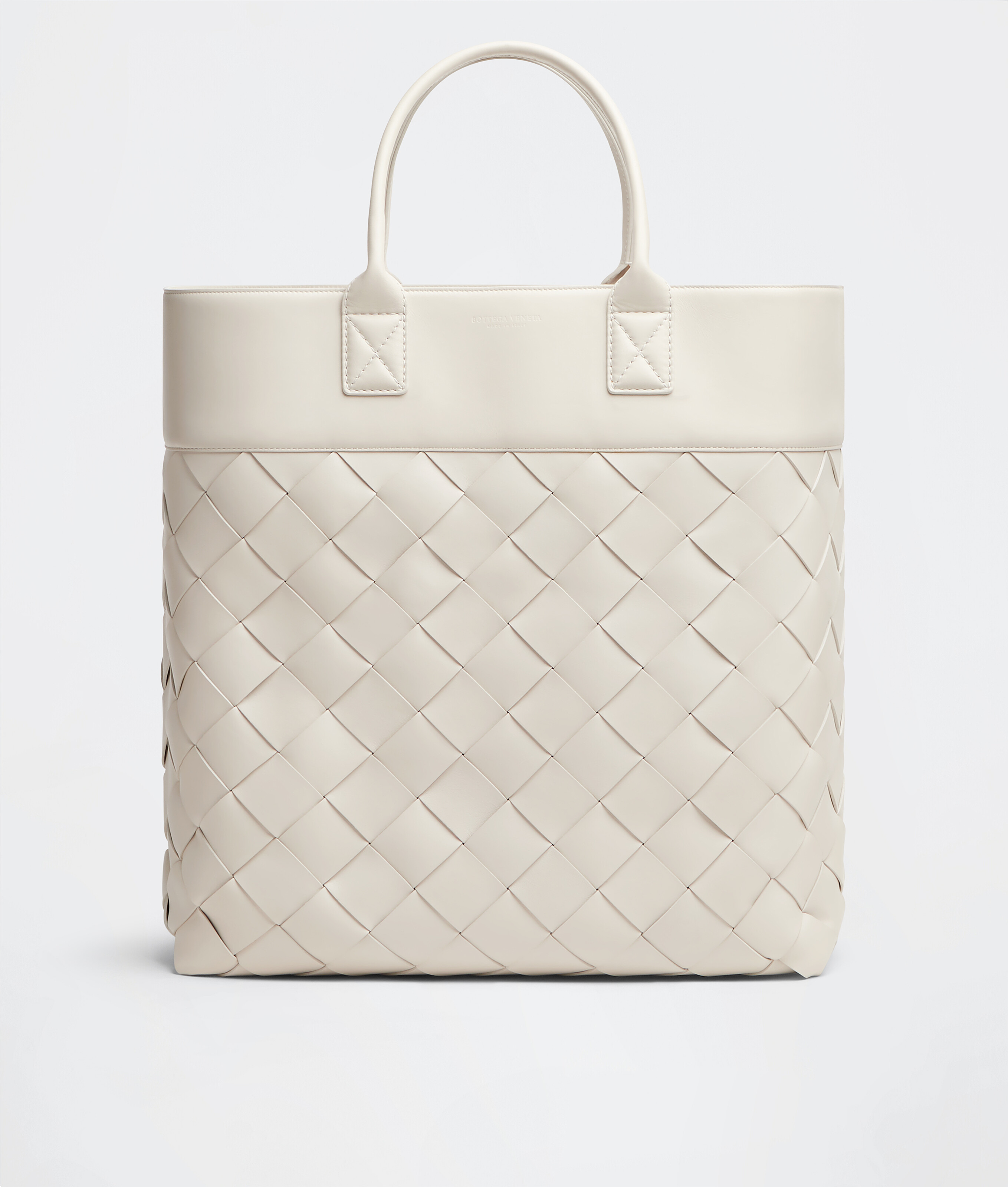
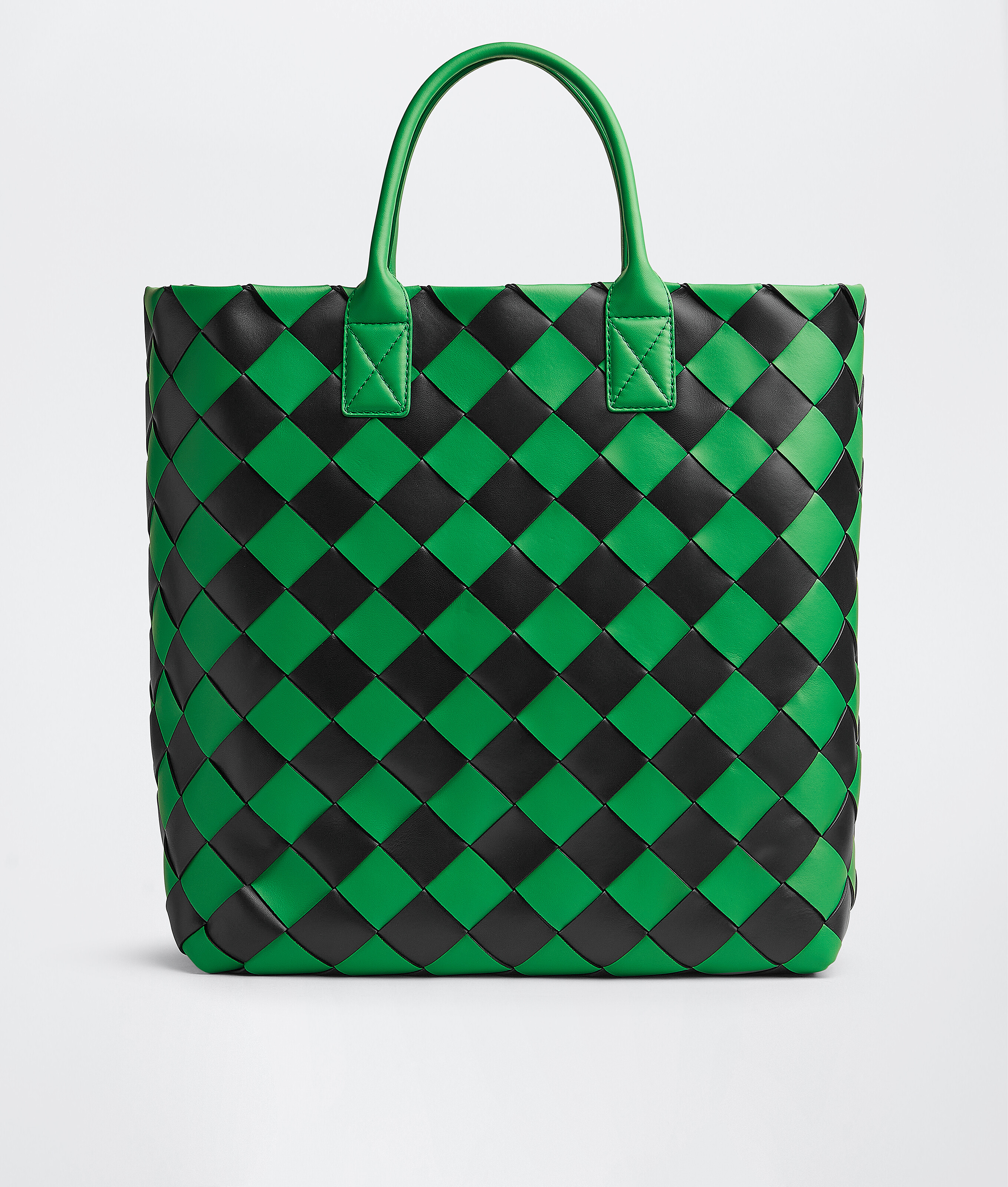
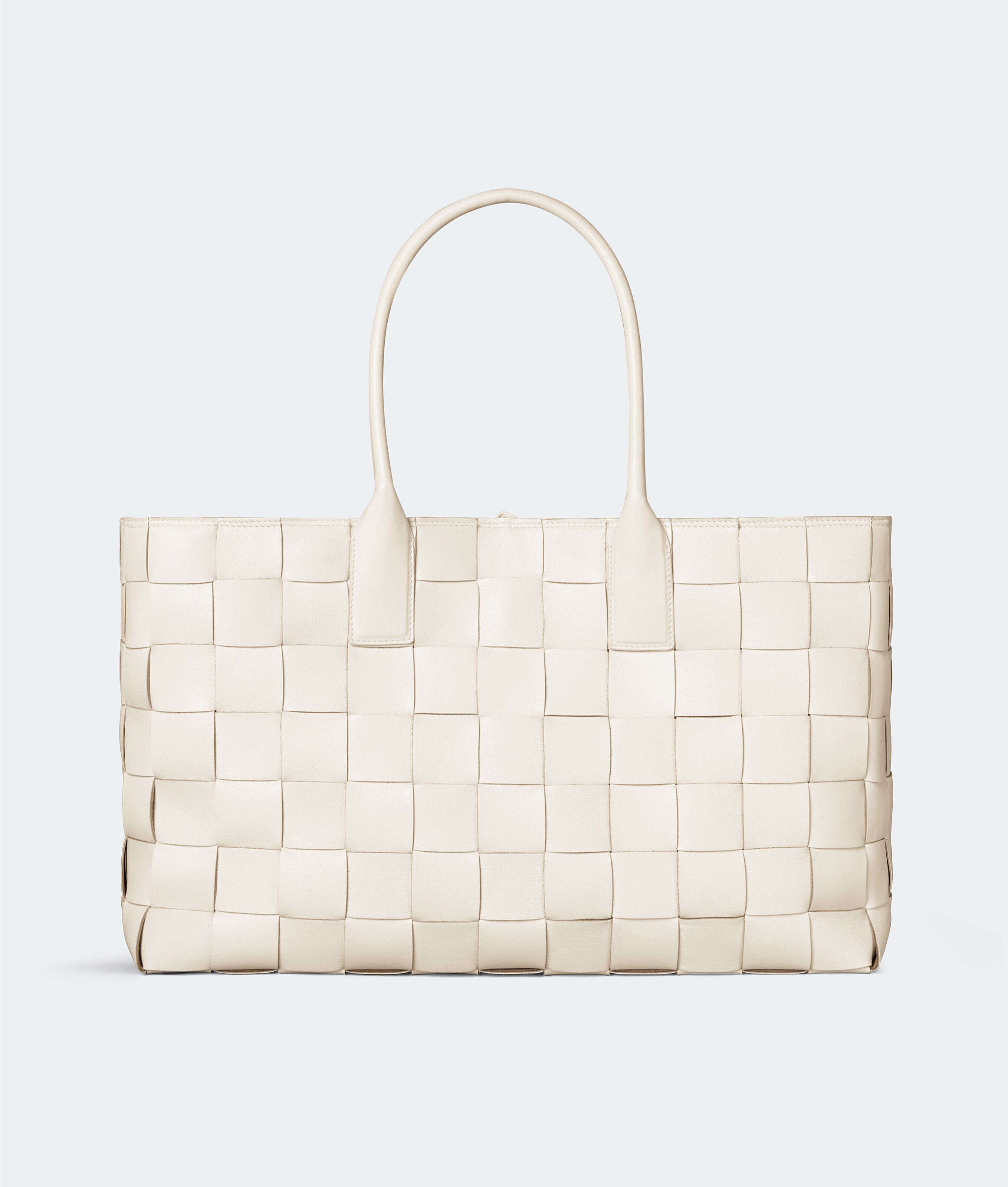
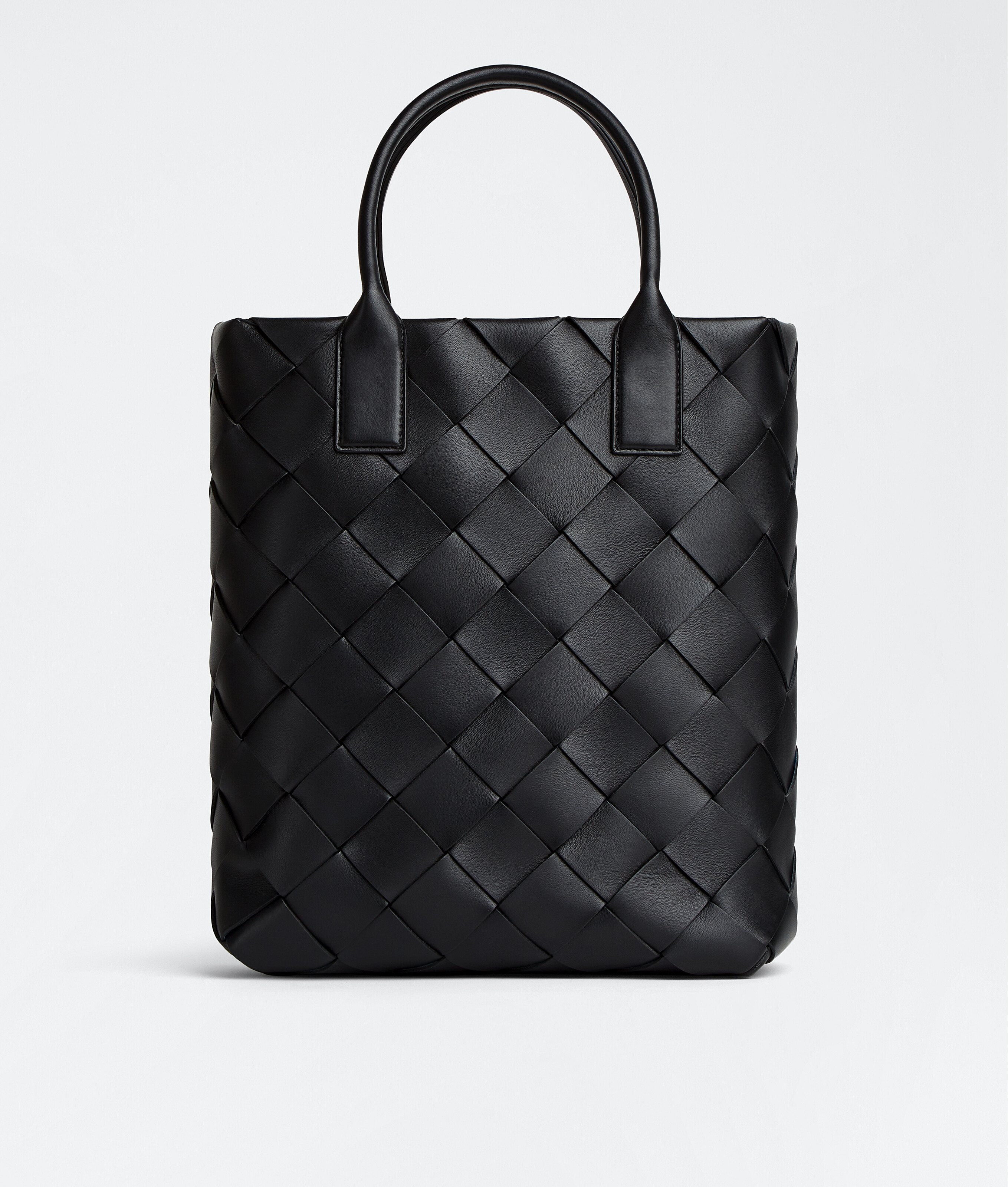
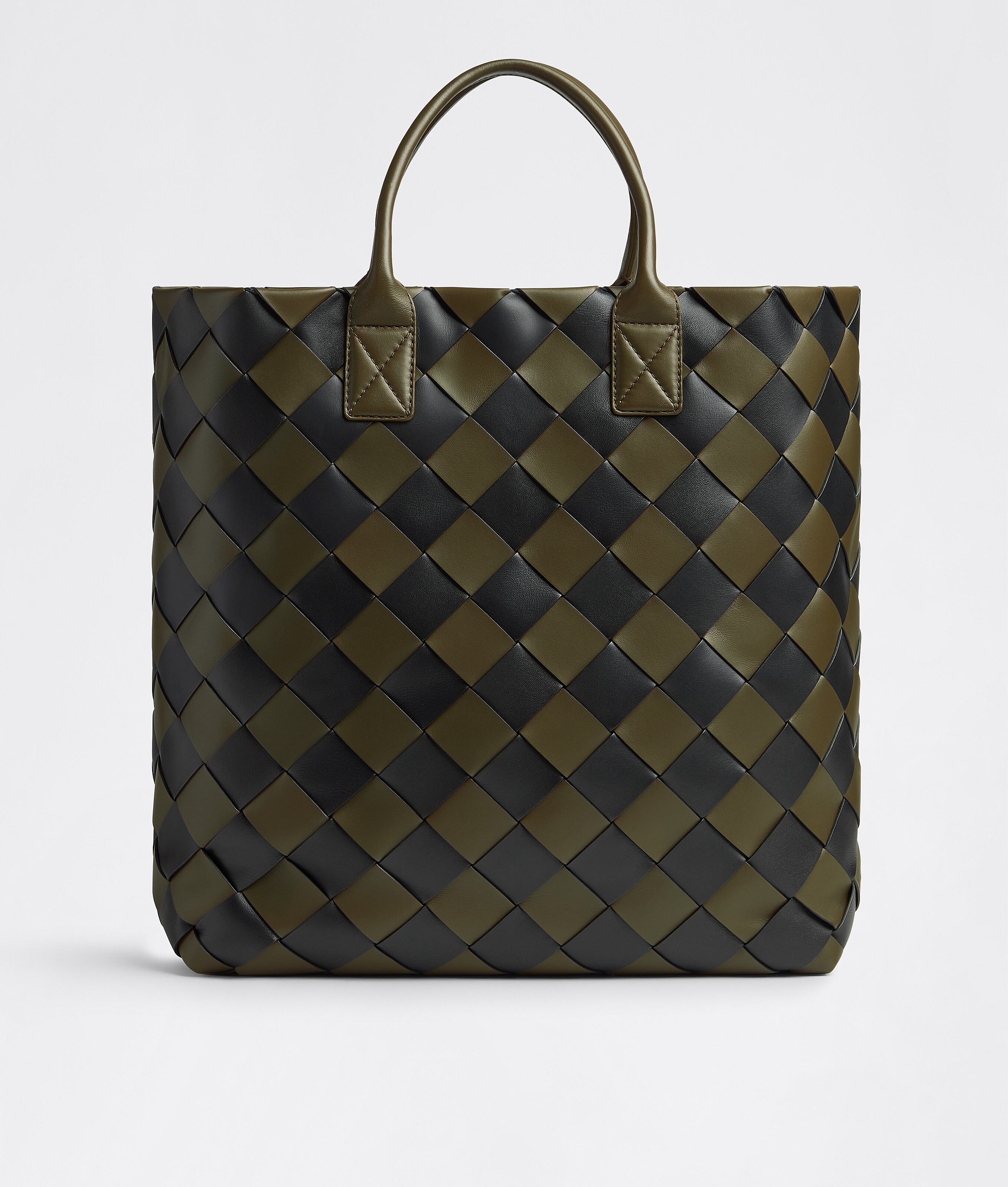
The Arco tote, small or medium, depending on what you're carrying. Bottega's signature intrecciato weave in a leather that's been treated to resist moisture — not waterproof, but enough that light snow or sleet won't mark it. The Arco works for a winter evening because it's structured enough to hold its shape when you set it down, but soft enough that it doesn't look rigid against the rest of the outfit. The house designed it to be carried by the top handle or tucked under the arm, and both gestures read as deliberate without looking precious. Colours that ground the palette: a deep brown, forest green, or burgundy that's almost black in low light. Avoid anything too pale. Winter in the city is wet, and pale leather shows it.
The Shoe
A loafer or a Chelsea boot in calfskin, not suede. Suede doesn't survive the salt and slush, and you'll spend the evening worrying about it. Bottega's boots are cut close to the ankle with a low profile sole — enough tread to handle ice, not so much that they look technical. The loafer works if the walk between venues is short and the streets are clear, but the boot is the safer call. Both should be dark enough that they recede. This isn't where you want the eye to land.
What Not to Do
Don't add a scarf unless the wind is actually cutting. The rollneck is already doing that work, and a scarf on top of it starts to look like you're nervous about the cold. Don't carry a puffer or a quilted jacket as backup. If you're worried the coat isn't enough, wear a heavier knit. And don't try to make this work with sneakers. A winter evening has a threshold, and sneakers fall under it.