## The Problem with February
The Problem with February
A dinner reservation at eight means stepping out into twenty-degree air. It means a coat that works in the taxi and works when you hand it to the coat check and works when you're standing on a corner at midnight trying to find the car. The friction is real: you need warmth that doesn't announce itself, that doesn't add bulk where evening clothes are meant to drape. Bottega Veneta has been solving this problem quietly for years, building a vocabulary of winter dressing that refuses the puffer, the shearling collar, the anything-that-reads-as-outerwear-first.
The work here is about weight that sits close, about construction you feel but don't see. It's about leaving the house warm without looking like you're dressed for different weather than the room you're walking into.
The Coat That Doesn't Compromise
Start with the double-face cashmere coat. Not the oversize trench, not the belted situation—the straight-cut, collarless piece that Bottega has been refining since Matthieu Blazy took over. It's cut from fabric that's bonded on both sides, which means no lining, no extra layer, just one continuous plane of wool that holds its line from shoulder to hem. The silhouette is narrow through the body, eases slightly at the hip, stops mid-calf.
What makes it work for evening is the sleeve. It's set in close, tailored through the bicep, which means it layers over a knit or a shirt without that telltale bunching at the armhole. You can wear this over a slip dress. You can wear it over trousers and a fine-gauge sweater. The warmth comes from the fabric's density, not its thickness. Bottega's double-face weighs around 650 grams per meter—substantial enough to block wind, light enough that it doesn't fight what's underneath. Colours to consider: bitter chocolate, a grey that's almost charcoal, black if you're certain about black.
The Knit That Holds the Room
Bottega's approach to knitwear has always leaned architectural. The pieces that work best for a winter evening are the ones that give you structure without stiffness—usually a merino-cashmere blend, sometimes with a touch of silk to keep it from pilling. Look for the crew-neck pullover with the slightly dropped shoulder, the one that sits flush to the collarbone and skims the waist without clinging.
The detail that matters: the gauge. Bottega works in what they call a "compact knit," which is finer than your standard sweater but denser than a summer-weight piece. It's warm because of how tightly it's constructed, not because it's thick. This is the knit you wear with trousers that have a clean front, with a skirt that's cut on the bias, with anything that doesn't want competition. Tuck it in or leave it out—the hem is finished the same way on both sides, which means both options look intentional.
Colours here should do one job: either match the trouser exactly, creating a tonal column, or contrast sharply enough that it reads as a choice. No muddy middle ground.
The Trouser That Travels
You need a pant that works in the car and works at the table. Bottega's wide-leg wool trouser—the one with the flat front and the single pleat—does this by sitting low on the hip and falling straight from there. The fabric is a wool-mohair blend, which means it has memory. It doesn't bag at the knee. It doesn't wrinkle across the lap when you sit for two hours.
The rise is crucial. It's not high-waisted in the Instagram sense; it sits just below the natural waist, which means it works with a tucked knit and works with a top that's meant to skim. The leg opening is wide enough to balance a structured shoe but not so wide that it puddles. Bottega cuts these to break once at the instep—no pooling, no cropping.
Pair this with the compact knit and you have a foundation that doesn't negotiate. Add a coat and you're warm. The trouser alone weighs around 340 grams, which is enough to feel substantial but not so much that you're overheating indoors.
The Bag That Doesn't Apologize
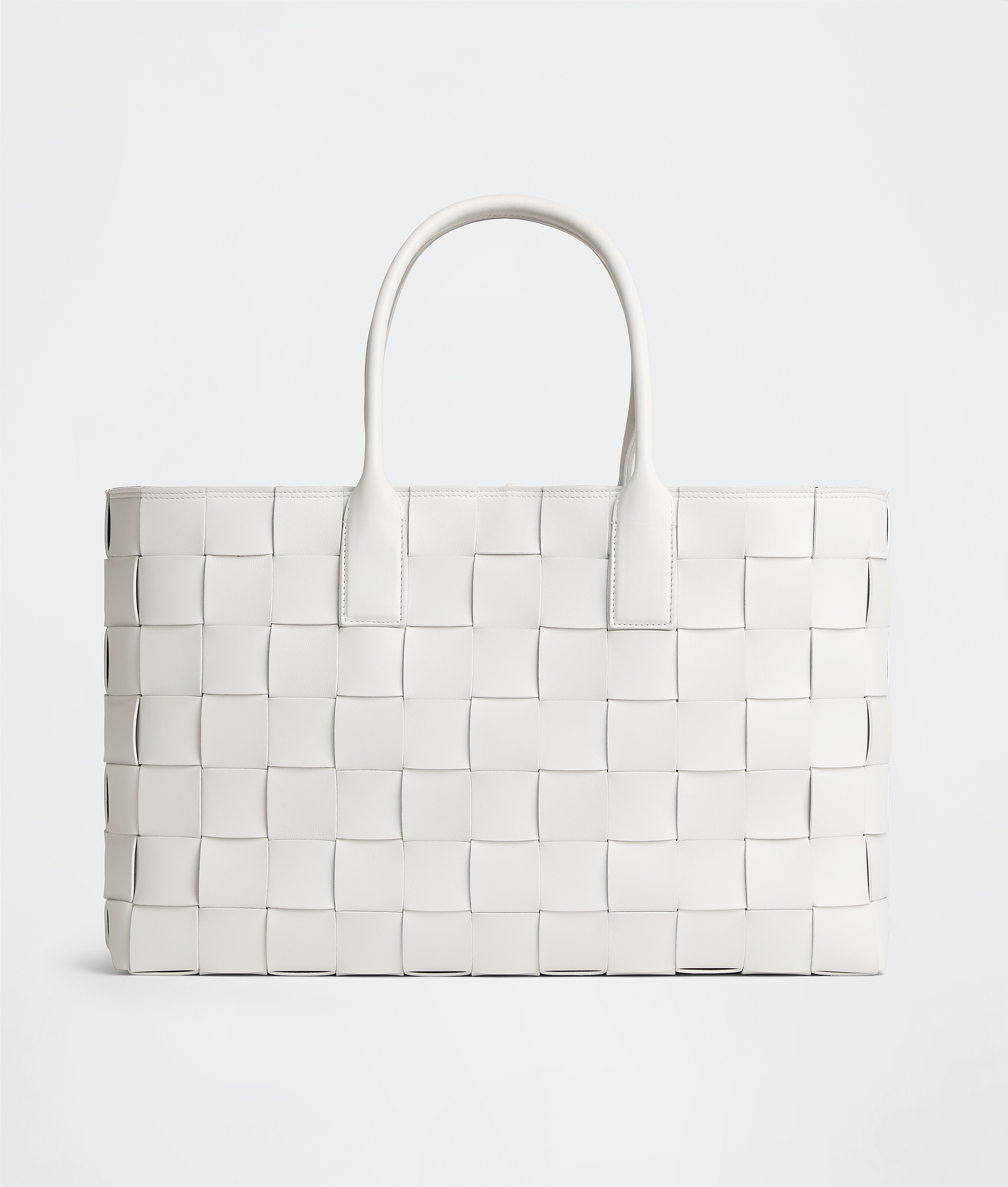
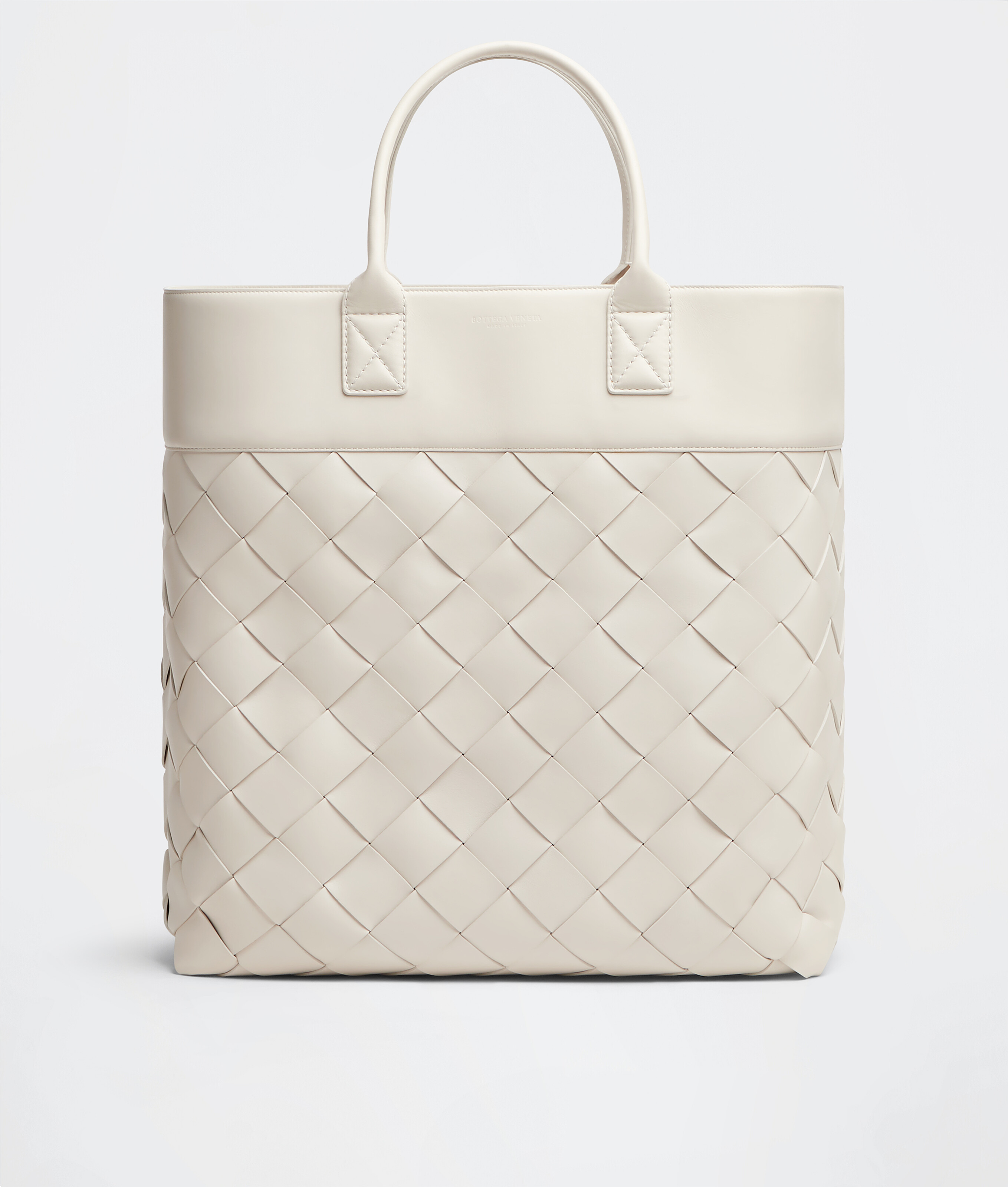
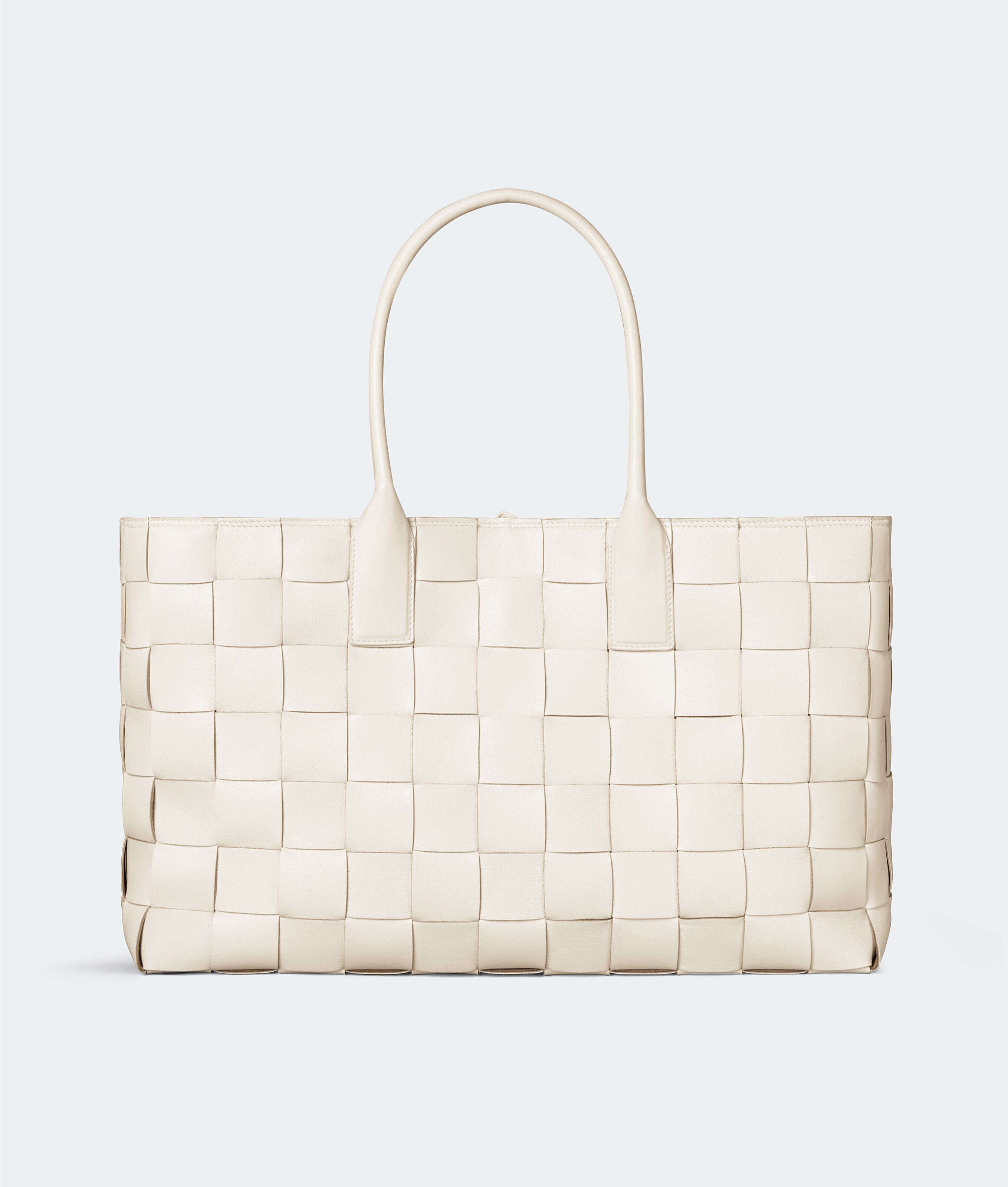
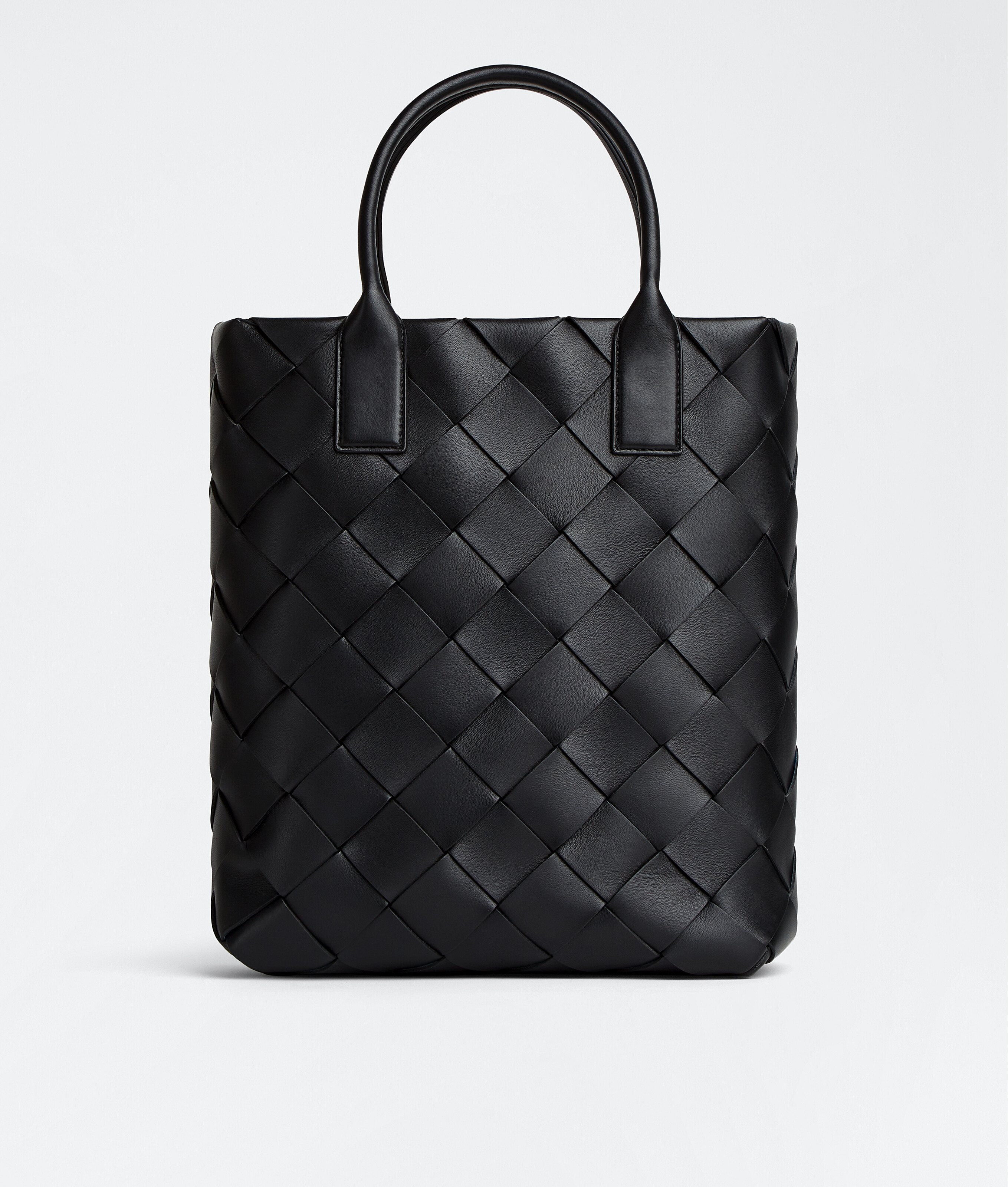
The Sardine bag—Bottega's curved, gathered clutch—has become shorthand for a certain kind of evening dressing, but it's not the only option. For winter, consider the small Arco tote, the structured top-handle piece that's large enough for a phone, a cardholder, keys, and nothing else. It's made from the house's signature intrecciato leather, which means it's soft but holds its shape.
What makes it work for evening is the scale. It's not miniature. It's not trying to be precious. It's a day bag that's been edited down to evening proportions, which means it doesn't look like you're carrying a different bag than you'd carry at noon—it looks like you made a choice about what to bring.
The handle is short enough to carry by hand, long enough to tuck into the crook of your elbow. No crossbody strap, no chain. This is a bag that asks you to hold it, which is part of the point.
What Not to Do
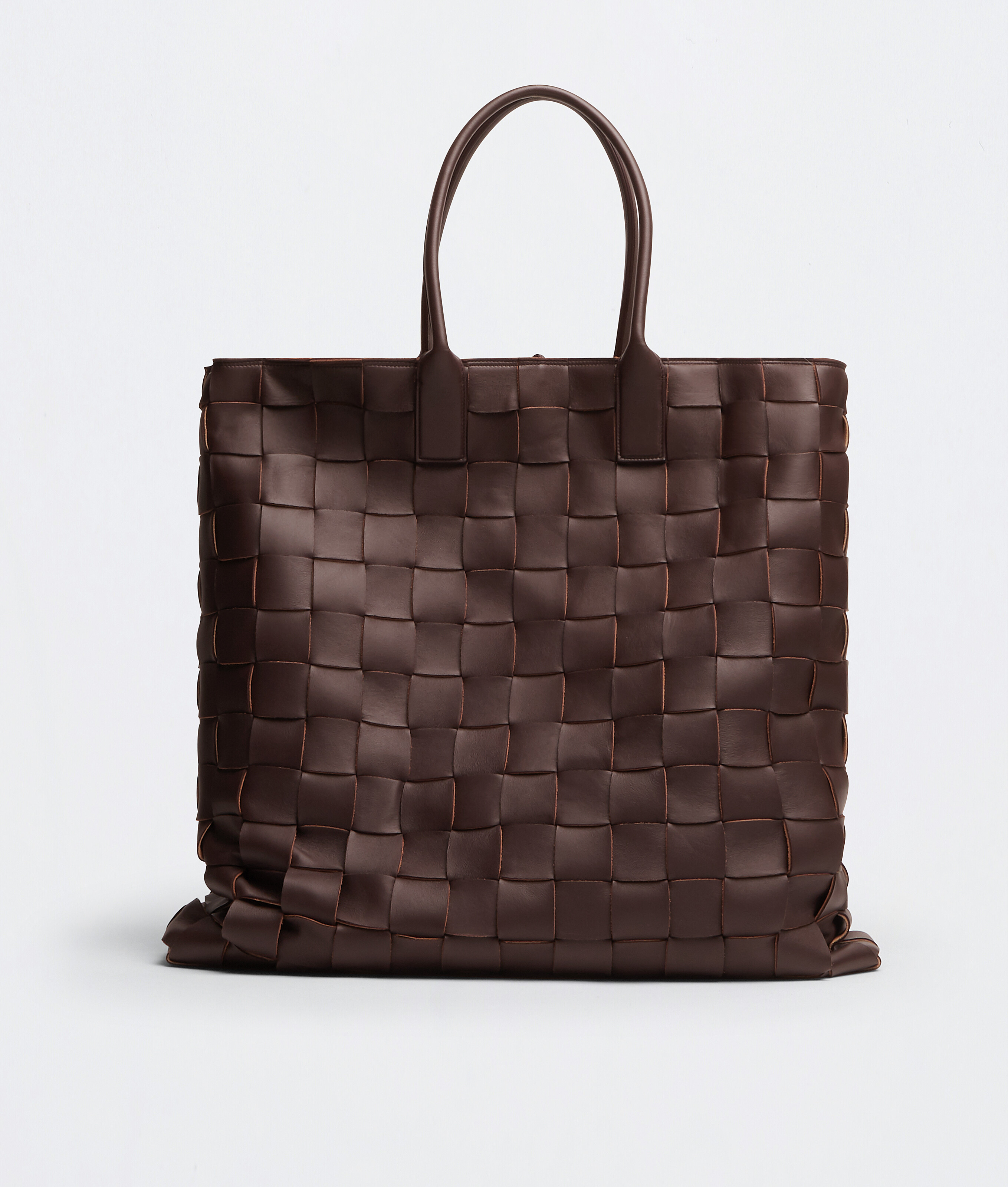
Don't add a scarf unless it's doing structural work. Don't wear gloves that aren't leather. Don't choose a boot with visible shearling or fur trim—if you need that much insulation, you need a different coat. Don't carry a tote that's large enough for a laptop; nothing kills the line of evening dressing faster than a bag that suggests you might have just come from work. And don't, under any circumstance, wear the puffer vest under the coat. If you're cold enough to consider it, you bought the wrong coat.