## The Problem with Looking the Part
The Problem with Looking the Part
Most corporate dress codes don't say "Givenchy," but they don't say "not Givenchy" either. The friction is real: you want presence without costume, authority without the stiffness that comes from trying too hard. Givenchy does workwear the way the house does most things—with a sharpness that reads as discipline, not decoration. The risk is looking like you're dressed for a different occasion entirely, or worse, like you're performing competence instead of possessing it. The work is in calibration. Wear the structure, skip the theatre.
The Blazer That Doesn't Announce Itself
Start with Givenchy's single-breasted wool blazer in black or deep navy—not the ones with hardware, not the ones with contrast stitching. The cut is what does the work here: a shoulder line that sits clean without padding, a two-button stance that doesn't pull when you sit. The house has been doing tailoring since Hubert de Givenchy opened the atelier in 1952, and that fluency shows in how the jacket moves. It doesn't fight your body. Pair it with grey trousers in a weight that holds a crease, or wear it over a slip dress in charcoal silk when you need to shift registers between a morning meeting and an evening obligation. The blazer stays on. The context changes around it.
The Shirt That Holds the Room
Givenchy's poplin shirting—particularly the styles with a concealed placket and a collar that doesn't collapse by noon—is cut closer than most American tailoring but looser than the European slim fits that looked relevant in 2011 and suffocating by 2019. The fabric has enough body to read as considered, not casual. White works, but so does pale grey or ecru if your workplace doesn't enforce a narrow palette. Tuck it into high-waisted trousers. Leave the cuffs showing past the blazer sleeve by half an inch. If you're wearing the shirt on its own, make sure the rest of the outfit has enough weight to match it—this isn't the piece that carries a look alone. It's the piece that makes everything else look intentional.
The Trouser That Doesn't Apologize
Givenchy's tailored trousers in wool gabardine or a wool-silk blend do what good workwear trousers should: they fit at the waist, break cleanly at the shoe, and don't require constant adjustment. A straight leg or a slightly tapered cut reads more current than anything too wide, which tends to look editorial in an office setting unless your job is to look editorial. The maison's trousers often come with a flat front and side pockets that don't gape—small details that matter when you're sitting in a conference room for three hours. Pair them with the blazer, or wear them with a fine-knit crewneck sweater in black merino when the day doesn't require full tailoring. The trouser holds the line either way.
The Bag That Works, Not Waves
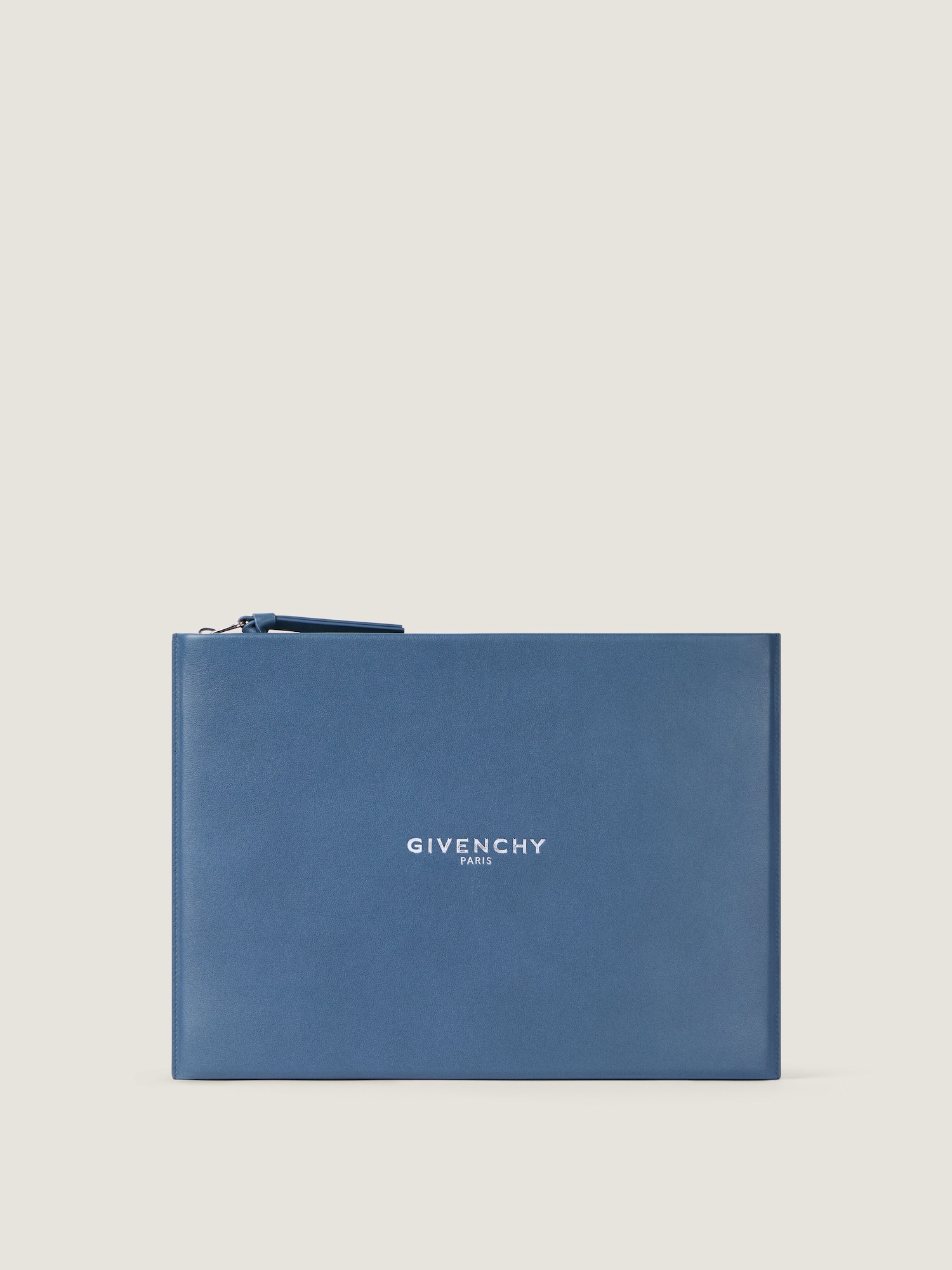
A structured tote or a top-handle bag in smooth calfskin—Givenchy's Antigona in small or medium, or the Voyou if you need something that converts from hand-carry to shoulder. Both have enough volume for a laptop, a notebook, the small cosmetic bag that holds the things you actually use. The hardware should be minimal. The shape should be clean. This is not the place for a statement bag with charms or contrast panels or a logo that reads from across the street. The bag is a container and a signal. It says you've thought about what you carry and how you carry it. It doesn't say anything else.
The Shoe That Closes the Outfit
Givenchy's leather loafers or a low-heeled pump in black or burgundy. The loafer works if your office has relaxed past the point where flats read as too casual; the pump works everywhere else. Both should have a sole that doesn't click too loudly on hard floors and a fit that doesn't require bandages by Thursday. The house's footwear tends toward a sleeker last than you'd find in comfort-first brands, so size carefully. If the shoe doesn't fit in the morning, it won't fit by evening. And if you're spending eight hours in it, fit matters more than the name on the insole.
What Not to Do
Don't wear the logo sweatshirt to the office unless your office is a recording studio. Don't pair the tailoring with sneakers unless you're prepared for that to be the only thing people remember about the outfit. Don't stack three Givenchy pieces in one look—it starts to read as brand loyalty rather than taste. And don't mistake formality for authority. The stiffest outfit in the room is rarely the most powerful one. Givenchy's workwear functions best when it's part of a considered whole, not the whole itself. Wear the structure. Let the rest be yours.