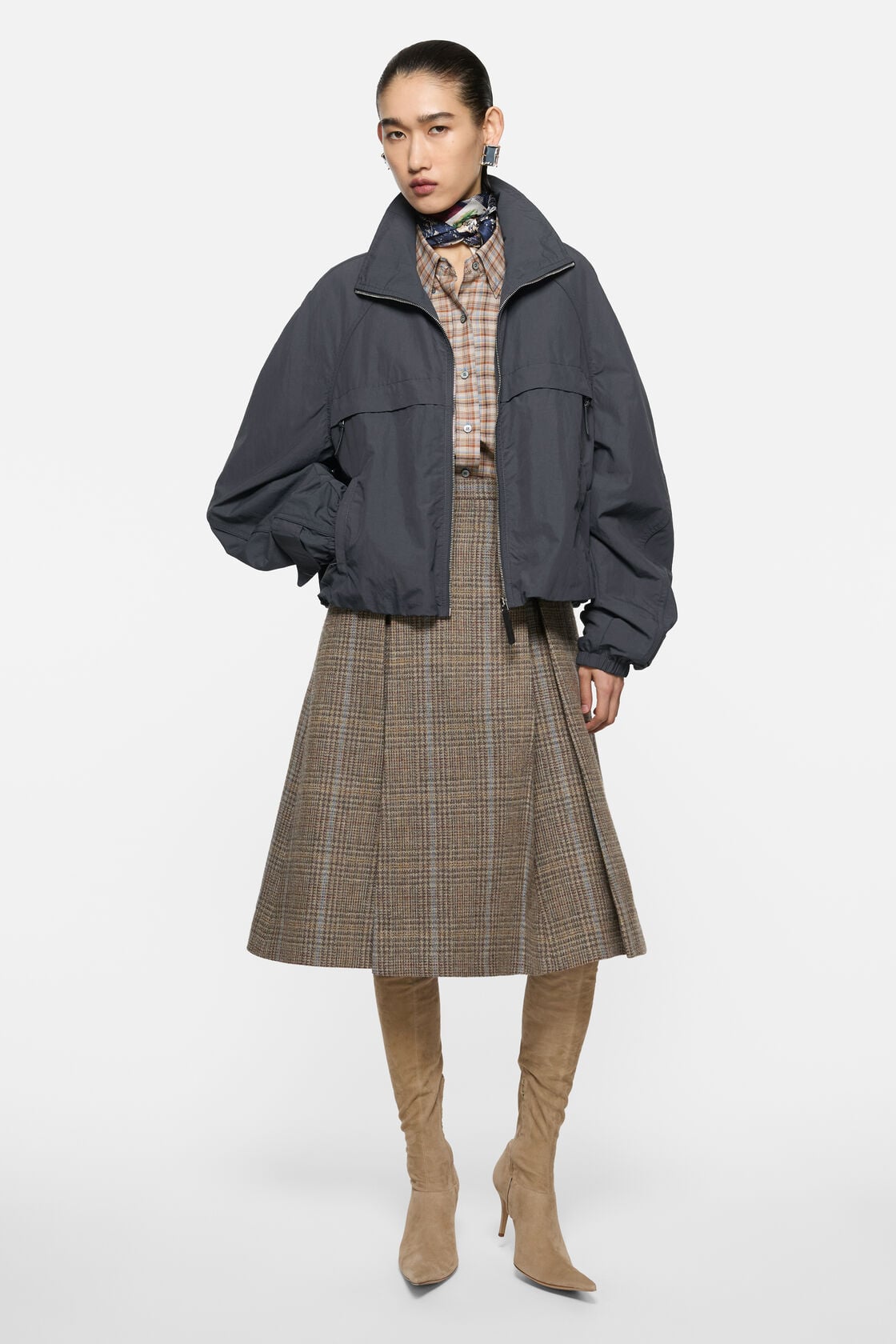
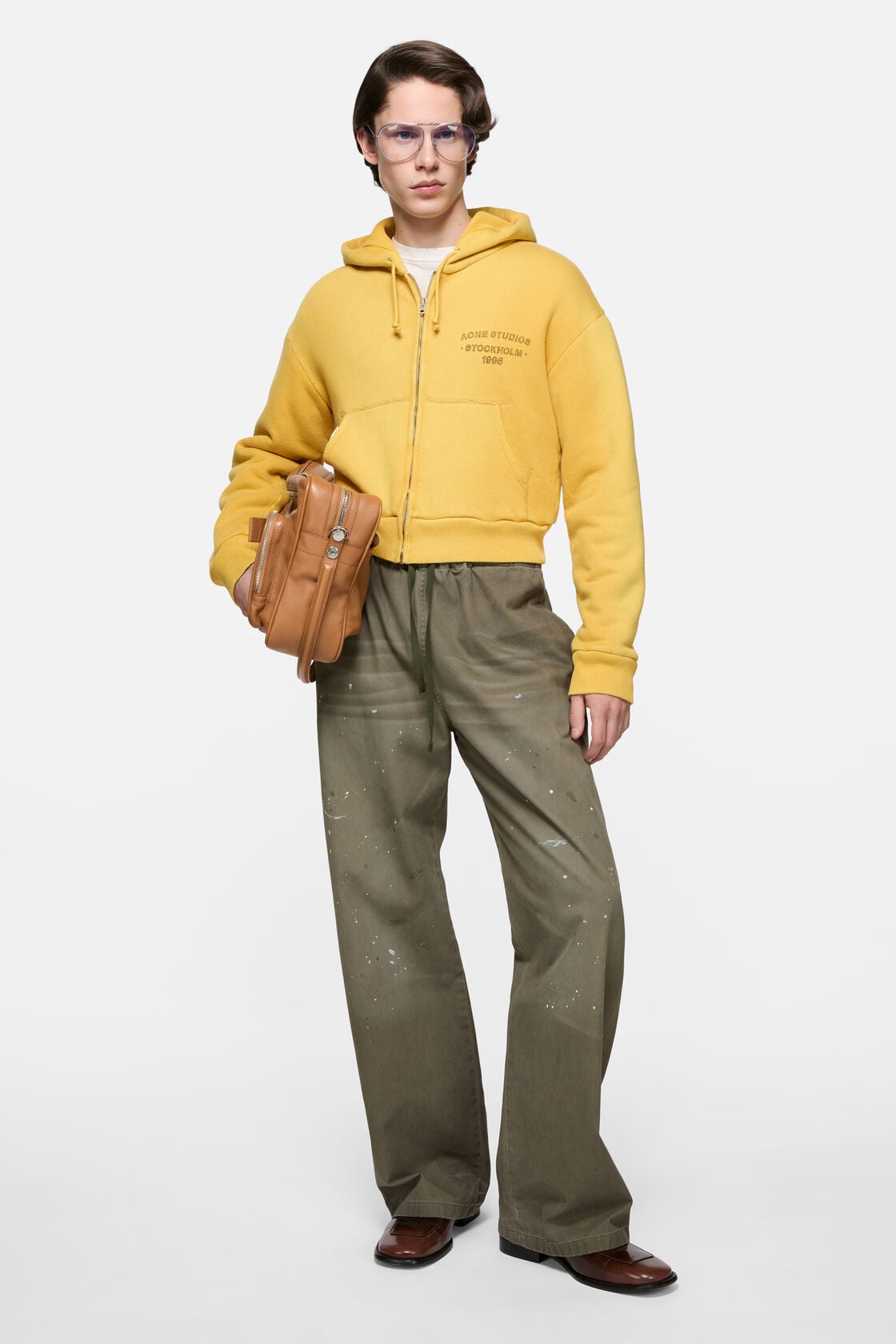
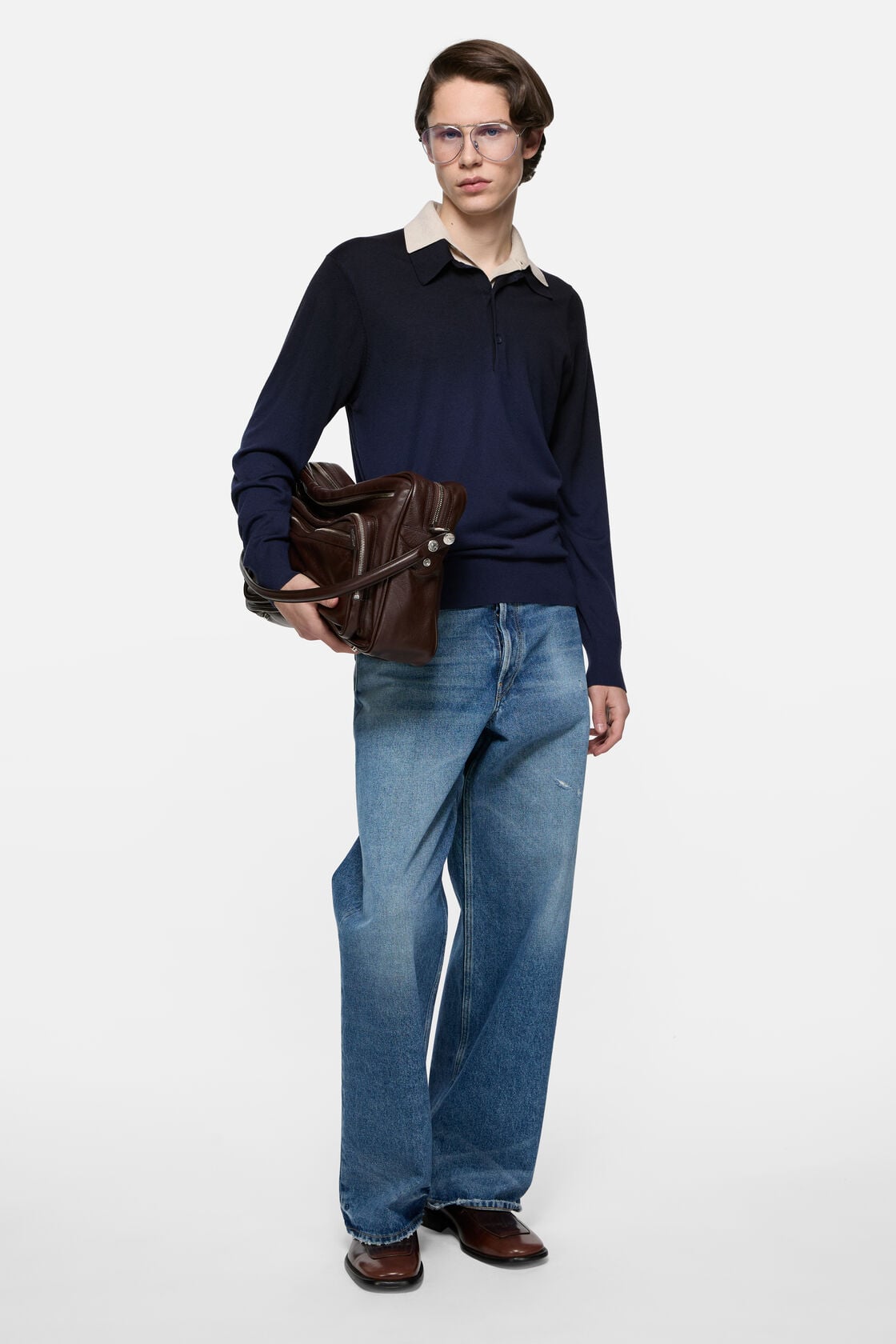
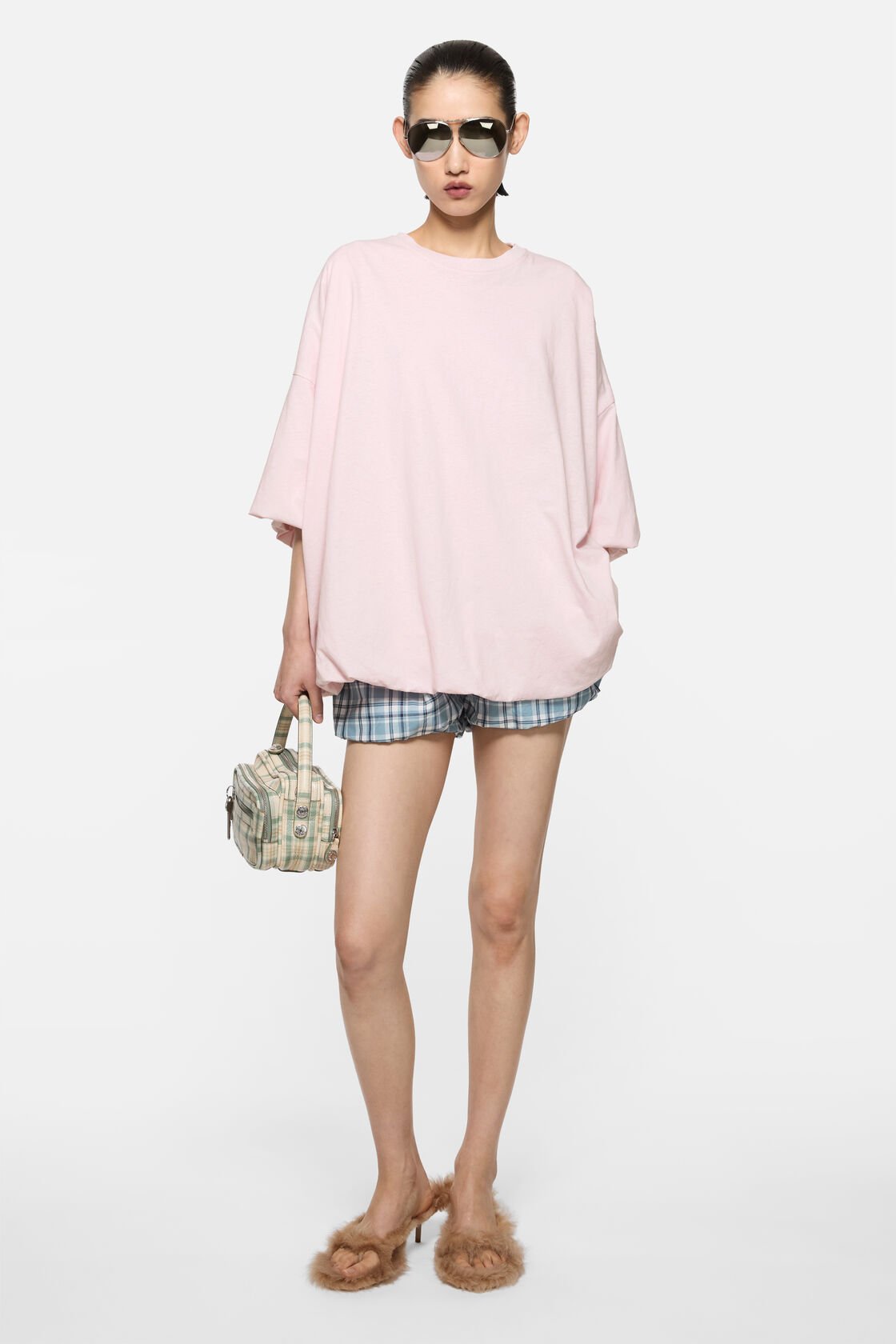
Acne Studios's archive comes back
Acne Studios is reissuing pieces from its 2006 to 2014 archive — not as capsules or special editions, but as part of the main line. The first drop landed in stores last month: the 'Max' raw-denim jean from 2008, the 'Velocite' shearling-lined leather from 2012, the 'Canada' wool scarf in its original oversized proportions. This isn't nostalgia. It's correction.
The timing aligns with what's been happening at retail for the last eighteen months. Buyers have been asking for pieces that don't require a styling paragraph. The kind of thing you pull on and it reads immediately — denim that sits at the natural waist, a leather jacket with enough structure to work over knitwear, a scarf that does what scarves used to do before they became neck jewellery. Acne's archive happens to be full of exactly that.
What's Being Brought Back
The 'Max' jean is the anchor. It's a straight-leg raw selvedge in 13.5-ounce Japanese denim, cut to sit just below the navel with a 32-inch inseam. When it first appeared in 2008, it was positioned as the anti-skinny. Now it's being positioned as the anti-everything-else. The fit hasn't been touched. The only update is a slightly narrower leg opening — 16 centimetres instead of 17 — to work with the shoes people are actually wearing.
The 'Velocite' is coming back in black only. Shearling collar, asymmetric zip, enough weight in the leather to hold a silhouette without stiffness. It originally launched for Autumn/Winter 2012, the season Jonny Johansson was leaning into biker references without making biker jackets. The reissue uses the same tannery — a supplier outside Scandicci that Acne never dropped, even when the style was out of rotation. The leather is still drum-dyed, still broken in by hand before it's cut.
The 'Canada' scarf returns in its original 200 x 70 centimetre dimensions, which is to say: large enough to be structural. Acne made it in brushed wool-blend for nearly a decade, then quietly phased it out around 2016 when scarves shrank and went modal. The reissue keeps the wool, keeps the scale, adds a single colourway that wasn't in the original run — a grey-green that works as a neutral but doesn't flatten into beige.
Less prominent but equally deliberate: the 'Pistol' ankle boot from 2010, back in smooth black leather with the same stacked heel and almond toe. The 'Oversized' cardigan from 2013, still in the chunky-knit wool that made it feel like outerwear. The 'Raya' mohair sweater, which sold out in three colourways when it first appeared in 2014 and is now being offered in five.
Why Now Works
Acne's archive sits in a specific band of time — post-2000s minimalism, pre-Instagram styling. The pieces were designed to photograph well in editorials, not on feeds. That means they tend to have clear lines, matte surfaces, enough ease to move. They don't rely on a pose.
The maison also benefits from having kept its suppliers consistent. The Japanese mill that wove the 'Max' denim in 2008 is still weaving it now. The Scandicci tannery still runs the same drum-dye process. When you're reissuing something fifteen years later, that kind of supply-chain continuity is rare. Most brands would have to reverse-engineer their own archive.
There's also the question of what counts as archive in the first place. Acne's oldest pieces are from 1996, but the brand doesn't reach back that far. The reissues start in 2006 — the year the brand opened its first standalone store and began producing at a scale that allowed for proper stock management. Anything earlier exists mostly in editorials and private collections. The 2006–2014 window is recent enough to have survived in pattern libraries and supplier relationships, old enough to feel like a reset rather than a rerun.
What It Means to Wear It
The broader context is a retail environment that has spent three years rewarding newness over coherence. Buyers are tired. Customers are tired. Acne's archive play works because it doesn't ask you to learn a new language — it asks you to remember one that already made sense.
For the next twelve months, dressing in this means accepting that the most interesting thing you can wear might be something that was already interesting fifteen years ago.