Bottega Veneta is narrowing the shoulder
Bottega Veneta is narrowing the shoulder. Not padding it, not building it out with structure—narrowing it. The line that runs from neck to sleeve head is closer to the body now, set in rather than extended. This is the silhouette Matthieu Blazy has been working toward since his spring 2025 collection, and it is now the house's primary gesture.
The shift is clearest in the tailoring. A single-breasted jacket from the autumn 2024 collection sat with a shoulder that tracked the natural slope of the body. No roping, no canvas reinforcement at the head. The sleeve was set slightly forward, which pulled the shoulder seam inward by roughly two centimetres. That measurement is small enough to miss in a photograph, but it changes how a jacket holds the frame. The silhouette reads as contained rather than broad.
Blazy has used this line across categories. A leather blouson from the same season had a raglan sleeve—no shoulder seam at all—but the effect was related. The garment wrapped the torso without widening it. A wool coat from spring 2025 showed a similar approach: the shoulder was there, structured enough to hold its shape, but it ended where the body ended. There was no overhang, no extension into air.
This is a departure. Bottega Veneta spent the better part of the last decade working with volume. Under Daniel Lee, the house built shoulders that cantilevered outward. A padded leather jacket from his tenure had a shoulder line that extended past the natural body by five or six centimetres. That was the point. The garment was architecture, and the wearer stood inside it. Blazy's work moves in the opposite direction. The clothes now follow the body's line rather than construct a new one.
The narrow shoulder appears in knitwear as well. A crewneck sweater from autumn 2024 had a sleeve that dropped slightly from the shoulder point, which made the upper body read as a single unbroken curve. This is not a dropped shoulder in the oversized sense—the sleeve still fits the arm—but the seam sits a fraction lower than a traditional set-in sleeve. The result is soft without being loose.
Bottega Veneta is not alone in this. The Row has been working a similar shoulder for three seasons. A wool blazer from their autumn 2024 collection had a shoulder with almost no padding, and the sleeve was set to follow the body's natural slope. Lemaire showed comparable tailoring in spring 2025: jackets with narrow, sloped shoulders and sleeves that hung close to the arm. But Bottega Veneta is doing this at a different scale, across a broader range of garments, and with more insistence.
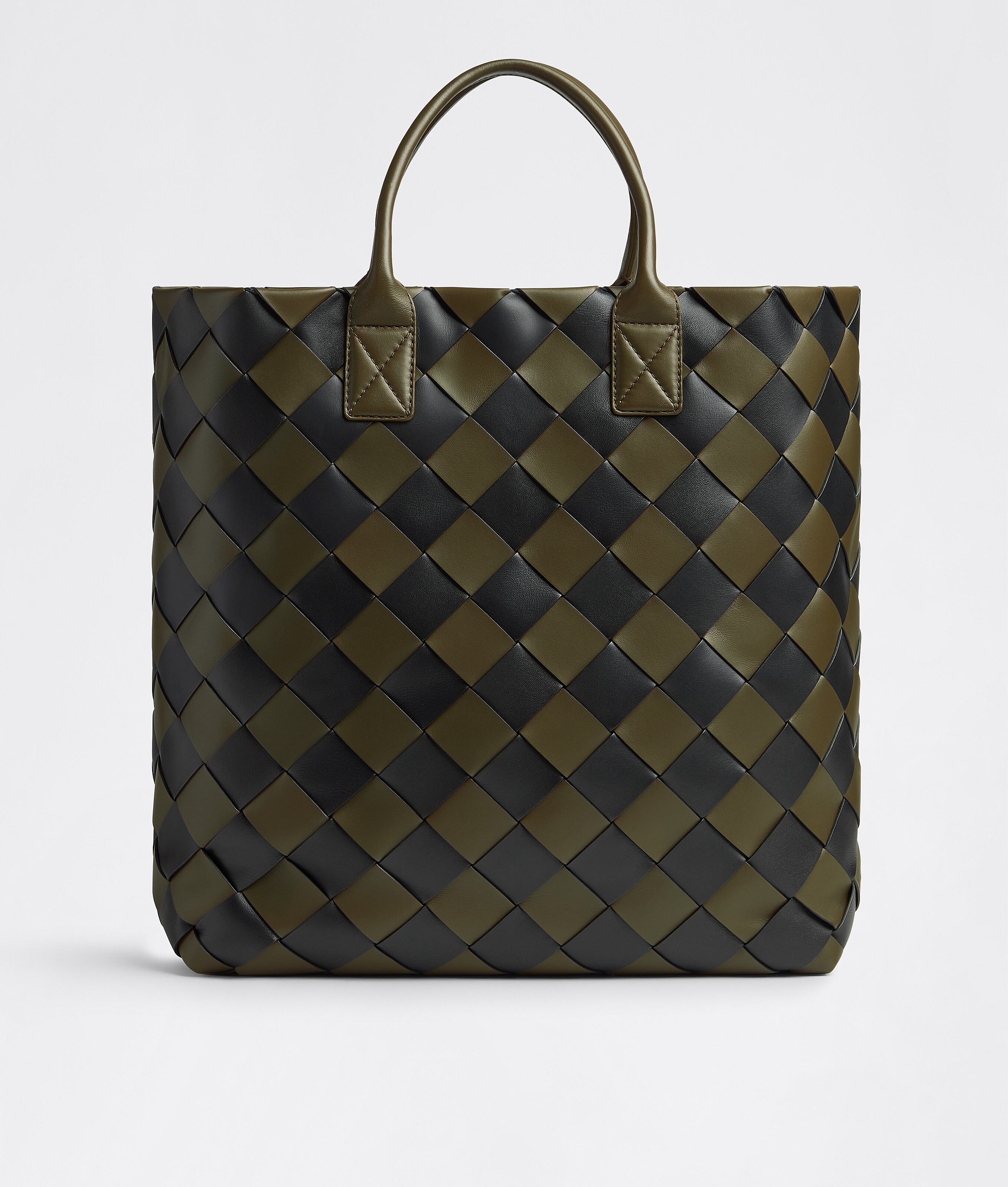
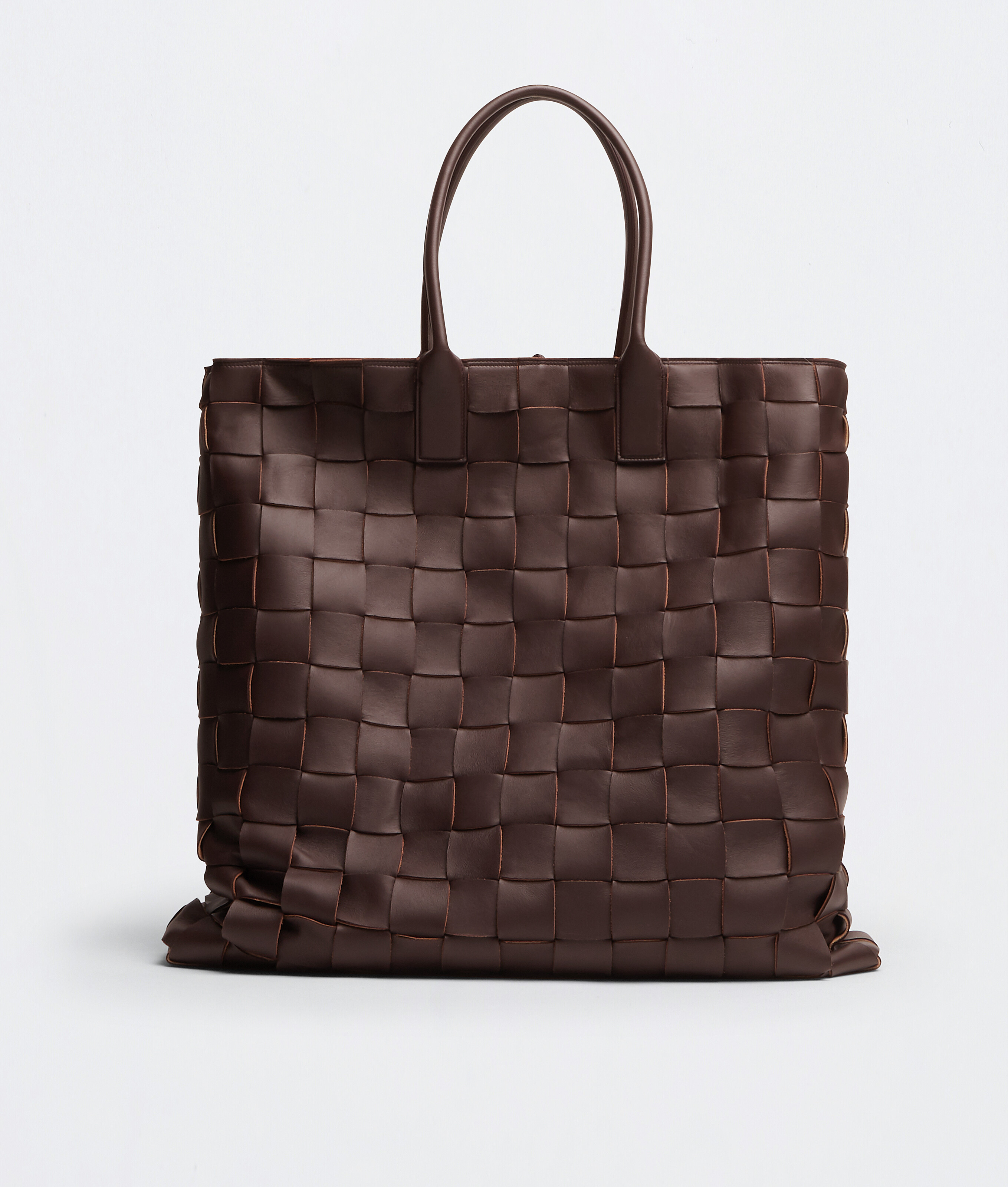
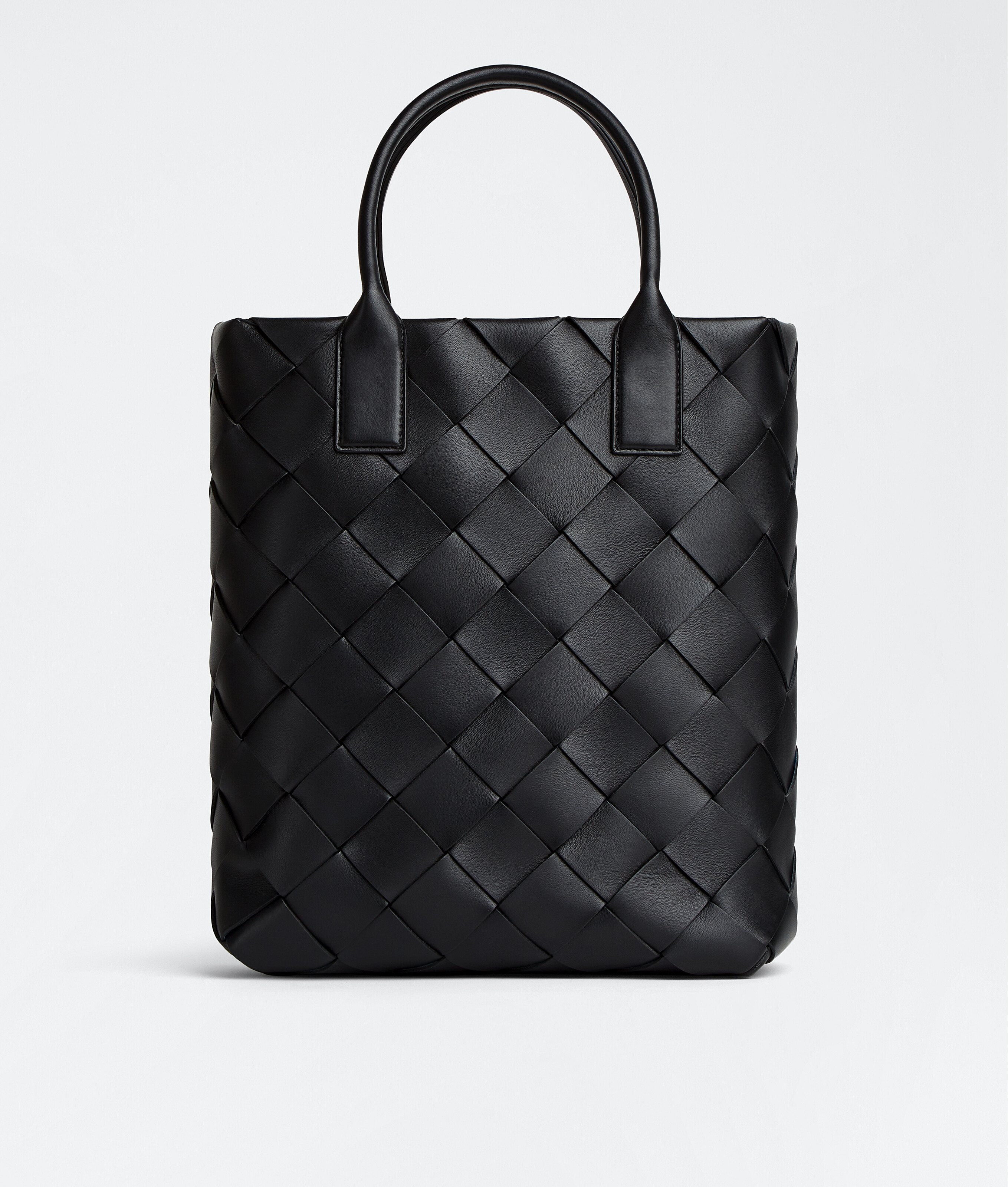
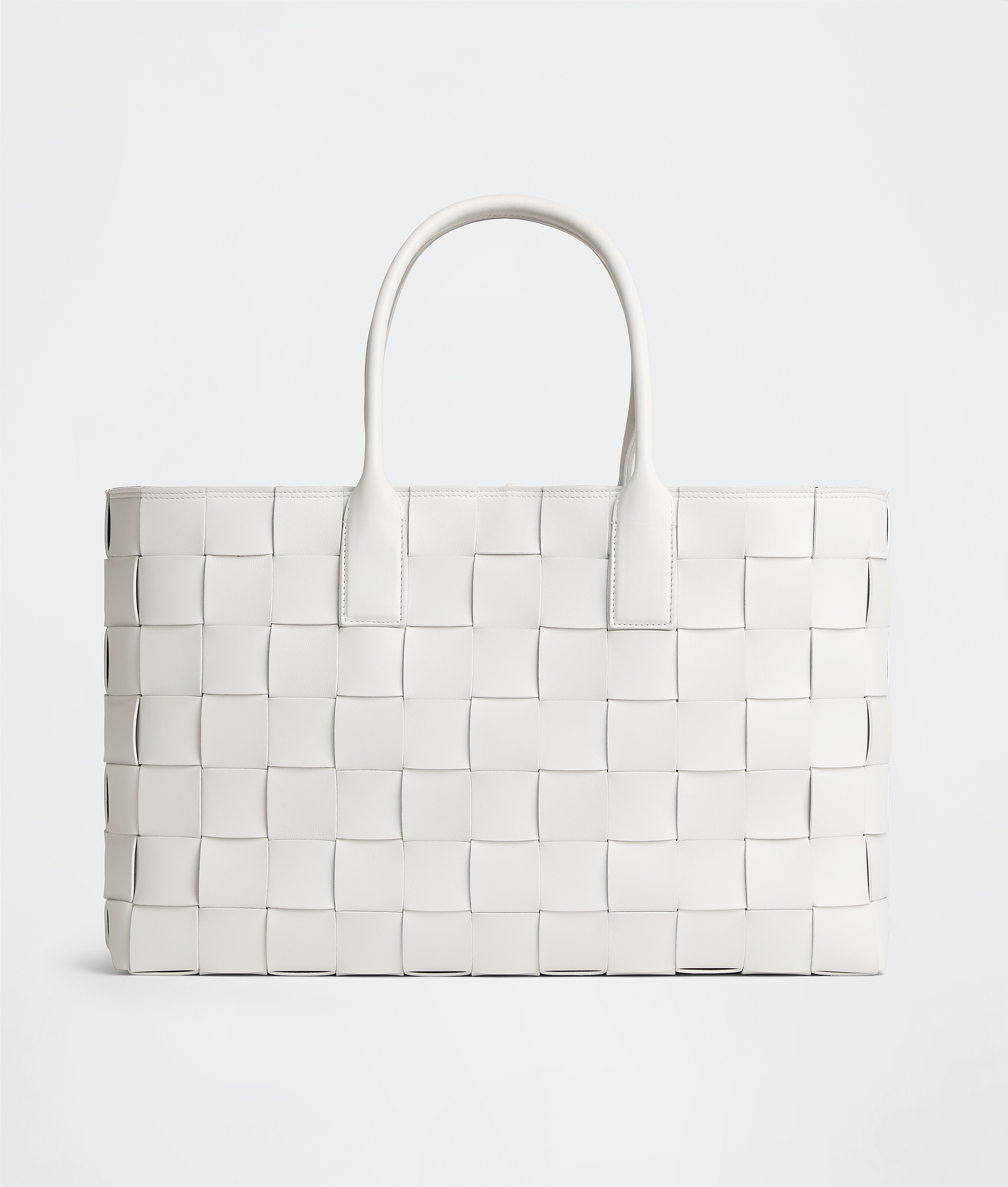
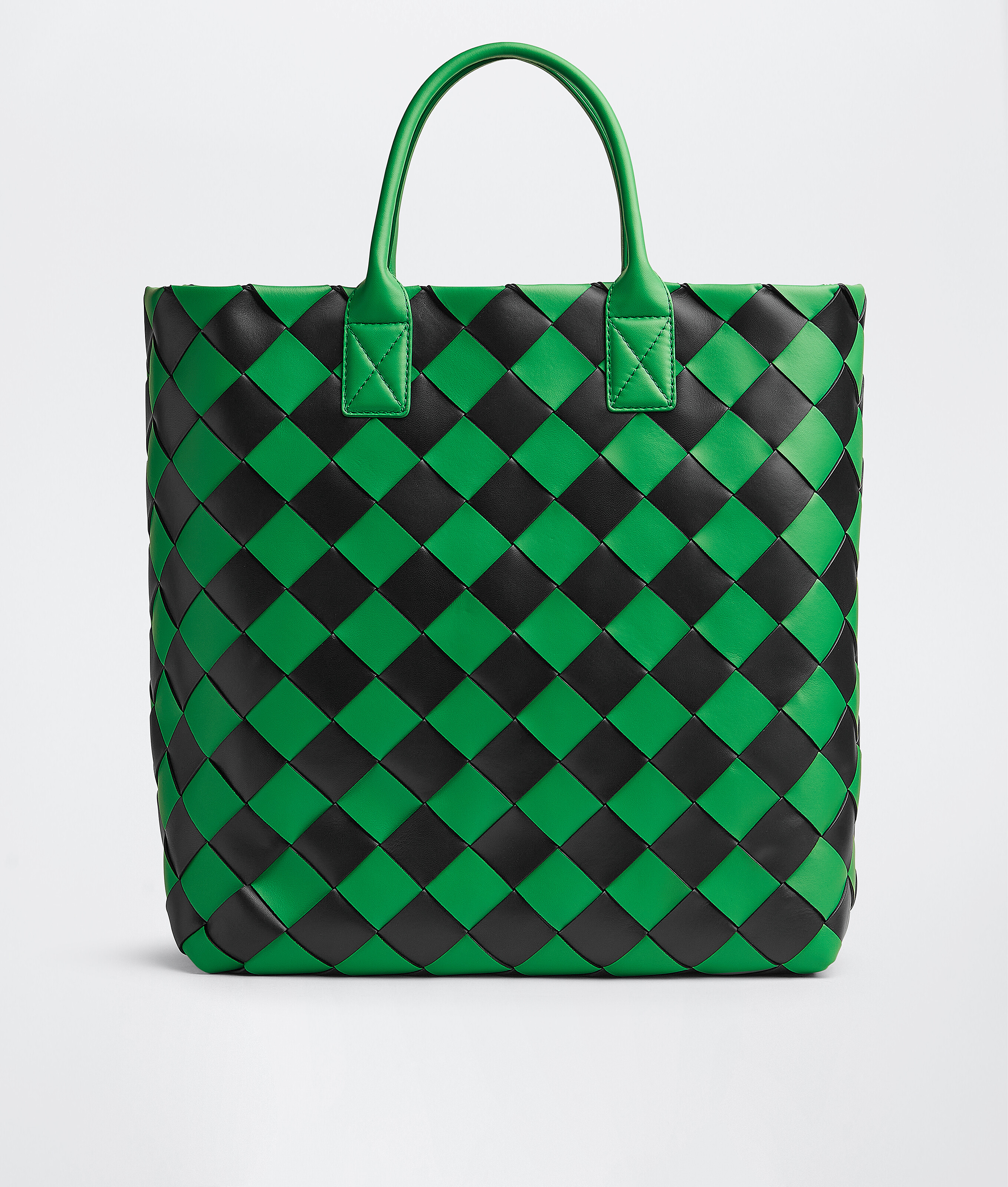
The house's leather goods are responding to the same logic. The Kalimero bag, introduced in spring 2024, has a rounded, compact form. It does not extend outward from the body. The Sardine, relaunched under Blazy, sits close to the torso when worn on the shoulder. These are not the oversized pouches that dominated the house's accessories under Lee. They are smaller, denser, and they stay near the body.
What this does is change the relationship between garment and wearer. A broad shoulder creates distance. It builds a shape that is separate from the body beneath it. A narrow shoulder does the opposite. It suggests that the garment is responsive to the person inside it. This is a shift in emphasis, from construction as spectacle to construction as fit.
There is a practical dimension here. A narrow shoulder is easier to layer. A coat with a restrained shoulder line can go over a jacket without bulk at the seam. This matters for northern Europe, where layering is structural rather than optional. Blazy, who is French and worked under Raf Simons and Phoebe Philo, knows that climate. His tailoring accounts for it.
The question is durability. A narrow shoulder is quieter than a broad one, and quieter shapes can disappear. But Bottega Veneta is not making minimal clothing. The house is still working with colour, with texture, with leather that has weight and presence. The narrow shoulder is not about reduction. It is about where the emphasis sits. Right now, it sits on fit, on how a garment meets the body at the shoulder and moves down from there.
To dress in this for the next twelve months is to accept that structure does not require distance.