## The Burberry Archive Returns, Edited
The Burberry Archive Returns, Edited
Burberry is reissuing pieces from its own past. Not reprints — reissues. The spring 2025 collection includes the Equestrian Knight bag first shown in 2010, the Rocking Horse tote from 1996, and a car coat cut to the 1960s pattern that predates the brand's diffusion era. These are not homages. They are the same garments, adjusted for contemporary proportion and priced into the accessible luxury bracket the house has spent three years rebuilding.
The move is deliberate. Daniel Lee arrived at Burberry in 2022 and spent his first year stripping back the logo plays and streetwear adjacency that had defined Riccardo Tisci's tenure. By spring 2024, the runway was showing outerwear with set-in sleeves, knee-length hemlines, and fabrics heavy enough to hold a silhouette without internal structure. The archive pieces now entering production are the next step: proof that Burberry's design language was legible before it became a logo, and that it can be again.
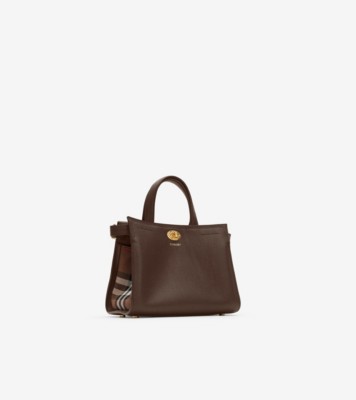
The Equestrian Knight bag is the clearest example. It first appeared in Christopher Bailey's autumn/winter 2010 collection, a structured top-handle in grainy leather with the house's knight emblem embossed at the front flap. The original sold in limited numbers — it was expensive, and 2010 was still a logo-averse moment in British fashion. The reissue is nearly identical: same dimensions, same clasp, same embossed knight. The leather is slightly lighter, the interior has been reworked with a zipped pocket, and the price has dropped by thirty percent in relative terms. It is now positioned as an entry piece, not an occasion bag.
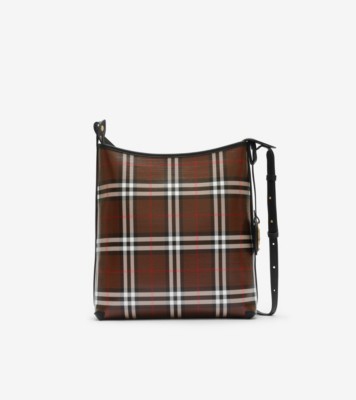
The Rocking Horse tote is older and less formal. It debuted in 1996 as a soft, unstructured carryall in Burberry's house check — the tan, black, red, and white grid that had been lining trench coats since the 1920s. The bag was named for its curved base, which allowed it to rock forward when set down. It became a signature piece in the late nineties, carried by editors who wanted something recognisable but not stiff. Burberry discontinued it in 2007, during the brand's first attempt to move upmarket. The 2025 version is offered in both the original check and a tonal canvas. The shape is unchanged.
The car coat is the least obvious pull. Burberry's archive includes hundreds of outerwear patterns, many of them documented in the company's Horseferry Road vault. The coat now in production is based on a 1962 design: single-breasted, hip-length, with a narrow lapel and no belt. It was intended for drivers — short enough to sit comfortably, warm enough for an open-top car. The contemporary version uses the same cotton gabardine as the trench, but the lining is thinner and the coat is unlined at the sleeves. It reads as a blazer until you see the storm flap at the back.
Why now? Burberry's revenue declined eleven percent in the fiscal year ending March 2024. The brand had been positioned as a challenger to Louis Vuitton and Dior, but it was priced below them and designed for a customer who no longer existed. Lee's response has been to narrow the offering: fewer SKUs, more outerwear, a return to the British country codes that Burberry was built on. The archive reissues are part of that edit. They are not nostalgic. They are evidence of a design system that worked before the brand tried to be something else.
Other houses are doing this, but not in the same way. Prada reissued the 1995 nylon backpack in 2019, but it was styled as a streetwear piece and marketed to a younger customer. Gucci brought back the Jackie bag in 2020, but it was positioned as an icon, not a workhorse. Burberry's approach is quieter. The archive pieces are not flagged as reissues in the press materials. They are simply in the line, priced between the core trench and the runway pieces, available in six colourways instead of two.
The risk is that this reads as conservative. Burberry has been accused of playing it safe since Lee's first collection, and the archive strategy does nothing to counter that. But conservative is not the same as unclear. The brand now has a point of view: British, functional, built to last. The archive is not being mined for content. It is being used as proof.
To dress in this for the next twelve months is to accept that fashion does not require reinvention every season — that a bag from 1996 can sit next to a coat from 2025 without either one reading as costume.