## The Burberry Trench, Three Ways
The Burberry Trench, Three Ways
Burberry showed the trench coat in three distinct iterations this season: cropped to the hip with exaggerated lapels, extended to mid-calf in technical gabardine, and deconstructed into a sleeveless gilet with the storm flap intact. Each reads as a different garment. Each carries the same historical weight.
The house has returned to its archive not as nostalgia but as raw material. Daniel Lee, in his second year as chief creative officer, is treating the trench as a modular system rather than a fixed silhouette. The spring collection presented twenty-three variations. Some retained the full complement of details—epaulettes, gun flap, throat latch, D-rings. Others stripped the form to a single gesture: the belted waist on a sleeveless shell, the storm shield grafted onto a bomber jacket in waxed cotton.
This is not deconstruction in the Margiela sense. The seams are finished. The hardware functions. What Lee has done is isolate each component of the trench and ask whether it can stand alone. The answer, at least in this collection, is yes. A cape derived from the trench's back yoke appeared over narrow trousers. A cropped jacket borrowed only the collar and the double-breasted closure, cut in heavyweight linen that held its shape without the gabardine's rigidity. The belt, removed from its coat, became a harness worn over a fine-gauge knit.
Burberry is not alone in this approach. Bottega Veneta has spent the last four seasons refining the leather trench into progressively more minimal forms, most recently a collarless version in butter-soft lambskin that fastens with a single concealed hook. The Row showed a trench in cotton poplin so light it moved like shirting, the traditional structure replaced by a drawstring waist. Lemaire presented a version in unlined linen that creased with wear, the formality of the silhouette undercut by the fabric's deliberate casualness.
What separates Burberry's iteration is the house's relationship to the garment. This is not borrowing. The trench originated in the Burberry workshop in 1912, developed for British officers in the First World War. The gabardine itself—a tightly woven, water-resistant cotton—was patented by Thomas Burberry in 1879. Lee is working with the original document.
The cropped version, which falls just below the natural waist, reverses the trench's traditional proportions. The coat has always been defined by its length, by the way it moves when the wearer walks. Shortened, it becomes a jacket. The belt, which on a full trench cinches at the waist and releases volume below, here emphasises the hips. Paired with a mid-rise trouser in matching gabardine, the effect is a continuous line from shoulder to ankle, broken only by the belt's horizontal.
The extended version, cut to mid-calf, restores the length but alters the fabric. Lee used a technical gabardine with a faint sheen, lighter than the traditional cloth but with more body than a standard poplin. The coat holds its shape in motion but doesn't stiffen. Worn open, it creates a vertical column. Belted, it pulls tight at the waist and flares slightly at the hem, a silhouette closer to a robe than a military coat.
The gilet is the most direct extraction. It retains the storm flap, the throat latch, and the shoulder epaulettes, but removes the sleeves entirely. What remains is a vest that reads as outerwear. The proportions are exact—the armholes are cut as they would be on the full coat, which means they sit lower and wider than a traditional vest. The result is a garment that layers over shirting or knitwear without adding bulk, but still carries the trench's visual grammar.
All three pieces appeared in the same neutral palette: honey, stone, black, navy. Burberry has always worked within a narrow colour range, and Lee has tightened it further. The spring collection included no prints, no embellishment, and almost no colour outside of this core group. The focus remains on cut and cloth.
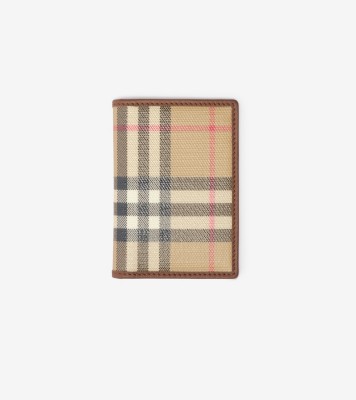
What this signals is a return to the idea of the house uniform—not a single garment worn season after season, but a set of related pieces that can be combined and recombined. Burberry has offered this before, particularly in the early 2000s under Christopher Bailey, but Lee's version is more restrained. There is no logo visible on any of the three trench variations. The check, Burberry's most recognisable pattern, appeared only as a lining.
The question for the next twelve months is whether this approach—specific, modular, rooted in a single archival garment—can sustain a wardrobe, or whether it reads as too narrow, too interior, too much like a design exercise rather than a way of dressing.