## The Return of the Grown-Up Shoulder
The Return of the Grown-Up Shoulder
Gucci's spring 2025 show in Milan arrived with a sharp-edged tailored blazer, cut close at the waist and built with a shoulder that sits two inches wider than the body's natural line. Not the cartoonish power shoulder of the eighties, not the dropped, slouchy construction that's been standard since 2019. This is a structured, architectural shoulder — visible, intentional, unapologetic. And Gucci isn't alone.
Bottega Veneta sent a similar silhouette down the runway three weeks earlier, though their version leaned softer: a wool-cashmere blend with a shoulder that extended just enough to square the frame without announcing itself. At Ferragamo, creative director Maximilian Davis showed a double-breasted blazer in charcoal wool with a shoulder seam that landed a full inch past the body's edge, styled over wide-leg trousers and flat loafers. The message across all three houses was identical. The era of the unstructured, apologetic jacket is over.
This shift matters because the shoulder is the first thing a blazer does. It sets the frame. It establishes proportion. For the last four years, designers have worked in the opposite direction — soft shoulders, dropped armholes, jackets that draped rather than shaped. The look was borrowed from men's tailoring but worn without the crispness men's tailoring requires. It read as ease, yes, but also as a kind of refusal. A refusal to take up space. A refusal to assert.
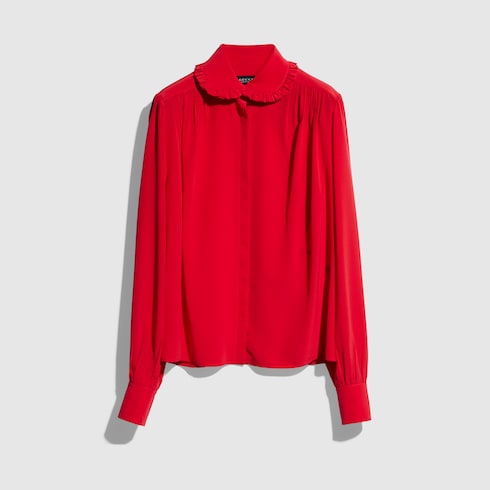
Gucci's version is different. The blazer that opened the spring collection was cut in a mid-weight wool with a notched lapel and a single button at the natural waist. The shoulder extended just past the body's line, enough to create a clean horizontal from clavicle to deltoid. It was worn over a silk blouse with a soft bow at the neck, tucked into a high-waisted trouser in matching wool. The effect wasn't masculine. It was precise.
Bottega's approach, by contrast, felt quieter. Their blazer had the same extended shoulder but the fabric — a wool-cashmere with a slight nap — softened the line. The lapels were wider, almost exaggerated, and the jacket was left open over a ribbed tank and low-rise trousers. It was a shoulder you could live in. A shoulder that didn't require the rest of the outfit to be as considered.
Ferragamo split the difference. Davis showed his blazers buttoned, styled with slim leather belts that cinched at the waist and emphasized the shoulder's width by contrast. The trousers were wide-legged and pooled slightly at the ankle, a proportion that only works when the top half of the body is clearly defined. The shoulder did that work.
What all three houses understood is that structure doesn't mean stiffness. The new shoulder isn't about padding or rigidity. It's about a seam that sits where it should, a sleeve that sets cleanly into the armhole, a silhouette that holds its shape when you move. It's a return to the basics of tailoring, the mechanics that make a jacket work.
This isn't nostalgia. The eighties shoulder was about volume, about filling space with fabric and padding until the body disappeared underneath. The nineties shoulder was about androgyny, about erasing difference. This shoulder is about proportion. It's about using structure to create a line that flatters rather than overwhelms.
The question now is how far this extends beyond the runway. Blazers are easy to show, harder to sell. They require fit, alteration, a willingness to spend time in a dressing room. They don't work off the rack the way a sweater or a slip dress does. But the houses betting on this shift — Gucci, Bottega, Ferragamo — aren't making clothes for impulse buys. They're making clothes for people who understand that a jacket is an investment, that good tailoring lasts, that the right shoulder changes how you move through a room.
The call for the next twelve months is simple: if you're buying a blazer, make sure it has a shoulder.