## The Return of the Narrow Shoulder
The Return of the Narrow Shoulder
The shoulder line is tightening. Not dramatically—this isn't the nipped waist of the Fifties or the linebacker silhouette of the Eighties—but enough that you notice it when a jacket sits on a hanger. The seam is migrating inward, closer to the body's actual architecture. Drop-shoulder ease, which dominated from 2019 through last year, is being replaced by something more considered. The new proportion asks the fabric to follow bone structure, not fight it.
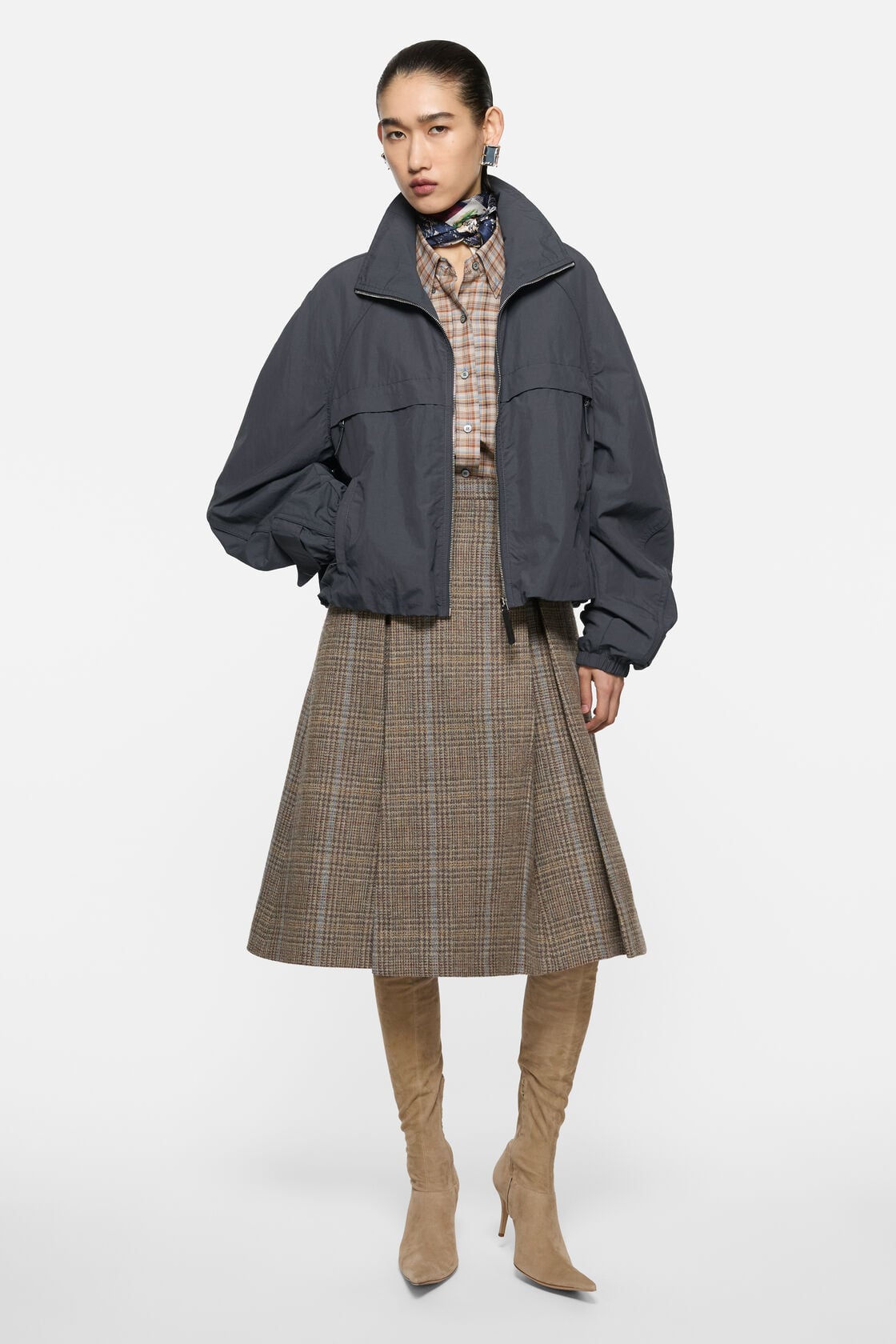
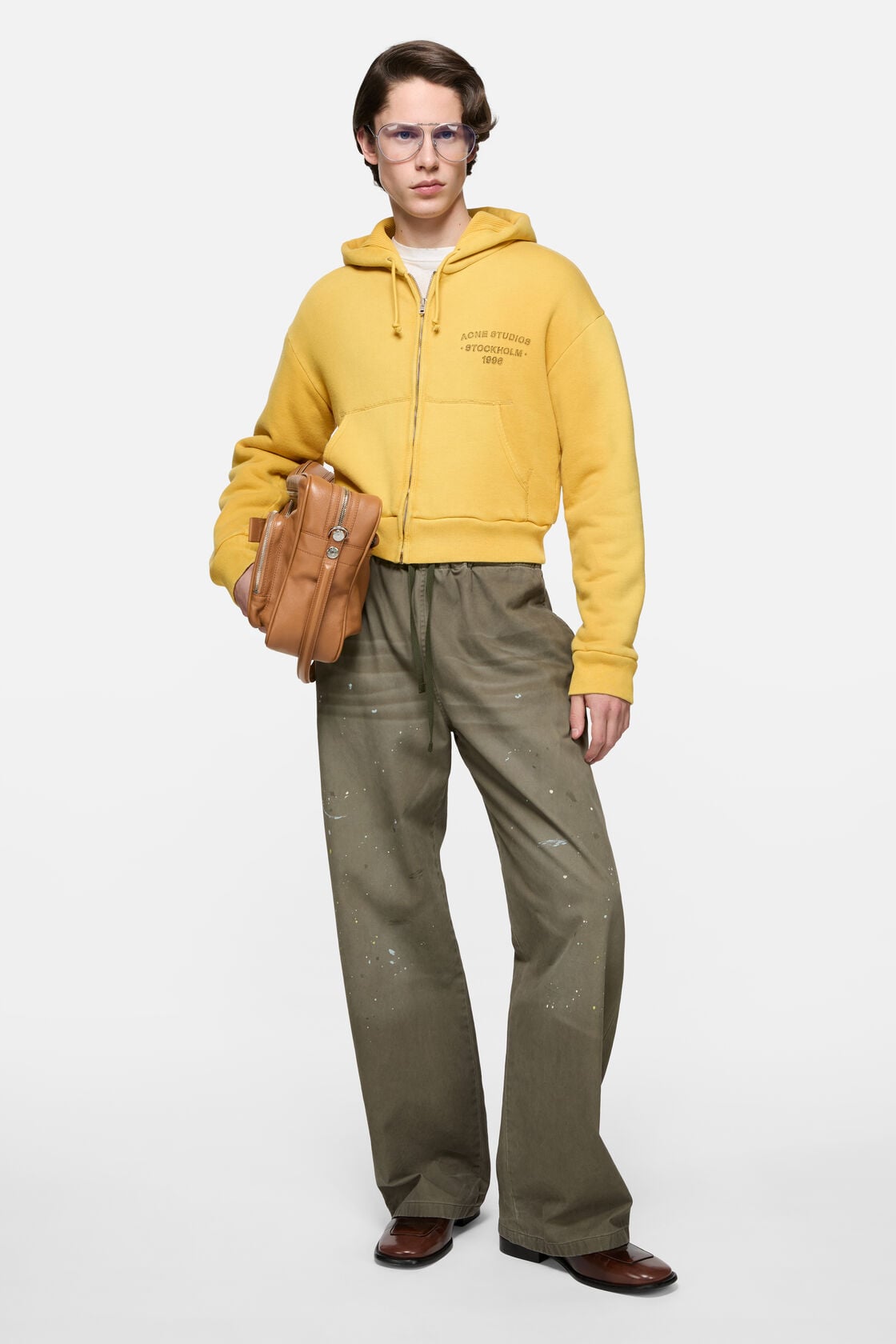
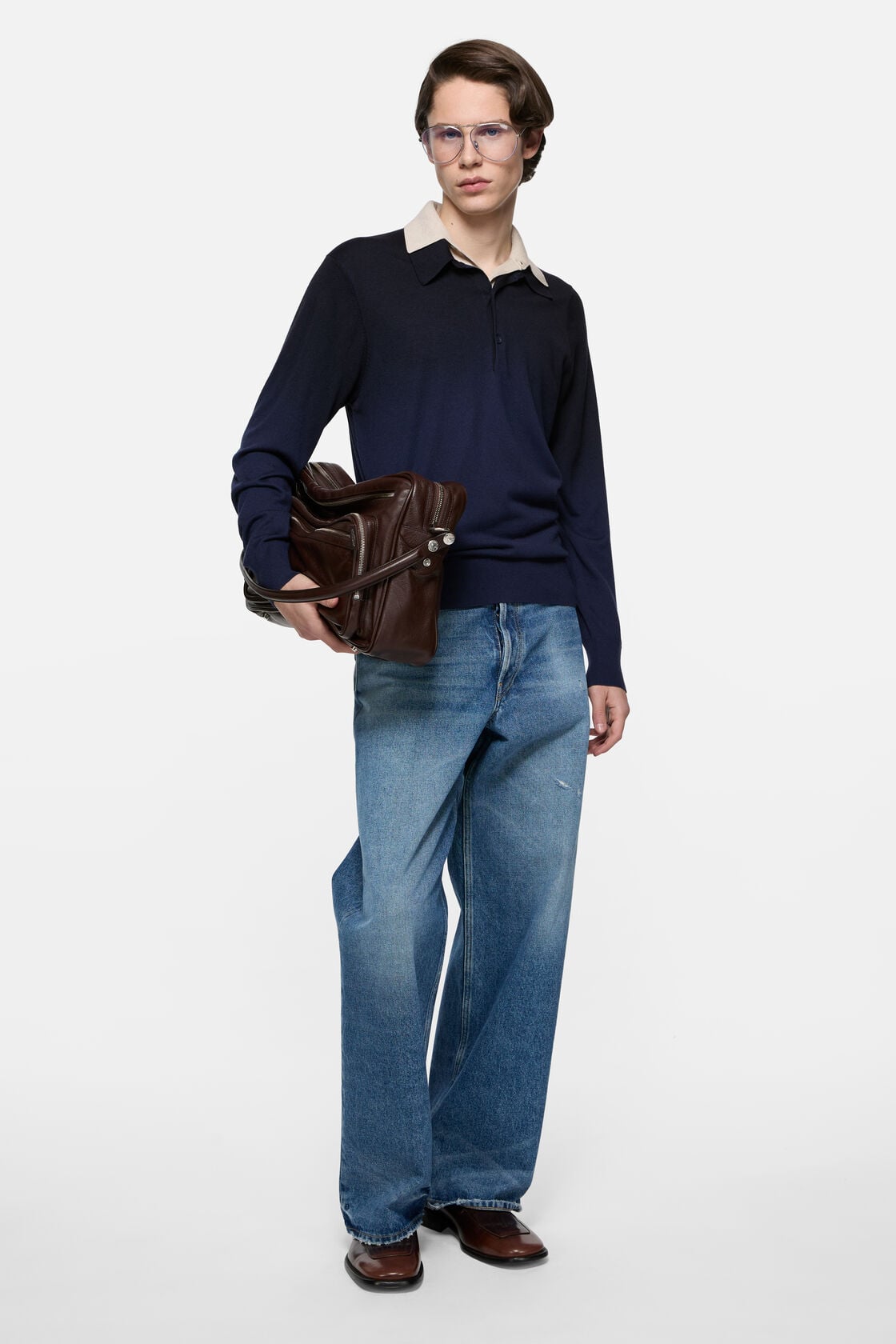
Acne Studios showed this most clearly in their Pre-Fall 2024 collection. The blazers—cut in charcoal wool and a tobacco-brown cotton twill—had shoulders that ended where shoulders end. The sleeves set in at the natural point. There was no overhang, no borrowed-from-my-brother drape. It read as tailoring rather than as a commentary on tailoring. Jonny Johansson, the house's creative director, has been circling this idea for two seasons, but here it landed with clarity. A double-breasted jacket over a ribbed tank and straight-leg jeans: that was the formula. Narrow shoulder, clean line, no apology.
The Row arrived at the same place from a different direction. Their Fall 2024 show in Paris featured coats with shoulders so quiet you almost missed them. A camel wool overcoat, worn over a silk slip dress, had a sleeve head that barely lifted from the body. It wasn't soft, exactly—the fabric still had structure—but the shape came from cutting, not padding. The effect was reserved in a way that felt new, or at least newly relevant. The Olsens have always worked in reduction, but this season the shoulder became the site of that reduction. Less architecture, more geometry.
Toteme, meanwhile, leaned into the same narrow line but made it feel sportier. Their Pre-Spring 2025 lookbook showed blazers in navy wool and grey flannel, both with a shoulder that tracked the body's slope. Paired with low-rise trousers and loafers, the silhouette read as ease without excess. Elin Kling, the brand's co-founder, has built a business on this kind of precision—pieces that don't announce themselves but shift the room's centre of gravity when you walk in. The narrow shoulder does that work. It pulls the eye to the waist, to the way a trouser breaks, to the fact that you chose flats instead of heels.
This isn't happening in a vacuum. The last four years gave us volume everywhere—sleeves, hems, waistbands. Oversized became the default, which meant it stopped reading as a choice. A dropped shoulder stopped meaning anything beyond "I bought this recently." The narrow shoulder is a correction, but it's also a return to a different kind of luxury. One that requires a fitter, or at least a decent tailor. One that assumes you know your measurements and care about them.
Acne Studios has an advantage here. The house has always occupied the space between Scandi restraint and a certain downtown irreverence. A narrow-shouldered blazer from Acne doesn't feel austere the way it might from another house. It still works over a band tee. It still works with sneakers. Johansson's skill is in making tailoring feel like a material choice rather than a sartorial one—you're buying good wool that happens to be cut into a blazer, not buying into a whole ideology about what blazers mean.
The question is whether this holds for twelve months or thirty-six. Narrow shoulders require fit, and fit requires trying things on, and trying things on requires time most people don't budget for. The appeal of the drop shoulder was partly aesthetic, but it was also practical. You could size up. You could layer. You didn't need to think about sleeve pitch or whether the button stance worked with your torso length.
The narrow shoulder asks for more attention. It asks you to know a tailor's name, or to at least know that tailoring exists as a thing you can pay for. It's a silhouette that rewards care, which means it's also a silhouette that punishes haste. You can't grab it off the rack and assume it'll work.
But if you're willing to do that work—if you're willing to spend twenty minutes in a fitting room and another thirty at an alterations counter—the payoff is a jacket that feels like it was cut for your frame, because it nearly was. That's the trade. More effort on the front end, more presence on the back end. For the next year, maybe longer, that trade is going to define how tailoring works.