## The Scarf Coat, the Flat Boot, the Shearling That Isn't
The Scarf Coat, the Flat Boot, the Shearling That Isn't
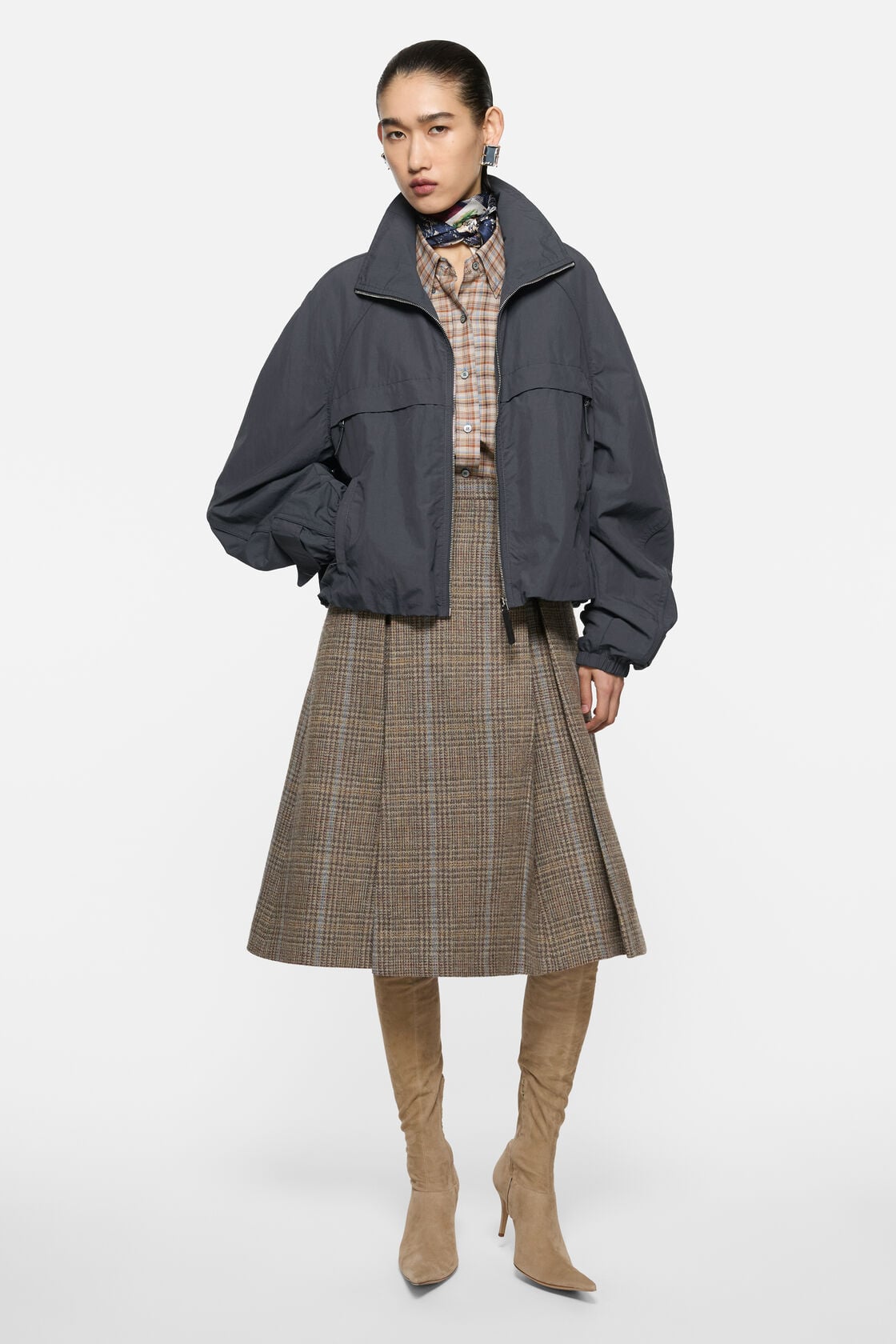
Acne Studios' autumn showing in Paris didn't announce a theme. It showed three pieces that have since turned up everywhere — not as direct lifts, but as the same structural idea dressed in different houses' codes. The scarf coat: a single-breasted wool overcoat with an oversized shawl collar that wraps and ties rather than buttons. The flat boot: knee-high, matte leather, block heel under two centimetres. And a reversible shearling jacket cut like a bomber, cream side out, that weighs less than you expect and sits closer to the body than the oversized shearlings we've been living in since 2021.
None of these are new silhouettes. What's new is the proportions and the way they layer. The scarf coat is structured through the shoulder but soft through the body — it doesn't close with hardware, so it moves when you do. Acne cut theirs in a charcoal melton with a belt that's part of the coat, not an add-on. You tie it loose or let it hang. The effect is considered without looking like you spent twenty minutes in front of a mirror.
The Khaite autumn show three weeks later featured a similar coat in camel, though theirs had a notched lapel that could be worn open or wrapped. The Row's pre-fall lookbook included a version in navy cashmere with no belt at all — the wrap was implied by the cut. By the time The Frankie Shop's buyers started pulling samples, the scarf coat was already being referenced as shorthand for a specific kind of dressing: tailored, but not rigid. Warm, but not bulky. The sort of coat that works over a thin knit and trousers, which is what most of us are actually wearing day to day.
The flat boot is harder to pin down because it's a correction, not an innovation. For the last four seasons, boots have been either extremely chunky or extremely thin — lug soles that add five centimetres, or stiletto shafts that require a sit-down to zip. Acne's version is neither. It's a plain knee-high pull-on in matte black leather with a 1.5-centimetre block heel. The shaft is straight, not slouched. The leather is supple enough to move but structured enough to hold its line when you're not in it.
Totême showed a near-identical boot a season earlier, but it didn't register the same way — the rest of that collection was still leaning into the oversized blazer and wide-leg trouser that required a chunkier boot to balance the volume. Acne's boot works because the trousers have narrowed. Not skinny, but straight through the leg with a mid-rise that sits just above the hip bone. The boot disappears under the hem instead of announcing itself.
By the time Lemaire and Jil Sander's autumn collections landed, the flat boot had become the default. Lemaire's was in chocolate suede. Jil Sander's came in both black and a dark burgundy that looked nearly black under certain light. The shift isn't about the boot itself — it's about what the boot allows. You can walk. You can layer a longer coat without looking swamped. You can wear the same boot to a meeting and to dinner without the outfit reading as two different people.
The reversible shearling is the least obvious of the three, but it's the one that's already moved fastest into the accessible market. Acne's version is cut slim — not cropped, but ending at the hip rather than mid-thigh. One side is cream shearling, the other is smooth black leather. The shearling side is turned out, which is the opposite of how these jackets usually work. Most shearling bombers are leather-out with shearling lining. Flipping it makes the jacket read softer, less moto, more like outerwear you'd wear over a dress.
COS released a version in their October drop. Arket's came two weeks later. Both are lighter-weight than traditional shearlings, and both are cut closer to the body. The silhouette works because it doesn't add bulk where the scarf coat already adds volume. You can layer them, or you can wear the shearling on its own over a thin rollneck and trousers. It's not trying to be a statement piece. It's trying to be useful.
What these three pieces share is a kind of practicality that doesn't announce itself. They're not minimal in the way that word usually gets used — they're not colourless or austere or trying to disappear. They're structured enough to look considered, soft enough to move naturally, and specific enough in their proportions that they shift how everything else in the outfit sits. The scarf coat changes how you think about closures. The flat boot changes how you think about hemlines. The shearling changes how you think about layering weight.
To dress in this for the next twelve months is to accept that the uniform has tightened slightly, softened slightly, and stopped trying to make a point.