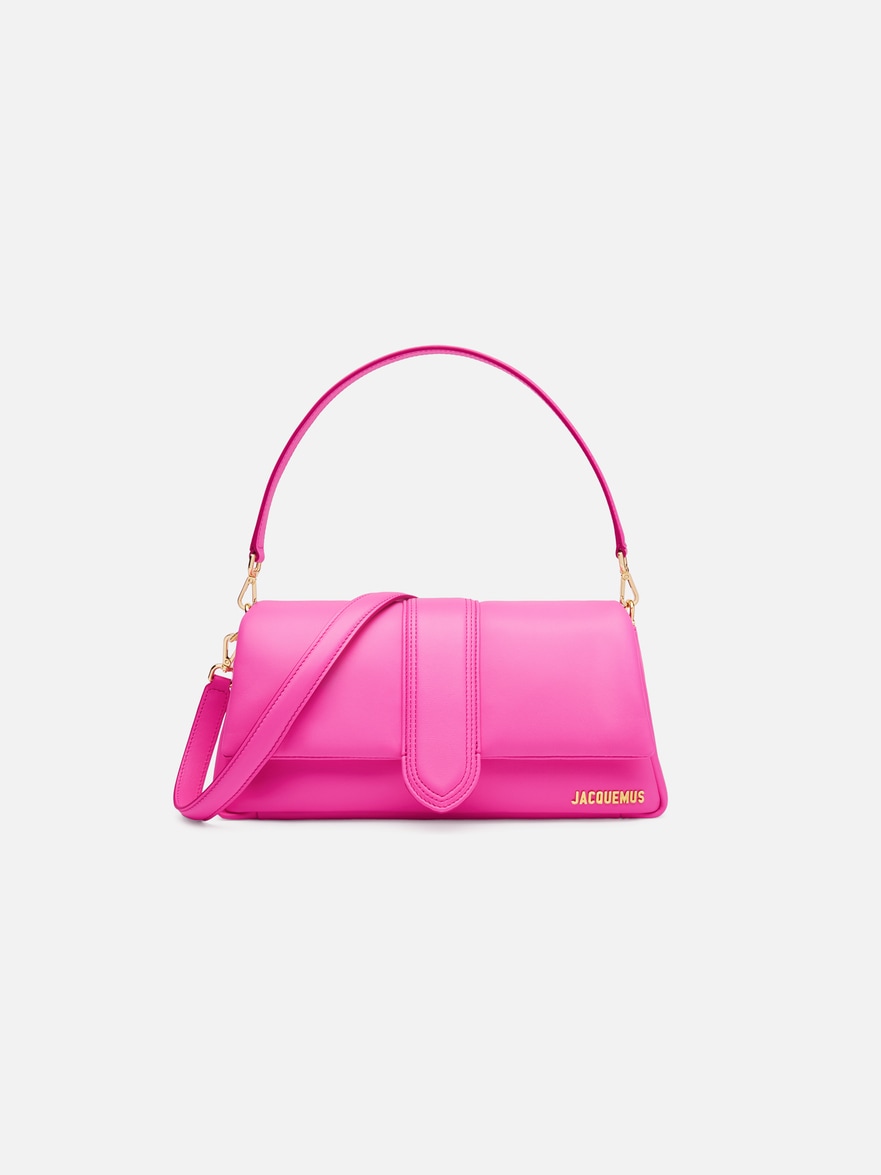
The shoulder at Jacquemus has moved
The shoulder at Jacquemus has moved. Not dropped, not built — moved. The cut sits further back on the body now, a half-inch behind where you'd expect the seam to fall. The effect is postural. You stand differently when the sleeve starts at the back of your shoulder blade instead of its crest.
This showed up first in Le Raphia, the Spring/Summer 2024 collection shown in Capri last June. Simon Porte Jacquemus sent out tailored jackets in bone linen and burnt sienna cotton with sleeves that began an inch past the natural shoulder point. The armscye sat high and snug. The sleeve hung clean. On the runway it read as ease, but the construction was exacting — curved sleeve heads, bias-cut facings, canvas through the chest. The jackets looked like they'd been worn in, but they'd been engineered to look that way from the first wearing.
By Pre-Fall, the cut had travelled. It appeared in outerwear — a double-breasted wool coat in deep navy, shown in the lookbook against the white geometry of a Provençal villa. Then in shirting: oversized poplin button-downs with the shoulder seam landing two inches back, creating a clean slope from neck to arm. The silhouette worked because Jacquemus kept the proportions tight everywhere else. High waists. Narrow legs. Sleeves that ended exactly at the wrist bone, not past it.
The maison's Fall/Winter 2024 show, Le Chouchou, staged in a Paris warehouse in February, pushed the idea further. Jacquemus opened with suiting — wide-leg trousers in charcoal wool paired with boxy blazers that sat off the shoulder. The models wore them with their hands in their pockets, which is a styling choice but also a structural tell. When the shoulder sits back, you don't gesture as much. You hold still. The clothes do the work.
This isn't about volume. Jacquemus tried big shoulders three seasons ago — padded linen blazers, sculptural summer coats — and it didn't hold. That was borrowed drama. This is something closer to the body's actual line. The back-set shoulder follows the scapula, not the deltoid. It changes how a jacket hangs when you're seated, how a coat moves when you walk, how much room you have when you reach across a table for the salt.
The technique isn't new. Yohji Yamamoto cut shoulders this way in the nineties. So did Martin Margiela, though he took it further, sometimes eliminating the shoulder seam entirely and draping the sleeve from the neckline. What Jacquemus has done is domesticate the idea. He's applied an avant-garde cut to accessible shapes: the linen blazer you'd wear to a gallery opening, the cotton trench you'd pack for a week in Lisbon, the wool coat that works over a sweater or a slip dress.
The shift has implications for how you build an outfit. A back-set shoulder changes your proportions on paper — shortens your neck slightly, lengthens your torso, makes your arms read as part of your silhouette instead of appended to it. If you're used to balancing a structured shoulder with a looser bottom half, this won't work the same way. The jacket already has ease built in. Pair it with something equally considered: a straight-leg trouser in the same weight fabric, a knee-length skirt with no movement, a slim knit that doesn't compete.
Colour matters more when the cut is this clean. Jacquemus has been working in a tight palette — ecru, rust, slate, black — and the restraint is doing something. A back-set shoulder in ivory linen against a white shirt is a different garment than the same cut in camel or charcoal. The seam becomes visible. You read the construction.
This is where Jacquemus is right now: in the details that change how a body is framed, not in the gestures that announce a silhouette from across a room. The shoulder has moved back. The waist has stayed high. The leg has narrowed slightly but not enough to call it skinny. What it means for the next twelve months is this: if you're buying tailoring, try it on standing still first, then watch what happens when you move.