## The Wide Leg Returns, But Lower
The Wide Leg Returns, But Lower
Jacquemus showed trousers this season that sit at the natural waist, not above it. The silhouette is still wide through the leg, but the rise has dropped two inches from where it lived in spring. That shift changes the body's centre of gravity. What read as retro last year now reads as something closer to menswear proportion.
The change appeared first in the Le Pantalon Arlesien from the autumn collection. The fabric is a heavyweight linen-cotton blend, stone-washed to a pale grey that photographs almost white in direct sun. The waistband is structured but not stiff. There is a single pleat at each hip. The leg opens to twenty-four centimetres at the hem, wide enough to break over a loafer but narrow enough that the trouser does not pool. Simon Porte Jacquemus has been working this silhouette for three seasons, but the rise is new. It sat higher in spring, closer to the rib cage. Now it rests where trousers rested in 1997.
The second piece is a shirt. Le Chemise Valensole is cut from poplin so fine it registers as semi-sheer in certain light. The collar is a spread, not a point. The shoulder seam falls half an inch past the natural shoulder line, which softens the upper body without adding volume. Jacquemus paired it with the trouser in the lookbook, both pieces in the same pale grey. The effect is not a suit but a tonal approach to separates. The shirt is long enough to tuck but cut to wear loose. The hem is straight, not curved. That is a small detail, but it matters. A straight hem implies intention. A curved hem implies you borrowed the shirt.
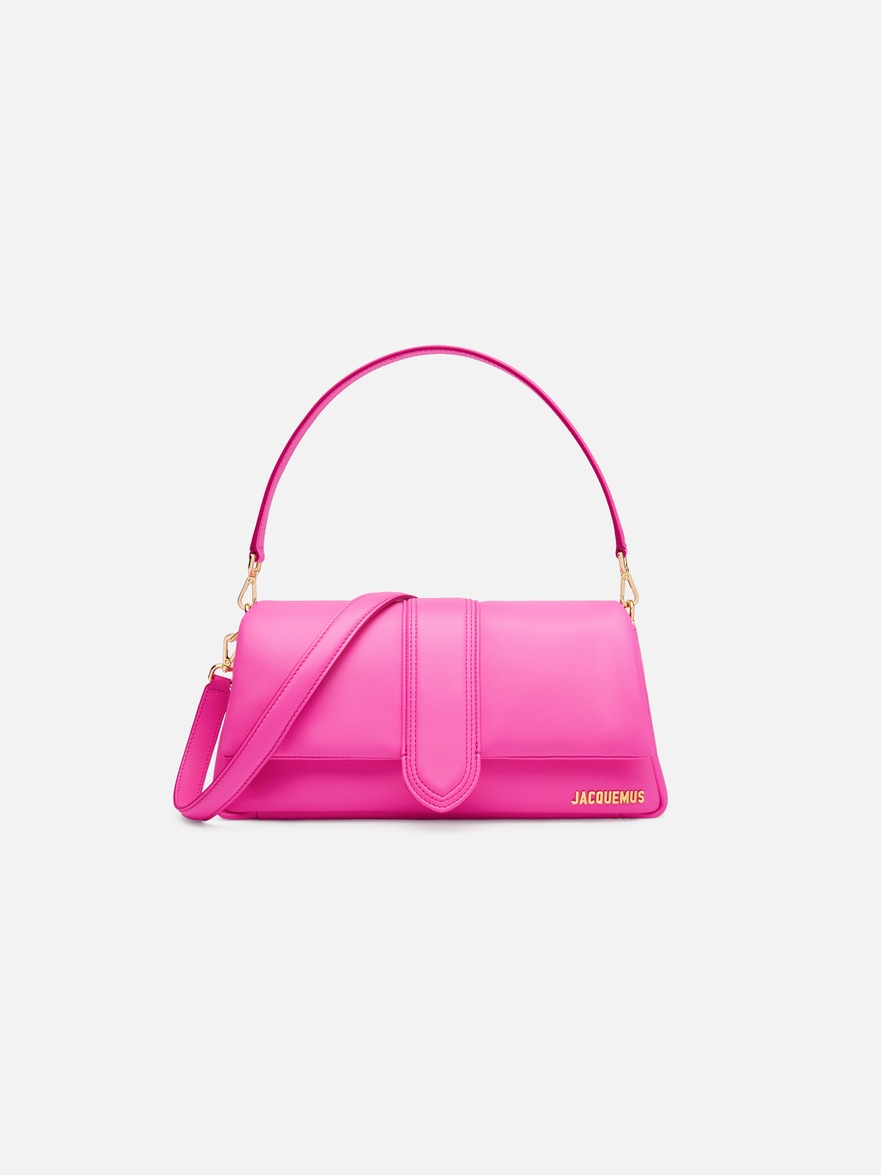
The third piece is a bag. Le Bambino has been in the line since 2017, but this season it appears in a new scale. The original measured seventeen centimetres across. The new version measures twenty-two. That is still small, but it is no longer precious. You can fit a phone, a card case, and a lipstick without strategy. The strap is long enough to wear cross-body, which the original was not. Jacquemus rendered it in three finishes for autumn: smooth black leather, cracked white leather, and a raffia weave in natural beige. The hardware is gold-toned, not silver. The clasp is magnetic, not a turn-lock.
These three pieces share a logic. They are all slightly larger than their previous iterations, and they all sit closer to the body's natural lines. The trouser drops to the waist. The shirt extends past the shoulder. The bag grows wide enough to function without performance. Jacquemus is not abandoning the sculptural instinct that built the house, but he is letting air into the form.
This is not unique to Jacquemus. The Row showed a similar trouser for pre-fall, cut in charcoal wool with a mid-rise and a twenty-six-centimetre hem. Totême's autumn collection included a linen pant in the same proportion, styled with a white shirt that also fell past the shoulder. Lemaire has been working this silhouette for two years, though the fabric there is lighter and the pleat deeper. What Jacquemus brings is colour and a certain tightness of edit. The trousers, the shirt, and the bag are not part of a capsule. They are the capsule.
The question is whether this shift is technical or emotional. A mid-rise trouser is easier to wear than a high-rise one. It does not require the same postural awareness. You do not have to think about where your waistband sits in relation to your ribs. That is a practical concern, but it also signals a change in how we want to hold our bodies in clothing. The high-rise pant of the last three seasons asked for a certain pulled-together verticality. The mid-rise asks for less. It lets you stand the way you stand.
To dress in this for the next twelve months is to accept that ease and structure are not opposites.