## Three Pieces, One Read: Bottega Veneta's Quiet Recalibration
Three Pieces, One Read: Bottega Veneta's Quiet Recalibration
Bottega Veneta's autumn showing in Milan this February landed on three shapes: a mid-calf A-line skirt in heavyweight wool, a collarless jacket with set-in sleeves and no visible closure, and a soft briefcase in vacchetta that looked like it had been carried for a decade. Not revolutionary. Not meant to be. What Matthieu Blazy put forward was a kind of anti-statement—clothes that assume you've already lived through the logo cycle and the irony phase and now just want to get dressed without performing theory.
The skirt came first in the lineup, paired with flat knee boots and nothing else worth naming. Blazy's been circling this silhouette since his second season, but this iteration dropped the pleating and the volume. What's left is a clean A-line that sits naturally at the waist and ends mid-shin, cut from wool dense enough to hold its line without stiffness. It's the kind of piece that makes every other skirt in your wardrobe feel like it's trying too hard. The hem doesn't flare or kick—it just falls. Showroom appointments in March confirmed what the runway suggested: this is the shape being written into autumn orders across Europe, from Rinascente to the Bon Marché.
The jacket showed up eleven looks later, worn open over a fine-gauge knit. No lapels, no buttons, no belt. The construction is traditional—a set-in sleeve, a shaped shoulder—but Blazy's stripped the jacket of its usual signalling devices. It closes with internal snaps placed high enough that the front panels overlap without gaping. In practice, you wear it open. The effect is more robe than blazer, though the structure keeps it from reading as leisurewear. Bottega Veneta has been moving away from the oversized silhouette that defined its early Blazy years, and this jacket formalises that shift. It's tailored, but it doesn't announce itself. You could wear it into a meeting or onto a plane, and in both contexts it would register as considered without being declarative.
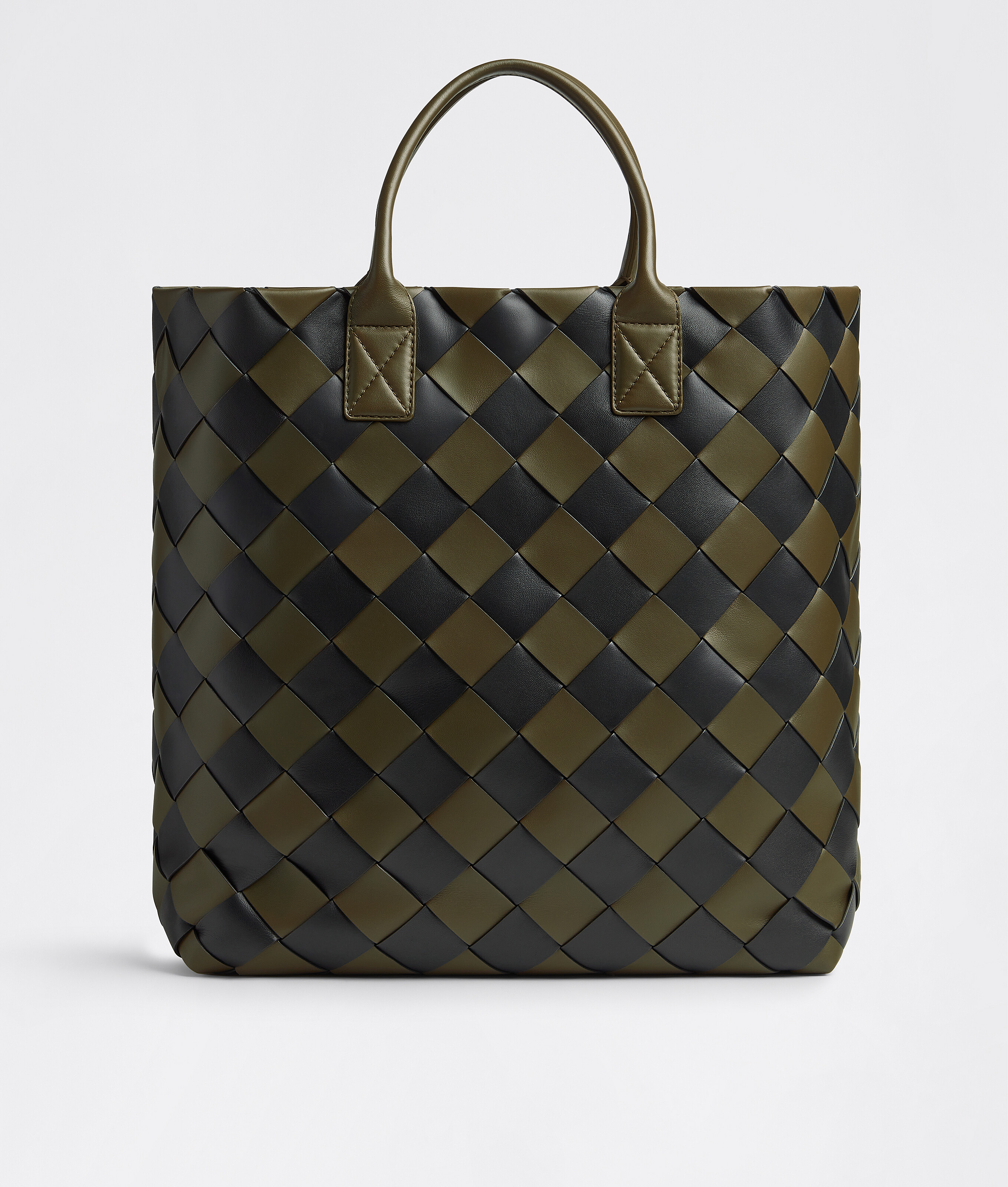
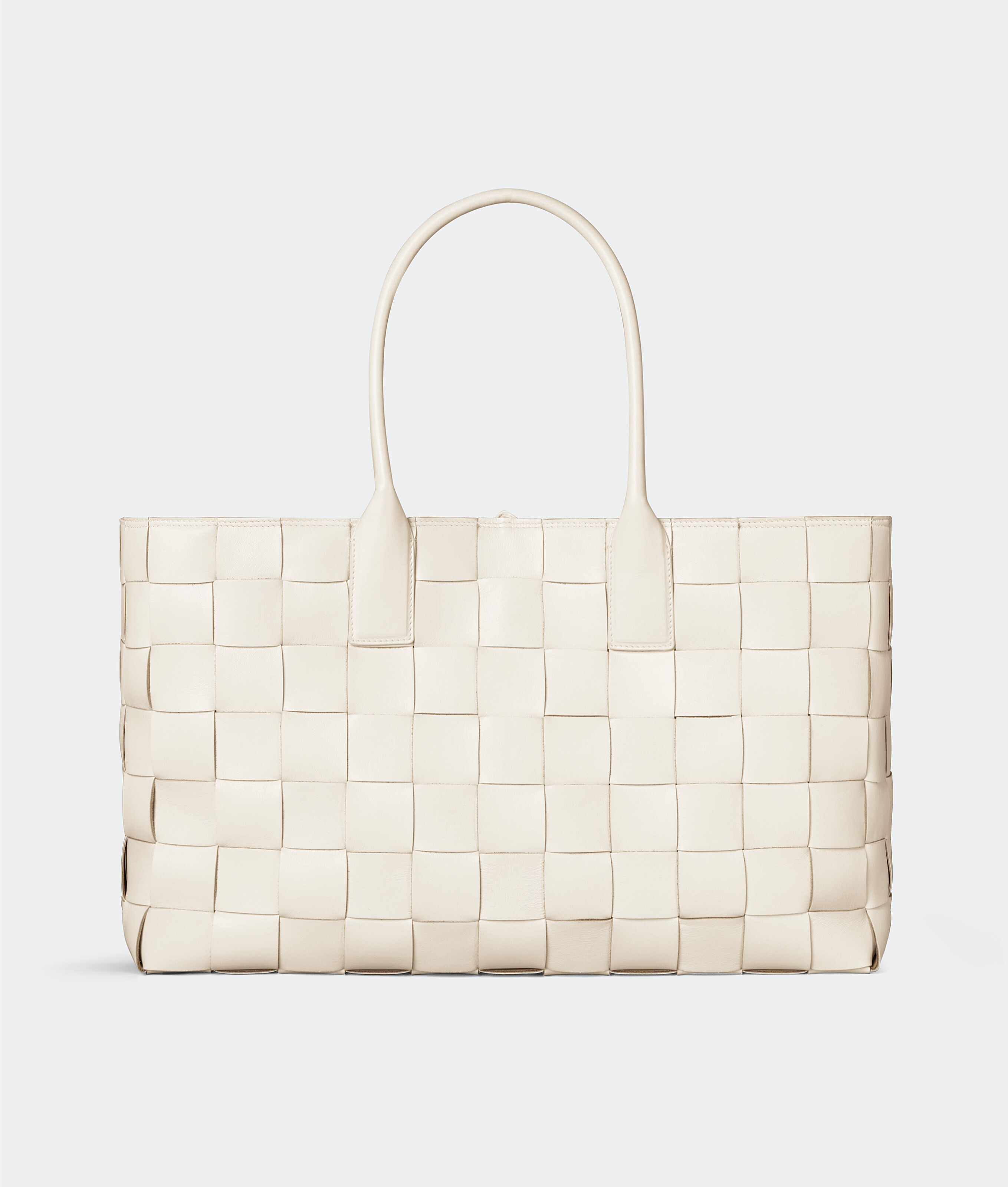
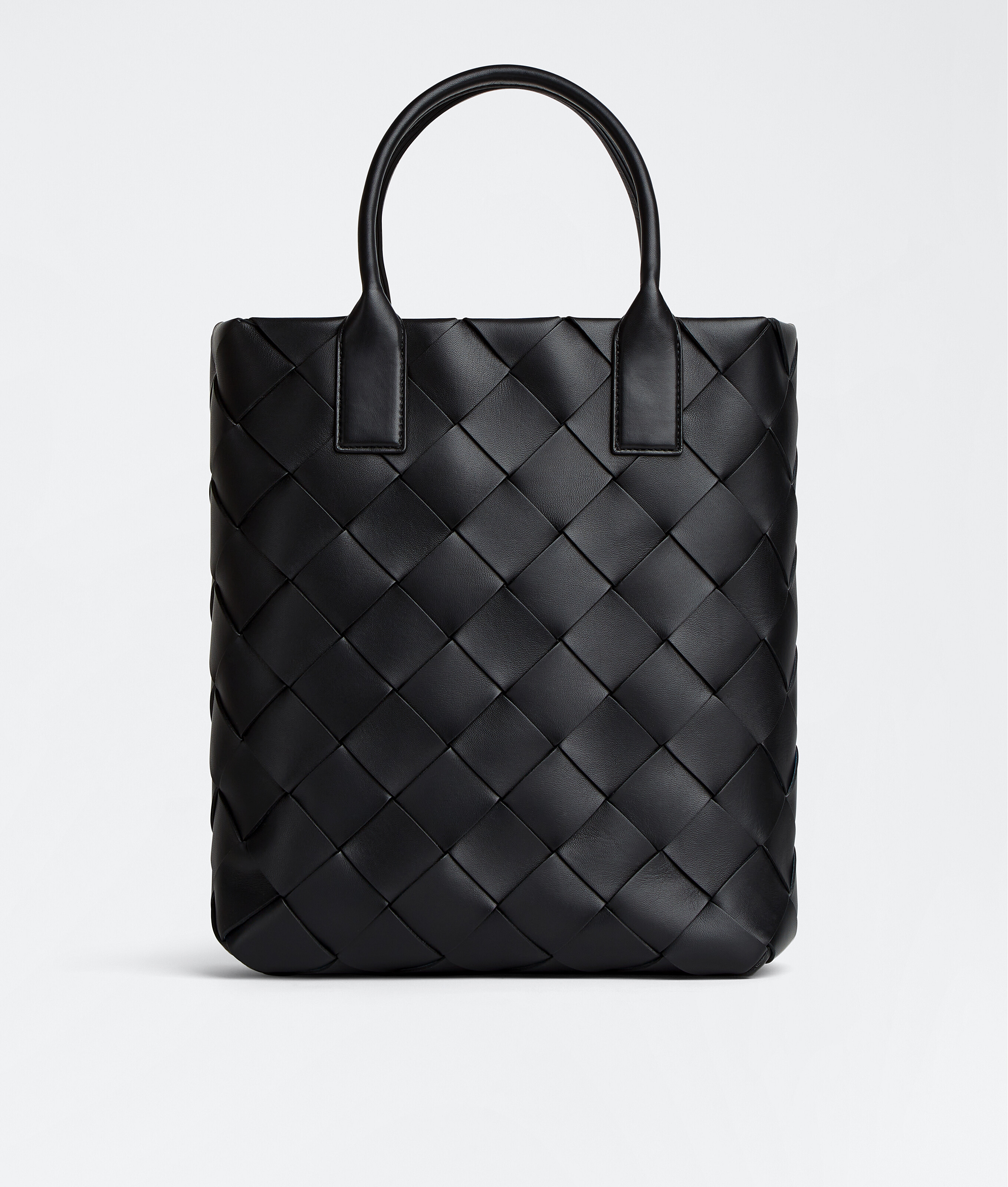
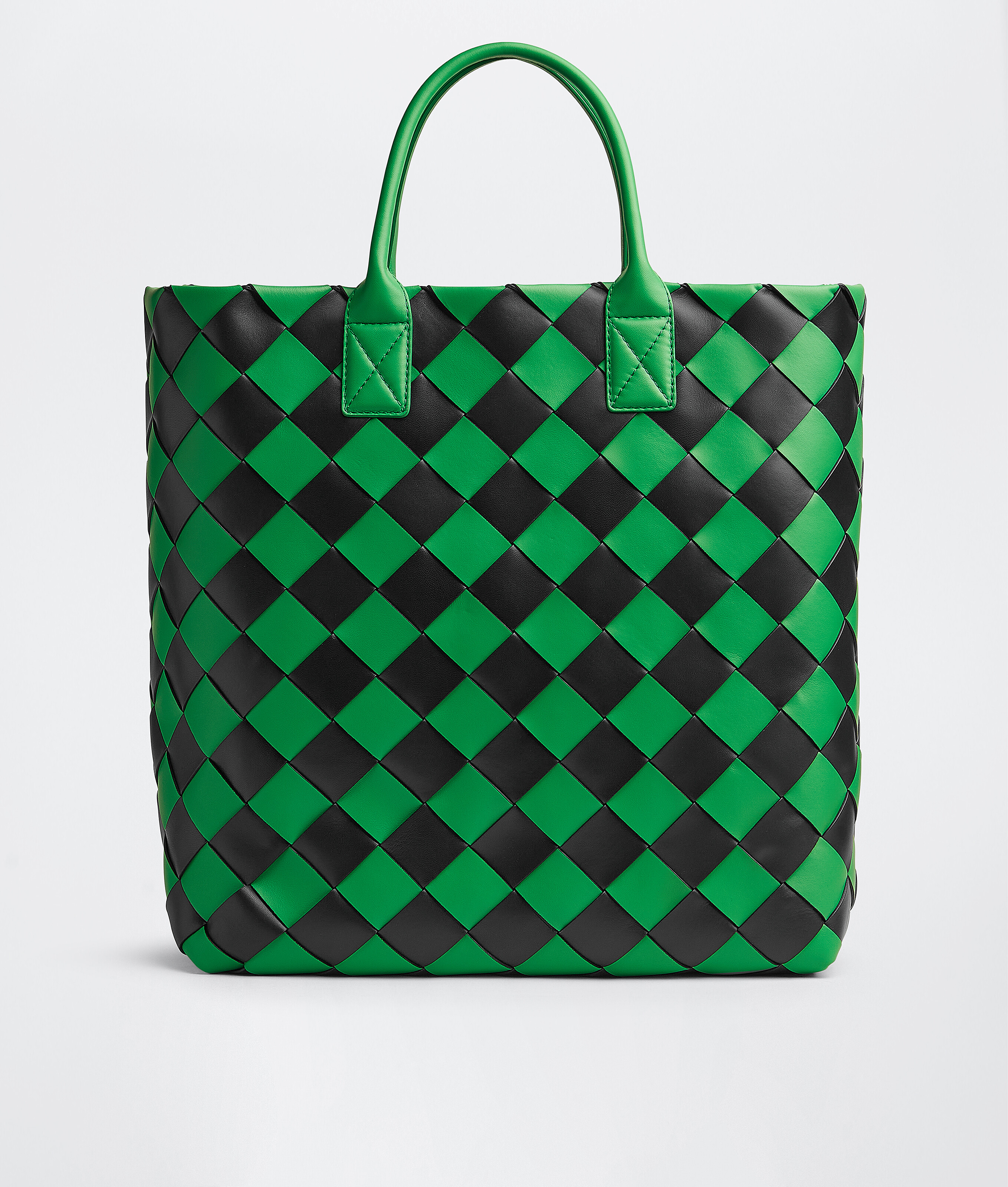
The briefcase is where the collection's material intelligence shows most clearly. Blazy's design team has been working with the same Veneto tannery for three seasons now, developing a vacchetta that softens faster than the traditional process allows. The result is a leather that already looks worn in when it leaves the atelier. The bag itself is structured but not rigid—a top-handle shape with a single interior compartment and a magnetic closure that doesn't snap shut so much as settle into place. It's sized to hold a laptop and not much else, which makes it more useful than most of the oversized totes currently cluttering the accessories market. By April, versions of this bag were appearing in showrooms from The Row to Loro Piana, all of them chasing the same worn-in suppleness Bottega got to first.
What ties these three pieces together isn't a theme or a mood—it's a production philosophy. Blazy's been vocal, in the few interviews he's given, about wanting clothes that improve with wear rather than degrade. That's easier said than executed. Most fashion is engineered to look best in the first three months, then quietly fall apart. Bottega's autumn line reverses that logic. The wool skirt will pill slightly at the hem, then stop. The jacket's internal snaps will loosen, making it easier to shrug on. The briefcase will develop a patina that's specific to how you carry it. These aren't investment pieces in the aspirational sense—they're investments in the literal sense, objects that accumulate value through use rather than lose it.
This approach is showing up elsewhere, though not always as successfully. Loro Piana's autumn collection leaned into similar territory with a cashmere car coat and a series of unstructured trousers, but the pieces felt more like luxury basics than a coherent point of view. The Row's pre-fall offering included a collarless jacket that shared Bottega's minimalist instinct, though at a price point that makes the comparison mostly academic. What separates Blazy's work from these adjacent efforts is specificity. He's not designing for a general idea of quiet luxury—he's designing for women who've spent the last decade in fashion and are now looking for an exit ramp that doesn't feel like surrender.
To dress in this for the next twelve months is to accept that the performance is over, and what's left is the part where you figure out what you actually want to wear.