## Three Pieces, One Read: What's Happening at Bottega Veneta This Season
Three Pieces, One Read: What's Happening at Bottega Veneta This Season
Bottega Veneta is tightening the silhouette without narrowing it. Matthieu Blazy's Autumn/Winter 2025 collection—shown last month in Milan—pivots around three pieces that share a single instruction: structure that doesn't announce itself. The mid-rise tailored trouser, cut with a gentle taper and finished with a pressed crease, replaces the wide-leg drift that's dominated the last three seasons. The shoulder on outerwear lifts by two centimetres, just enough to restore definition without veering into the cartoonish padding seen at certain Parisian houses. And the top-handle bag shrinks to a scale that requires actual editing—no A4 documents, no water bottle, no pretending this is a work tote.
This isn't minimalism. Minimalism was the Nineties, and Bottega already mined that seam with Tomas Maier. This is something more specific: a studied restraint that still leaves room for material to do the talking. The leather on the new Gemelli bag—a compact, structured frame style shown in forest green and a near-black burgundy—is vacchetta that's been tumbled for seventy-two hours, giving it a matte surface with enough give to soften over six months of use. The trouser, meanwhile, comes in a wool-mohair blend that holds the crease through a full day but doesn't feel rigid when you sit. Blazy understands that structure in 2025 can't feel punitive.
The shoulder moment is the clearest signal. Bottega's coats this season—particularly a double-breasted camel style in felted wool and a cropped leather jacket with a stand collar—introduce a gentle slope that starts just past the natural shoulder line. It's not the exaggerated breadth of Phoebe Philo-era Céline, and it's certainly not the dropped, deconstructed drape that Lemaire and The Row have been working for years. It sits between: enough architecture to frame the body, not enough to costume it. The effect is oddly flattering on a range of frames, which is likely intentional. Bottega's RTW has always moved units in Asia, where proportion tends to skew smaller, and this cut doesn't require the kind of height that makes a sample-size blazer work.
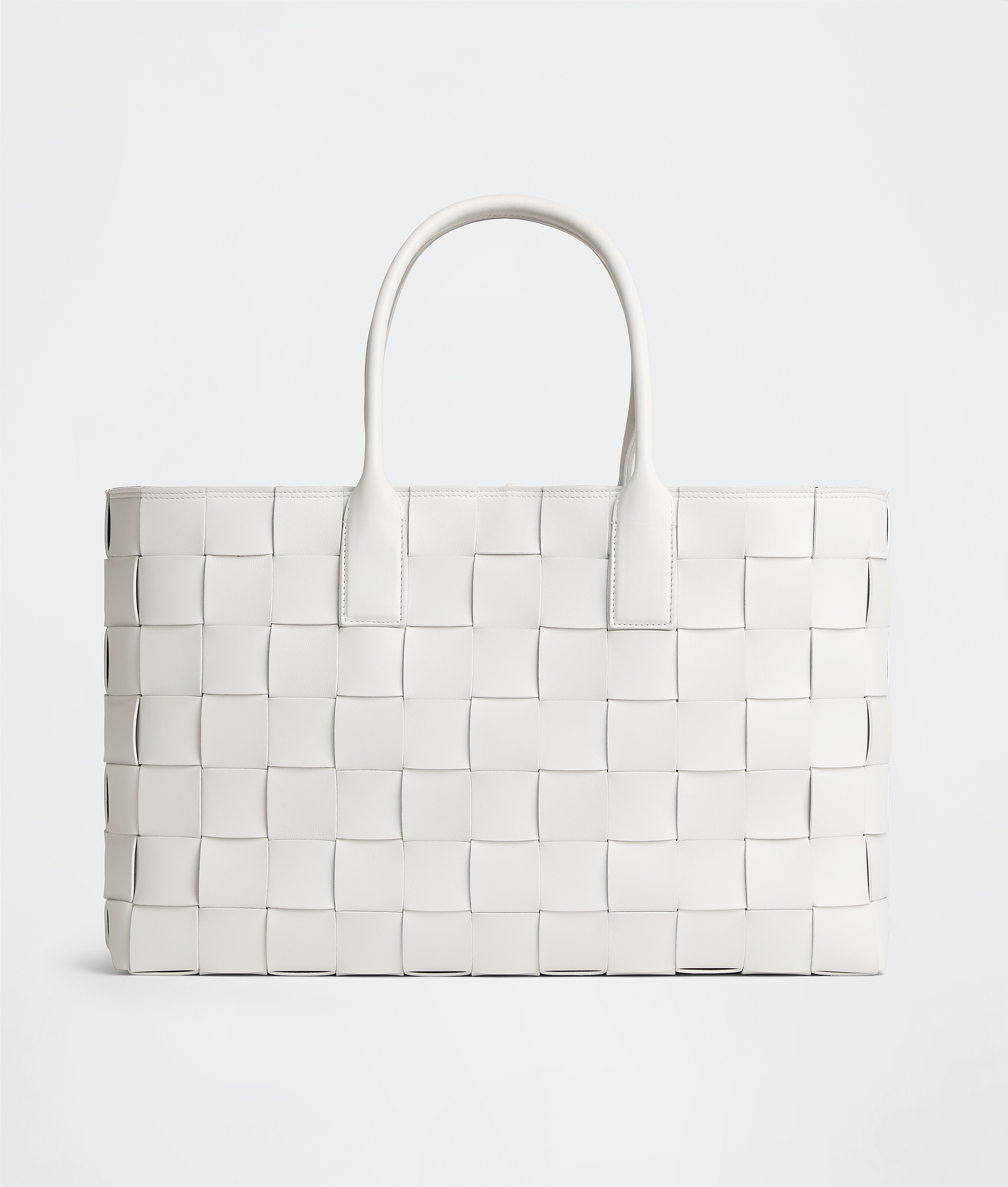
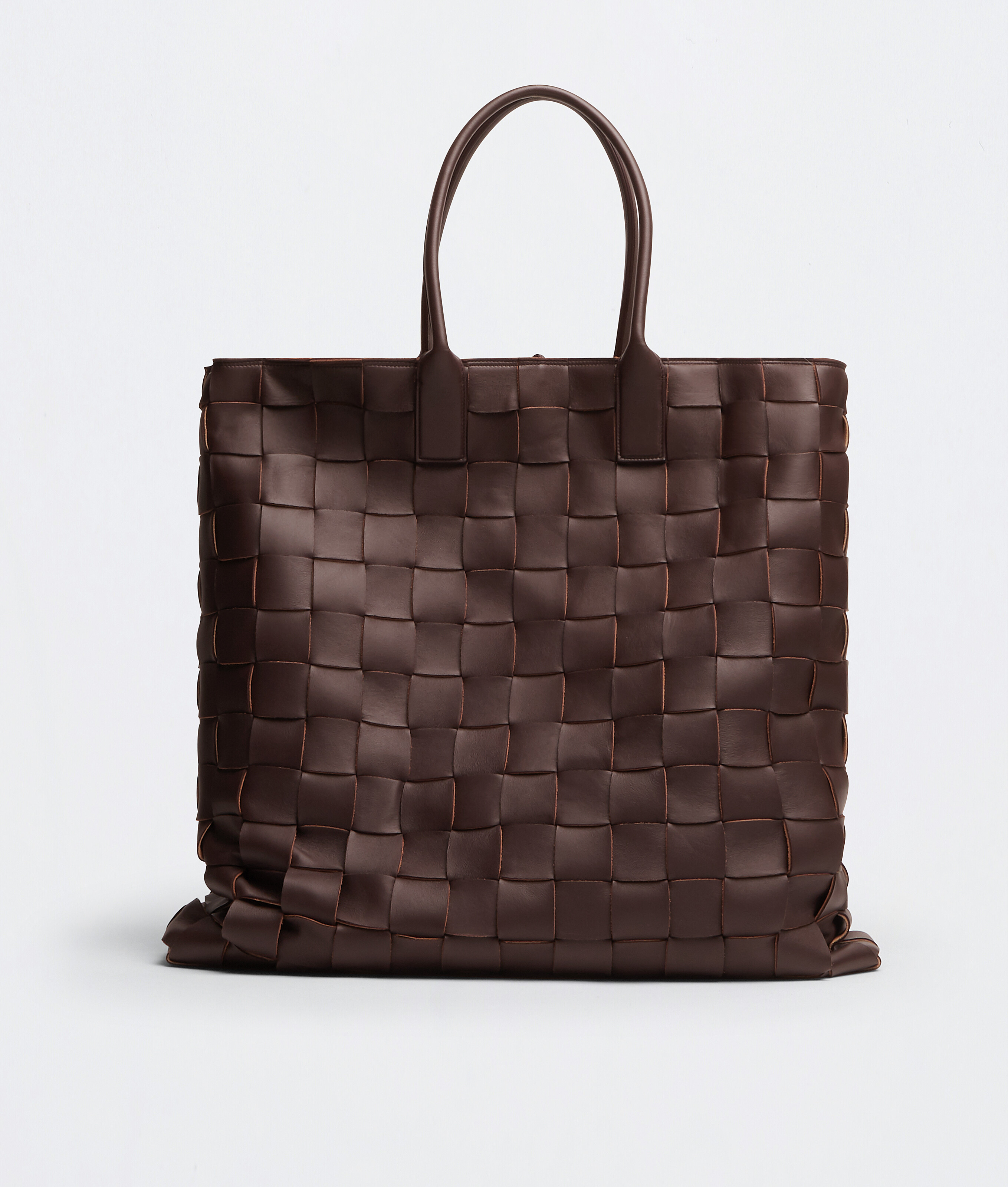
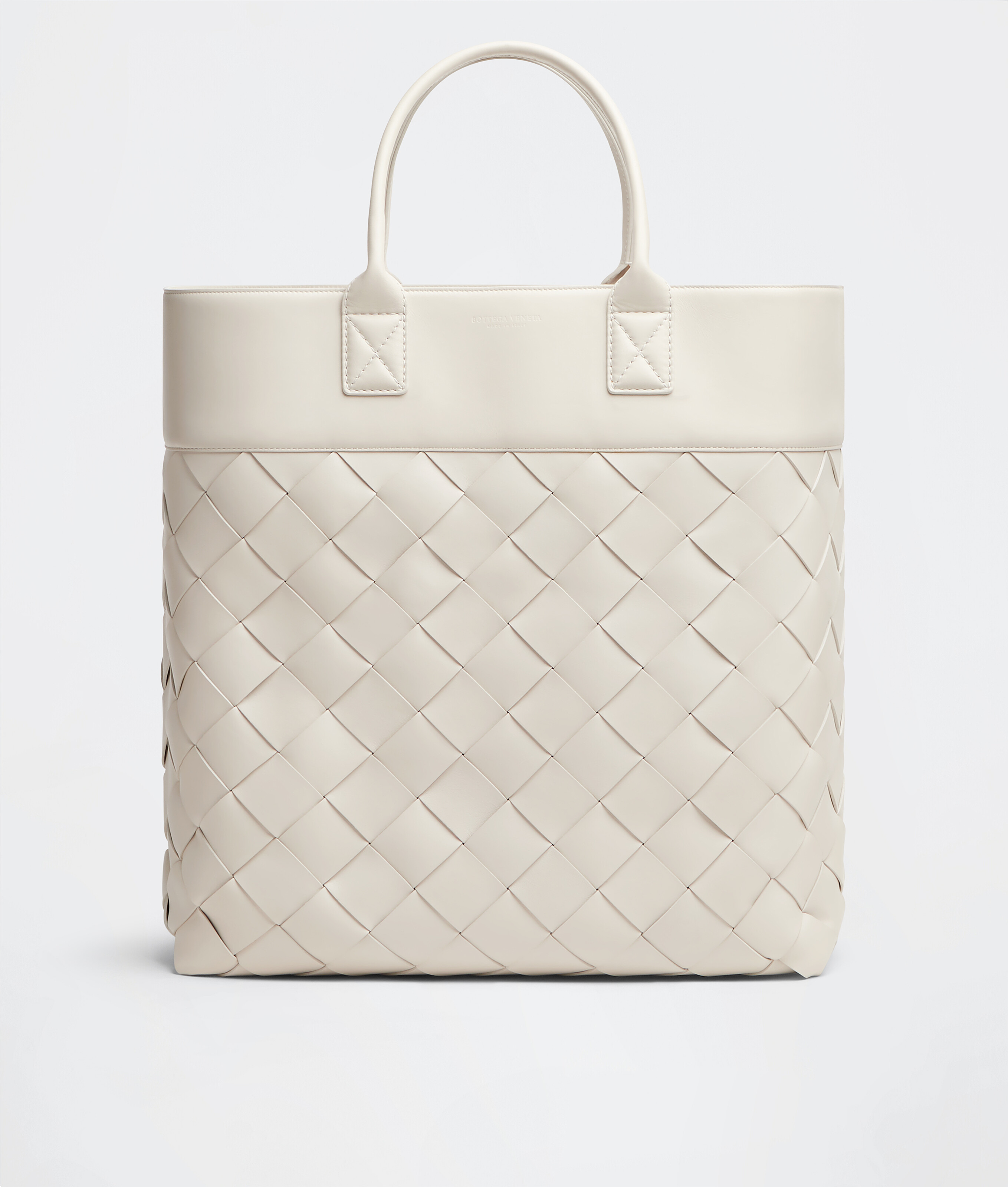
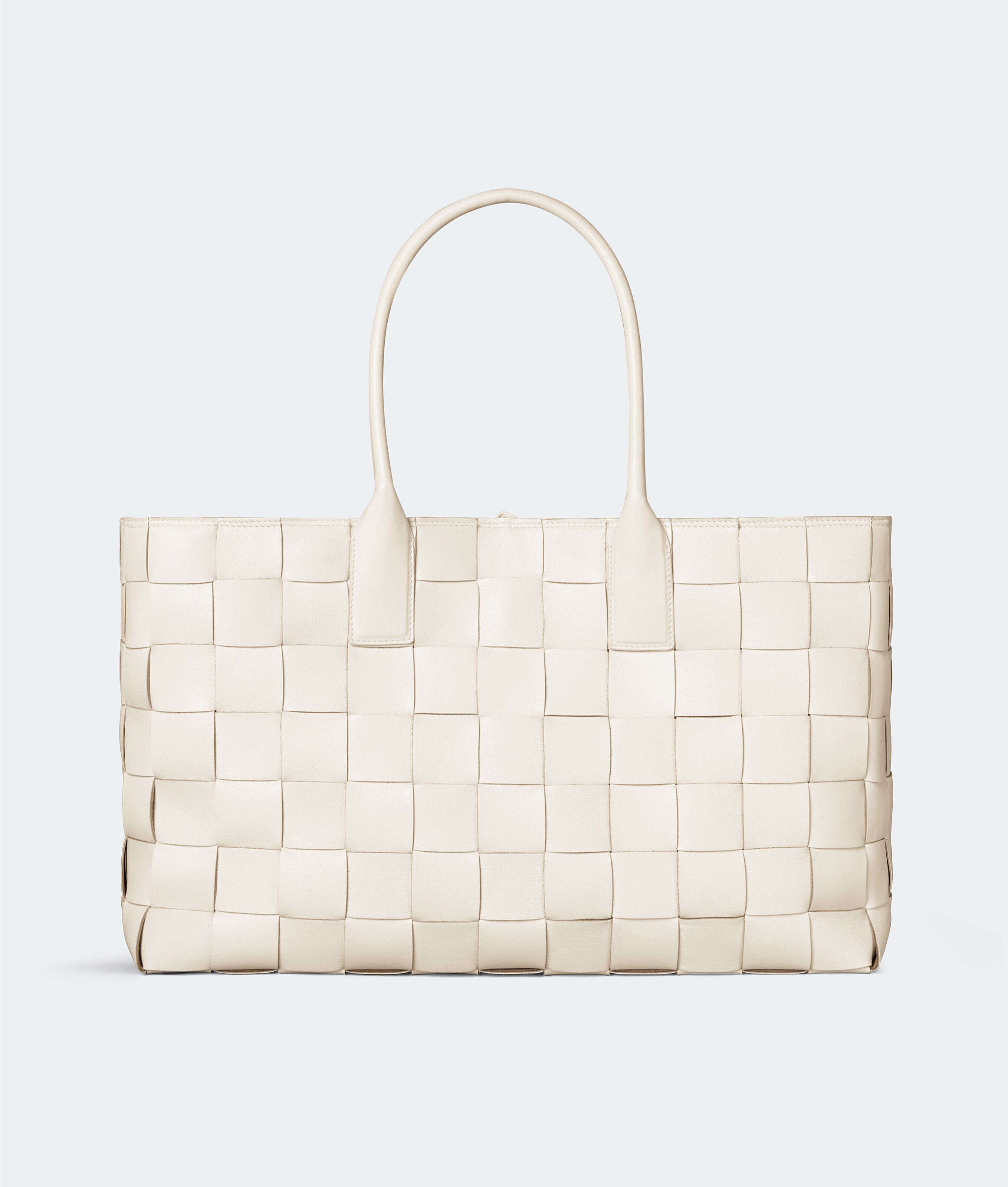
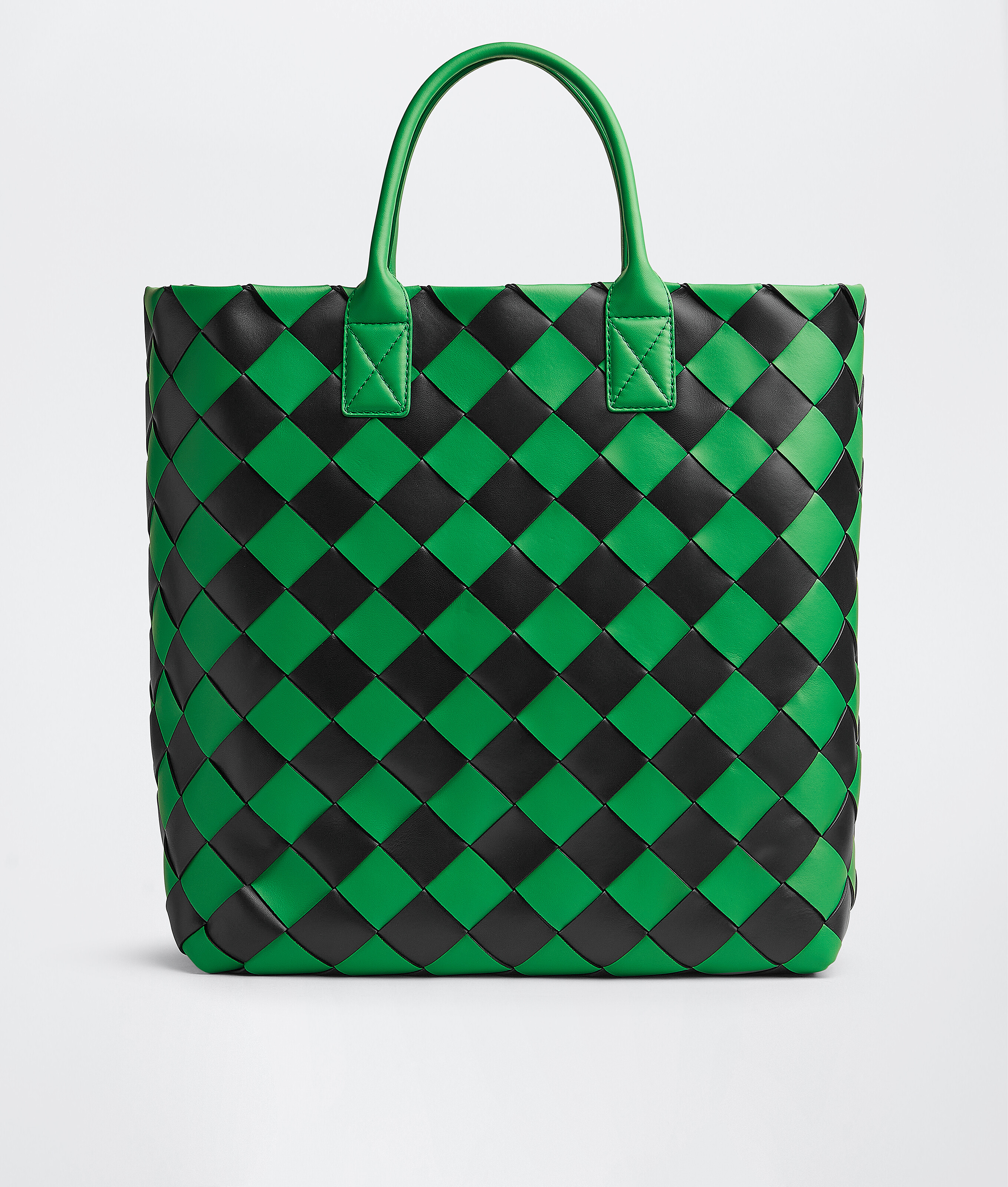
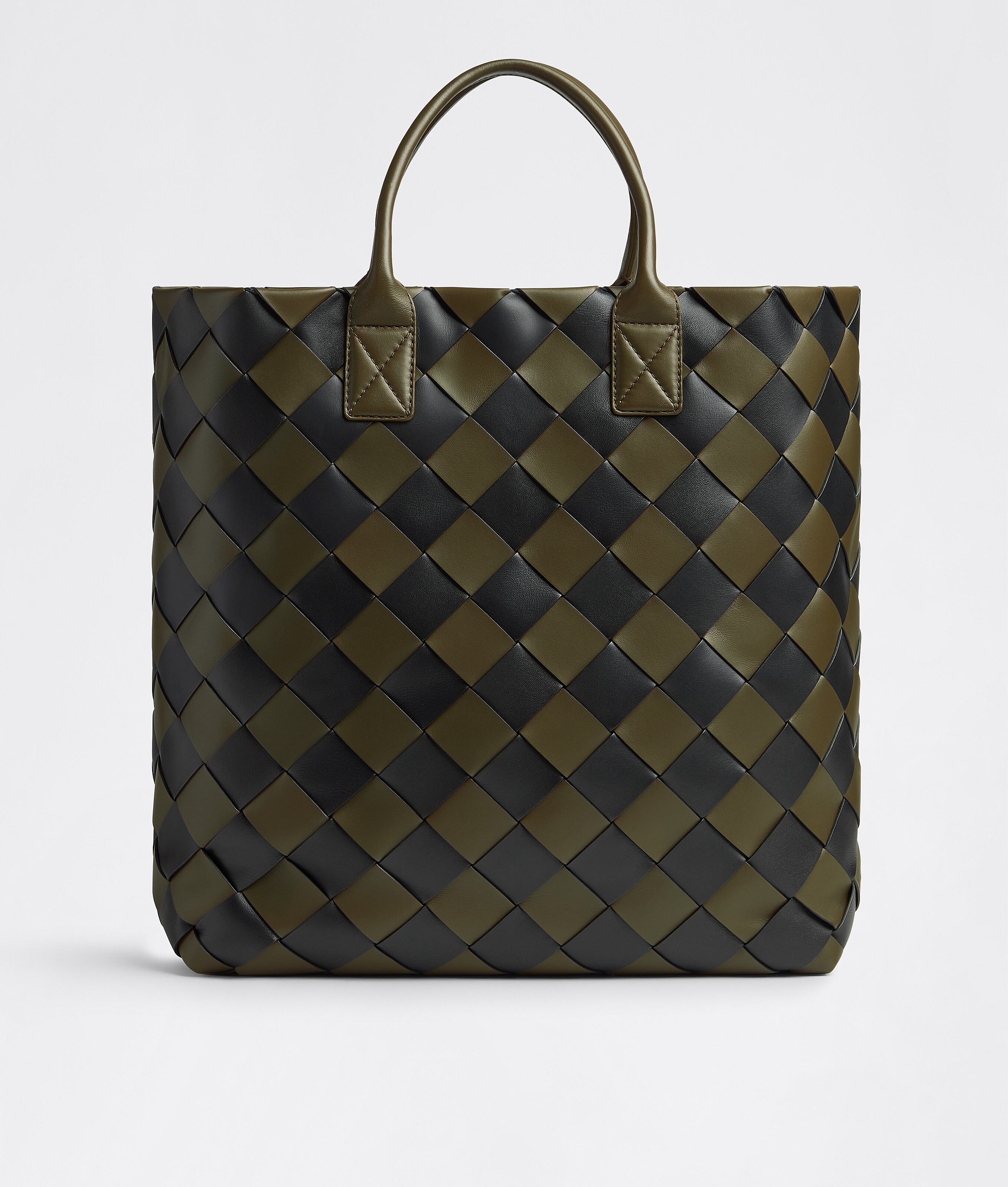
The bag edit feels like the sharper play. Bottega has spent the last four years rebuilding its accessories business around the Cassette, the Jodie, the Point—styles that leaned heavily on signature intrecciato or sculptural hardware. The Gemelli doesn't abandon craft, but it doesn't foreground it either. The woven detail appears only on the interior lining and the narrow shoulder strap, which can be removed entirely if you want to carry it as a clutch. What you see from the outside is clean calf, a gold-toned clasp, and a silhouette that reads as considered rather than coded. It's a bag that doesn't require you to know Bottega to want it, which is a different strategy than the house has pursued recently.
There's a version of this shift happening across Milan. Max Mara's Autumn collection introduced a similar mid-rise trouser in camel wool, paired with belted coats that reinstated the waistline. Loro Piana's tailoring—shown the same week—leaned into a soft shoulder and a higher rise, though their fabrications skew quieter and their price points higher. Even Prada, which has spent two seasons pushing volume and proportion into near-costume territory, pulled back slightly with a series of lean skirt suits in mohair. The collective message: the body is allowed to have a shape again, and that shape doesn't need to be apologised for with oversized layering.
What makes Bottega's version feel less reactionary is the material commitment. The house still sources its leather from the same Veneto tanneries it's worked with for thirty years, and the production calendar hasn't sped up to match the churn elsewhere. A Gemelli bag takes eleven hours to construct, most of that time spent on the frame assembly and the interior structure that keeps the shape from collapsing when it's empty. You're not buying into a trend; you're buying into a thing that was made with enough care that it might outlast the trend.
To dress in this for the next twelve months is to accept that ease and structure aren't opposing ideas—and that the best version of both requires you to spend more and carry less.