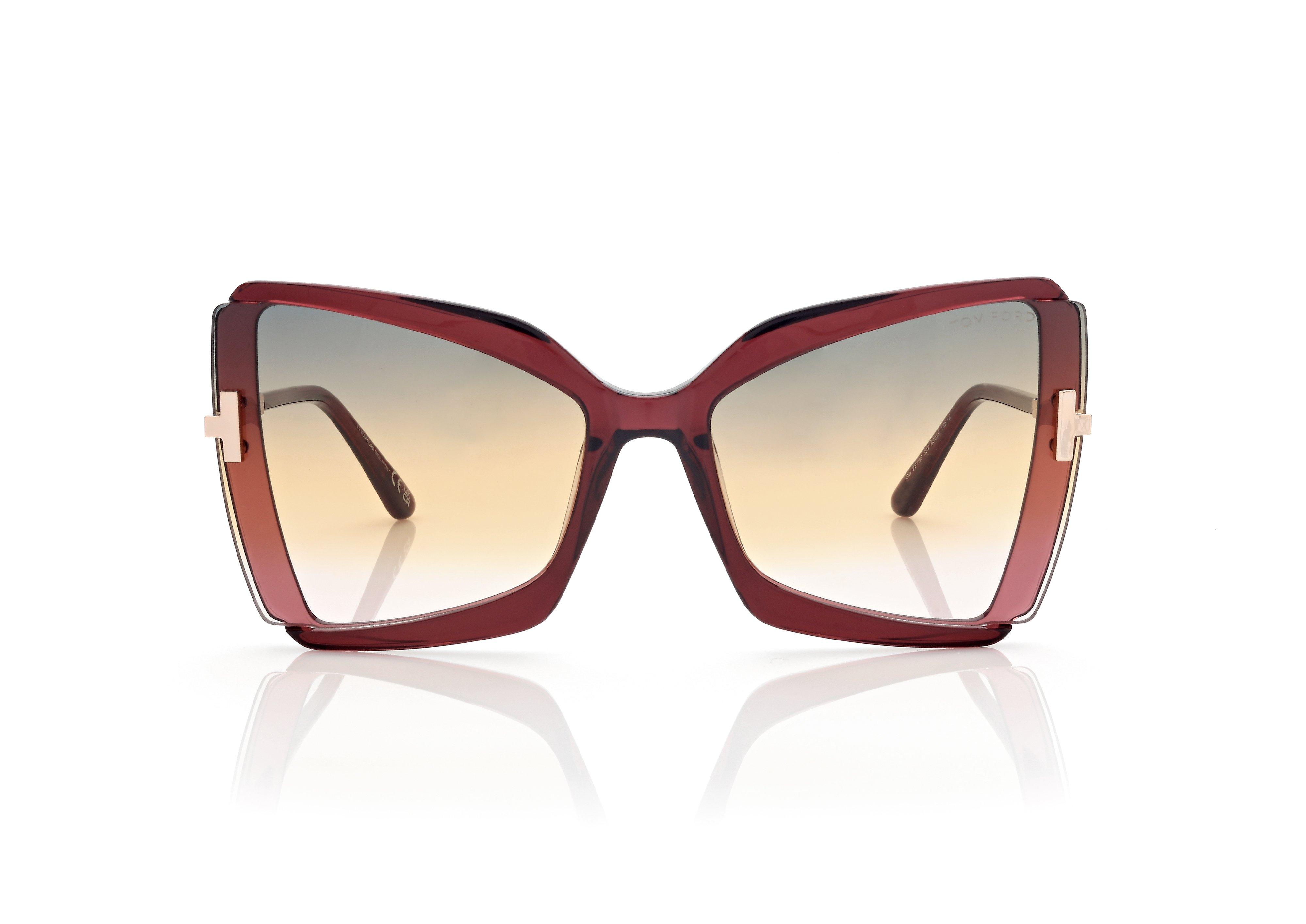
Tom Ford's archive comes back
Tom Ford is reissuing pieces from the Gucci years—not the greatest hits, but the second-tier looks that only people who were paying attention remember. The velvet hipsters from fall 1996. The satin shirts with the exaggerated point collar from spring 1997. The skinny pant that sat two inches below the navel, not on it. These aren't archival capsules in the usual sense. They're proper reissues, cut from the original patterns, sold through the Tom Ford stores as part of the permanent line.
The timing is commercial and cultural in equal measure. Tom Ford the brand has spent the last eighteen months under new creative direction, which means the archive suddenly has distance. It's no longer the recent past. It's far enough back to be a reference point rather than a comparison, and that changes what the house can do with it. Creatively, there's room. Financially, there's demand. The secondary market for Ford-era Gucci has been ticking up since 2021—not the ad-campaign pieces, but the things people actually wore. A white poplin shirt with a cutaway collar from fall 1999 will move for twice what it sold for new. The market has named a price, and the house is responding.
What's coming back first is tailoring. A single-button blazer from spring 2000, cut narrow through the body with a suppressed waist and a low-slung button stance. A trouser in charcoal wool gabardine, flat-front, with a mid-rise that sits just above the hip bone—higher than the original noughties silhouette, lower than what's been dominant for the last three seasons. The leg is straight but not stovepipe. The break is minimal. It's a trouser that asks you to consider your shoes, which is half the point.
Then there's the evening line. A bias-cut slip dress in liquid jersey, first shown in fall 1997, now reissued in black, ivory, and a red so dark it reads as wine in certain light. The cowl neckline is deeper than current taste, but not as deep as people remember—memory exaggerates everything about that period. There's also a velvet blazer from spring 1996, the season Ford started to clarify what Gucci would become. Single-breasted, peak lapel, worn over skin or over a shirt unbuttoned low enough to make a point. The house is selling it with a suggested styling: slim black pant, no belt, black leather loafer. You can ignore the suggestion, but it's there.
The reissues aren't identical to the originals. The trouser rise is higher by an inch and a half. The blazer shoulder is softer, less structured than the 1990s version, which had a pad that telegraphed from across a room. The slip dress is the same, because there's no way to update a bias cut without breaking it. These are adjustments for a contemporary body—not the literal body, but the way people carry themselves now, the way they expect clothes to sit. A 1996 shoulder doesn't read the same way in 2025. It reads costume, and costume isn't the aim.
Ford-era Gucci was never about subtlety, but it was about specificity. A look had a point of view, and that point of view was executable: you knew what shirt to wear, what heel height, whether the bag should be structured or soft. The reissues retain that clarity. They're not open to interpretation. A velvet blazer worn over a T-shirt is a different garment than a velvet blazer worn over bare skin, and the house is clear about which one it means.
Other houses are watching. Helmut Lang reissued its own archive two years ago, but that was under different ownership and a different mandate—it was as much about resurrecting the brand as it was about the clothes themselves. This is narrower. Tom Ford doesn't need resurrection. It needs a way to monetise its most valuable asset, which is the work Ford did somewhere else, for someone else, under his own name. The legal architecture allows it. The cultural moment supports it. The product is sitting in a warehouse in Italy, already graded, already specced.
What it means to dress in reissued Tom Ford for the next twelve months is to accept that the archive is no longer a reference point—it's a product category, as accessible as anything on the runway, and twice as considered.