Alexander McQueen's leather goods occupy an odd position
Alexander McQueen's leather goods occupy an odd position. The house built its name on tailoring that made women look dangerous and runway spectacle that made editors faint. Bags were an afterthought until they weren't. Now they fund the atelier, and the question becomes: can a house known for aggression make something you want to carry every day?
The answer is yes, provided you accept a certain aesthetic contract. McQueen bags do not whisper. They will not blend into a minimal wardrobe. They arrive with hardware that catches light, silhouettes that refuse to slump, and details—knuckle clasps, chain straps, skull motifs—that announce themselves before you do. This is not a failing. It is the point.
What separates a good McQueen bag from a bad one is restraint within that framework. The successful pieces take one idea—a clasp shape, a structured curve, a single decorative element—and execute it with enough precision that it doesn't need a second. The unsuccessful ones stack three concepts and hope volume compensates for lack of focus. The five below belong to the first category. They work because they know when to stop.
Jewelled Satchel
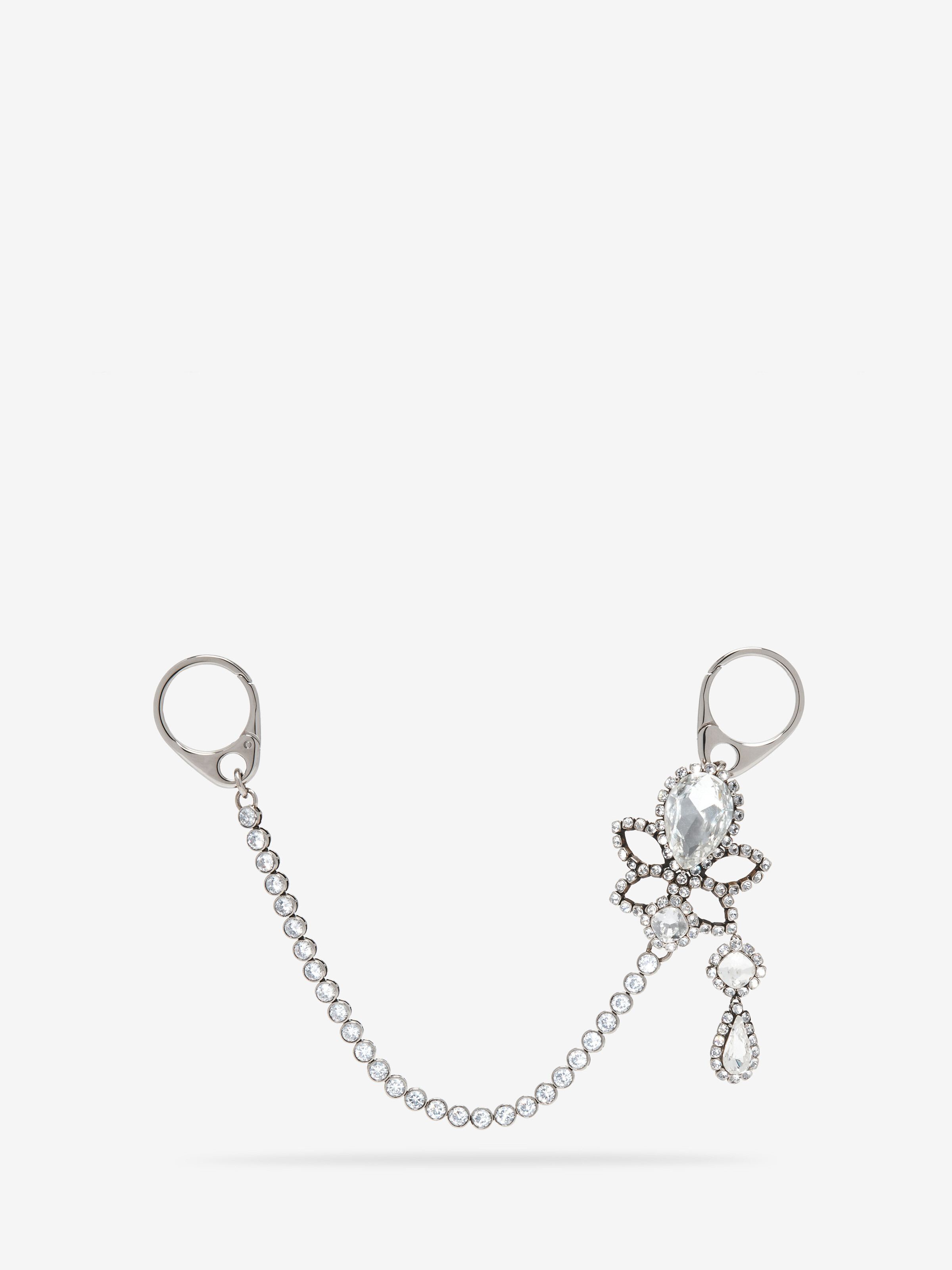
The Jewelled Satchel is McQueen's attempt at a day bag that doesn't apologise for existing. It is a structured, top-handle piece in calf leather, roughly the size of a hardback novel, with a single four-ring knuckleduster clasp holding the front flap closed. The clasp is oversized, cast metal, and entirely decorative—it doesn't articulate, doesn't open, just sits there looking like something you'd find in a Victorian gentleman's drawer next to his cufflinks and his laudanum.
The bag works because the rest of the design steps back. The body is clean. The leather is smooth, not embossed or treated. The handle is a simple arc. The only other detail is a detachable shoulder strap, which you will use more than you expect because carrying a rigid box by a top handle for six hours will remind you that structure has consequences.
Capacity is deceptive. The satchel looks small but swallows a wallet, phone, keys, a small paperback, and a compact without complaint. It does not, however, forgive overpacking. Try to fit a water bottle in and the whole thing loses its line. The silhouette depends on the bag being two-thirds full, no more.
The clasp will scratch. Accept this now. It is metal meeting metal, keys, zippers, the world. McQueen's hardware is lacquered brass, not solid, which means the finish will wear at contact points. This is not a defect. It is what happens when you use a thing.
Curve
The Curve is the least McQueen-looking bag McQueen makes, which is precisely why it works. It is a small, half-moon shoulder bag with a single curved seam running from one side to the other, creating a soft, slouched crescent. No hardware beyond the strap clips. No logo beyond a small embossed mark on the back. No knuckles, no skulls, no aggression.
What it has instead is proportion. The curve of the body mirrors the curve of the human torso when worn cross-body, which means it sits flat against the ribs without swinging. The strap is long enough to wear properly—not choking your armpit, not banging your hip—and wide enough that it doesn't dig in after an hour.
The leather is drum-dyed calf, which means the colour goes all the way through. Scratch it and you get the same shade underneath, not a pale core. This matters more than you think. Surface scratches on through-dyed leather blur into the patina. Surface scratches on coated leather look like damage.
Inside, you get one compartment and a flat pocket. That is all. The Curve is not a bag for people who carry twelve things. It is a bag for people who have edited their twelve things down to five: phone, cardholder, keys, lip balm, and one wild card. Anything beyond that and the crescent loses its shape, starts to bulge, and the whole point collapses.
This is McQueen for people who don't want to announce that they're carrying McQueen. It works at a wedding. It works at a funeral. It works on a Tuesday.
Skull Clutch
The Skull Clutch is the bag everyone thinks of when they think of McQueen bags, which makes it both the most obvious choice and the hardest to wear. It is a rigid box clutch, roughly the size of a large eyeglasses case, with a brass knuckleduster clasp shaped like a skull. Four finger rings, hollow eyes, a hinged jaw that opens when you press the teeth. Subtle it is not.
The difficulty is not the skull itself but the context it demands. This is a bag that requires a deliberate outfit—something architectural, something dark, something that can absorb the visual weight of a three-dimensional metal death's head. Pair it with a floral dress and you look like you're trying. Pair it with a black column and sharp shoulders and it locks in.
The construction is faultless. The box is made from rigid leather over a wooden frame, so it holds its shape under pressure. The clasp is solid brass, heavy enough that the bag has a centre of gravity. The chain strap is detachable, which gives you the option to carry it as a true clutch, though the weight makes that a short-term proposition.
Inside, the capacity is smaller than the exterior suggests. You get a phone, a cardholder, and a lipstick. Maybe a compact if it's thin. The rigidity means you cannot cheat by stuffing it. The box is the box.
The skull clasp will patina. The brass will darken in the recesses, lighten on the high points, and eventually look like something you inherited rather than bought. This is the intended lifecycle. McQueen's hardware is designed to age, not to remain pristine. If you want a clutch that looks new in five years, buy acrylic.
Wander
The Wander is McQueen's attempt at a tote, which means it is a tote that cannot quite commit to being a tote. It is a large, unstructured bag in soft calf with a single top zip, two handles, and a detachable strap. The leather is thinner than the Jewelled or the Curve, which gives it drape but costs it shape. Set it down empty and it puddles.
What makes it work is the size. The Wander is genuinely large—large enough for a laptop, a change of shoes, a book, a sweater, and the debris that accumulates when you leave the house for twelve hours. It is not, however, so large that it looks like luggage. The proportions stay in the handbag category, which is harder to achieve than it sounds.
The zip is the critical detail. Most totes are open, which makes them easy to access and easy to lose things from. The Wander zips shut, which means you can throw it in an overhead bin or under a restaurant table without worrying that your phone is about to slide out and into someone's wine.
The handles are short. You will carry this in the crook of your elbow or on your shoulder, not in your hand at your side. The strap is long and wide, which makes it the better option for extended carry, but also the option that breaks the clean line of the bag. You will toggle between the two depending on whether you care more about comfort or silhouette.
The Wander works best when it is two-thirds full and the leather has started to relax. New, it is slightly stiff, slightly uncertain. Six months in, it has found its shape and will hold it until you overpack it, at which point it becomes a sack. This is the trade-off with unstructured bags. They are forgiving until they are not.
Mini Jewelled Hobo
The Mini Jewelled Hobo is the Jewelled Satchel's younger sibling—smaller, softer, less formal. It keeps the four-ring clasp but shrinks the body and swaps the rigid structure for a slouched, gathered shape. The result is a bag that works at night but also, improbably, during the day.
The hobo shape is deceptive. It looks small but expands when you fill it, the gathered leather smoothing out to accommodate a surprising amount of cargo. You will not fit a laptop, but you will fit everything else: wallet, phone, keys, sunglasses, a small notebook, a charging cable, and a paperback if you're willing to let the silhouette relax.
The clasp is the same cast brass as the Satchel, which means it carries the same visual weight but on a smaller frame. This is the bag's central tension. The hardware wants to be the focus. The soft body wants to recede. Whether they balance or fight depends on how you style it. With a structured coat, the clasp reads as a deliberate detail. With a loose knit, it reads as a mismatch.
The strap is the weak point. It is a thin chain, which looks correct but digs in after an hour if the bag is full. McQueen includes a leather shoulder pad, which helps, but also adds bulk and breaks the clean line of the chain. You will toggle between comfort and aesthetics every time you pack it.
The Mini Jewelled Hobo works best as a transitional bag—something that takes you from a meeting to dinner without requiring a swap. It is formal enough for the first, relaxed enough for the second, and small enough that it doesn't dominate either context.
Care
McQueen's leather is good, not great. The calf is drum-dyed and will patina well, but it is not the indestructible hide you get from a dedicated leather goods house. It will scratch. It will scuff. It will darken where your hand oils the handle.
This is not a reason to avoid the bags. It is a reason to use them as intended. McQueen designs for wear, not for preservation. The hardware is meant to tarnish. The leather is meant to soften. If you want a bag that looks the same in ten years, buy something else.
Store them stuffed with tissue, not hanging. The unstructured pieces—Curve, Wander, Mini Hobo—will lose their shape if left to collapse. The structured pieces—Jewelled Satchel, Skull Clutch—are less fragile but still benefit from support.
Clean the hardware with a soft cloth. Do not use metal polish. The lacquer will strip and you will be left with raw brass, which oxidises faster and unevenly. If the brass darkens, let it. That is the finish finding its final form.
Condition the leather once a year with a neutral cream. McQueen's calf is not heavily treated, which means it will drink up conditioner and look better for it. Do not over-apply. A thin layer buffed in is enough.